You’ve probably heard it a million times: if you have low porosity hair, you need to avoid humectants like the plague. But what if I told you that’s one of the biggest myths in hair care?
The truth is, your hair needs humectants. The problem isn’t the ingredient itself; it’s about choosing the right one and knowing how to use it. Get this right, and you’ll have beautifully moisturized strands instead of a sticky, built-up mess.
Debunking the Low Porosity Humectant Myth
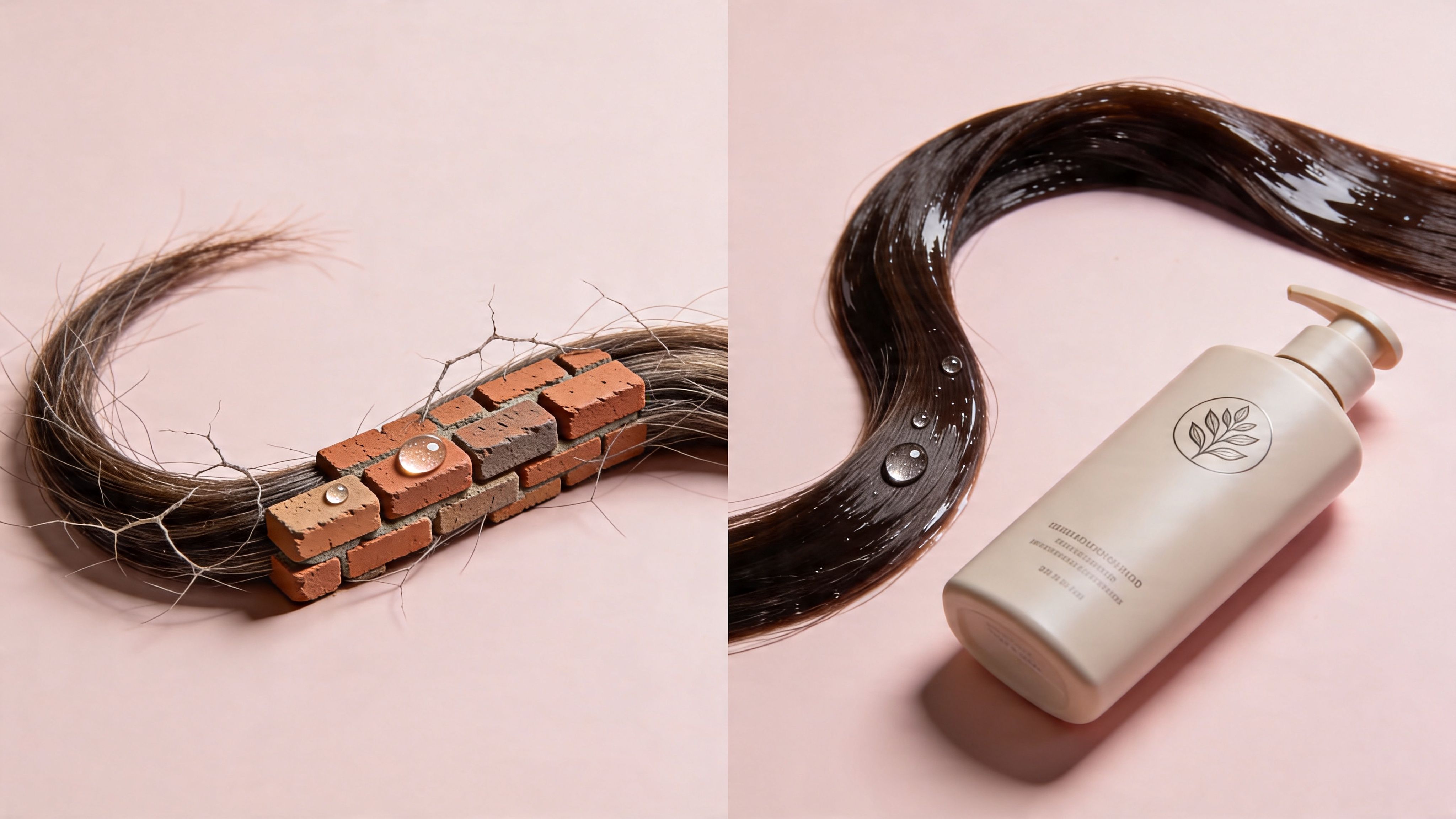
Think of your low porosity hair as a high-tech raincoat. Its cuticle layer is tightly sealed, which is great for repelling water. This is why it takes forever for your hair to get wet in the shower and just as long to dry.
This "raincoat" effect is also why so many products—especially heavy butters and creams—feel like they just sit on the surface, leaving your hair greasy and weighed down. This is where the whole myth about humectants for low porosity hair got started. People assume all water-attracting ingredients will just create that surface-level stickiness.
The real secret, though, isn’t about avoiding them. It’s all about molecular size.

Why Small Molecules Matter
Here's an easy way to picture it: you can't shove a basketball through a mail slot. It’s just not going to happen. Large-molecule humectants are the basketballs—they’re too big to get past your hair's tightly sealed cuticle. They end up stuck on the outside, pulling moisture from the air and creating that dreaded sticky, filmy feeling.
Small-molecule humectants, on the other hand, are like marbles. They’re tiny enough to slip right past that "raincoat" barrier. They get underneath the cuticle to attract and hold moisture deep inside the hair shaft, right where you need it. These are the true heroes for low porosity hair.
The key isn't avoiding humectants, but selecting lightweight ones that can penetrate the hair cuticle instead of sitting on top of it. This ensures hydration without buildup.
This shift toward ingredient science is shaking up the beauty world. The global market for natural hair care products, including smart formulations for specific hair types, hit USD 10.17 billion in 2024 and is expected to reach USD 16.99 billion by 2030. This growth is all thanks to savvy consumers like you who are learning to identify exactly what their hair needs.
Heroes vs. Heavyweights
Learning which humectants are friends and which are foes is the first step to finally getting hydration that works. While we're focused on low-po here, you might also want to check out our guide on creating a high porosity hair routine, since the rules are often the complete opposite.
To help you spot the good guys on an ingredient list, I’ve put together a quick-reference table.
Quick Guide to Humectants for Low Porosity Hair
This table breaks down the common humectants you’ll find in products, so you can quickly tell which ones will work for you and which might cause issues.
| Humectant Category | Examples | Low Porosity Suitability | Why It Works (Or Doesn't) |
|---|---|---|---|
| Small Molecule Heroes | Glycerin, Sorbitol, Propylene Glycol, Panthenol (Pro-Vitamin B5) | High | These have a low molecular weight, allowing them to easily penetrate the tight cuticle and hydrate from within. |
| Film-Forming Humectants | Aloe Vera, Flaxseed Gel, Hydrolyzed Proteins | Moderate | They form a light film that helps hold moisture. Best used in moderation and in lightweight formulations. |
| Large Molecule Humectants | Honey, Agave Nectar, Sodium PCA | Low to Moderate | Their larger size makes penetration difficult. They can work with heat but often sit on the surface, risking buildup. |
| Challenging Humectants | Hyaluronic Acid (High Molecular Weight) | Low | While a superb humectant, its very large molecules can't penetrate low porosity hair, leading to surface film and stickiness. |
With this knowledge, you can start building a smarter routine. Instead of fearing humectants, you can make them work for you.
Here’s how your low-porosity hair thinks: it has a shield. The cuticle layers are packed down so tightly that almost nothing gets in or out. This is great for preventing damage, but it's also why your hair takes forever to get wet and why most products just sit on top.
So, how do we get any moisture past this fortress? It all comes down to one simple concept: molecular weight.
The Mail Slot Analogy
Think of your hair’s cuticle as a tiny mail slot. You can’t shove a basketball through it, but a marble will slide right in. This is exactly how different humectants work with your low-porosity hair.
- Large Humectants (The Basketballs): Ingredients with a high molecular weight are simply too big to get past the tightly sealed cuticle. They end up sitting on the surface, pulling moisture from the air and creating that sticky, filmy feeling we all hate.
- Small Humectants (The Marbles): Ingredients with a low molecular weight are small enough to slip through the cracks. They get inside the hair shaft to deliver moisture where you actually need it.
This is why finding the right humectants for low porosity hair is so critical. Small-molecule ingredients like glycerin, sorbitol, and panthenol (pro-vitamin B5) are your best friends. Their tiny size lets them bypass the "shield" and hydrate your hair from the inside.
The Water Magnet Effect
Once those small humectants are inside the hair shaft, their real job begins. Humectants are hygroscopic, meaning they act like tiny water magnets, grabbing and holding onto water molecules from your products and the air around you.
For low-porosity hair, this is a huge win. It means that once you finally get moisture into the hair, these ingredients help lock it in place, fighting off the chronic dryness that makes low-porosity hair feel stiff and brittle.
But this magnet effect has a flip side, which is why your climate matters. In high humidity, they can pull in too much water and cause frizz. In very dry air, they can actually pull moisture out of your hair if they aren't sealed in properly with an oil or cream.
This isn't just theory; it's documented science. Low porosity hair is defined by its tightly packed cuticle, making it resistant to absorbing water. It's why it takes ages to get wet and even longer to dry. You can learn more about the science of hair porosity to get a deeper understanding of your hair's behavior.
First, Confirm Your Hair Porosity
Before you overhaul your entire routine, you need to be 100% sure you actually have low-porosity hair. Using the wrong products because of a misdiagnosis is a fast track to frustration and buildup.
The popular "float test" is notoriously unreliable. The best way to know for sure is to just pay attention to your hair.
- Does it take a long time to get fully wet in the shower?
- Do conditioners and creams seem to sit on top of your hair instead of soaking in?
- Does your hair take hours and hours to air dry?
If you're nodding your head "yes," you likely have low-porosity hair. To be absolutely certain, you can check your hair porosity with our quick test and get a clear answer in minutes.
Once you know your porosity for sure, you can start choosing the right ingredients with confidence. Next up, we'll look at the specific humectants that will become your new go-to's.
Choosing Your Best Low Porosity Humectants
Alright, so you get the science—small molecules are the key to getting moisture past your hair’s stubborn cuticle. But how does that translate to the real world when you’re standing in a store, staring down an ingredient list that looks like a chemistry final?
Let's make this simple. We’ll break down the most common humectants you’ll find in products, so you can finally spot the heroes from the ones that just sit on top and cause buildup.
Small Molecule Heroes
Think of these ingredients as your hair’s hydration all-stars. Their tiny molecular size lets them slip right past that tightly sealed cuticle and deliver moisture where it’s actually needed—inside the hair shaft. Seeing these near the top of an ingredient list is a fantastic sign.
Your Go-To Humectants:
- Glycerin: A classic for a reason. It’s incredibly small and one of the most effective humectants for drawing water into the hair.
- Propylene Glycol: Much like glycerin, this is another small-molecule workhorse that gets the job done for low porosity hair.
- Sorbitol: This is a type of sugar alcohol that works as a wonderfully lightweight humectant.
- Panthenol (Pro-Vitamin B5): This one is a double-win. It moisturizes and helps strengthen the hair, adding a bit of shine without weighing anything down.
These are the ingredients you want to build your routine around. They are the foundation for getting and keeping moisture in your low porosity strands.
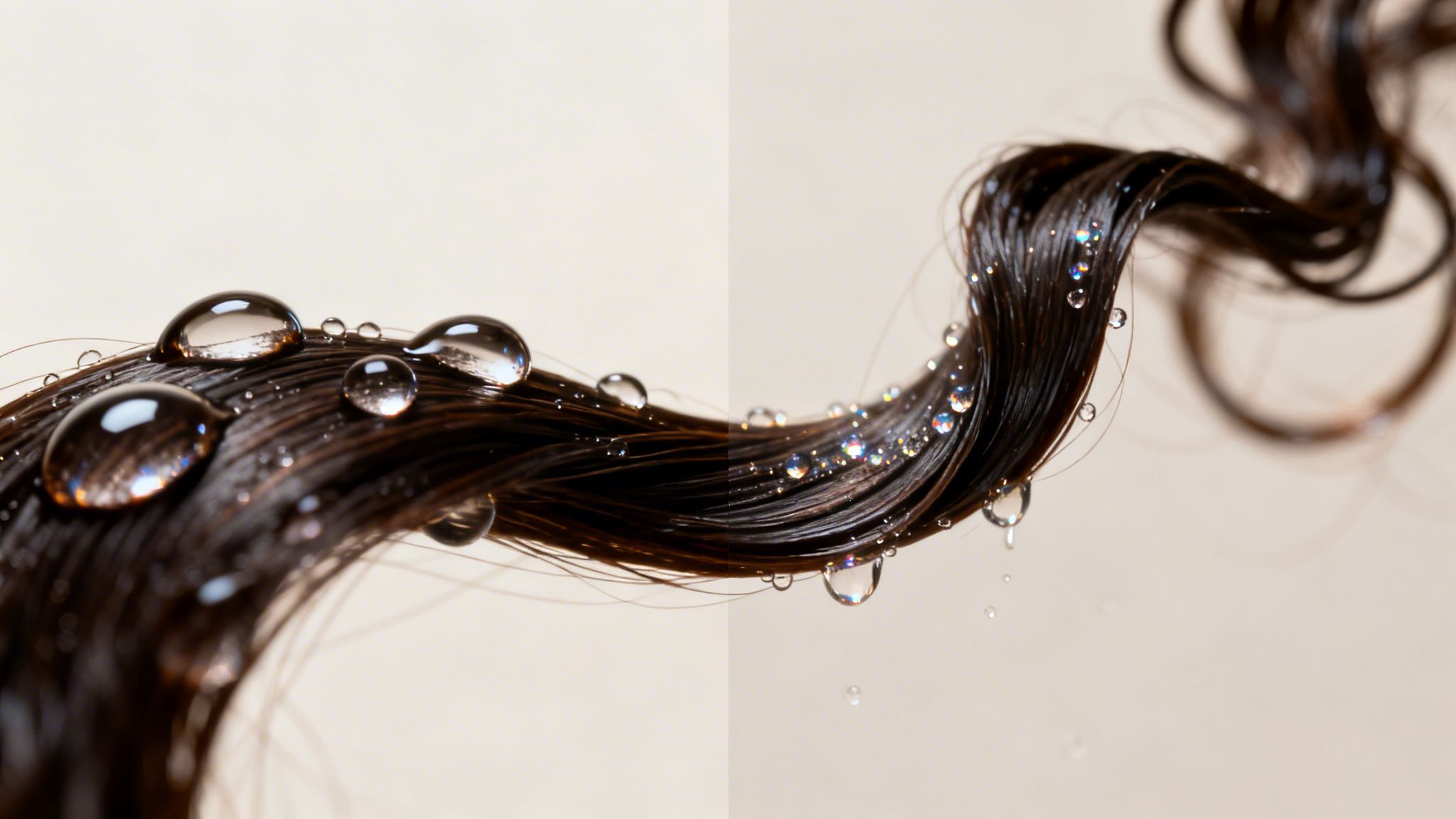
This is exactly why smaller is better. Only the smallest humectants can actually get past the cuticle shield to hydrate your hair from within.

As you can see, those tiny molecules can penetrate where the larger ones just can't, making all the difference for low porosity hair.
Conditional Allies and Tricky Humectants
Now, things get a little more nuanced. Not all humectants are bad news, but some need a little extra help to work their magic, while others are best left on the shelf.
Conditional Allies: These ingredients have larger molecules, but don't write them off just yet. With the right technique, they can still be effective.
- Aloe Vera: This plant-based favorite is fantastic, but it works best when you use gentle heat—like wrapping your hair in a warm towel or using a hair steamer—to help it absorb properly.
- Hyaluronic Acid (Low Molecular Weight): Many skincare lovers swear by a good Hyaluronic Acid Serum for hydration, but for hair, the details matter. You must look for formulations that specifically state they use a low molecular weight version, otherwise, it’s just too big to penetrate.
Key Insight: The secret to making larger humectants work for low porosity hair is heat. A little bit of steam or warmth helps temporarily lift the cuticle, giving those bigger molecules a window to get inside.
Tricky Humectants: These guys are generally too large to be of much use and will almost always lead to that dreaded sticky, coated feeling.
- Honey & Agave Nectar: While they sound natural and lovely, their large sugar molecules are simply too big for low porosity hair. They’ll sit right on the surface and create a sticky film.
- Sodium PCA: This is a powerful humectant, but its molecular size just isn't a good match for low porosity cuticles. It’s much better suited for high or medium porosity hair.
Knowing the difference is what separates a good hair day from a bad one. To make it even clearer, let's put them head-to-head.
Comparing Common Humectants for Low Porosity Hair
This quick-glance table breaks down some of the most popular humectants, their size, and how to best use them for low porosity hair.
| Humectant | Relative Molecular Size | Best For Low Po Hair? | Application Tip |
|---|---|---|---|
| Glycerin | Small | Yes | Perfect in water-based mists and leave-ins. Always apply to damp hair. |
| Panthenol | Small | Yes | A great addition to lightweight conditioners and stylers for moisture and strength. |
| Aloe Vera | Medium to Large | With Help | Use with gentle heat or steam to boost absorption. Works well in DIY refresh sprays. |
| Hyaluronic Acid | Very Large | Rarely | Can cause buildup unless it is explicitly a low molecular weight formula. |
| Honey | Large | No | Best to avoid. It sits on the hair, causing stickiness and attracting buildup. |
Now you can read ingredient labels like a pro. If you’re still feeling stuck or want to double-check the products you already own, you can analyze your ingredients with our checker. It’s a simple step that can save you a ton of frustration and help you finally avoid product buildup for good.
The Art of Applying Humectants for Maximum Moisture
Picking the right humectants for low porosity hair is only half the battle. When you have low porosity hair, how you apply your products is everything. Your technique is what unlocks deep hydration and keeps you from getting that sticky, product-on-the-surface feeling.
It all boils down to a simple, three-part process that ensures moisture gets in and—just as importantly—stays there.

Let's break down the essential steps for getting that hard-won moisture to actually stick around.
Start with Warm, Damp Hair
This is the non-negotiable first step. Never apply humectant-rich products to dry hair. The cuticles on low porosity hair are shut tight, and when your hair is dry, they’re at their most stubborn. Products will just sit on top without a chance of getting in.
Applying your leave-ins, mists, or creams to warm, damp hair makes all the difference. The warmth and water work together to gently swell and lift the cuticles just enough to create an opening for those small-molecule humectants to slip inside. The perfect time for this is right after you shower, while your bathroom is still warm and steamy.
Introduce Gentle Heat or Steam
If you really want to open the door for moisture, gentle heat is your secret weapon. This step dramatically boosts the absorption of any product, especially for humectants with slightly larger molecules like aloe vera. Think of it as coaxing the door open instead of just knocking on it.
You don’t need a fancy salon setup to make this happen. Here are a few simple ways to do it:
- Thermal Heat Cap: After applying a deep conditioner or moisturizing treatment, put on a microwaveable heat cap for 15-20 minutes. The sustained, gentle warmth is incredibly effective at helping products sink in.
- Hair Steamer: A dedicated hair steamer is the gold standard. It delivers moist heat, infusing both warmth and water vapor directly onto the hair shaft for maximum hydration.
- The DIY Method: No tools? No problem. Just apply your product, cover your hair with a plastic shower cap, and wrap a warm, damp towel around your head. The trapped body heat will do the rest.
The Final, Non-Negotiable Step is Sealing
This is what makes all your effort worth it. If you skip this, you’re basically leaving the back door open for all that precious moisture to escape. A humectant’s job is to pull water in, but it can’t hold it there on its own.
Think of it like this: the humectant is the water you pour into a cup. A lightweight sealant is the lid you put on top to stop it from evaporating. Without the lid, the water eventually disappears, leaving the cup empty again.
The key for low porosity hair is to use a lightweight sealant. Heavy butters and oils like shea butter or castor oil are too much; they’ll just sit on top of your hair, weigh it down, and cause instant buildup. You want oils with smaller molecules that can coat the strand without making it greasy.
Excellent lightweight sealing oils include:
- Jojoba Oil
- Grapeseed Oil
- Argan Oil
- Sweet Almond Oil
By layering a few drops of one of these oils over your humectant-based product, you create a light barrier that locks in moisture. Following these steps—applying to damp hair, using gentle heat, and sealing with a lightweight oil—is what turns humectants from a potential problem into your hair’s best friend for lasting hydration. The best way to make sure you're using the right products in the right order is to build your personalized hair routine based on your unique hair properties.
How to Manage Humectants in Different Climates
Making humectants for low porosity hair work year-round isn't just about your hair type—it's about the weather. The real secret is understanding how your products interact with the atmosphere, specifically the dew point.
Think of the dew point as a simple number that tells you how much moisture is actually in the air. Once you get a feel for it, you can predict how your hair will react and adjust your routine before frizz or dryness even starts. Humectants are essentially tiny water magnets, designed to pull moisture from the air into your hair. But this can be a double-edged sword.
High Humidity and High Dew Points
On a sticky, humid summer day, the air is packed with water. The humectants in your products go into overdrive, grabbing all that excess moisture from the atmosphere. For low porosity hair, this is a recipe for disaster. Since that moisture can't easily get inside your tightly-bound cuticles, it just sits on the surface, swelling the outside of the hair strand.
The result? That puffy, sticky, unmanageable halo of frizz we all dread. Your humectants did their job too well, and now your hair feels heavy and out of control instead of hydrated.
Low Humidity and Low Dew Points
Now, let's flip the script. In dry winter air or arid climates, there's very little moisture for humectants to pull from. So, where do they turn? The closest source available: your hair.
This is a huge deal for low porosity hair. If a humectant isn't layered properly, it will literally pull moisture out of your hair shaft and release it into the dry air. This is what we call "flash drying," and it can leave your hair feeling even more brittle and straw-like than before.
In high humidity, film-forming humectants like flaxseed gel can be a lifesaver, creating a light shield against that extra moisture. In dry weather, it's absolutely crucial to layer a sealing oil over your humectant to lock hydration in and stop it from escaping.
It’s this deeper understanding of hair science that’s causing a massive boom in the beauty industry. In fact, the hair care product market is expected to hit an incredible USD 261.56 billion by 2035. This huge growth shows that more and more people are investing in learning about their hair's specific needs, like porosity. You can learn more about these market trends to see just how much the industry is shifting to serve smarter, more informed customers.
Adapting Your Routine for Any Weather
So, what does this all mean for your daily routine? It all comes down to being strategic with your products and how you apply them.
For Humid Climates (High Dew Points):
- Embrace Anti-Humectants: Look for products with light silicones (if they're part of your routine) or other film-forming ingredients that create a barrier against moisture.
- Lighten Up: Use less of your humectant-heavy leave-in, or choose one where ingredients like glycerin are lower on the list.
- Seal the Deal: A very light sealing oil can help block your hair from swelling up.
For Dry Climates (Low Dew Points):
- Hydrate First: Always apply your humectant products to damp, even warm, hair. This gives them a water source to grab onto right away.
- Seal, Seal, Seal: This step is non-negotiable. After you apply your humectant styler or leave-in, you must lock it all in with a lightweight oil (like jojoba or grapeseed) to prevent all that precious moisture from vanishing into thin air.
Switching things up with the seasons can feel complicated, but it's simple once you have the right foundation. If your current routine isn't adjusting well to weather changes, it might be a good time to analyze your hair care routine to spot potential issues before they cause frizz or dryness.
Building Your Ideal Low Porosity Hair Routine
Alright, let's put all this science into practice. Crafting a routine that actually works for your low porosity hair isn’t about chasing a single "miracle" product. It's about knowing which types of products to use and, just as importantly, the right order to use them in.
This blueprint will show you exactly how to layer humectants for low porosity hair into your routine to get that deep, lasting hydration you've been looking for.
Remember, personalization is key. What works wonders for one person might need a few tweaks for you. The goal is to build a balanced system that delivers moisture without the dreaded buildup or frizz.
A Sample Weekly Routine Framework
Think of this as your starting point. Your hair’s needs can shift with the weather or your styling habits, so always be ready to adapt.
1. Wash Day (1-2 Times Per Week)
- Clarify (As Needed): Every 2-4 weeks, kick things off with a sulfate-free clarifying shampoo. This strips away any lingering product or mineral buildup, giving moisture a clean slate to penetrate.
- Deep Condition with Heat: This is non-negotiable. Slather on a lightweight, humectant-rich deep conditioner that features ingredients like glycerin or aloe vera. Then, grab a thermal cap or hair steamer for 15-20 minutes. The heat is what coaxes your tight cuticles to open up and drink it in.
- Apply Leave-In to Damp Hair: While your hair is still warm and damp from conditioning, apply a water-based leave-in. You want to see small-molecule humectants like panthenol high up on the ingredient list.
- Seal Immediately: Before your hair has a chance to air dry, lock everything in. A few drops of a lightweight oil like jojoba or grapeseed oil is all you need.
The single biggest mistake is waiting too long between your leave-in and your sealant. You have to seal while the hair is still damp to trap the water molecules the humectant just worked so hard to attract. If you wait, they'll just evaporate.
Daily Refresh and Mid-Week Moisture
It’s normal for low porosity hair to feel a bit parched between washes. A quick refresh can bring it back to life without needing a full wash day reset.
- Mix Up a Refresh Spray: Get a spray bottle and fill it mostly with distilled water. Add a splash of your favorite humectant-based leave-in conditioner and give it a good shake.
- Mist Lightly: You're aiming for damp, not drenched. Lightly spritz your hair to re-activate your products and add a touch of moisture.
- Seal Again (If Needed): If the air in your home is particularly dry (hello, winter!), you might need to smooth a tiny amount of sealing oil over your ends to lock in the hydration from your refresh spray.
Trying to figure out product types, ingredients, and application order can feel like a full-time job. If you want to skip the trial and error, the easiest next step is to build a routine using our dedicated tool. It looks at your unique hair profile to create a perfectly sequenced plan, making sure you get all the benefits of humectants with none of the pitfalls. You can also dive deeper into specific techniques in our guide to creating a complete curly hair routine.
Frequently Asked Questions
Even with a solid game plan, you're bound to have some questions. Let's tackle the most common ones that pop up when you're working with humectants on low porosity hair.
Can I Use Glycerin on My Low Porosity Hair Every Day?
Absolutely, but there's a catch: it all comes down to the product and how you use it. Daily use is totally fine as long as the glycerin is in a lightweight, water-based formula, like a refreshing mist or a watery leave-in conditioner.
The real key is to always seal it properly with a light oil. This locks in the moisture the glycerin attracts without weighing your hair down.
Pay close attention to how your hair feels. If you notice any stickiness or a tacky texture, especially on humid days, that’s your hair telling you to either ease up or make sure your sealant is really creating that protective barrier.
Why Does My Hair Feel Sticky After Using a Humectant?
That dreaded sticky feeling almost always points to one of two things. First, if the humidity is high, the humectant on your hair's surface can go into overdrive, pulling way too much moisture from the air and leaving it sitting on top of the strand.
Second, you might just be using too much product. With low porosity hair, less is always more. Try cutting back on the amount you apply and be disciplined about following up with a light sealant to create a buffer. If you're still struggling, it might be time to build a new personalized hair routine designed around your hair's specific tolerance.
Do I Need Heat Every Time I Use a Humectant?
While a steamer or thermal cap is the gold standard for getting deep conditioners to work their magic, you don't need to pull them out every single time you use a humectant.
For your daily routine, there’s a much simpler trick. Just apply your products in a steamy bathroom right after you shower. The warm, moist air gives just enough of a lift to the cuticle, helping those humectants penetrate a little deeper without any extra effort.
Ready to put all this into action? You can stop the guesswork and build a routine that finally understands your hair's unique needs. The IsItClean Hair Routine Builder helps you pick the right products and layer them perfectly for hydrated, healthy, and buildup-free hair.