Let's get one thing straight about protein and low porosity hair: it’s not about avoiding it. The real secret is using the right kind of protein, at the right time. So many people are terrified of it, worried it will make their hair stiff and brittle, but the correct, smaller-sized proteins can be a game-changer for strength and preventing breakage.
The Myth of Protein-Phobic Low Porosity Hair
There's a persistent myth floating around that low porosity hair and protein just don't mix. This idea usually comes from a bad experience—maybe a heavy-duty protein mask meant for severely damaged hair left your strands feeling like straw. I get it.
But the reality is, your hair doesn't hate protein. It’s just incredibly selective.
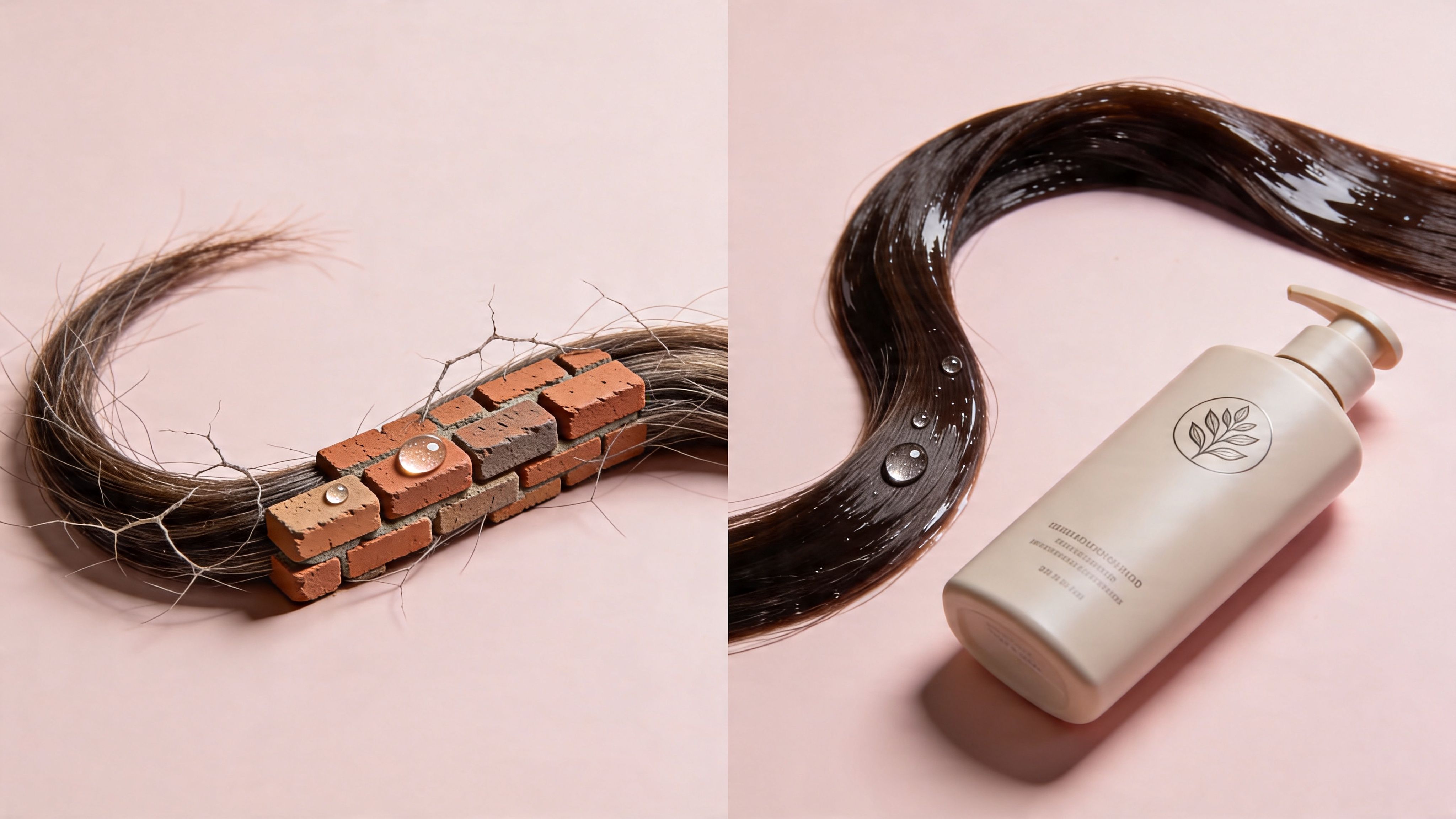
Think of your low porosity cuticle as a tightly sealed gate. It’s very good at its job, which is protecting the hair shaft. Large, clunky protein molecules can't get past the gate, so they just pile up on the surface. That’s what causes that dreaded stiff, coated feeling. It’s not an allergy to protein; it’s a rejection of molecules that are too big to be useful.
Why Your Hair Might Actually Need a Little Protein
Even the healthiest low porosity hair goes through daily wear and tear. Brushing, styling, sun exposure, and even just touching it can create tiny points of weakness over time. A targeted, light protein treatment is like patching up those weak spots before they become a bigger problem.
This isn't just theory. Community surveys from 2023-2026 show that low porosity hair, which makes up about 10-15% of global hair types, can see breakage reduced by up to 30% with the right protein strategy. Small, hydrolyzed proteins are the key. They’re tiny enough to slip past the cuticle, filling in micro-gaps and reinforcing your hair's structure from the inside. You can read more about the impact of protein treatments to really get into the science.
Key Takeaway: The goal isn’t to banish protein. It’s to move from fear to a smart, strategic approach, giving your low porosity hair exactly what it needs to be strong and resilient.
Is It Protein or Moisture? Learning the Signs
One of the biggest hurdles is figuring out what your hair is actually asking for. Is that frizz a sign of thirst, or a cry for strength? Knowing the difference is crucial.
This table breaks down the common symptoms to help you diagnose your hair's needs more accurately.
Signs Your Low Porosity Hair Needs Protein vs Moisture
| Symptom | Likely Needs Protein If... | Likely Needs Moisture If... |
|---|---|---|
| Feel | Your hair feels overly soft, mushy, or "gummy" when wet. It lacks body and substance. | Your hair feels dry, rough, brittle, or straw-like. It snaps easily without stretching. |
| Curls/Waves | Curls are limp and lifeless. They won't hold their shape, even with styling products. | Curls look frizzy, dull, and undefined. They feel coarse to the touch. |
| Elasticity | When you gently pull a wet strand, it stretches and stretches, and may not bounce back. | A wet strand has very little stretch and snaps almost immediately when pulled. |
| Frizz | You have a soft, "fluffy" or "cloud-like" halo of frizz, even when your hair feels soft. | Frizz is wiry and rough, indicating a dry, raised cuticle. |
| Appearance | Hair looks dull and lacks shine, despite being well-moisturized. | Hair looks dull, lackluster, and may feel tangled or "grabby." |
Learning these signs takes a little practice, but it's the first step toward giving your hair what it truly craves instead of just guessing.
If your hair is screaming for protein based on these clues, don't run out and grab the most intense reconstructor on the shelf. It’s just a gentle nudge to start thinking about incorporating a light protein treatment into your routine.
Understanding the other end of the porosity spectrum can also be super helpful for context. While their needs are different, our detailed guide on creating a high porosity hair routine really highlights the contrast in protein requirements.
Ultimately, it all comes down to finding your hair's unique protein-moisture balance. Now, let’s get into how you can accurately diagnose your hair’s needs before you even think about applying a treatment.
Diagnosing Your Hair's True Protein Needs
Before you even think about reaching for a protein treatment, we need to get one thing straight. Applying protein to hair that doesn't need it is a fast-track to stiff, brittle strands and breakage. The first step is learning to read what your hair is telling you.
One of the most reliable ways to do this at home is the stretch test. It's a simple, hands-on way to get a snapshot of your hair's current protein-moisture balance.
The At-Home Stretch Test
To do the test, find a single strand of hair that has naturally shed—your brush or the shower floor is a great source. Hold it gently between your fingers and give it a little stretch.
- If it stretches and stretches without bouncing back, feeling mushy or almost gummy, that's a classic sign of over-moisturization. Your hair's internal structure is weak and it's desperate for protein to add some backbone.
- If it barely stretches at all and snaps almost instantly, your hair likely has too much protein or is severely dry. It feels rigid and brittle. The last thing you want to do is add more protein.
This quick test gives you a fantastic starting point. But to be truly confident, it's smart to move from an educated guess to data-backed insights.
First, if you're not 100% sure you have low porosity hair, confirm it. You can take a quick Hair Porosity Test to understand your starting point. Knowing your foundation is key.
This decision tree helps visualize how to interpret common hair signals, like when it feels limp or way too soft.

If your hair consistently feels limp, lacks body, and is overly soft to the touch, it’s a strong signal that a carefully chosen protein treatment will help restore its strength and integrity.
Moving Beyond Guesswork
After you've done the stretch test and confirmed your porosity, you might still have some lingering doubts, especially if your hair felt brittle. What if you already have too much protein? Don't guess.
Instead of risking more stiffness, you can get a clear answer. The IsItClean platform includes a Protein Overload Test that helps you assess your current protein levels based on specific symptoms and product history, taking all the guesswork out of the equation.
Knowing your precise protein status is empowering. It means you can move forward with confidence, choosing the right treatment because you know your hair needs it, not because you're just hoping for the best.
With this knowledge, you're ready to build a truly personalized routine with the perfect balance of strength and moisture. You can find all the resources to do this, including our porosity and protein overload diagnostics, right here with the other IsItClean tools.
Choosing the Right Protein for Your Hair

Learning to read an ingredient list is probably the most important skill you can develop for low porosity hair. It’s not about grabbing any bottle that screams "protein" on the label; it's about finding one with proteins your hair can actually absorb.
The trick is all about molecular size. Low porosity hair has a tightly sealed cuticle, making it tough for anything to get in. Big, clunky proteins (like plain old collagen or keratin) can't penetrate this barrier. Instead, they just sit on top, leaving you with that stiff, coated feeling we all dread.
Small Molecules, Big Impact
For a protein to do its job on low-po hair, it needs to be small enough to slip through the cuticle's defenses. This is where hydrolyzed proteins are a game-changer. The process of hydrolysis breaks down large proteins into tiny fragments—amino acids and peptides—that are perfectly sized to get inside the hair shaft.
These are the good guys. They deliver reinforcement from within, without causing that dreaded surface buildup.
Keep an eye out for these ingredients on your product labels:
- Hydrolyzed Silk Protein: Amazing for adding shine and softness while it strengthens.
- Hydrolyzed Wheat Protein: A fantastic choice for boosting moisture retention and adding a bit of body.
- Amino Acids: These are the smallest building blocks. Look for terms like silk amino acids or keratin amino acids.
- Peptides: These are just short chains of amino acids, making them small and effective.
If you want to get into the nitty-gritty of why size matters, learning about different protein types like hydrolyzed collagen really highlights how these ingredients work on a molecular level.
Ingredients to Approach With Caution
On the flip side, some ingredients are a potential red flag for low porosity hair, especially when they show up high on the ingredient list. These are usually larger, film-forming proteins that can easily lead to stiffness.
Be wary of:
- Collagen: In its un-hydrolyzed form, this molecule is just too large.
- Gelatin: This is a common ingredient in DIY treatments, but it's known for being heavy and coating.
- Keratin (un-hydrolyzed): Your hair is made of keratin, but adding a large-molecule version topically can backfire and cause rigidity.
Still unsure about an ingredient you're seeing? Don't guess. You can analyze your ingredients with the IsItClean Ingredient Checker to see if a product is a good fit before you even think about buying it.
The Science of Why This Matters
Here’s a stat that explains everything: low porosity hair binds 40-50% less protein than high porosity types. Its cuticles are just that much more intact. Because it isn't damaged, it simply doesn't need an aggressive repair job.
In fact, a 2024 trichology analysis showed that low porosity strands only lost 5-10% of their internal protein from heat styling. High porosity hair, by contrast, lost 30%. This is exactly why standard protein masks—which are formulated for damaged, porous hair—are reported to cause buildup in nearly 70% of low porosity users.
Key Insight: The goal isn't to blast your hair with protein. It's to deliver tiny, targeted reinforcements that strengthen from within, without creating a stiff outer shell.
What About DIY Options Like Rice Water?
If you’re a fan of DIY, a rice water rinse can be a great, gentle way to add a touch of strength. The amino acids found in fermented rice water are very mild, which is often exactly what low porosity hair needs.
Just remember that moderation is everything. Try it as a quick rinse after shampooing, leaving it on for only 5-10 minutes before rinsing completely. It's absolutely crucial to follow up with a moisturizing conditioner to restore softness and prevent any potential stiffness.
Pay close attention to how your hair feels afterward. If you notice any hint of dryness or brittleness, dial back how often you use it. Listening to your hair is always more effective than following a one-size-fits-all schedule.
Your Application Guide for Maximum Benefit

The secret to making a protein treatment work on low porosity hair isn’t just what you use—it's how you apply it. Your goal is to get those strengthening ingredients past your tightly sealed cuticles, not just let them sit on top causing stiffness and buildup.
Let's walk through how to get it right.
Start With a Clean Slate
You absolutely have to start with clean hair. Applying a treatment over product buildup, oils, or silicones is like trying to moisturize your skin with clothes on—it just won't work.
Grab a good clarifying shampoo and give your hair a thorough wash. This step removes anything that could block the protein from getting where it needs to go.
Once your hair is clean, gently squeeze out the excess water. You want it damp, not dripping wet. If it's too saturated with water, there’s simply no room for the treatment to soak in. A good rule of thumb is to towel-blot until your hair is about 60-70% dry.
The Gentle Heat Game-Changer
This is the most important part of the process for low porosity hair: gentle heat. Your cuticles are naturally closed off, and a bit of warmth is the only way to coax them open so the protein can slip inside.
We’re not talking about damaging high heat from a flat iron. The key is gentle, consistent warmth. Here’s the best way to do it:
- Apply the Treatment: Work the product evenly through your damp hair, making sure every strand is lightly coated from root to tip.
- Cover It Up: Pop on a disposable plastic shower cap. This traps the natural heat radiating from your scalp, which starts the process.
- Add External Warmth: Now for the real magic. Use a thermal heat cap, a hooded dryer on a low setting, or wrap a warm, damp towel around your capped head for 15-20 minutes.
This indirect, gentle heat is the single most effective trick for getting a protein treatment to penetrate low porosity hair. It temporarily lifts the cuticle without causing damage, ensuring you get the best possible results.
After your time is up, let your hair cool down completely before you even think about rinsing. This gives the cuticle time to settle back down and lock that protein inside.
Get the Timing Right (and Don't Skip the Final Step)
When you're starting out, less is more. Stick to a processing time of just 15-20 minutes for your first few treatments. This is plenty of time to see how your hair responds without risking protein overload.
Now for the final, non-negotiable step: always follow with a moisturizing deep conditioner. As soon as you rinse the protein out, apply a rich, protein-free moisturizing mask. This restores softness and elasticity, creating the perfect protein-moisture balance. Skipping this is what leads to that dreaded stiff, brittle feeling.
A successful protein treatment will leave your hair feeling stronger but still flexible and soft, never rigid. As you get the hang of it, you can perfectly time these treatments when you build your personalized hair routine, taking all the guesswork out of maintaining healthy, balanced hair.
Building a Balanced Long-Term Hair Routine
Getting great results from one protein treatment is a nice little win. But getting consistent, long-term hair health? That comes from building a smart, integrated routine. It’s all about creating a sustainable rhythm between strength and moisture, not just lurching from one hair emergency to the next.
When you have low porosity hair, this means truly understanding frequency and learning to read your hair's unique signals.
Honestly, the "less is more" philosophy is your best friend here. For most of us with low porosity hair, a light protein boost every 4-6 weeks is the real sweet spot. This schedule gives your hair the reinforcement it needs without completely overwhelming your tightly sealed cuticles.
Finding Your Perfect Treatment Frequency
We've learned a lot recently about the risks of overdoing it. By 2026, data from forums and brand surveys showed a staggering 60% of people with low porosity hair were reporting that post-protein stiffness and crunch from using treatments too often.
That’s because low porosity cuticles already repel so much, and any excess protein just sits on the surface, leading to an 18-25% spike in breakage. Seeing this, experts shifted their guidelines away from weekly treatments, strongly recommending the 4-6 week interval instead. The result? A 45% drop in protein overload incidents among people who followed the new advice.
To really dial in your own perfect schedule, try keeping a simple hair journal. Just jot down when you do a protein treatment and how your hair looks and feels in the days that follow. You'll quickly see a pattern emerge and find your hair's ideal timing.
Spotting the Signs of Protein Overload
Even with the best plan, it's still possible to tip the scales. Knowing the early warning signs of protein overload is key, because it lets you fix the problem before it gets worse.
Your hair will give you some pretty clear signals when it's had too much protein:
- Sudden Brittleness: Your hair feels weirdly stiff and snaps easily, even when you know it's moisturized.
- Straw-Like Texture: It loses all its softness and takes on a rough, coarse feel, almost like straw.
- Loss of Elasticity: A wet strand has no stretch. It just snaps instantly. This is the complete opposite of that mushy, overly soft feeling of moisture overload.
- Dullness: Your hair just loses its shine and looks lifeless, like it’s coated in a dull film.
If you spot these signs, don't panic. The fix is pretty straightforward. Grab a good clarifying shampoo to wash away all that excess protein buildup. Follow it up with a deeply hydrating, protein-free deep conditioner. You'll probably want to focus only on moisture for the next few weeks to get things back in balance.
Key Insight: The ultimate goal is personalization. A truly balanced routine isn't about following rigid rules. It's about listening to your hair's feedback and creating a schedule that's perfectly adapted to its unique needs.
As you're building out this routine, don't forget to consider outside factors. For example, understanding the impact of hard water on your hair can be a total game-changer for its overall health and how it responds to products.
The smartest way to stop guessing and finally personalize your routine is to let technology do the heavy lifting. Instead of juggling calendars and product lists, you can build your personalized hair routine with the IsItClean Hair Routine Builder. It takes everything we've talked about—from treatment frequency to product choices—and maps it out into a custom schedule just for you.
This tool helps you strategically plan your protein and moisture days, recommends clean products that fit your hair's profile, and adapts as your hair changes. It’s the easiest way to give your low porosity hair the perfect balance of care, keeping it strong and healthy for the long haul. And for even more targeted tips, be sure to check out our dedicated guide to crafting the perfect low porosity hair care plan.
Frequently Asked Questions
Even after you’ve got a plan, a few questions always seem to pop up when you're navigating something new with your hair. Here are some quick, straightforward answers to the most common things people ask about protein treatments for low porosity hair.
Can I Use a Protein Treatment on Color-Treated Low Porosity Hair?
Yes, and you probably should. The coloring process can rough up the cuticle, creating weak spots even on resilient low porosity hair. A gentle protein treatment is the perfect way to reinforce that structure and prevent breakage.
The secret is balance. Stick with light protein treatments every 4-6 weeks and always—always—follow up with a moisturizing deep conditioner to bring back that soft, supple feel. Before you start, run your product list through the IsItClean Ingredient Checker to make sure you're not using any harsh, color-stripping sulfates.
What Is the Difference Between a Rice Water Rinse and a Commercial Protein Treatment?
A rice water rinse is a DIY approach that uses the amino acids from starchy water to gently strengthen your hair. Think of it as a nice, gentle entry point into protein.
A commercial protein treatment, on the other hand, is a product formulated in a lab with specific hydrolyzed proteins that are broken down into tiny molecules. These are designed for more predictable and effective absorption, which is exactly what low porosity hair needs. If you do use rice water, keep the application time short—just 5-10 minutes to start—to see how your hair responds. And never skip your moisturizing conditioner afterward.
My Hair Feels Stiff After a Protein Treatment. What Went Wrong?
That stiff, straw-like feeling is the classic sign of "flash drying" or protein overload. It’s your hair's way of telling you something in your routine was off.
This usually happens for one of three reasons:
- The protein treatment was too strong for what your hair actually needed.
- You left it on for too long.
- You skipped the crucial moisturizing step that needs to follow a protein treatment.
To fix it, start by clarifying your hair to wash away any excess protein sitting on the surface. Then, give it some love with a rich, protein-free moisturizing mask, maybe using a little gentle heat to help it sink in. You can avoid this altogether next time by using the IsItClean Protein Overload Test to check your hair's protein status before you even start.
How Do I Add Protein Without Using a Deep Conditioner?
This is a great strategy for low porosity hair, often called "micro-dosing" protein. It’s all about providing small, consistent amounts of strength without running the risk of a heavy treatment making your hair stiff and brittle.
The easiest way to do this is through your regular styling products. Just look for rinse-out conditioners, leave-ins, or stylers that have hydrolyzed proteins listed further down the ingredients list. A lower placement means a smaller concentration—perfect for a gentle, steady boost.
For example, a curl cream with hydrolyzed silk listed as the tenth ingredient gives you a light touch of protein. A mask with hydrolyzed keratin as the third ingredient is a much more intensive, heavy-duty treatment.
This micro-dosing approach is one of the best ways to maintain that perfect protein-moisture balance over time. You can find and schedule clean styling products with light protein when you build your personalized hair routine with the IsItClean Hair Routine Builder. It’s the simplest way to make sure your daily regimen is perfectly balanced.
Ready to stop guessing and start seeing real results? The key is building a plan that's unique to you. Don't just follow generic advice—create a data-driven schedule that balances protein and moisture perfectly for your low porosity hair. Try the IsItClean Hair Routine Builder today to get a personalized routine that adapts to your hair's needs, recommends the right products, and helps you achieve your healthiest hair ever.