You wash your hair carefully, apply a leave-in that everyone swears by, seal it, style it, and still end up with strands that feel coated and dry at the same time. The roots may puff, the ends may feel rough, and the product that was supposed to help seems to sit there like a film.
That frustration is common with 4c hair low porosity. The problem usually isn't that your hair "doesn't like moisture." It's that your hair doesn't let moisture in easily, and a lot of standard advice makes that harder instead of easier.
The Low Porosity 4C Hair Paradox
A lot of people with 4C hair think they're doing too little. In practice, many are doing too much of the wrong kind of care. The shelf is full, the strands look shiny, but the hair underneath still feels thirsty.

Why it feels dry when it looks moisturized
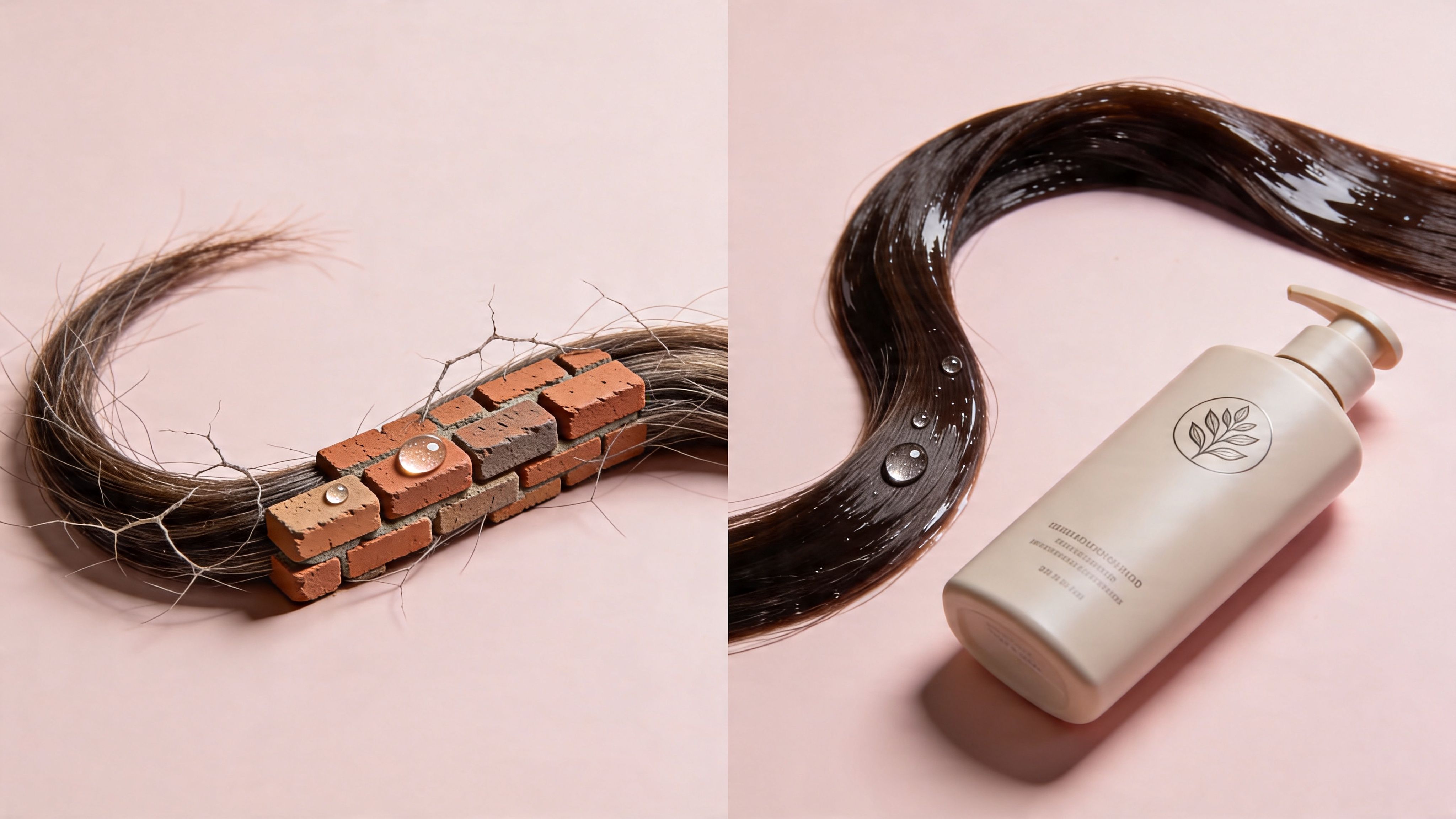
Low porosity 4C hair has tightly closed cuticles that resist moisture penetration. Water often beads on the surface instead of moving into the strand. That structure is linked to hair composition. African hair types can have over 3% lipid content, compared with around 1.5% to 1.9% in other hair types, which contributes to a more compact, water-resistant cuticle layer, as explained in this deep dive on low and high porosity for type 4C hair.
4C texture adds another layer to that challenge. The tight zigzag pattern slows product distribution, so moisture has to travel through a strand that already resists entry. That means technique matters as much as product choice.
Practical rule: If your hair gets shiny fast but soft very slowly, you're often dealing with surface coating, not deep hydration.
The trade-off most people miss
Low porosity hair isn't weak by default. It tends to retain moisture well once moisture gets inside. That is the paradox. Entry is the problem, not always retention.
This is why copying routines made for damaged or high porosity hair can backfire. Heavy butters, repeated oils, and rich protein masks can leave 4C low porosity hair stiff, dull, or greasy. If your routine sounds more like repair than penetration, it's probably working against you.
For contrast, hair that absorbs quickly and loses moisture quickly needs a different strategy, which is why a high porosity hair routine often looks almost opposite to what low porosity 4C hair needs.
- What usually works: Warm water, clean hair, lightweight products, and heat-assisted conditioning.
- What often fails: Layering heavy oils on dry hair, skipping clarifying, and treating every rough feeling as a sign to add more product.
- What changes results: Opening a pathway for moisture before you try to seal anything in.
How to Accurately Diagnose Your 4C Hair Porosity
The float test is popular because it's simple. It is not popular because it's especially reliable for tightly coiled hair.

Why the float test can mislead 4C hair
For coily hair types, the common float test has been found to be 62% accurate, compared with 89% for straight hair, because air pockets in the coils can create false readings. That same misdiagnosis often pushes people toward the wrong products, especially extra protein that can worsen dryness in true low porosity hair, as noted in this video discussion on porosity testing limits for coily hair.
That matters because 4C hair doesn't always behave neatly in a glass of water. A floating strand may reflect trapped air just as much as cuticle behavior.
What to look for instead
Use pattern-based observation over a single at-home test.
- Water behavior: Water beads up or rolls off before the strand becomes fully saturated.
- Drying pattern: Hair can stay damp for a long time once it finally gets wet.
- Product response: Leave-ins and oils tend to sit on top, especially when applied in large amounts.
- Buildup cycle: Hair feels coated quickly, even when the product label says "lightweight."
- Protein reaction: Hair feels harder, rougher, or straw-like after protein-heavy treatments.
A lot of people confuse low porosity with protein sensitivity because both can show up as stiffness and dryness. The difference is timing. If your hair gets worse after strengthening products, that points to a routine mismatch, not just "dry hair."
If your strand resists water, gets coated easily, and turns hard after protein, stop chasing richer products. Start questioning the diagnosis.
For a more complete read on your pattern, it's smarter to check your hair porosity with a multi-factor quiz instead of relying on a floating strand alone.
A quick visual explainer helps if you're comparing signs in real time:
A better diagnosis framework
Think in clusters, not one-off clues.
| Sign | More consistent with low porosity | More consistent with another issue |
|---|---|---|
| Water sits on hair | Yes | Sometimes product residue alone |
| Hair feels greasy but dry | Yes | Also possible with over-layering |
| Hair gets stiff after protein | Often | Can also suggest protein overload |
| Hair won't hold moisture without heat | Common | Less typical for medium porosity |
| Hair dries slowly after wash day | Common | Can vary with density and styling |
If you're still unsure, start with routine behavior. Hair tells the truth faster than trend advice does.
Your Science-Backed Wash Day Protocol
Wash day for 4C low porosity hair should do three things well. Remove buildup. Let water in. Keep moisture there without creating a new barrier on top.

Clarifying is not optional
Low porosity hair collects residue fast because products sit on the surface more easily. If you keep layering leave-ins, gels, oils, and creams over old product, moisture has to fight through that film before it even reaches the cuticle.
Use a clarifying shampoo periodically. Ensure it's timed before the hair feels waxy, flat, or impossible to wet. If your deep conditioner suddenly "stops working," residue is often the underlying issue.
Signs you need a clarifying wash:
- Water resistance gets worse: Hair takes too long to get fully saturated.
- White film shows up: Product pills, flakes, or mixes badly during styling.
- Curl definition drops: Twists or coils look puffy but not hydrated.
- Scalp feels coated: Your roots feel less fresh even after cleansing.
Cleansing should be gentle, not weak
After clarifying, use a hydrating cleanser that removes sweat and scalp debris without leaving the hair rough. Low porosity hair still needs thorough cleansing. "Moisturizing" shampoos that barely clean can leave you stuck in the same buildup cycle.
Work in sections. Let warm water run through each section longer than you think you need. Don't rush saturation. With this hair type, the first part of cleansing is often about helping water reach the strand evenly.
Salon note: Many people think their hair hates shampoo. Often, their hair actually hates leftover product.
Deep conditioning needs heat and structure
The efficacy of deep conditioning often determines whether most routines succeed or fail. A 4-phase deep conditioning method can increase moisture absorption by 40% to 60% and improve moisture retention for 3 to 5 days, according to this science-based explanation of deep conditioning for 4C low porosity hair.
The method works because it doesn't just add conditioner. It creates conditions for absorption.
Pre-treatment
Start on clean, damp hair. A useful primer mix is 1 cup distilled water, 2 teaspoons panthenol, and 1 teaspoon glycerin. This kind of humectant pre-treatment helps prepare the cuticle before your deeper conditioning step.
Penetration phase
Apply your deep conditioner, then use a heat cap, steamer, or hooded dryer. The warm phase matters because low porosity hair responds better when the cuticle is gently encouraged to lift.
The warm and cool cycling approach is especially useful. Rather than blasting heat the whole time, rotate periods of warmth with cooler room-temperature periods so the hair can take in moisture and settle.
Moisture infusion
After the main conditioner step, layer in moisture-supporting ingredients such as honey or glycerin if your hair responds well to them. This isn't about piling on product. It's about choosing ingredients that help hold water near the strand instead of creating instant heaviness.
Sealing
Finish with a lightweight oil, not a heavy butter. Grapeseed and safflower fit well here because they're lighter and rich in linoleic acid. The seal should feel like a thin finish, not a greasy coating.
What this looks like in practice
A successful wash day for 4c hair low porosity usually follows this flow:
- Clarify when buildup is present so the next steps can work.
- Cleanse with warm water and a gentle shampoo in sections.
- Apply deep conditioner under heat instead of expecting room-temperature conditioning to do all the work.
- Rinse thoughtfully so you don't leave a heavy film behind.
- Seal lightly and stop before your hair starts feeling coated.
If you're trying to connect hair care with broader wellness habits, this science-backed plan for healthier hair offers a useful overview of how routine consistency supports hair health overall.
When you want to match this wash process to your actual hair behavior, you can follow a low porosity hair routine built around your needs.
Mastering Moisture and Styling Without Buildup
A lot of low porosity routines fail after wash day, not during it. Hair feels good at first, then day two brings dullness, tackiness, or that familiar coated feeling. The usual cause is the styling sequence.

Why standard LOC often feels too heavy
Porosity matters more for product choice than hair type alone. As natural hair care evolved after the 2000s, it became clearer that 4C hair can be low, medium, or high porosity, and low porosity 4C hair responds better to lightweight products and heat-assisted conditioning, as discussed in this overview on why porosity matters more than type alone.
That changes how you should think about the LOC method. On low porosity hair, putting oil on too early can create a barrier before water-based moisture has a chance to move in. Then the cream sits on top of that barrier, and the hair feels dressed but not hydrated.
A better sequence for low porosity 4C hair
For many people, LCO works better than LOC.
- Liquid first: Start with water or a light water-based leave-in on damp hair.
- Cream second: Use a light cream or milk that spreads easily and doesn't feel waxy.
- Oil last: Finish with a very small amount of lightweight oil only where needed.
Some heads of hair do best with an even simpler pattern. Liquid plus one styling product is enough. Low porosity hair often rewards restraint.
A helpful outside reference on porosity-specific moisturizing methods can give you more context on adapting moisture steps instead of forcing one universal method.
What to use less of
Heavy products aren't automatically bad. They're just often a poor fit here.
Avoid leaning on:
- Dense butters when your hair already struggles with absorption
- Repeated oil layering between wash days
- Thick creams that leave drag on the strand
- Styling by feel alone if "more product" keeps making your results worse
Soft hair usually comes from better penetration, not a thicker coating.
How to style for definition without residue
Try this decision guide:
| Styling goal | Better choice for low porosity 4C | Usually less helpful |
|---|---|---|
| Twist-out softness | Light leave-in plus light cream | Butter-heavy layering |
| Wash-and-go hold | Water-based styler on damp hair | Oil first, then gel |
| Mid-week moisture | Warm water mist and small product refresh | Reapplying cream daily |
| Sleek styles | Light gel over moisturized sections | Grease on dry hair |
If your styles collapse into puffiness fast, don't assume your hair needs more product. It may need cleaner hair, better initial hydration, or lighter layering. If you want a structure based on your pattern, you can build a curly hair routine around your texture and behavior.
The Low Porosity Ingredient Guide
Ingredient labels tell you quickly whether a product is likely to help your hair absorb moisture or sit there. For low porosity 4C hair, the goal is straightforward. Choose ingredients that support water movement and light sealing. Be careful with ingredients that form a heavy film or stack too fast.
What to look for first
Humectants help pull moisture toward the strand. Lightweight oils help reduce moisture loss without creating the kind of barrier that makes the next wash day harder. Small hydrolyzed proteins can be useful in moderation, especially if the hair feels weak, but low porosity hair usually reacts badly to too much protein or proteins that don't absorb well.
Good signs on a label include:
- Humectants such as glycerin, honey, and panthenol
- Lightweight oils such as grapeseed and safflower
- Hydrolyzed proteins in small amounts rather than multiple protein sources packed high on the list
- Water-based formulas that spread easily through damp hair
What tends to cause trouble
The common mistake is assuming "rich" means effective. For low porosity hair, rich often means residue.
Watch for:
- Heavy butters when your hair already gets coated easily
- Too many oils in one routine
- Protein-heavy masks that leave the hair stiff
- Products that feel slick but never seem to sink in
Your ingredient list should help water stay with the strand, not keep water from reaching it.
Ingredient Guide for 4C Low Porosity Hair
| Ingredient Category | Seek (Penetrating & Lightweight) | Avoid (Coating & Heavy) |
|---|---|---|
| Humectants | Glycerin, honey, panthenol | Formulas with little water support and mostly heavy emollients |
| Oils | Grapeseed oil, safflower oil | Repeated heavy oil layering |
| Proteins | Hydrolyzed rice protein in moderation | Protein-rich formulas that leave hair hard or straw-like |
| Conditioners | Lightweight water-based leave-ins | Thick waxy creams that sit on top |
| Finishers | Small amounts of lightweight sealants | Dense butters used as daily moisturizers |
Protein needs a careful hand
Low porosity hair doesn't always need zero protein. It needs the right kind, the right amount, and enough moisture support around it. If your hair feels brittle after strengthening products, pull back. If it feels limp and overly soft, a small amount of hydrolyzed protein may help.
If you're unsure whether your current routine is tipping into stiffness, use a protein overload test for your hair. If you want to screen a product label before buying it, you can also analyze your ingredients for buildup risks and formula fit.
Troubleshooting Common Low Porosity Problems
Most low porosity problems aren't random. They're usually a direct response to one mismatch in the routine. Fix the mismatch, and the issue becomes much easier to manage.
My hair still feels dry after deep conditioning
The likely cause is one of three things. The hair wasn't clarified first. The conditioner sat on the surface without enough heat. Or the formula was too heavy to penetrate well.
Try this:
- Clarify first if your hair has been product-heavy.
- Deep condition on damp, sectioned hair.
- Use gentle heat instead of room-temperature conditioning alone.
- Rinse away excess film so the finish feels soft, not coated.
I keep getting flakes or white residue
That usually points to buildup or poor product pairing. Layering a cream over an incompatible leave-in, or reapplying stylers over old residue, often creates visible flakes.
Do a reset wash. Then simplify the next styling session. Fewer products usually produce better results on 4C low porosity hair than a long chain of layers.
My twist-out looks moisturized but won't stay defined
Definition problems often start earlier than styling. If the hair wasn't evenly saturated on wash day, the set won't behave evenly when it dries. If too much oil was used, the hold product may not grip the strand properly.
A better twist-out usually comes from:
- Clean hair
- Even moisture
- A light leave-in
- One main styler
- Full dry time before separating
If your style keeps failing, stop replacing products first. Check the order, the amount, and whether buildup is blocking everything.
I don't know what's actually causing the problem
That's common when several products overlap. One practical way to sort it out is to list everything you use and analyze your hair care routine so you can see where buildup, excess protein, or layering issues may be happening.
Your Questions on 4C Low Porosity Hair Answered
How often should I wash 4C low porosity hair
Wash often enough that your scalp stays clean and your strands don't stay coated. If your hair starts resisting water more than usual, feels waxy, or your stylers stop performing, it's time to cleanse. Clarify periodically when buildup is obvious.
Can I color-treat my hair without ruining its porosity
Color can shift how your hair behaves because external factors such as chemical processing can alter porosity from its genetic baseline. That means you may need to reassess your routine after coloring instead of assuming your old low porosity routine still fits.
What's the best mid-week refresh
Use a small amount of water or a light water-based refresher on sections that need it. Then add a tiny amount of product only where the hair feels rough. Reapplying thick creams all over the head usually creates buildup faster than it restores moisture.
Should I avoid protein completely
Not always. Many people with low porosity hair do better limiting protein, especially if they've already noticed stiffness. Small hydrolyzed proteins can work better than heavier protein formulas, but they still need moderation.
Do I need a hair type quiz if I already know I'm 4C
It can still help. Hair type and porosity solve different problems. If you want a fuller picture of how your texture and routine fit together, you can also take a hair type quiz for your curl pattern.
If you want a routine that fits your actual porosity, texture, product habits, and styling goals, try building your personalized hair routine. It gives you a structured starting point for wash day, conditioning, styling, and maintenance so you're not guessing every time your hair feels dry, coated, or inconsistent.