Your hair looks long, but it doesn’t feel healthy. The ends knot the second you turn your head, your roots get greasy before the lengths feel conditioned, and every “best long hair routine” online seems written for someone with completely different hair.
That’s the trap with long hair care. Length makes every weakness louder. A routine that’s fine for shoulder-length straight hair can be a mess on waist-length waves, curls, color-treated ends, or a sensitive scalp. The answer usually isn’t more products. It’s a better match between your hair and the steps you repeat every week.
Why Your Long Hair Needs a Custom Routine
Long hair asks more from you than is commonly realized. It takes more time to wash, more care to detangle, and more planning to keep the oldest part of the fiber from splitting before it ever looks “long” in the mirror.

The cost of trial and error adds up fast. Women with long hair average 30 minutes a day, or 182 hours a year, on hair care and spend about $877 yearly on products, while 27% of consumers cite hair damage as a primary concern, according to this breakdown of time, spending, and damage concerns. If you’re putting in that much time and money, a generic routine isn’t good enough.
Long hair has competing needs
The biggest mistake I see is treating the whole head like one uniform fabric. It isn’t.
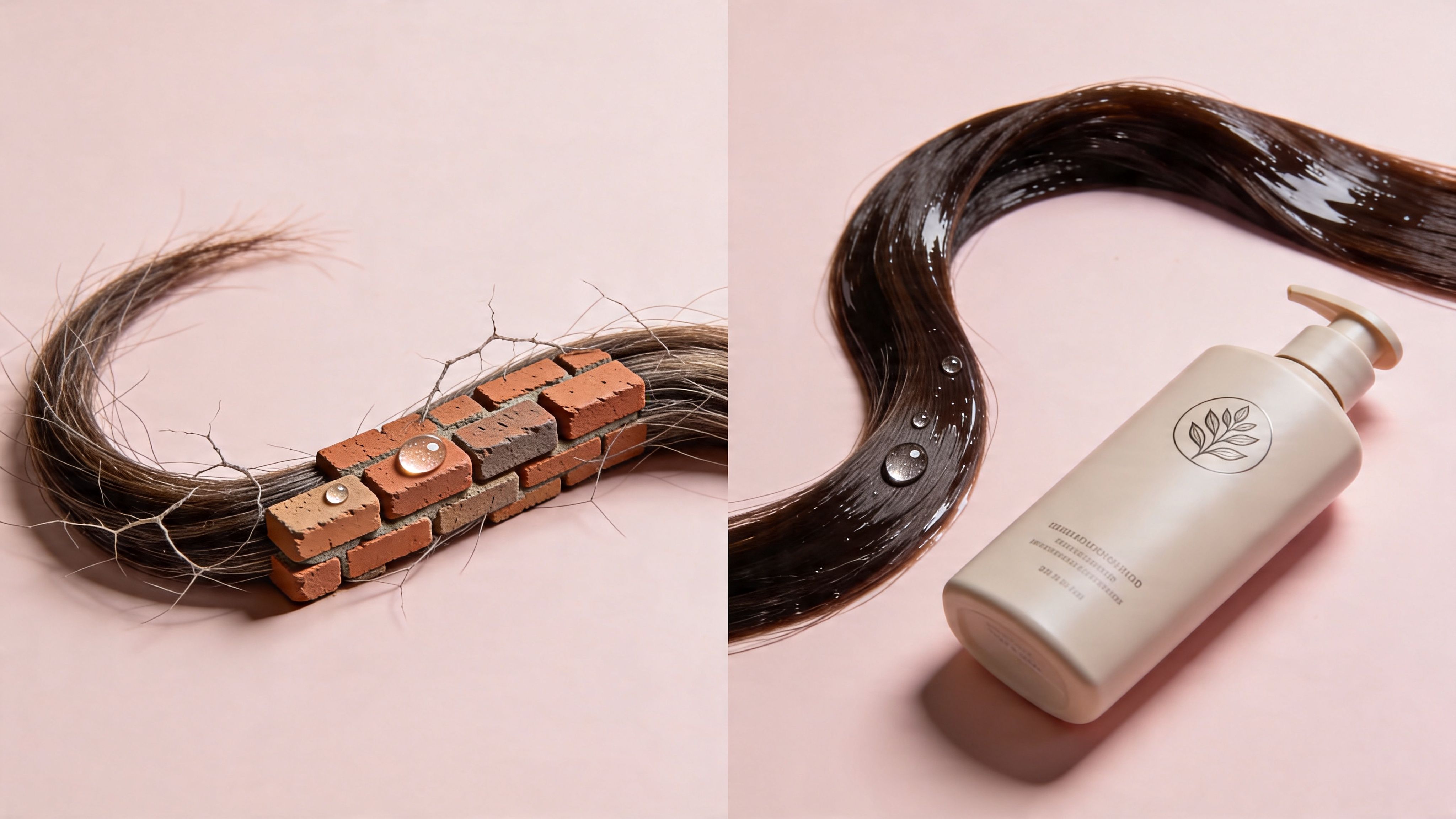
Your scalp is new growth. Your mid-lengths are older. Your ends are the oldest, driest, and most weathered part of your hair. That’s why a one-size-fits-all method often creates the classic long-hair problem: greasy roots, dry ends, and breakage in the middle.
A proper long hair care routine has to answer a few practical questions:
- How often does your scalp need cleansing? Not what social media says.
- How quickly do your lengths lose moisture? Fast-drying hair needs different support than hair that stays damp for hours.
- Do your strands need softness, strength, or both? Too much of either can leave long hair limp or brittle.
- Are you styling for smoothness, curl definition, or simple protection? The technique changes the outcome.
Good routines are built, not copied
A lot of “healthy long hair” advice is really just someone else’s hair diary. That can be useful for ideas, but not as a template. Even polished routines from beauty traditions should be adapted to your own hair. For example, this guide to a Japanese hair care routine is helpful because it emphasizes care, layering, and gentleness, but those principles still need to be adjusted for your texture, porosity, and scalp.
Practical rule: If a routine works only when you ignore how your own scalp and ends behave, it isn’t your routine.
Customizing doesn’t mean making hair care complicated. It means getting honest about what your hair is doing now, then choosing steps that solve that specific problem. That’s how you stop spending effort on habits that sound healthy but don’t help you keep length.
Understanding Your Hair Your Starting Point
Before you change products, change your diagnosis. Most routine problems start because people know their goals, but not their hair profile.
The three things that matter most are hair type, porosity, and scalp condition. Get those right, and most product decisions become easier.

Hair type changes technique
Hair type tells you how your hair behaves when left alone. Straight hair usually lets oil travel more easily from scalp to ends. Wavy hair can look smooth one day and puffy the next. Curly and coily hair usually need more intentional moisture and gentler handling because scalp oil doesn’t move down the strand as easily.
If you’re not sure whether your hair is straight, wavy, curly, or somewhere between, start with a hair type quiz that identifies your curl pattern. That matters because your washing, conditioning, detangling, and styling all change with pattern.
A few examples:
| Hair profile | Usually does better with | Usually struggles with |
|---|---|---|
| Straight to loose wave | Lightweight conditioner, focused root cleansing, minimal heavy leave-ins | Flatness, buildup, greasy roots |
| Strong waves to curls | Slip during detangling, leave-in support, lower-friction styling | Frizz, brushing damage, dry ends |
| Coily or tight curls | Richer conditioning, sectioning, protective styling | Shrinkage confusion, tangling, moisture loss |
Porosity decides product weight
Porosity is how easily your hair absorbs and holds moisture. It’s one of the most useful concepts in long hair care because it explains why one person’s “holy grail” leaves another person greasy, stiff, or dry.
Low-porosity hair tends to resist water and product at first, then gets weighed down if you layer too much. High-porosity hair tends to absorb quickly and lose moisture quickly, so it often feels rough, frizzy, or dry again soon after wash day.
You can do a rough at-home check by watching how your hair behaves:
- Low porosity signs include products sitting on top, slow drying, and easy buildup.
- High porosity signs include fast drying, frizz, rough ends, and hair that never seems to stay moisturized.
- Mixed porosity is common in long hair. Healthier roots, older porous ends.
If you want a clearer answer, use a hair porosity test to check how your hair handles moisture.
Hair length often creates mixed porosity. The roots may behave one way, the ends another. That’s why long hair often needs different products on different sections.
Your scalp sets the pace
A lot of people try to fix long-hair problems entirely with masks and oils, when the scalp is what determines whether the routine feels balanced. If your scalp is sensitive, itchy, oily, flaky, or reactive, your cleansing schedule and ingredient choices matter more than another styling cream.
A healthy routine pays attention to questions like these:
- Do you feel itchy or tight after washing?
- Do roots get oily quickly while ends stay dry?
- Do fragranced or heavy products trigger irritation?
- Do flakes show up because of dryness, buildup, or both?
If that sounds familiar, a scalp sensitivity quiz for irritation and buildup patterns can help you narrow down what your scalp is reacting to.
One more factor people forget
Density also matters. Two people can both have “curly long hair” and need very different amounts of product because one has fine, dense hair and the other has coarse, medium-density hair. Dense hair often benefits from sectioning and more deliberate application. Fine hair usually needs restraint, especially with rich butters, oils, and leave-ins.
The point isn’t to label your hair for fun. It’s to stop guessing. Once you know your type, porosity, and scalp behavior, your long hair care routine becomes a series of informed choices instead of constant experimentation.
Gentle Daily Habits to Prevent Breakage
Long hair doesn’t usually fail on wash day alone. It gets worn down in the hours between washes. Friction, rough detangling, tight styles, dry brushing, and nighttime tangles gradually undo a lot of good care.

Detangle for length retention, not speed
If you hear snapping while you detangle, you’re not “getting through knots.” You’re breaking hair.
Start from the ends and work upward in small sections. Add slip first if needed. That can be a leave-in, a lightweight detangler, or even a small amount of rinse-out conditioner on damp hair. Curly and wavy hair usually do best when detangled with more moisture and less tension. Straight hair can often handle dry detangling better, but only if the hair isn’t rough or tangled.
A better daily detangling sequence looks like this:
- Separate first: Use fingers to loosen major knots before any brush or comb touches the hair.
- Start low: Work on the last few inches first, then move higher only when that section is clear.
- Support the strand: Hold the section above the knot so you’re not pulling directly from the scalp.
- Choose the right tool: Wide-tooth combs are safer for wet textured hair. Flexible brushes can work well on conditioned, detangled lengths.
Protective styling should reduce stress
Protective styling gets oversimplified. A style is only protective if it lowers friction and tension.
Loose braids, soft twists, low buns, and tucked styles can help protect ends during work, commuting, exercise, and dry weather. But if the style pulls at the hairline, compresses damp hair for too long, or rubs aggressively against clothing, it stops being protective.
What works best often depends on texture:
| Hair behavior | Better daytime options | Watch out for |
|---|---|---|
| Fine straight or wavy | Loose low braid, low bun with soft tie | Tight elastics, backcombing |
| Frizz-prone waves or curls | Twists, loose claw-clip updos, defined wash-and-go with reduced touching | Dry brushing, repeated restyling |
| Very long textured hair | Sectioned braids or twists with low tension | Heavy styles that pull at the roots |
Sleep care matters more than most routines admit
Long hair spends hours rubbing against fabric, shoulders, and itself overnight. That’s where a lot of tangling and frizz starts.
For high-porosity or damaged long hair, nightly protection is especially important. This guide on overnight long-hair protection notes that low buns with breathable scrunchies can retain 18% more length than traditional braids, and “pineapple” styling can reduce frizz by 22% by lowering friction and overnight moisture loss.
That gives you a useful decision point:
- If braids leave you with stretched, rough ends, try a low bun with a soft, breathable scrunchie.
- If you have waves or curls that flatten and frizz overnight, try a pineapple instead.
- If your hair is very fragile, combine a loose style with satin or silk sleep protection.
A quick demonstration helps if your nighttime handling is rough or inconsistent.
Smooth hair at bedtime often starts with what you didn’t do. You didn’t yank through knots, didn’t pile on sticky products, and didn’t sleep on a style that crushed the same weak spots every night.
Your daily checklist
Keep the in-between days simple:
- Refresh lightly: Add only enough product to restore slip or shape.
- Touch less: The more you handle long hair, the more frizz and wear you create.
- Protect ends: They’re the oldest part of the strand and the first to split.
- Avoid tight repeats: Don’t place the same bun or ponytail in the exact same spot every day.
Small habits decide whether your hair keeps the inches it grows.
Mastering Your Long Hair Wash Day Routine
Wash day should clean the scalp, soften the lengths, and leave your hair easier to manage for the next several days. If it leaves you squeaky, tangled, coated, or limp, the sequence is off.
Start before the shampoo
Not every wash needs a pre-treatment, but long hair often benefits from one when the ends feel rough or the hair tangles easily. The key is choosing the right kind.
If your issue is surface dryness and friction, a light pre-wash oil or serum on the lower lengths can help reduce mechanical stress during cleansing. If your issue is obvious damage from color or heat, a bond-supporting treatment may fit better than more oil. Don’t throw both at the hair every time just because they sound healthy.
A useful rule of thumb:
- Use oil or a smoothing pre-wash layer when hair feels rough, catches on itself, or loses slip.
- Use repair-focused treatments when hair feels weak, overly stretchy, or compromised from chemical or heat stress.
- Skip both when hair already feels balanced and manageable.
Clean the scalp well, but don’t scrub the lengths
One of the most persistent myths in long hair care routine advice is that washing less is always healthier. That isn’t automatically true. Consumer and epidemiological findings summarized here show that washing 5 to 6 times per week leads to peak satisfaction with hair and scalp condition, and daily washing can deliver over 5 “great hair days” per week by reducing sebum buildup and oxidation.
That does not mean every person with long hair should wash daily. It means forced wash-stretching isn’t a virtue by itself.
Use this wash-frequency framework
Your best schedule usually depends on scalp oil, exercise, product use, and hair texture.
| If your scalp does this | Your routine usually works better with |
|---|---|
| Gets oily quickly, especially at the crown | More frequent cleansing with a gentle shampoo |
| Feels comfortable for several days | Fewer washes, but still regular scalp cleansing |
| Gets flaky or reactive with buildup | Consistent cleansing and careful product selection |
| Has dry ends but a normal-to-oily scalp | Root-focused shampooing and stronger conditioning only on lengths |
If you need guidance for product weight and cleansing cadence, this low porosity hair routine guide is especially helpful for hair that gets heavy easily and doesn’t tolerate rich layering well.
The wash-day sequence that usually works
A clean sequence matters more than owning a shelf full of products.
- Fully saturate the hair. Long hair needs more water than often assumed before shampoo spreads evenly.
- Shampoo the scalp first. Focus on scalp, hairline, and behind the ears. Let the rinse carry cleanser through the lengths instead of piling shampoo onto the ends.
- Repeat only if needed. If you use heavy stylers, oils, dry shampoo, or go longer between washes, a second cleanse may help.
- Condition mid-lengths and ends. That’s where long hair usually needs softness and slip most.
- Detangle while conditioned if your hair tangles easily. This is especially useful for wavy, curly, or damaged lengths.
- Rinse according to your goal. A thorough rinse gives more bounce. A slight residue can leave very dry textured hair softer.
Wash-day check: Your scalp should feel clean, not stripped. Your lengths should feel flexible, not coated.
Conditioner placement matters
A lot of long-hair heaviness comes from applying rich conditioner too close to the scalp. That creates flat roots without helping the oldest part of the hair.
Keep richer formulas on the lower half of the hair unless your texture is very dry from root to tip. Often, the best target zone is from ears downward, with extra attention to the last several inches.
Learn the difference between protein and moisture problems
At this point, many routines go off course.
Hair that needs moisture often feels rough, frizzy, and thirsty. Hair that has too much strengthening input can feel stiff or brittle. Hair that is over-soft can feel limp, mushy, or hard to style. Those issues don’t all need the same mask.
If your hair feels strong but unyielding, test whether your routine is too protein-heavy with a protein overload hair check. If you’re unsure whether your products are loaded with harsh cleansers, drying alcohols, or heavy silicones that don’t suit your preferences, you can analyze your ingredients with the checker.
Finish with less friction
The post-wash window is where long hair is easiest to damage. Don’t twist aggressively with a rough towel. Press out water instead. Then apply leave-in only where it helps. Fine hair usually needs lighter sprays or milks. Coarser or more porous hair can often handle creams or richer leave-ins on the ends.
Good wash day doesn’t feel dramatic. It just leaves your hair easier to live with until the next one.
Deep Treatments Your Weekly and Monthly Resets
Daily and wash-day care keep long hair functioning. Deep treatments keep it from slowly declining.
Long hair usually needs two kinds of resets. One adds softness and slip back into weathered lengths. The other removes the buildup that makes hair feel dull, coated, or resistant to moisture. The mistake is using the same mask every time and calling that a treatment plan.

How to deep condition properly
Application technique changes the result. Many people deep condition long hair badly by slapping product on soaking wet strands, leaving it on for a few minutes, and hoping for salon-level softness.
A better method follows the structure described in this deep-conditioning guide: apply treatment to sectioned, damp hair, use a warm towel for 10 to 30 minutes to boost cuticle absorption by 60%, then rinse with cool water, which can lock in 80% more hydration. Over 8 weeks, this approach is associated with an 85% reduction in frizz and breakage.
Make the treatment fit the problem
Use this simple distinction when choosing your weekly or occasional reset:
- Moisture masks suit hair that feels dry, rough, tangly, or frizzy.
- Protein or strengthening treatments suit hair that feels weak, overly stretchy, or compromised by repeated color or heat.
- Clarifying washes suit hair that suddenly feels lifeless, coated, hard to wet, or strangely dry despite adding more conditioner.
A practical treatment schedule
Long hair usually responds well when you rotate instead of stacking everything at once.
| Hair condition | Weekly focus | Occasional reset |
|---|---|---|
| Dry but not badly damaged | Moisture mask | Clarify when hair starts feeling coated |
| Color-treated or high-porosity | Moisture most weeks, strengthening as needed | Clarify before deep treatment when buildup blocks results |
| Fine hair with buildup | Light conditioner or lighter mask | Clarify sooner, use rich masks more carefully |
| Curly or very frizz-prone | Deep moisture with heat support | Clarify when curls lose definition and products stop performing |
If your ends stay rough no matter what you use, a dedicated high porosity hair routine can help you decide whether the issue is moisture loss, damage, or product mismatch.
Warmth helps many deep treatments perform better. Excess product doesn’t. Sectioning and placement matter more than using a huge scoop.
What not to do
A few common mistakes waste good products:
- Applying heavy masks at the roots: This often leaves the scalp flat or irritated without improving the ends.
- Deep conditioning over heavy buildup: If the strand is coated, the mask may sit on top instead of helping.
- Using strengthening products every wash: Long hair needs resilience, but too much structure can make it feel hard and brittle.
- Ignoring rinse quality: If you never rinse thoroughly, even a good mask can turn into residue.
Monthly resets are where long hair gets back on track. If the routine feels confusing, simplify it by assigning each treatment a job. One for hydration. One for strength when needed. One for clearing buildup. That’s how deep care stays useful instead of random.
Personalizing Your Routine and Fixing Common Problems
A lot of long-hair advice still assumes smooth, straight hair is the default. That’s why so many people with waves and curls keep getting told to brush more, oil more, or wash less, even when those habits make their hair worse.
That one-size-fits-all model doesn’t hold up well for textured long hair. Searches for “long curly hair routine” have spiked 40% year over year, yet most online advice still skews straight-hair focused, and long curly hair retains 25% more length with silicone-free, scalp-first routines. If your hair is textured, copying straight-hair habits can cost you length.
Wavy and curly long hair need different handling
Frequent brushing may polish straight hair. On waves and curls, it often breaks up definition, lifts the cuticle, and creates a halo of frizz. Heavy oils can help some coarse textures, but they can also sit on the hair, dull definition, and make wash day harder if the rest of the routine doesn’t support them.
If your hair is textured, a curly hair routine built around your pattern and porosity is usually more useful than generic “grow your hair faster” advice.
A few practical adjustments make a real difference:
- Low-porosity waves: Keep leave-ins light, avoid over-layering, and don’t assume dryness means you need richer products.
- High-porosity curls: Prioritize slip, sealing support, and lower-friction drying and sleep care.
- Fine textured hair: Choose hold and definition without too much butter or oil.
- Coarse textured hair: You can usually tolerate richer conditioners and more structured protective styling.
Fix the symptom by finding the cause
When a long hair care routine isn’t working, the symptom is usually obvious. The cause often isn’t.
| Problem | Common cause | Better fix |
|---|---|---|
| Frizz all the time | Dryness, rough handling, or poor product match | Improve conditioning, reduce friction, adjust leave-in weight |
| Breakage at the ends | Old damage, rough detangling, weak sleep habits | Trim damaged tips, detangle gently, protect at night |
| Greasy roots and dry ends | Treating the whole head the same | Cleanse scalp based on need, condition only lengths |
| Hair feels stiff | Too much buildup or too much strengthening support | Clarify, then reassess treatment balance |
| Hair feels mushy or limp | Over-conditioning or too much heavy layering | Use lighter products and reduce mask frequency |
If your routine keeps creating opposite problems at once, such as oily roots and brittle ends, your placement is probably wrong before your products are wrong.
Extensions need their own rules too
If part of your length comes from added hair, you have another variable to manage. Extension care often needs different brushing, washing, and sleeping habits than natural long hair. If that applies to you, this practical guide on how to take care of extensions is worth reading before you copy a routine designed only for natural strands.
Audit the routine you already have
Before you buy anything new, look at what your current routine is doing:
- Which step leaves your hair worse, not better?
- Are you using rich products near the scalp?
- Are you layering products that solve the same problem?
- Are you trying to fix damage with styling products instead of treatment changes?
This kind of troubleshooting works best when you look at the whole routine, not one product at a time. A hair care routine analyzer that reviews your full routine can help you spot patterns like over-conditioning, buildup, or ingredient mismatch more quickly than trial and error.
Personalization doesn’t mean a complicated shelf. It means every step has a reason. When that happens, long hair gets easier to manage and much easier to keep.
Your Journey to Healthy Long Hair Starts Now
Healthy length doesn’t come from copying the longest-haired person on your feed. It comes from matching your routine to your hair, then repeating the basics consistently enough for them to work.
That means knowing how your scalp behaves. It means treating your ends like the oldest, most fragile part of the strand. It means washing often enough for comfort, conditioning with intention, and using deep treatments for a specific job instead of out of habit. Most of all, it means building a long hair care routine that fits your texture, porosity, and damage level instead of fighting them.
You don’t need a dozen random tips. You need a routine that makes sense from root to ends.
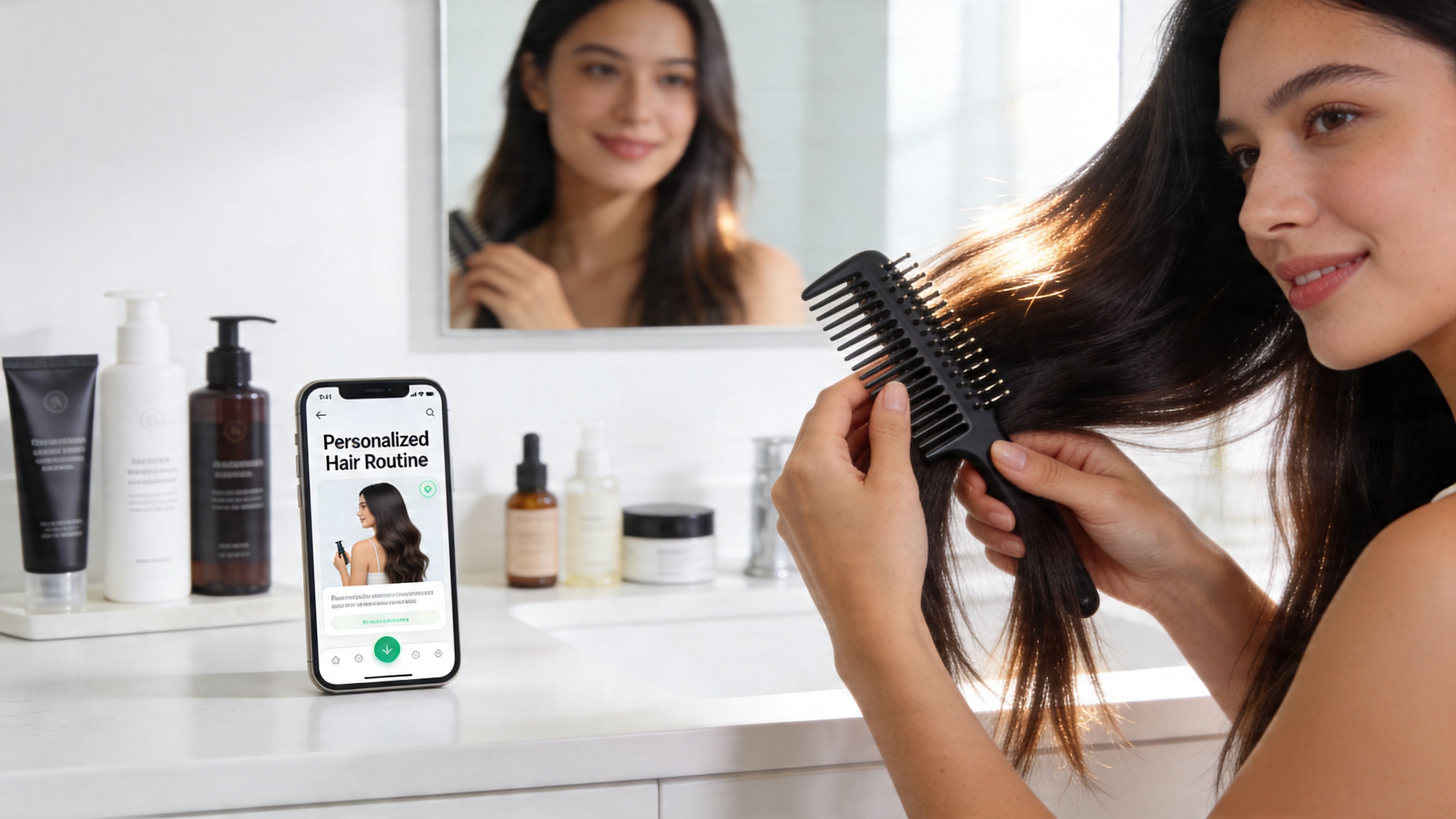
If you want to stop guessing, try IsItClean. You can build your personalized hair routine in under two minutes based on your hair type, porosity, scalp needs, and goals. It’s the fastest way to turn all of this advice into a routine you’ll use.