Your hair feels dry again by midweek. The ends look fuzzy, the length feels rough, and every product promising “intense moisture” seems to work for a day, then disappear.
I know that cycle well. Dry hair can make you feel like you're doing a lot and getting nowhere. You buy a mask, add an oil, cut back on heat, and still end up with strands that feel thirsty.
The turning point usually isn't finding one miracle bottle. It's understanding why your hair is losing moisture, then building a dry hair care routine that matches that reason. That's where the science becomes useful, not intimidating.
Beyond the Bottle Understanding Why Your Hair Is Dry
Dry hair isn't one problem. It's a symptom.
Sometimes the issue starts at the scalp, where there isn't enough sebum traveling down the hair shaft. Sometimes the problem is physical damage to the outer layer of the strand. Sometimes it's the routine itself, especially if you're washing too often or using formulas that leave hair stripped instead of clean.

Your cuticle is the moisture gatekeeper
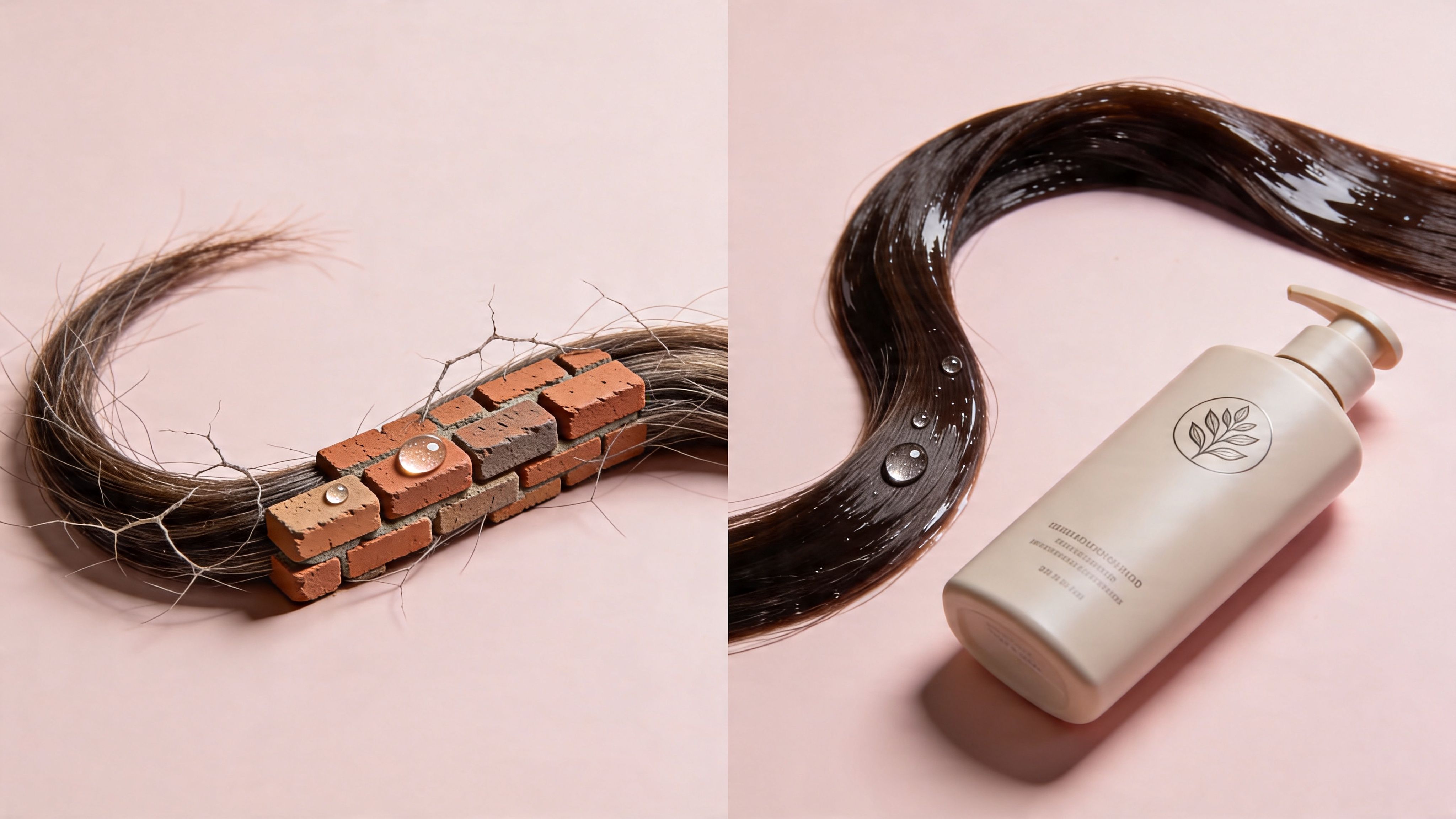
Think of the hair cuticle like overlapping roof shingles.
When those layers lie relatively flat, water stays in better, light reflects more evenly, and hair feels smoother. When those layers lift or chip, moisture escapes more easily. Hair starts feeling rough, tangles faster, and frizz shows up even when you just conditioned it.
Common triggers include:
- Heat styling that repeatedly dries out the outer layer
- Chemical processing like color, bleach, relaxers, or perms
- Environmental exposure such as sun, wind, and dry air
- Overwashing with harsh cleansers
- Product mismatch like heavy coatings on hair that needs water and light conditioning
Dry hair often isn't “missing oil” alone. It's also struggling to hold onto water.
That distinction matters. Oil can help reduce moisture loss, but it doesn't replace hydration by itself.
Why porosity changes everything
If you've ever said, “My friend uses this exact routine and her hair looks amazing, but mine gets worse,” porosity is often the missing answer.
Hair porosity describes how easily your hair takes in and loses moisture. High-porosity hair usually absorbs water quickly but loses it fast. Low-porosity hair often resists water at first, then gets product buildup if formulas sit on top instead of sinking in.
That's why dryness can look different from person to person.
- High porosity often feels dry soon after wash day, gets frizzy fast, and benefits from richer sealing.
- Low porosity can still be dry, but often needs lighter layers, more water, and less product sitting on the surface.
If that's sounding familiar, it helps to learn the difference before buying anything else. A routine made for porous, thirsty strands won't behave the same on resistant, easily weighed-down hair. If low-porosity dryness sounds like you, this low porosity hair routine guide shows how to keep hydration from turning into buildup.
Dryness can also point inward
Most dry hair comes down to structure, environment, and routine. But if your hair changes suddenly, feels unusually fragile, or you're also noticing broader body changes, it may be worth looking beyond styling habits.
In some cases, hair dryness can overlap with broader wellness concerns like potential nutrient deficiencies, especially if you're seeing changes in nails, energy, or skin at the same time.
Washing frequency matters more than many people realize
A lot of people with dry hair are still treating shampoo like a daily reset button.
According to the American Academy of Dermatology, individuals with dry, textured, or curly hair should shampoo only as needed, sometimes as little as once every 2 to 3 weeks, to preserve the scalp's natural oils and prevent further dehydration (AAD guidance).
That doesn't mean everyone with dry hair should wait weeks between washes. It means your routine should respect your natural oil balance instead of stripping it by default.
The real goal
You don't need to chase softness with random products. You need a system that answers a few basic questions:
- Is your hair losing water too fast?
- Is the cuticle damaged or raised?
- Is your hair low porosity, high porosity, or somewhere in between?
- Are your products moisturizing, coating, or inadvertently drying your hair out?
Start there. The more accurately you identify the cause, the easier it becomes to build a dry hair care routine that holds.
The Three Pillars of a Moisture-First Hair Routine
A useful dry hair care routine rests on three habits, not twelve. If these are weak, the rest doesn't matter much.
Those habits are gentle cleansing, deep conditioning, and sealing moisture into damp hair.
Gentle cleansing
Dry hair still needs cleansing. The mistake is using shampoo like a degreaser.
Your scalp collects sweat, oil, and residue. But your mids and ends usually don't need aggressive washing. In many cases, shampoo belongs mainly on the scalp, with the lather moving down the length during rinsing.
If your hair is very dry, textured, curly, or coily, gentler schedules usually work better than frequent full-length washes. The broader logic behind the capillary schedule also supports this. The protocol is built around the idea that consistent hydration can prevent up to 80% of dryness-related issues by replacing the water hair loses daily (capillary schedule reference).
That principle is simple. Hair that keeps losing water needs repeated replenishment, not harsher cleansing.
A good cleanser for dry hair should leave your scalp clean without making the length feel squeaky, straw-like, or tangled right after rinsing.
Deep conditioning
Regular conditioner helps with slip and surface softness. A deep conditioner does more.
It gives the hair more time, more concentration, and usually better support from ingredients that help soften, smooth, and reduce roughness. If your hair dries hard, puffs up after washing, or feels decent only while wet, this step is usually underpowered.
What many people miss is consistency. Dry hair responds better to repeated care than rescue treatments.
Practical rule: If your hair feels soft on wash day but brittle two days later, your routine probably isn't holding moisture between washes.
Sealing
This is the step that gets oversimplified online.
Sealing doesn't mean drenching your hair in oil. It means applying something after hydration to reduce how quickly water escapes. That “something” might be a lightweight serum, a cream, a leave-in, a butter, or an oil, depending on your hair type and porosity.
The sequence matters. Water or a water-based product first, then your sealing layer.
If your hair feels dry and greasy at the same time, you're often looking at surface coating without real hydration underneath.
What to look for on labels
You don't need to memorize cosmetic chemistry. You just need a filter.
Here’s a simple shopping guide for a dry hair care routine:
| Ingredient Type | Look For (Hydrating) | Avoid (Drying) |
|---|---|---|
| Humectants | Glycerin, hyaluronic acid | Formulas where drying alcohols dominate early in the list |
| Emollients | Shea butter, avocado oil, jojoba oil | Very harsh cleansing systems if your hair already feels stripped |
| Conditioning agents | Leave-in conditioners, rich masks, softening creams | Products that leave hair squeaky and tangled right after use |
| Cleansers | Sulfate-free shampoo, gentler wash formulas | Sulfates if your hair is already chronically dry |
| Finishers | Lightweight oils or creams matched to your porosity | Heavy layers that sit on the hair and create dull buildup |
If you're unsure what a product is doing, use the IsItClean Ingredient Checker to analyze your ingredients and spot drying alcohols, sulfates, silicones, or other mismatch issues.
The order matters more than the hype
A lot of expensive routines fail because the steps are out of order.
- Cleanse first so hydration isn't blocked by heavy residue
- Condition thoroughly so the strand gets softness and flexibility back
- Seal after moisture so your hair holds onto what you added
That sequence sounds basic, but it changes results. Dry hair usually doesn't need more random products. It needs better timing, less stripping, and layers that work together.
Your Weekly and Daily Dry Hair Care Regimen in Action
A solid dry hair care routine should feel repeatable. If it's too complicated to maintain, it won't help for long.
This shows how that might appear across a week.

Wash day that protects instead of strips
Wash day should leave your hair balanced, not exhausted.
A practical sequence looks like this:
Optional pre-wash prep
If your ends get very rough during shampooing, apply a little oil or conditioner to the length before washing. This can reduce the harsh feeling that some dry hair gets during cleansing.Cleanse the scalp
Focus shampoo on the roots and scalp. Massage gently with fingertips, then let the rinse carry the cleanser downward.Remove excess water
Before deep conditioning, your hair shouldn't be dripping. Gently towel-dry so the treatment can sit on the strand instead of sliding off.Apply deep conditioner thoroughly
Work section by section, especially from mid-lengths to ends.Add gentle warmth
For damaged hair, applying a deep treatment to towel-dried hair and covering it with a warm towel for 10 to 30 minutes allows for 40% deeper penetration into the hair cuticle compared with application without heat (forhers deep conditioning guidance).Rinse and style on damp hair
Don't wait until your hair is fully dry to start layering moisture.
If you're comparing products for this step, a curated guide to best hair masks for dry damaged hair can help you think through mask textures and repair-focused options before you buy.
What “damp hair” really means
This is one of the biggest confusion points.
Damp hair is not soaking wet and not almost dry. It still contains enough water to support a leave-in or moisturizer, but not so much that products just slide off.
That middle stage matters because your styling products can form a more even layer.
If you apply your leave-in too late, you're often trying to moisturize hair that's already started drying out.
Non-wash days are where moisture retention happens
The focus tends to be on wash day because it feels productive. But dry hair usually wins or loses on the days after.
On non-wash days, try this decision process:
If hair feels a little dry but still soft
Use a light mist or a small amount of leave-in on the driest areas only.If hair feels rough and expanded
Add water first, then a moisturizer, then a small amount of sealant.If hair feels coated and dull
Skip the oil. You may need less product, not more.
For very porous hair that loses softness quickly, a richer routine often works better than a minimalist one. This high porosity hair routine is a useful reference for choosing denser layers without going straight into buildup.
A simple layering method
The LOC or LCO method can work well for dry hair. The letters stand for liquid, oil, cream or liquid, cream, oil.
You don't need to treat that as law. Treat it like a test.
- Lighter hair that gets weighed down easily often prefers a lighter cream or a very small amount of oil.
- Coarser or more porous hair may hold moisture longer with a richer cream before or after oil.
What matters is that you don't start with oil alone.
Later in the week, if you want a visual refresher on handling dry strands gently, this can help:
Night care is part of the routine
A lot of breakage shows up in the morning, not because your products failed, but because sleep created friction.
Try these small changes:
- Use a silk or satin surface so the cuticle isn't dragged all night
- Loosely secure longer hair in a braid, pineapple, or low twist
- Avoid sleeping on stiff product casts if your hair gets crunchy and matted overnight
A sample rhythm
Not every head of hair needs the same schedule, but this pattern works as a starting point:
| Day | Focus |
|---|---|
| Wash day | Cleanse scalp, deep condition, apply leave-in and seal on damp hair |
| Day after | Leave it alone unless specific areas feel dry |
| Midweek | Refresh with water or light moisturizer, then seal lightly if needed |
| Later in week | Protective styling, low manipulation, monitor ends |
| Next wash day | Adjust based on what happened, not what the label promised |
The goal isn't perfection. It's reducing the cycle where hair gets fully reset, then fully dehydrated, over and over again.
How to Personalize Your Routine by Hair Type and Porosity
The most frustrating routines are often built for “dry hair” as if that describes one kind of strand. It doesn't.
Fine, low-porosity hair and coarse, high-porosity hair can both feel dry, but they usually don't need the same texture, timing, or treatment frequency.

If your hair is fine or low porosity
This hair type often struggles with product sitting on top.
The hair may feel dry, but heavy masks and thick oils can leave it limp before they leave it soft. In that case, the better move is usually lighter hydration with careful layering.
A low-porosity routine often works best with:
- Lightweight leave-ins
- Moderate use of oils
- Heat or steam during conditioning
- Less frequent heavy masks if they create buildup
If your strands seem to take forever to get wet and forever to dry, that's a clue.
If your hair is coarse or high porosity
This pattern often absorbs product quickly, then loses softness quickly too.
Hair may feel soft when wet but rough after drying. Ends may look frayed even right after styling. This type usually benefits from richer leave-ins, creamier masks, and stronger sealing after moisture.
The challenge isn't getting product in. It's keeping hydration from escaping.
Hair type changes the feel of dryness
Curl pattern matters because natural scalp oil doesn't travel as easily down bends and coils.
That's why curly and coily hair often needs more intentional moisture support than straighter hair, even when the scalp itself isn't dry. If that sounds like your pattern, a dedicated curly hair routine can help you adapt product texture, layering, and wash frequency more precisely.
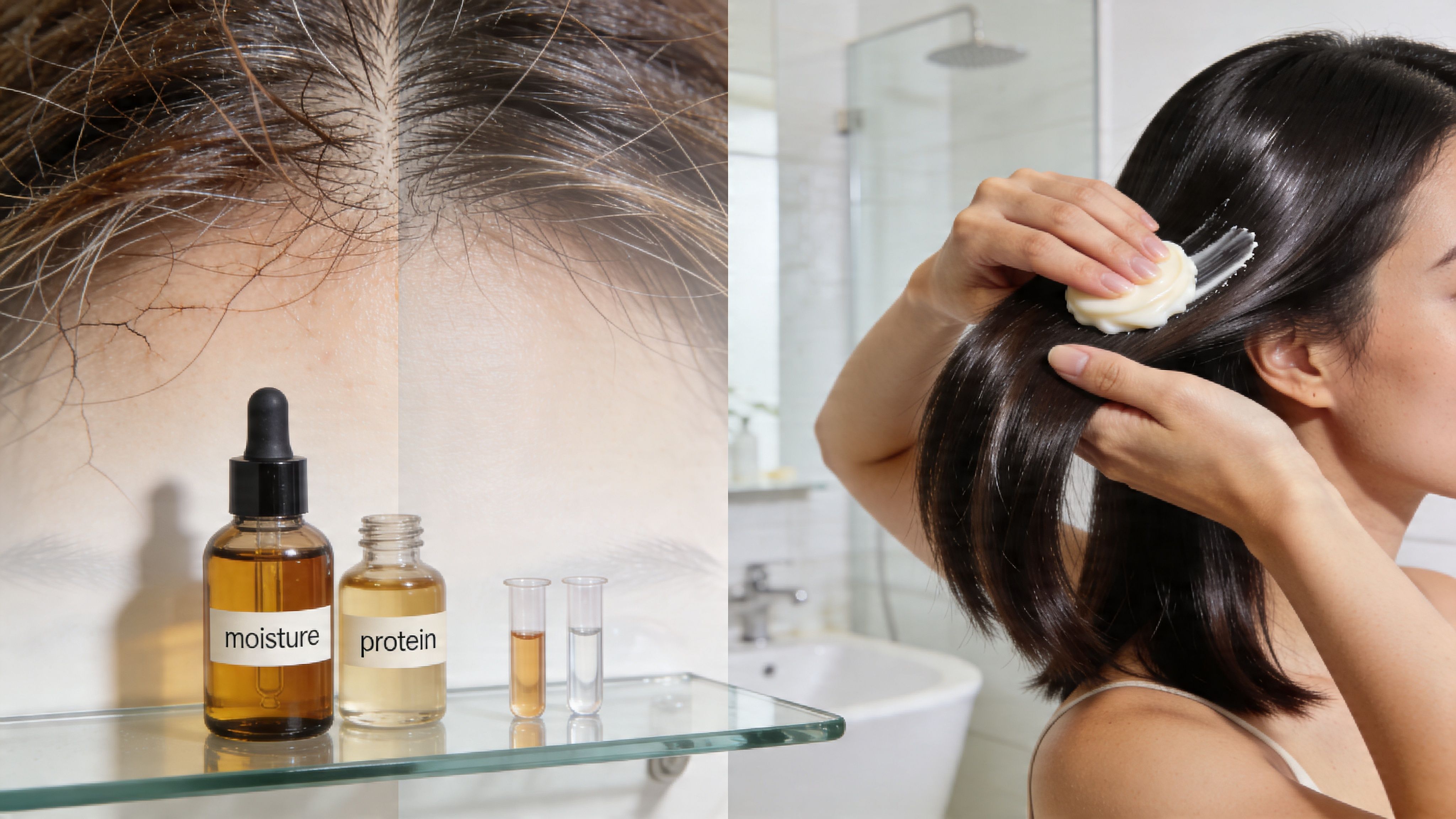
Protein and moisture need balance
Some dry hair isn't asking for more moisture alone.
If your hair feels stiff, crunchy, oddly hard after treatments, or snaps instead of stretching, protein overload may be part of the picture. Trichologist insights show that 30% to 40% of dry hair cases in curly and wavy consumers stem from a protein-moisture imbalance, where overuse of protein treatments on porous hair leads to stiffness and breakage (Healthline reference).
That's one reason “repair” products can confuse people. A formula marketed for damage may help one person and make another person's hair feel worse.
Check this pattern: soft and mushy hair often needs structure, while hard and brittle hair often needs moisture and less protein.
A simple way to customize
If you're not sure where to begin, think in pairs.
Texture plus porosity tells you product weight.
Behavior plus feel tells you whether to emphasize protein or moisture.
Here are a few examples:
Fine + low porosity + flat after conditioning
Use lighter conditioners and minimal sealing.Curly + high porosity + frizz returns fast
Focus on stronger moisture layering and richer sealants.Wavy + porous + hair feels crunchy after bond or protein products
Reduce protein frequency and increase moisture follow-up.
Questions that help you choose better
Ask yourself:
- Does my hair absorb water quickly or resist it?
- Does it dry soft and then turn rough, or stay coated all day?
- Do rich masks help, or do they just make my hair heavy?
- Does “repair” make my hair stronger, or stiffer?
Those answers are more useful than trend-based routines. Personalization isn't about doing more. It's about removing what doesn't fit.
Troubleshooting When Your Routine Is Not Working
Sometimes a routine is close, but one mistake keeps canceling the rest.
If your hair feels greasy and dry
This usually means your products are sitting on the outside without enough water underneath.
Check for these issues:
- Too much oil too early on hair that wasn't properly damp
- Creams that are too rich for your density or porosity
- Layering new product on old buildup instead of refreshing with water first
A major reason this happens is simple. Applying sealing oils to completely dry hair gives zero moisture lock-in, while moisture retention success jumps by 80% when moisturizing and sealing products are applied to damp hair first (YouTube reference).
If frizz won't go away
Persistent frizz doesn't always mean “not enough product.”
It can mean uneven application, too much touching during drying, poor nighttime protection, or moisture leaving the strand too quickly after styling. It can also mean your sealing step is too light for your porosity.
Frizz is often your hair showing you that moisture didn't stay where you put it.
If your hair feels dry and crunchy
Look closely at repair products, bond treatments, and protein-heavy masks.
If the hair feels harder after treatment, gets brittle at the ends, or snaps more easily, pull back on protein and return to softer, moisture-focused conditioning. Dryness that feels “crispy” is different from dryness that feels limp.
If everything feels random
When results swing from soft one week to terrible the next, simplify.
Use one cleanser, one conditioner or mask, one leave-in, and one sealant for a few wash cycles. Change only one variable at a time. That's how you learn what your hair is reacting to.
Build Your Perfect Dry Hair Routine Today
You finish wash day, your hair feels soft, and for a moment it seems like you finally fixed the problem. By the next morning, the ends feel rough again, the surface looks dull, and you are left wondering which product failed. I know that cycle well. Dry hair can feel unpredictable until you start treating it like a diagnosis problem instead of a shopping problem.
A good routine starts with the reason your hair is drying out.
Porosity changes how quickly water enters and leaves the strand. Protein balance affects whether hair feels stretchy and weak or stiff and brittle. Cleansing habits, heat exposure, buildup, and styling choices all shape how your hair holds moisture through the week. Once you identify the main cause, choosing products gets much simpler, because you are matching the routine to the behavior of your hair instead of reacting to symptoms.
That is why the best routines often look plain on paper. They are repeatable. They are easy to adjust. They work like a basic skin care plan. Clean gently, condition thoroughly, protect what you added, then watch how your hair responds before changing anything.
If you want a faster way to organize all of that, build your personalized hair routine based on your hair type, porosity, and goals.
If you want broader support beyond the routine builder, try IsItClean for ingredient checks and product screening so you can choose steps that fit your actual dryness pattern, not generic advice.