Tired of watching your hair break faster than it grows? The journey to long, healthy hair isn't about a single magic product, but a complete strategy that combines scalp health, personalized care, and smart nutrition. Many common practices and popular ingredients unknowingly sabotage your efforts, leading to a frustrating cycle of split ends and slow growth. This guide moves beyond generic advice to provide a science-backed roundup of actionable tips for healthy hair growth.
We'll explore the 'why' behind each strategy, from mastering your hair's unique porosity to decoding ingredient labels and building a routine that actually works. You will learn how to balance protein and moisture, choose clean cleansers, minimize heat damage, and nourish your hair from the inside out. Understanding these core principles is the key to creating a sustainable environment for growth, regardless of your hair type. Whether you have curly, wavy, straight, or color-treated hair, these insights will empower you to break through growth plateaus and prevent breakage effectively.
Ready to build a foundation for resilient, visibly longer hair? A great first step is to build your personalized hair care routine to ensure every product you use is aligned with your goals. By understanding your specific needs, such as your hair's porosity which you can discover with a quick hair porosity test, you can finally stop guessing and start seeing real results. This list will give you the tools and knowledge to take control of your hair's health and unlock its true potential.
1. Balance Protein and Moisture in Your Hair Routine
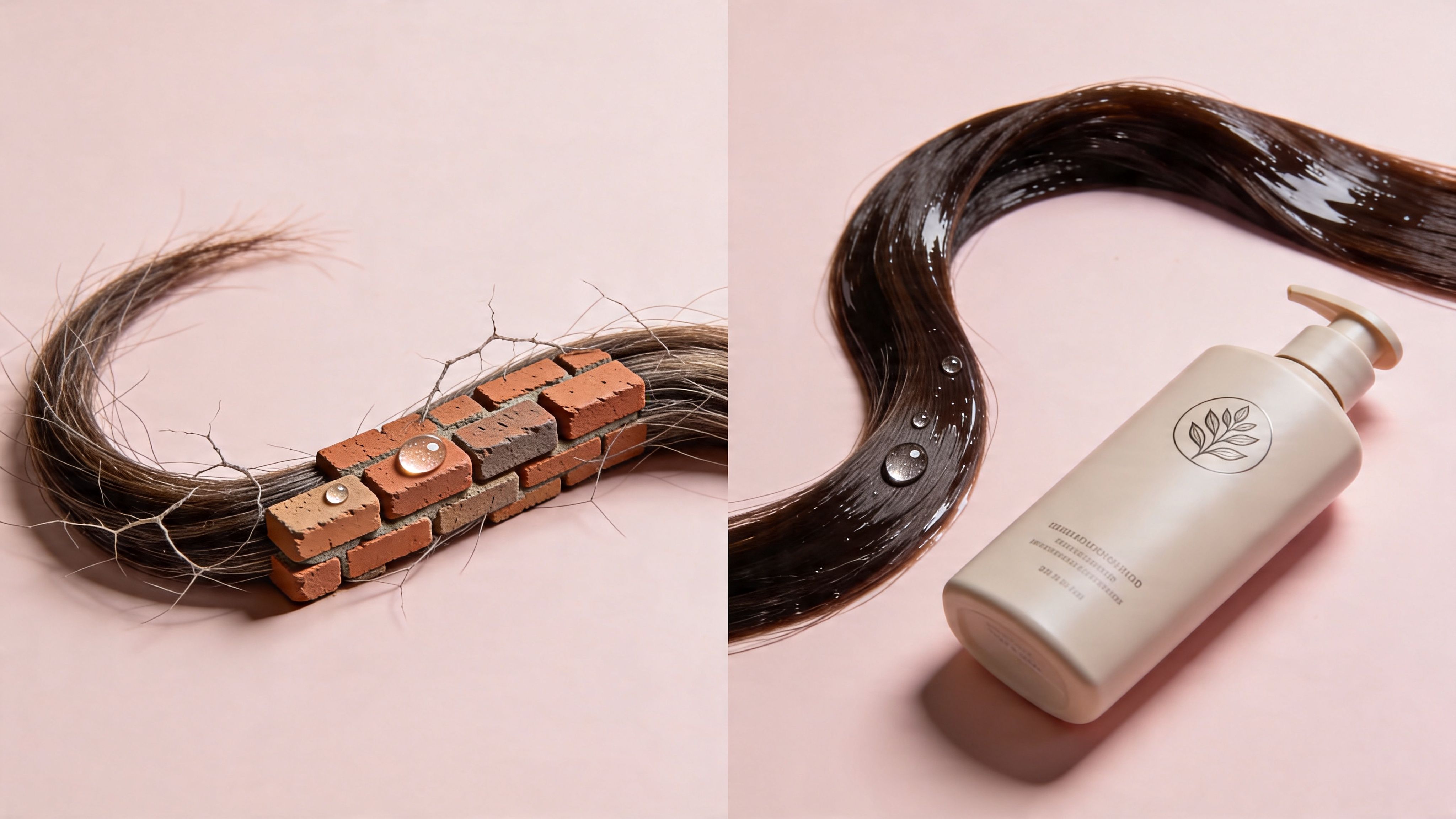
Achieving your hair growth goals often comes down to a delicate balancing act: the relationship between protein and moisture. Think of your hair strands like a brick wall. Moisture is the water that keeps the bricks (your hair's keratin structure) supple and prevents them from becoming dry and brittle. Protein acts as the mortar, filling in cracks and gaps in the hair's cuticle layer, reinforcing its structure and adding elasticity. One of the most effective tips for healthy hair growth is learning how to provide your hair with the right amount of both.

When this balance is off, you’ll notice it. Too much protein without enough moisture leads to stiff, straw-like hair that snaps easily, a condition known as protein overload. Conversely, too much moisture without sufficient protein results in mushy, overly soft, limp hair that stretches excessively before breaking, often called hygral fatigue. Both scenarios cause breakage, which directly prevents you from retaining length and seeing progress.
Key Insight: Your hair's needs are not static. Factors like your hair's porosity, chemical treatments (like color or relaxers), and even environmental humidity can shift the ideal protein-moisture ratio.
How to Achieve the Right Balance
Finding your hair’s ideal equilibrium requires observation and a little experimentation. A good starting point for many is a routine that prioritizes moisture over protein, such as a 70% moisture and 30% protein focus.
- For High Porosity or Damaged Hair: This hair type has gaps in the cuticle and loses moisture quickly, so it often benefits from more frequent protein treatments. Try a weekly protein mask followed by a moisturizing deep conditioner. Using a protein-rich conditioner and a moisturizing leave-in can also provide a steady balance.
- For Low Porosity Hair: This hair type has a tightly bound cuticle, making it prone to protein buildup. Focus heavily on moisture and use protein treatments sparingly, perhaps once a month or as needed.
- For Curly and Wavy Hair: These hair types are naturally drier and benefit from alternating between moisturizing deep conditioners and strengthening protein treatments. A common routine is to deep condition for moisture one week and use a light protein treatment the next.
If you suspect an imbalance but aren't sure which way your hair is leaning, you can take the Protein Overload Test on IsItClean. To implement a balanced routine, you can also analyze your current products to identify which provide protein, moisture, or both, ensuring you never unknowingly overload your hair with one or the other.
2. Use Clean, Sulfate-Free Cleansing Products
The foundation of any effective hair care routine is how you cleanse your scalp and hair. One of the most impactful tips for healthy hair growth is to switch to clean, sulfate-free cleansers. Sulfates, particularly harsh ones like sodium lauryl sulfate (SLS) and sodium laureth sulfate (SLES), are powerful detergents that create a rich lather but can strip your hair and scalp of their natural protective oils. This aggressive cleansing action can lead to a cascade of problems including dryness, increased breakage, and scalp irritation, all of which disrupt the healthy hair growth cycle.
Sulfate-free shampoos use gentler cleansing agents, like cocamidopropyl betaine or various plant-derived surfactants, to remove dirt, oil, and product buildup without compromising your hair's natural moisture barrier. Preserving these oils is critical for keeping strands flexible, resilient, and less prone to snapping. For those with color-treated, curly, or damaged hair, where moisture retention is already a challenge, eliminating sulfates can be a game-changer, often resulting in improved vibrancy and curl definition.
Key Insight: A healthy scalp is the bedrock of hair growth. Irritation and inflammation caused by harsh sulfates can damage hair follicles and impede their ability to produce strong, healthy hair. A gentle, sulfate-free approach supports a balanced scalp environment.
How to Make the Switch to Sulfate-Free
Transitioning to a sulfate-free routine is straightforward, but a few key steps can ensure you get the best results without experiencing issues like buildup.
- For Curly and Wavy Hair: Many people with curls see a dramatic reduction in frizz and an enhancement of their natural curl pattern within a few weeks of ditching sulfates. Because sulfate-free shampoos are gentler, they can be used more frequently without causing dryness.
- For Color-Treated Hair: Sulfates are notorious for stripping hair color. By using a sulfate-free cleanser, you can often extend the life and vibrancy of your hair color by several weeks, reducing the need for frequent touch-ups that cause further damage.
- For Sensitive or Flaky Scalps: If you struggle with itching or dandruff, the irritating nature of sulfates might be a contributing factor. A quick scalp sensitivity quiz can help you determine if your scalp needs special care, and switching to a gentler formula can calm inflammation and reduce flaking by allowing your scalp to rebalance its natural oil production.
Before you make the change, consider using a clarifying shampoo once to remove any lingering silicone or product buildup. As you adapt, you may find you only need to wash your hair 2-3 times per week. To ensure a product is genuinely free of harsh sulfates, you can use the IsItClean Ingredient Checker to scan the label for you and identify any unwanted ingredients.
3. Understand and Work With Your Hair Porosity
Beyond your hair type, one of the most critical factors influencing your hair's health and length retention is its porosity. Hair porosity describes your hair's ability to absorb and hold onto moisture. Getting this concept right is one of the most effective tips for healthy hair growth because it dictates which products will work for you and which will lead to breakage or buildup. When your routine is mismatched with your porosity, you're often fighting a losing battle against dryness or limpness.

High-porosity hair, common in damaged or color-treated hair, has a raised and open cuticle layer. It absorbs moisture very quickly but loses it just as fast, leading to chronic dryness and frizz. Low-porosity hair has a tightly sealed cuticle, making it difficult for moisture to penetrate the hair shaft. This can cause products to sit on top of the hair, leading to buildup and a stiff feeling. Both extremes can cause breakage, preventing you from reaching your growth goals.
Key Insight: Porosity is not always uniform. You can have high-porosity ends from damage and low-porosity roots that are perfectly healthy. This requires a targeted approach to product application.
How to Work With Your Hair's Porosity
Adapting your routine to your hair’s porosity is key to seeing real progress. The first step is to identify your porosity level. While the simple float test (placing a clean strand in water) is a popular DIY method, a more reliable option is to take the IsItClean Hair Porosity Test for an accurate assessment.
- For High Porosity Hair: Your main goal is to seal in moisture and fill gaps in the cuticle. Use richer, heavier leave-in conditioners and creams that contain sealing oils. Protein treatments are also beneficial for patching up the cuticle layer. Finish your wash routine with a cool water rinse to help close the cuticles. For a detailed guide, you can explore an ideal high porosity hair routine.
- For Low Porosity Hair: Your focus should be on helping moisture penetrate the hair shaft without causing buildup. Opt for lightweight, water-based products like milks and lotions. When deep conditioning, use gentle heat from a steamer or a warm towel to help open the cuticles and allow the product to absorb. Avoid heavy oils and butters that will just sit on top of your hair.
- For Medium or Mixed Porosity Hair: You have more flexibility but should still pay attention to your hair’s needs. If your ends are damaged and porous, apply heavier creams just to that section while using lighter products at the roots.
By choosing products based on their ingredients and weight relative to your porosity, you give your hair exactly what it needs to thrive. This personalized approach prevents the breakage that sabotages length retention.
4. Minimize Heat Styling and Use Heat Protection
Excessive heat is one of the most significant obstacles to achieving your hair growth goals. High temperatures from blow dryers, flat irons, and curling wands strip the hair's natural moisture and degrade its protein structure, the very foundation of its strength. This process weakens the hair cuticle, leading to increased porosity, brittleness, and breakage, which directly counteracts any progress in length retention. One of the most impactful tips for healthy hair growth is to reduce your reliance on heat and always shield your strands when styling.
Even low-heat styling can cause cumulative damage over time, making a good heat protectant non-negotiable. These products work by forming a protective film over the hair shaft, which slows down heat conduction and distributes it more evenly. This barrier minimizes moisture loss and reduces the direct impact on the hair's delicate keratin bonds. Ignoring this step is like stepping out into a snowstorm without a coat; you are leaving your hair exposed and vulnerable to damage.
Key Insight: Healthy hair growth isn't just about what you add to your routine, but also about what you subtract. Reducing heat exposure is a subtractive measure that yields substantial positive results by preventing the damage that holds you back from your length goals.
How to Implement a Low-Heat Routine
Embracing your hair's natural texture is the most effective way to minimize heat damage, but when styling is necessary, doing it safely is key. The goal is to make heat a deliberate, occasional choice rather than a daily habit.
- For Wavy and Curly Hair: Many people with textured hair see a dramatic reduction in frizz and an increase in curl definition by switching to air-drying or using a diffuser on a low-heat, low-speed setting. This small change can transform hair health in a matter of weeks.
- For Color-Treated Hair: Heat accelerates color fading. By reducing blow-drying to just once or twice a week and using a quality heat protectant, you can maintain color vibrancy for much longer, saving both your hair's integrity and your wallet.
- For Damaged Hair: If your hair is already compromised, eliminating direct-heat tools like flat irons is crucial. Instead, explore heatless styling methods like braid-outs, twist-outs, or using silk rollers to achieve waves and curls without further harm.
When selecting a heat protectant, check its ingredients to avoid silicones that can cause buildup and drying alcohols that can make hair more brittle. To be certain a product is safe for your hair type, you can run its formulation through the IsItClean Ingredient Checker. Apply your chosen protectant to damp hair from about six inches away, ensuring even coverage before any heat touches your strands.
5. Maintain a Consistent, Personalized Hair Care Routine
Visible hair growth is a marathon, not a sprint. While individual tips can make a difference, their power is fully realized only through consistent application over time. One of the most foundational tips for healthy hair growth is committing to a routine specifically designed for your hair's unique characteristics. An inconsistent, one-size-fits-all approach prevents your hair from finding its ideal balance and makes it nearly impossible to figure out what is actually helping or hurting your progress.
A personalized routine accounts for your specific hair type, porosity, concerns like frizz or dandruff, and damage level. Hair needs time to adapt and respond to products, and you typically won't see significant, measurable results for at least 8 to 12 weeks. Sticking to a plan allows your hair to stabilize and gives you a clear baseline for evaluating its health.
Key Insight: Consistency is the key to diagnostics. When you change products or techniques too often, you can't accurately identify the cause of breakage, dryness, or buildup. A steady routine helps you isolate variables and make targeted adjustments.
How to Build and Maintain a Routine
Creating a routine that works for you starts with understanding your hair's needs and committing to a schedule. The goal is to provide reliable care that supports a healthy scalp and strong strands, minimizing the breakage that masks new growth.
- For Wavy or Curly Hair: A consistent schedule might involve a weekly co-wash, bi-weekly moisturizing deep conditioner, a light protein treatment on alternating weeks, and styling with gel three times a week to maintain definition and control frizz.
- For Color-Treated or Damaged Hair: This hair type needs gentle, restorative care. A routine could include a sulfate-free shampoo twice a week, a reparative conditioner with every wash, a weekly protein mask to rebuild strength, and a monthly intensive moisturizing treatment.
- For a Sensitive or Dandruff-Prone Scalp: Focus on scalp health with a gentle, sulfate-free cleanser two to three times per week, a fragrance-free conditioner, and a dedicated scalp treatment once a week. This type of routine is a cornerstone of any plan for thinning hair.
To get started, use the IsItClean Hair Routine Builder to create a customized plan based on your hair profile. Once you have a routine, commit to it for at least eight weeks, track your progress with photos, and only adjust one product at a time to see what truly makes a difference.
6. Nourish Hair From Within With Targeted Nutrition
While topical products are essential for protecting the hair you already have, true growth starts from the inside out. Your hair follicles require a steady supply of specific nutrients-vitamins, minerals, and amino acids-to synthesize keratin and build strong, healthy strands. When your body is deficient in key building blocks, hair growth can slow down, thin out, or even stop altogether. This makes targeted nutrition one of the most fundamental tips for healthy hair growth.
Think of your scalp as a garden. You can spray the leaves (your hair strands) with nourishing mists, but if the soil (your body) lacks essential nutrients, the plants will never truly flourish. Deficiencies in iron, zinc, biotin, and vitamin D are directly linked to hair shedding and poor hair quality. For instance, many people with iron-deficiency anemia experience significant hair loss, which often reverses once their iron levels are restored through diet or supplementation.
Key Insight: Internal health is directly reflected in your hair's strength and growth rate. A balanced diet is the foundation, but targeted supplementation can be a game-changer if a specific deficiency is identified.
How to Optimize Your Hair Growth Nutrition
The first step is to ensure your diet is rich in the right components. If you suspect a specific deficiency is hindering your progress, consulting a healthcare provider for blood work is the most effective approach. They can test for common culprits like low iron, vitamin D, B12, and zinc.
- Prioritize Protein: Since hair is made of keratin, a protein, a diet lacking in protein can lead to weak, brittle hair. Aim to include sources like eggs, salmon, Greek yogurt, lentils, and nuts in your daily meals.
- Focus on Key Micronutrients: Incorporate foods rich in hair-friendly vitamins and minerals. Sweet potatoes and spinach are excellent for biotin and vitamin A, while chicken and almonds provide zinc. To optimize internal hair health, understanding the role of key vitamins for hair growth is essential.
- Supplement Smartly (If Needed): If a deficiency is confirmed, supplementation can provide a direct boost. Common recommendations include biotin (around 2.5 mg daily), vitamin D (1000-2000 IU), and iron (only if confirmed deficient). Be patient, as it typically takes at least three months of consistent intake to see visible results in new hair growth.
- Check Your Supplement Ingredients: Not all supplements are created equal. Some contain unnecessary fillers, sugars, or allergens that can be problematic. You can use an Ingredient Checker to verify that your chosen supplements align with your health goals and don't contain any unwanted additives.
7. Avoid Damaging Ingredients and Product Buildup
The products you put on your hair can either be a powerful ally or a hidden saboteur in your growth journey. While we focus on what to do for our hair, it's just as crucial to know what to avoid. Certain common ingredients, like drying alcohols, heavy silicones, and harsh sulfates, can accumulate on the hair shaft and scalp. This buildup blocks moisture from penetrating the hair cuticle, leads to dullness, and can even irritate the scalp, creating an environment that hinders growth. Recognizing and eliminating these ingredients is one of the most impactful tips for healthy hair growth.
Think of product buildup as a raincoat for your hair strands. When coated with insoluble silicones or waxes, your hair can't absorb the water and nutrients from your conditioners and treatments. This invisible barrier leads to chronic dryness and brittleness, regardless of how much you moisturize. High porosity and chemically treated hair are especially vulnerable, as their already-compromised cuticles can be further damaged by harsh ingredients. Over time, this damage forces you to trim your hair more often, canceling out your growth progress.
Key Insight: A "sulfate-free" or "natural" label doesn't guarantee a product is free from all potentially problematic ingredients. It’s essential to look beyond marketing claims and understand the full ingredient list.
How to Build a Buildup-Free Routine
Creating a routine that supports growth means becoming a savvy ingredient detective. The goal is to choose products with beneficial ingredients (like natural oils, glycerin, and proteins) while steering clear of those that cause buildup and damage.
- Know the Main Culprits: Familiarize yourself with common ingredients to avoid. These often include drying alcohols (like Alcohol Denat. or SD Alcohol), heavy, water-insoluble silicones (like Dimethicone), and harsh sulfates (like Sodium Lauryl Sulfate).
- Check Every Product Label: Don't just scan your shampoo. Buildup-causing ingredients are frequently found in conditioners, leave-ins, and styling products. For instance, color-treated hair can maintain its vibrancy and strength longer by avoiding styling products with drying alcohols.
- Clarify Strategically: If you suspect you have buildup, use a gentle clarifying or chelating shampoo to reset your hair. A quarterly cleanse is a good starting point for many, but you may need it more or less often depending on your product choices and water hardness.
The easiest way to avoid guesswork is to analyze your ingredients with a tool like the IsItClean Ingredient Checker. Simply paste your product's ingredient list to get an instant safety score and a breakdown of which ingredients might be sabotaging your hair health goals. This empowers you to make informed choices without having to memorize complex chemical names.
8. Practice Gentle Handling and Protective Styling
All the effort you put into nutrition, scalp care, and product selection can be undone by mechanical damage. Rough handling, friction, and tension are silent culprits that cause significant breakage, preventing you from retaining length. One of the most impactful tips for healthy hair growth is adopting a mindset of gentle handling and using protective styles to preserve the hair you’ve worked so hard to grow. This is especially crucial for textured, color-treated, or high-porosity hair, where each strand is more fragile.

Mechanical breakage occurs from daily habits: detangling aggressively, using harsh towels, or securing hair in tight ponytails. Protective styling minimizes this daily manipulation by keeping your ends tucked away and safe from friction against clothes, pillows, and environmental stressors. This "low manipulation" approach is why many people with highly textured hair see substantial growth when wearing styles like braids or twists, as it gives the hair a break from constant styling.
Key Insight: The goal isn't to never touch your hair. It's to be intentional and gentle when you do, and to give your hair periods of rest to minimize wear and tear.
How to Implement Gentle Handling and Protective Styling
Integrating these practices into your routine is about changing small habits that make a big difference over time. Start by focusing on reducing friction and tension wherever possible.
- Detangle Smartly: Only detangle your hair when it’s wet and saturated with conditioner. Use a wide-tooth comb, starting from the ends and working your way up to the roots to gently remove knots without yanking.
- Upgrade Your Nighttime Routine: Swap your cotton pillowcase for a silk or satin one. Cotton absorbs moisture and its rougher texture creates friction that leads to frizz and breakage overnight. Alternatively, wear a satin bonnet or scarf.
- Rethink Your Hairstyles: Avoid styles that pull tightly on the scalp, such as high, tight ponytails or heavy braids, which can lead to traction alopecia (hair loss from tension). Opt for loose buns, twists, or low ponytails.
- Master Low-Manipulation Styles: Before putting your hair into a protective style like braids or twists, seal in moisture using the LOC method (Leave-in, Oil, Cream). This keeps the hair hydrated and protected while it's tucked away. For more structured guidance, you can develop a personalized curly hair routine that incorporates these principles.
For a visual guide on how to safely install a protective style to maximize growth and minimize tension, this video offers excellent techniques:
Healthy Hair Growth — 8-Point Comparison
| Item | 🔄 Implementation Complexity | ⚡ Resource Requirements | 📊 Expected Outcomes (impact) | 💡 Ideal Use Cases | ⭐ Key Advantages |
|---|---|---|---|---|---|
| Balance Protein and Moisture in Your Hair Routine | Medium — ongoing monitoring and adjustments | Moderate — protein/moisture products, periodic tests | 📊⭐️⭐️⭐️ — reduced breakage, improved elasticity | High-porosity, color-treated, mixed-porosity hair | Restores structural balance; reduces split ends |
| Use Clean, Sulfate-Free Cleansing Products | Low — single product swap; short transition | Low–Moderate — replacement shampoos; label checks | 📊⭐️⭐️⭐️ — less dryness, better color retention | Curly, color-treated, sensitive scalps | Preserves natural oils; reduces scalp irritation |
| Understand and Work With Your Hair Porosity | Low — simple tests then tailor routine | Low — porosity test, matching product viscosity | 📊⭐️⭐️⭐️⭐️ — optimizes product effectiveness, less waste | All hair types, especially mixed/damaged porosity | Targets root needs; prevents incompatible product use |
| Minimize Heat Styling and Use Heat Protection | Medium — behavior change and product use | Low — heat protectants, adjust tools/settings | 📊⭐️⭐️⭐️⭐️ — reduced cumulative damage, length retention | Regular heat users, color-treated, damaged hair | Dramatically lowers breakage and color fade |
| Maintain a Consistent, Personalized Hair Care Routine | High — build, track, and iterate over weeks | Moderate — tailored products, tracking tools, tests | 📊⭐️⭐️⭐️⭐️⭐️ — measurable improvements in 8–12 weeks | Anyone seeking sustainable growth or fixing specific issues | Predictable, efficient results; reduces trial-and-error |
| Nourish Hair From Within With Targeted Nutrition | Medium — testing plus dietary/supplement changes | Moderate — supplements, dietary adjustments, blood tests | 📊⭐️⭐️⭐️ — strengthens hair from root; slower timeline (2–3 months) | Suspected deficiency, thinning, systemic hair loss | Addresses root causes; benefits overall health |
| Avoid Damaging Ingredients and Product Buildup | Medium — learn labels and replace products | Low–Moderate — cleaner alternatives, occasional clarifier | 📊⭐️⭐️⭐️⭐️ — prevents invisible damage and buildup | High-porosity, color-treated, sensitive scalps | Prevents moisture blockage; empowers informed choices |
| Practice Gentle Handling and Protective Styling | Low — habit changes and simple tools | Low — wide-tooth combs, silk/satin accessories | 📊⭐️⭐️⭐️⭐️ — significantly reduces mechanical breakage | Textured, fragile, high-manipulation hair | Low-cost, highly effective for length retention |
Your Personalized Path to Healthy Hair Growth
Embarking on the journey to longer, stronger hair can often feel like piecing together a complex puzzle. We've explored the foundational pillars of hair health, moving beyond generic advice to provide a strategic framework you can truly build upon. From the delicate science of balancing protein and moisture to the critical importance of a clean, well-nourished scalp, each tip serves as a vital component in your overall strategy. The path forward is not about finding a single magic product, but about creating a synergistic system where your routine, nutrition, and daily habits work together.
The most significant takeaway is this: personalization is everything. Understanding your unique hair properties is the key that unlocks sustainable progress. Knowing your hair's porosity, for instance, dictates how you should apply products and whether you need lighter hydrators or richer sealants. Recognizing the signs of protein overload or moisture fatigue allows you to adjust your routine with precision, preventing the breakage that sabotages your growth goals. These are not just abstract concepts; they are practical tools for diagnosing and responding to your hair's specific needs in real time.
From Knowledge to Action: Your Next Steps
The true value of these tips for healthy hair growth is realized through consistent application. Merely knowing the difference between a helpful and a harmful ingredient is one thing; actively using a tool like an Ingredient Checker to vet your products before purchase is where real change happens. To put this knowledge into practice, consider these immediate next steps:
- Audit Your Current Routine: Take inventory of your products. Are they aligned with your porosity? Do they contain sulfates, silicones, or drying alcohols that might be causing buildup or dryness? This initial assessment is your baseline.
- Establish a Scalp Care Ritual: Dedicate one day a week to focus on your scalp. This could involve a pre-shampoo treatment, a gentle scalp massage to boost circulation, or a clarifying wash to remove stubborn buildup. A healthy scalp is the bedrock of healthy hair.
- Track Your Progress: Keep a simple hair journal for the next 8-12 weeks. Note how your hair feels after using a new product, how it reacts to a deep conditioning treatment, and any changes in texture or shine. This feedback loop is essential for making informed adjustments.
Mastering these approaches means you are no longer a passive consumer of hair products but an active, informed curator of your own hair health. It frees you from the cycle of trial-and-error that costs both time and money. When you understand the "why" behind each step, you can confidently troubleshoot issues like frizz, dullness, or breakage and adapt your routine as your hair's needs change with the seasons or other environmental factors. As you begin to assemble these pieces, exploring various methods for how to improve hair health can provide additional valuable insights and reinforce your foundational knowledge.
Ready to move from theory to a clear, actionable plan? IsItClean provides the tools you need to apply these principles directly to your hair. Stop the guesswork and build your personalized hair routine with our Hair Routine Builder to get product recommendations and a step-by-step guide based on your unique hair profile.