So, are silicones actually bad for your hair? The honest answer isn't a simple yes or no. The truth is, it depends on the specific silicone, your hair type, and your daily routine.
While silicones can give you that instant, silky-smooth shine we all crave, some types can lead to frustrating long-term issues like buildup, leaving your hair feeling dull, lifeless, and weighed down.
The Silicone Verdict: The Good, The Bad, and The Complicated

The debate over silicones has been a source of major confusion in the hair care world for years. On one hand, they’re praised for their almost magical ability to turn frizzy, tangled hair into a sleek, glossy mane in just seconds. On the other, they’re condemned as plastic-like coatings that basically suffocate your hair strands.
As with most things, the reality is somewhere in the middle.
To make it simple, let's break down the immediate appeal versus the potential long-term consequences.
Silicones at a Glance: The Pros vs. The Cons
| Immediate Benefit (The 'Good') | Long-Term Drawback (The 'Bad') |
|---|---|
| Instantly smooths hair for incredible shine. | Prevents moisture from penetrating the hair shaft. |
| Seals the cuticle to fight frizz and humidity. | Can lead to dryness and brittleness over time. |
| Provides "slip" for easy, pain-free detangling. | Weighs hair down, causing loss of volume and bounce. |
| Offers a layer of heat protection from styling. | Makes hair appear dull and lifeless once it builds up. |
Ultimately, the goal isn't to demonize silicones entirely, but to understand which ones are friends or foes to your specific hair type and how to manage them in your routine.
The Allure of Instant Gratification
There's a reason silicones are in so many products—they deliver results, and they deliver them fast. Think of it like giving each hair strand its own lightweight, protective raincoat. This is what powerhouse silicones like dimethicone do so well.
By coating the hair, they provide a few key benefits right away:
- Incredible Shine: By smoothing the hair’s outer layer (the cuticle), silicones create a flawless, even surface that reflects light beautifully.
- Frizz Control: That protective coating seals out the humidity that causes frizz in the first place.
- Effortless Detangling: Silicones give hair that coveted "slip," letting your comb glide right through with way less snagging and breakage.
- Heat Protection: This barrier also helps shield your hair from some of the damage caused by hot tools.
This immediate cosmetic fix is why silicones have been a hair care staple since the 1960s. They provide a look and feel that’s tough to argue with.
The Hidden Downside of Buildup
The trouble starts when those "raincoats" don't wash off easily. Heavy, non-water-soluble silicones can pile up on the hair shaft, layer after layer. This buildup acts like a barrier, blocking moisture and vital nutrients from getting into your hair, which leads to it becoming dry and brittle from the inside out.
Prolonged use—often over 4-6 weeks without proper cleansing—can cause significant buildup. Studies have shown accumulation rates of up to 20-30% more residue on the hair shaft compared to silicone-free products. This weighs down strands, affecting about 40% of users who report dullness as a result. You can explore the full research on hair product residue for a deeper dive.
The key isn't to ban all silicones from your life. It's about making an informed choice by understanding which ones work for your hair and how to keep them from building up. This starts with knowing your hair’s unique needs, including its specific type. If you're unsure, taking a quick Hair Type Quiz can give you the clarity you need to move forward.
Ready to see if your go-to products are helping or hurting? A great next step is to analyze your ingredients and find out if buildup-prone silicones are hiding in your favorite bottles.
How Silicones Work A Raincoat for Your Hair

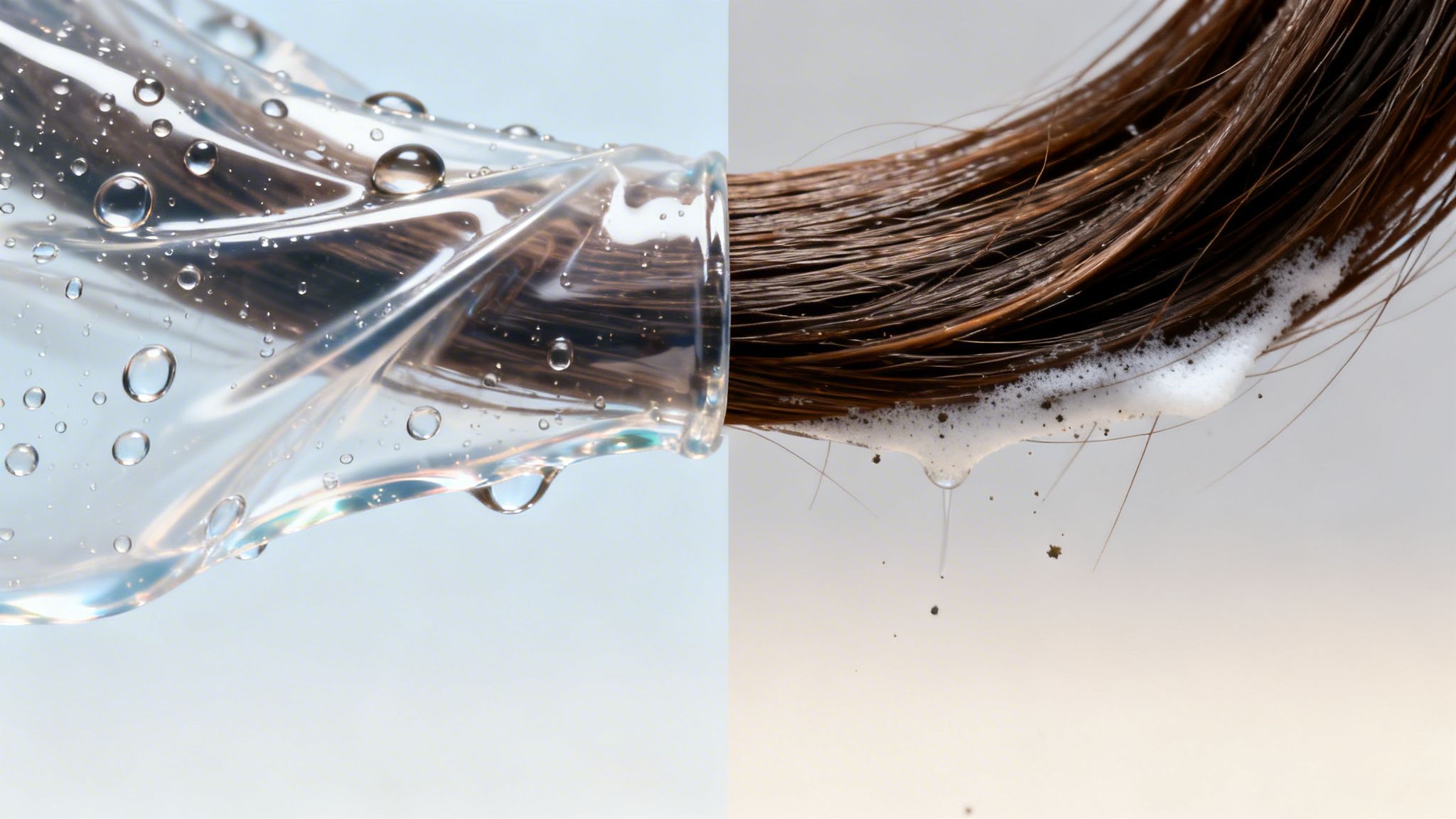
Ever wonder what's actually happening when you smooth that silky serum through your hair? To figure out if silicones are right for you, we first need to get a grip on what they do. The easiest way to think about it is like giving each strand of hair its own tiny, waterproof raincoat.
Silicones are synthetic ingredients—polymers, to be exact—that start as silica, a natural element found in sand. A bit of chemistry transforms this raw material into the slippery, smoothing compounds you find in countless conditioners, stylers, and serums. When you apply them, these polymers wrap around your hair, forming a thin, flexible film.
This "raincoat" effect is what gives you those instant, amazing results. It flattens the hair's outer layer (the cuticle), creating a super smooth surface that feels like silk and reflects light beautifully for that glossy finish. It also seals the strand, which both locks out the humidity that causes frizz and provides incredible slip, making tangles practically melt away.
Not All Raincoats Are Created Equal
This is where the conversation gets a lot more interesting. Just like you have different jackets for a light drizzle versus a torrential downpour, silicones come in different forms with very different behaviors. Getting this distinction is the key to making smart choices for your hair.
The biggest difference comes down to how they interact with water. This single factor determines whether a silicone is likely to cause buildup or rinse out cleanly with your shampoo.
The real issue isn't whether silicones are "good" or "bad"—it's whether they are soluble. The right type can be a total game-changer for frizz and shine, while the wrong one can cause the exact problems you were trying to fix.
Let's break down the main families you'll see on an ingredient list.
The Three Main Types of Silicones
To really take control of your routine, you have to know what you’re working with. Here are the three groups of silicones and what they mean for your hair's health.
Non-Water-Soluble Silicones: Think of these as the heavy-duty sealants, like Dimethicone and Amodimethicone. They create a strong, water-resistant coating that won't budge with just water. While they're fantastic for long-lasting frizz control and protection, they are the number one cause of buildup. You'll need a clarifying or sulfate-based shampoo to remove them completely.
Water-Soluble Silicones: These are the easy-to-manage cousins. You can spot them by prefixes like "PEG-" or "PPG-" (for example, PEG-12 Dimethicone). They've been chemically tweaked to dissolve in water, which means they rinse away easily and don't leave residue behind. This makes them a much safer bet for anyone worried about their hair feeling weighed down or greasy.
Evaporating Silicones: Also called "volatile" silicones, these are the ghosts of the ingredient world. Ingredients like Cyclopentasiloxane are put in products to give that initial slip for easy, even application. They do their job, and then, as your hair dries, they simply evaporate, leaving little to no film behind.
Recognizing these categories is a superpower. It means you don't have to follow a strict "no-silicones" rule. Instead, you can build a personalized hair care routine with ingredients that actually serve your hair—whether that means embracing easily washable silicones or just knowing when it's time to clarify away the heavy-duty ones.
Understanding the Problem with Silicone Buildup
So, why do silicones get such a bad rap? It all boils down to one word: buildup. While that instant "raincoat" shine feels amazing, the trouble starts when certain types of silicones overstay their welcome. The main culprits are the non-water-soluble ones—the heavy-duty ingredients that cling to your hair and won't wash away with a simple rinse.
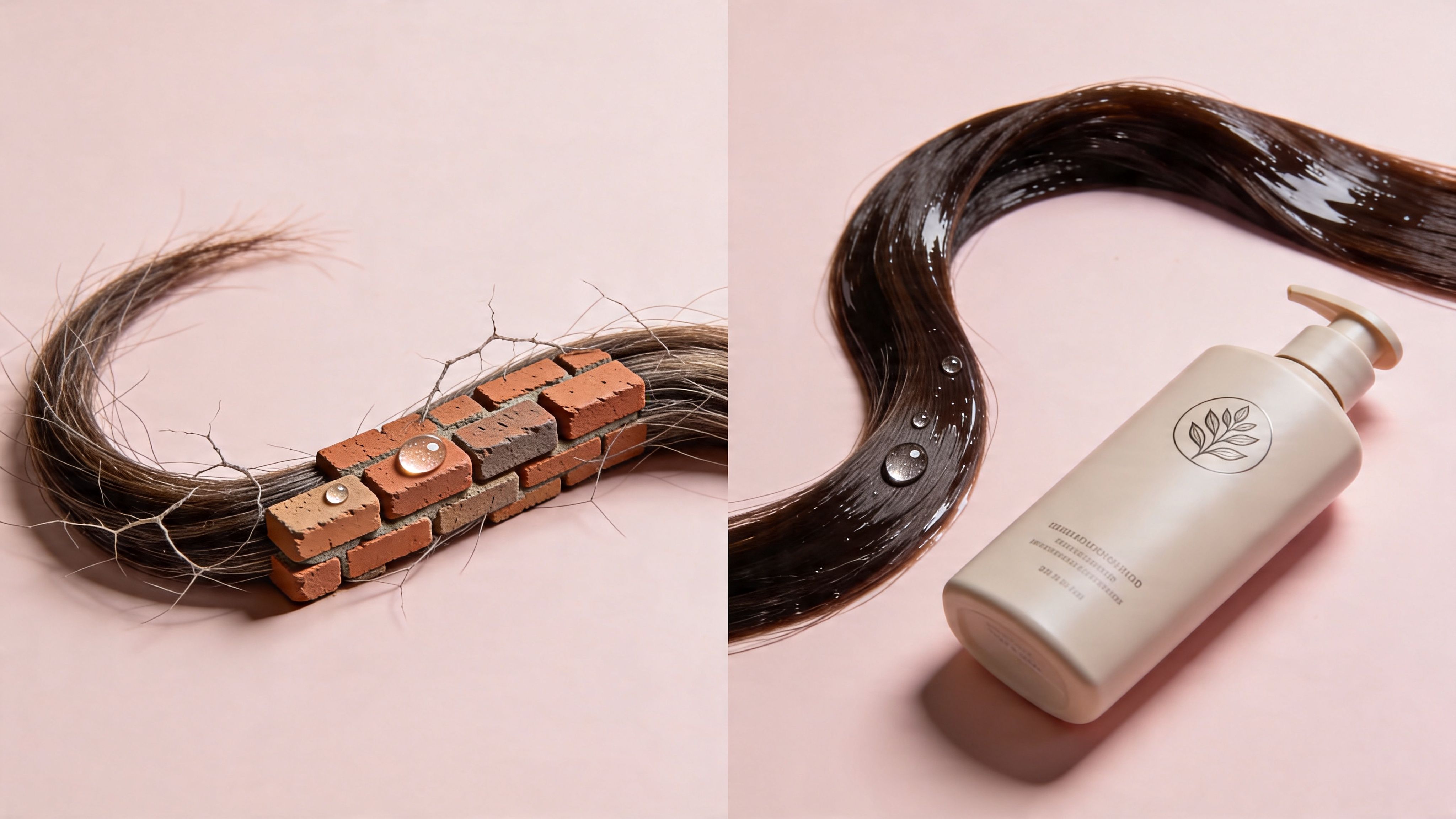
Imagine painting a wall with a fresh, glossy coat every single day without ever washing or prepping the surface. At first, it looks great. But layer after layer, you’re just creating a thick, plastic-like shell that completely hides the wall’s true texture underneath. That’s exactly what happens to your hair.
The Suffocating Effect of Buildup
When these stubborn silicones accumulate, they form a film around each hair strand. This coating acts like a seal, locking your hair off from the outside world. While it might look shiny for a little while, the consequences are frustrating and can make your hair feel terrible, even when it looks good.
This plastic-like barrier is a double-edged sword. Not only does it lock things out, but it also prevents good things from getting in. All those nourishing deep conditioners, hydrating masks, and moisturizing leave-ins you’re using? They can’t penetrate the hair shaft. They just sit on top of the silicone film, unable to deliver the moisture your hair is crying out for.
The result is hair that becomes dry and brittle on the inside, even while it appears smooth on the outside. This internal dehydration is a fast track to breakage, split ends, and that dreaded straw-like feeling.
Telltale Signs Your Hair Has Buildup
Is your hair not behaving the way it used to? It might be sending you signals that it’s suffocating under layers of old product. If you're using products with heavy silicones, watch out for these common red flags:
- Limp, Weighed-Down Hair: Your hair has lost its natural volume and bounce. It looks flat and feels heavy, especially near the roots.
- Loss of Curl or Wave Pattern: Your curls or waves look stretched out, undefined, and just can't seem to hold their shape no matter what you do.
- Dullness and Lack of Shine: That initial gloss has faded, replaced by a dull, filmy appearance as the residue builds up and stops reflecting light properly.
- Greasy or Stringy Texture: Your hair feels perpetually dirty or oily, even right after you wash it, because the silicone coating is a magnet for dirt and grime.
- Products Stop Working: Your holy-grail conditioners and stylers suddenly feel like they’re doing nothing at all. They can't work if they can't get past the buildup.
Beyond the Strands: How Buildup Affects Your Scalp
Silicone buildup doesn't just stop at your hair. That same film can settle on your scalp, creating a whole new set of problems. This coating can trap sebum (your scalp's natural oil), sweat, and dead skin cells right at the opening of your hair follicles.
Buildup from non-water-soluble silicones is a quantifiable issue. Experts report that unremoved silicones trap oil, dirt, and dead skin, clogging follicles in 25-35% of regular users. This can lead to itchiness, flaking, and worsen dandruff symptoms by up to 40% over three months. For sensitive scalps, clinical observations show a 22% rise in scalp inflammation scores post-buildup. You can discover more insights about scalp health from Women's Health.
When your follicles get clogged, it can stifle healthy hair growth and create the perfect environment for irritation and flakiness to take over. If you’re dealing with an itchy, sensitive, or flaky scalp and think product buildup might be the cause, taking a quick scalp sensitivity quiz can give you some much-needed clarity. Recognizing these signs is the first step toward getting your hair and scalp back in balance.
Matching Silicones to Your Specific Hair Type
So, are silicones actually bad for your hair? The honest answer is: it depends entirely on your hair. There’s no single rule because there’s no such thing as one-size-fits-all hair. What gives one person an unbelievable shine could leave someone else with hair that looks greasy and weighed down.
This is exactly why getting to know your hair's unique personality is the single most important thing you can do. Your hair type—and more importantly, its porosity—is what really determines how it will react to different ingredients. Before you banish silicones forever (or go all-in), it's crucial to understand your hair porosity. A simple Hair Porosity Test can reveal how well your hair absorbs and retains moisture, guiding your product choices.
The Role of Hair Type and Porosity
You wouldn't wash a delicate silk blouse the same way you’d wash a pair of rugged denim jeans, right? That same logic applies to your hair. Fine, low-porosity strands and coarse, high-porosity strands have completely different needs.
To help you figure out where you stand, we've broken down how non-water-soluble silicones typically affect different hair types. See which one sounds most like your own experience.
Silicone Impact by Hair Type and Porosity
| Hair Type / Condition | How Silicones Typically Affect It | Recommendation |
|---|---|---|
| Fine or Low Porosity | Prone to immediate buildup. Hair can look flat, greasy, and feel heavy since silicones sit on top of the tightly-sealed cuticle instead of penetrating. | Avoid non-soluble silicones. Opt for water-soluble versions or silicone-free products to prevent weighing hair down. |
| Coarse or High Porosity | Can be beneficial. The sealing effect locks in much-needed moisture, tames frizz, and adds a protective layer to the open cuticle, preventing further damage. | Use strategically. Non-soluble silicones can work well, but you must clarify regularly (e.g., weekly) to prevent buildup from dulling your hair over time. |
| Curly and Coily Hair | A double-edged sword. Silicones provide amazing slip for detangling, but heavy buildup can stretch out and suffocate the curl pattern, leading to limp, undefined curls. | Proceed with caution. Many curlies prefer to avoid non-solubles altogether (the "Curly Girl Method"). If you do use them, a strict clarifying routine is non-negotiable. |
| Color-Treated or Damaged | Often very helpful. Damaged hair is typically high porosity. Silicones create a protective film that reduces frizz, adds shine, and helps prevent further breakage and color fading. | Beneficial, but manage buildup. Enjoy the protective benefits, but use a chelating or clarifying shampoo to keep hair responsive to treatments and color. |
As you can see, the "best" approach is deeply personal. It's all about balancing the immediate cosmetic perks with the potential for long-term buildup.
How Silicones Affect Curly and Coily Hair
For anyone with curls or coils, the silicone debate gets even more complicated. Textured hair is naturally prone to dryness because the scalp's natural oils have a hard time traveling down all those beautiful twists and turns. While the slip from silicones can make detangling a breeze, that very same coating can become a curl's worst enemy.
When heavy, non-soluble silicones accumulate, they form a rigid, plastic-like film around the hair shaft. This suffocates your natural curl pattern, causing it to lose its bounce and elasticity. Curls become stretched out, undefined, and limp. Worse, this barrier blocks the moisture you’re trying so hard to get in, leading to even more dryness and frizz.
The Bottom Line for Curls: The problem isn't just about hair looking flat or greasy. Silicone buildup can actively destroy the very structure of your curl pattern, sabotaging the bounce and definition that makes your hair unique.
This chart can help you quickly diagnose if what you're seeing is actually buildup.

Whether your hair feels limp and lifeless or just dry and unresponsive, the culprit is often a barrier preventing your hair from thriving. For a complete strategy on handling this, check out our guide to creating a low-porosity hair routine.
Ultimately, no one knows your hair better than you. Once you have the right information about its type and porosity, the confusion starts to disappear. Instead of wondering if silicones are "bad," you can start asking what’s right for your hair and feel confident in the choices you make.
How to Decode Labels and Manage Silicones
Trying to figure out what’s actually in your hair products can feel like deciphering a secret code, especially when it comes to silicones. But you don't need a chemistry degree to take back control. It really just comes down to becoming a savvy ingredient detective.
Once you know what you’re looking for, you can decide whether to skip certain silicones, use them strategically, or go completely silicone-free. This is how you build a routine that stops buildup before it even starts, keeping your hair healthy and responsive.
How to Spot Different Silicones on an Ingredient List
Becoming fluent in "ingredient-speak" is your first and best defense. While the names look intimidating, most silicones follow a few predictable patterns that make them surprisingly easy to spot.
The simplest trick is to look for ingredients with these common endings:
- -cone: This is the most well-known clue. Think Dimethicone, Amodimethicone, and Cyclomethicone.
- -conol: This often points to a modified type of silicone, like Dimethiconol.
- -siloxane: This signals another family of silicones, such as the very lightweight Cyclopentasiloxane.
But just spotting a silicone isn't the whole story. The real game-changer is knowing if it’s the kind that sticks around (non-water-soluble) or the kind that rinses out easily (water-soluble). Water-soluble silicones will often have a "PEG-" or "PPG-" prefix, like PEG-12 Dimethicone. These are generally considered a safer bet if you're worried about buildup.
For an instant, error-free way to know exactly what's in your products, a powerful ingredient checker is your best friend. Instead of guessing, you just scan the label and get a clear breakdown of every silicone inside and whether it’s likely to cause problems.
Learning to identify ingredients is a skill that pays off. For a great general guide on understanding ingredient labels, this resource is helpful for both your hair and skin care products.
The Art of Removing Silicone Buildup
Even if you love the silky finish you get from non-soluble silicones, you absolutely need a game plan to manage them. The key is a regular reset with a good clarifying shampoo. Think of it as a deep clean for your hair that strips away old product, hard water minerals, and stubborn residue.
Clarifying is a powerful tool, but it can also strip your hair's natural oils, so it's all about finding the right balance.
Choose the Right Clarifying Shampoo: Look for products specifically labeled "clarifying," "detox," or "purifying." These are made with stronger cleansers (like sulfates or other heavy-duty surfactants) designed to break down that stubborn film.
Use It Strategically, Not Daily: For most people, clarifying once every 2-4 weeks is more than enough. If your hair is fine and gets weighed down easily, or if you use a lot of styling products, you might bump that up to once a week. Your hair will tell you when it's time—if it feels limp, dull, or just won't cooperate, it needs a reset.
Always Follow with a Deep Conditioner: This step is non-negotiable. After stripping everything away, you have to put moisture back in immediately. A rich, hydrating deep conditioner or hair mask will restore softness and elasticity, keeping your hair from feeling dry and brittle.
This simple "clarify and condition" cycle lets you get all the benefits of silicones without ever having to deal with the dreaded buildup.
Creating a Balanced Silicone-Friendly System
The question of whether to use silicones isn't a simple "yes" or "no." The smartest approach is to build a system that’s tailored to your hair's specific needs. That might mean going completely silicone-free, sticking to only water-soluble types, or strategically using the non-soluble ones paired with a solid clarifying routine.
The goal is to stop guessing and start building an intentional plan. Instead of just reacting to problems like buildup, you can prevent them from happening in the first place. Your hair type, porosity, and styling habits all play a role in what a "balanced" system looks like for you.
Now is the perfect time to put all this knowledge into action. By understanding how to spot, manage, and remove silicones, you have everything you need to build your personalized hair routine. A well-designed plan ensures every product has a purpose, leading to consistently healthy and beautiful hair.
Building Your Perfect Hair Care Routine
Let's be real: figuring out the whole silicone thing isn't about hunting down one "bad" ingredient to banish forever. It’s about shifting your mindset and learning how to build a routine that actually works for your hair's specific needs.
Whether you decide to use certain silicones on purpose or go completely silicone-free, the end goal is always the same: strong, nourished, and vibrant hair. It’s time to look past the quick, cosmetic fixes and start using ingredients that genuinely improve your hair's health from the inside out.
Exploring Powerful Silicone-Free Alternatives
Thinking of cutting back on silicones? Don't worry, you're not giving up performance. In fact, nature is packed with incredible ingredients that deliver all the moisture, slip, and shine you want without leaving behind that stubborn, plastic-like buildup.
The best part? Many of these alternatives actually feed your hair shaft instead of just sitting on top of it.
Here are a few fantastic, hard-working alternatives you’ll see in modern silicone-free products:
- Jojoba Oil: This stuff is amazing. Its molecular structure is so close to your scalp's own natural oils (sebum) that it can moisturize deeply without ever feeling greasy or clogging your follicles.
- Shea Butter: A true powerhouse of fatty acids and vitamins. Shea butter is a dream for sealing moisture into dry, high-porosity strands, leaving them feeling soft and flexible instead of brittle. If this sounds like your hair, we've even put together a guide specifically for a high porosity hair routine.
- Glycerin: Think of glycerin as a moisture magnet. It's a humectant, which means it literally pulls water from the air right into your hair. This provides a deep, lasting hydration that's especially game-changing for curly and coily hair types.
Beyond a Single Ingredient
A truly great hair routine is so much more than one star ingredient. It's about creating a holistic system where every single product works in harmony to meet your hair's total needs.
One of the most important concepts to get right is the protein-moisture balance. Get it wrong, and you'll know. Too much protein, and your hair becomes stiff and brittle. Too much moisture, and it turns limp, mushy, and weak.
If your hair feels weirdly brittle, snaps easily, or has a straw-like texture, you might be dealing with protein overload. It's a super common problem, especially if you use a lot of "repairing" or "strengthening" products.
Not sure where your hair stands? A quick protein overload test can give you a clear answer, helping you figure out if you need to dial back the protein and ramp up the moisture. And to really take control, it helps to understand what's in your hair care product labels so you can spot silicones and other key players.
The ultimate goal here is to stop guessing. No more buying random products and just hoping for the best. It's time to build a routine that is intentional, personalized, and actually gets you the results you want.
Let's move on from asking "are silicones bad for hair" and start building your healthiest hair ever.
Frequently Asked Questions About Silicones
Alright, let's tackle some of the most common questions that pop up when we talk about silicones. The "good vs. bad" debate can get confusing, so here are some straight answers to help you figure out what’s right for your hair.
Can I Use Silicones If I Have Curly Hair?
This is a big one in the curly community. While many strict curly routines say "no" to all silicones, it's not a hard-and-fast rule for everyone. The truth is, it really depends on your specific curls.
Some curls thrive with the slip and frizz-taming that water-soluble silicones provide. They can make detangling a breeze and add a beautiful shine without the heavy buildup that ruins a curl pattern. The key is to experiment and see how your hair responds.
If you’re curious about finding that balance, our guide on building a routine specifically for curly hair is a great place to start. It walks you through how to maintain moisture and definition, whether you choose to use silicones or not.
How Can I Tell If My Product Has Good or Bad Silicones?
It's time to become a label detective. Once you know what to look for, it's surprisingly easy.
- "Bad" (Non-Water-Soluble) Silicones: These are the ones notorious for causing buildup. Look for ingredients that end in
-cone,-conol, or-siloxane. Dimethicone is the most common one you'll see. - "Good" (Water-Soluble) Silicones: These guys rinse out with just water, so no buildup worries. They almost always have a
PEG-orPPG-prefix in their name, like PEG-12 Dimethicone.
If you want a foolproof way to check, you can use an ingredient analyzer to get an instant breakdown of what’s really in the bottle.
Do I Need to Throw Away All My Products with Silicones?
Absolutely not! If you're using a product with non-soluble silicones and you love the results—and you aren't seeing any signs of buildup—there's no reason to toss it. The trick is simply to add a good clarifying shampoo to your routine every week or two to hit the reset button.
On the other hand, if your hair feels limp, greasy, or just plain dull, that’s a classic sign of buildup. In that case, it’s probably time to switch to silicone-free formulas or stick with the water-soluble kind. A quick routine analysis can help you pinpoint which product might be the culprit.
Are Silicones Safe for Color-Treated Hair?
This is a classic "it depends" situation. Silicones can be a huge benefit for color-treated hair because they form a protective seal that helps prevent your expensive color from fading with every wash.
The downside? That same seal can sometimes block your deep conditioners and moisturizing treatments from actually penetrating the hair shaft, leading to dryness over time. If you use silicones on colored hair, your best bet is to stick with water-soluble types and clarify regularly. This gives you the color protection without sacrificing that much-needed moisture.
Ultimately, the big question isn't "are silicones bad?" but "what does my hair actually need?" At IsItClean, we want to help you move past all the confusing advice and build a routine based on what your hair is telling you. It’s time to stop guessing and start creating a plan that works for your unique hair type, porosity, and goals. Ready to build a system that delivers consistently healthy hair? Give the Hair Routine Builder a try and design a weekly plan that’s perfectly customized for you.