You deep condition. Your hair feels amazing for a day. Then the frizz returns, the ends feel rough again, and the softness seems to vanish overnight.
That cycle frustrates a lot of people with high porosity hair. It can make you think your hair needs more product, a pricier mask, or a miracle treatment. Most of the time, the core issue is simpler. Your hair doesn’t just need moisture. It needs help holding on to it.
That’s why finding the best deep conditioner for high porosity hair isn’t really about chasing a viral product list. It’s about learning what your hair structure is asking for, how to spot the right ingredients, and how to build a routine that supports moisture retention instead of temporary softness.
The High Porosity Hair Struggle Why Your Hair Is Always Thirsty
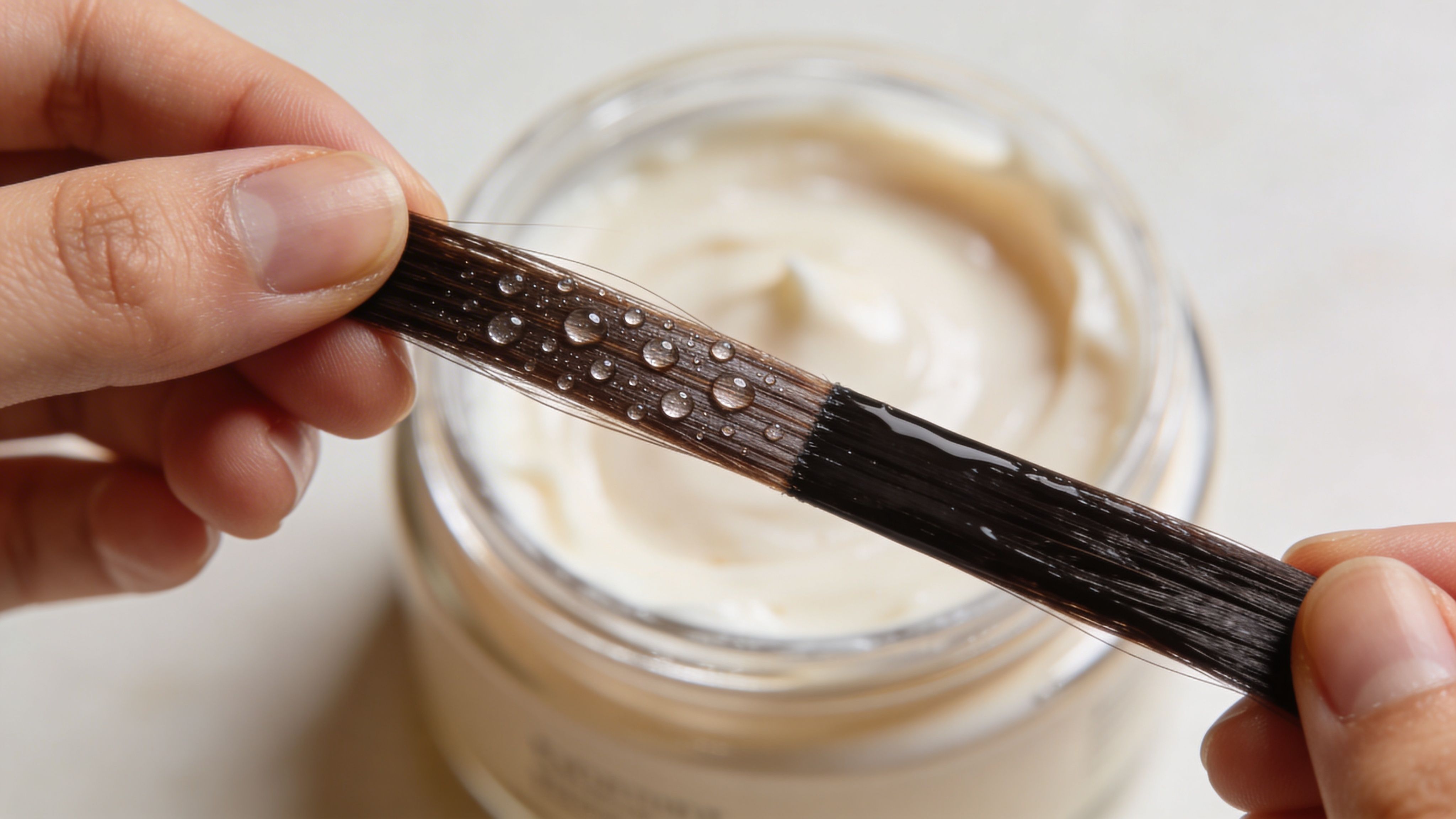
You finish wash day, your hair drinks up conditioner in seconds, feels silky for a few hours, then starts turning rough, puffy, or frizzy again by the next morning. That pattern usually points to one problem. Water gets in easily, but your hair has trouble keeping it.
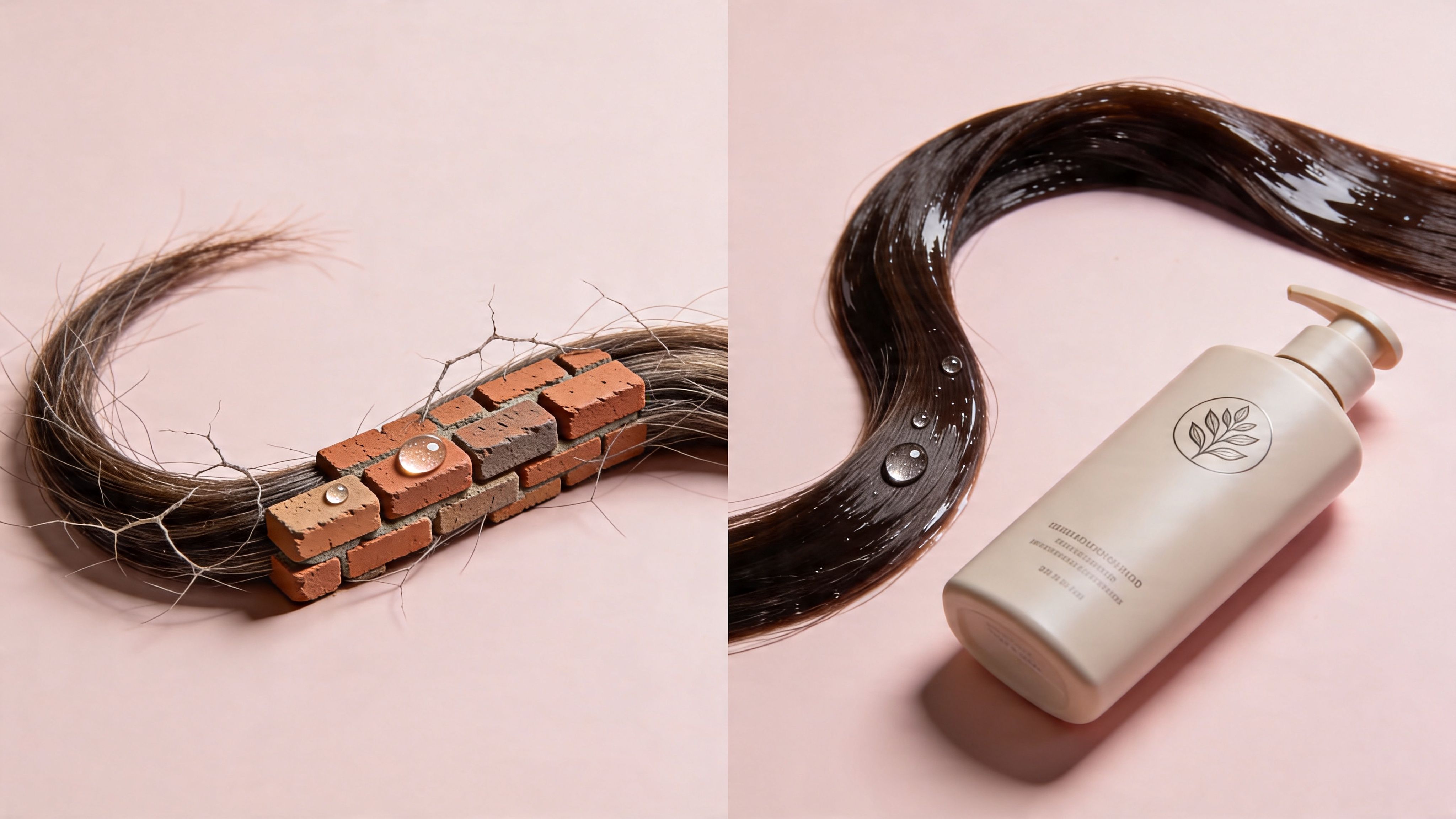
High porosity hair has a cuticle layer that sits more open than usual, often from weathering, heat, color, chemical processing, or repeated friction. The cuticle works like roof shingles. When those shingles lie flat, they help protect what is underneath. When they lift, chip, or wear down, moisture moves in fast and slips back out fast too.

What thirsty hair is really telling you
Dry-feeling high porosity hair is often not bad at absorbing product. It is bad at holding onto the water that softer hair depends on.
A simple way to read the signs is to watch what your hair does during and after washing. Hair with higher porosity often gets wet quickly, loses that wetness quickly, feels rough along the surface, and frizzes soon after conditioning. Those clues matter more than the word "moisture" printed on the front of a jar.
Here is the pattern many people notice:
- Fast wetting: Water and conditioner soak in quickly.
- Fast drying: Strands lose moisture sooner than expected.
- Surface roughness: Hair feels uneven or less smooth from root to tip.
- Short-lived softness: Hair feels good on wash day, then dull or puffy soon after.
A useful rule is this. If your hair responds to moisture but the softness does not last, focus on retention.
That is why a good deep conditioner for high porosity hair needs more than a rich texture. It needs ingredients that bring in water and ingredients that help slow its escape by smoothing the outer layer. Later in this guide, you will use that idea to judge formulas by their ingredient list instead of relying on product hype or random recommendations.
Why labels can send you in the wrong direction
A product can feel buttery, smell amazing, and still miss what high porosity hair needs. Slip can come from conditioning agents that make detangling easier. Shine can come from oils or silicones coating the surface. Neither one automatically means your hair will stay hydrated longer.
That is why learning your porosity matters before you buy anything. If you are not sure where your hair falls, you can check your porosity with a guided hair assessment instead of guessing from one wash day. If your hair behaves in the opposite way, this low porosity hair routine guide shows why a formula that works for one porosity type can disappoint another.
One more detail can confuse people. Some ingredients are famous in skin care and sound automatically hydrating for hair too. Hyaluronic Acid is a good example. On hair, a single trendy ingredient tells you very little by itself. The full formula, especially the balance of humectants, conditioners, proteins, and oils, matters much more.
The goal is not to memorize chemistry terms for the sake of it. The goal is to read your hair like a pattern, read a label like a map, and use tools, including AI, to decide whether a deep conditioner is likely to help your specific hair hold onto moisture better.
Decoding the Ingredient List What Your Hair Needs and What to Avoid
A deep conditioner ingredient list works like a blueprint. The front label sells a result. The back label shows how the formula is trying to get there.
For high porosity hair, that difference matters. Your strands usually take in water fast, then lose it just as fast. So a good deep conditioner is not just "moisturizing." It needs ingredients that do three jobs at once. Pull water in, smooth the cuticle, and support weaker parts of the strand so moisture has a better chance of staying put.
What high porosity hair usually needs in a formula
Start by scanning the first several ingredients, not just the trendy ones printed on the jar. Ingredients are generally listed in descending order, so the top of the list gives you the best clue about what the formula is really built around.
These categories matter most:
- Humectants that attract water: Glycerin, aloe vera, and panthenol help draw moisture toward the hair fiber.
- Conditioning agents that reduce roughness: Behentrimonium methosulfate, cetearyl alcohol, and similar conditioners help the hair surface feel smoother and less snag-prone.
- Protein or amino acid support: Hydrolyzed rice protein, hydrolyzed wheat protein, keratin amino acids, and other hydrolyzed proteins can help patch up weaker areas on the strand.
- Lipids and softening ingredients: Oils, butters, ceramides, and fatty acids help slow moisture loss by giving the cuticle a more cushioned, flexible feel.
Hair chemistry gets easier once you group ingredients by job. Humectants are the water-grabbers. Conditioners are the surface smoothers. Proteins are the repair helpers. Oils and fatty ingredients are the loss-reducers.
A formula does not need every buzzworthy ingredient to work well. It needs a sensible mix of jobs.
What deserves a closer look
"Avoid" can be too blunt for hair care. A better question is, "Will this ingredient category help my hair hold onto moisture, or will it create a tradeoff I do not want?"
For many people with high porosity hair, these ingredients deserve extra scrutiny:
- Harsh cleansing ingredients in a conditioning product: If a product meant to condition contains stronger cleansing agents, it may work against your moisture goal.
- Drying alcohols high on the list: Some alcohols can evaporate quickly and leave already-fragile hair feeling rougher.
- Heavy coating silicones, especially if your hair builds up easily: These can make hair feel silky at first while masking dryness underneath for some users.
- Protein-heavy formulas with little softness built in: A mask packed with proteins but light on conditioning agents can leave some high porosity hair stiff instead of supported.
- Fragrance-heavy formulas if your scalp is reactive: Scalp irritation can make wash day harder even if the hair shaft likes the conditioner.
The tricky part is that one ingredient rarely tells the whole story. A silicone is not automatically bad. A protein is not automatically good. The formula around it decides a lot. That is why manually decoding an INCI list is tedious, and why ingredient roles matter more than marketing claims.
A conditioner can make hair feel instantly slippery without doing much to improve long-term moisture retention.
High Porosity Hair Ingredient Guide
| Ingredient Class | What to Seek (Examples) | What to Avoid (Examples) |
|---|---|---|
| Humectants | Glycerin, aloe vera, panthenol | Formulas that promise moisture but offer little else to help keep it in |
| Cuticle-smoothing conditioners | Cetearyl alcohol, behentrimonium methosulfate, fatty alcohols, conditioning quats | Formulas focused only on temporary slip |
| Protein support | Hydrolyzed rice protein, hydrolyzed wheat protein, keratin derivatives, amino acids | Very protein-heavy formulas if your hair already feels hard or brittle |
| Lipid and oil support | Argan oil, fatty acids, ceramides, shea butter | Thick coatings that leave persistent buildup on your hair |
| Potential caution flags | Balanced formulas with moderate fragrance and manageable buildup risk | Drying alcohols high on the list, harsh cleansers, overly coating silicones if your hair is easily weighed down |
How to read a label without getting overwhelmed
Use a simple three-part filter.
First, ask whether the formula has real water-attracting ingredients. Glycerin, aloe, and panthenol are common clues.
Second, check whether it also has ingredients that help the cuticle lie flatter and feel less rough. Fatty alcohols and conditioning agents often do that job.
Third, look at the protein story. A little protein support can be useful for high porosity hair. A wall of strengthening ingredients with very little softness around them can be too much.
If you already recognize hydration ingredients from skincare, the logic is similar. People often use Hyaluronic Acid in skin routines because it attracts water. Hair humectants play a similar role, but hair also needs smoothing and sealing support or that water can leave just as quickly.
This is the advantage of learning ingredient functions. You stop asking, "Is this product on the best list?" and start asking, "Does this formula match what my hair is asking for?" That shift makes AI tools much more useful too, because you can feed them an ingredient list and judge the answer with a more trained eye.
The Protein and Moisture Balancing Act

You deep condition on Sunday, your hair feels amazing, and by Tuesday it is confusing you again. It feels soft but frizzy. Or strong but dry. That back-and-forth often comes from one question: does your hair need more water-loving softness, or more structural support?
High porosity hair usually needs both. The challenge is timing and proportion.
Protein and moisture work like a seesaw
Moisture-focused ingredients help the strand bend without feeling rough. Protein helps patch weak spots along a lifted, worn cuticle. High porosity hair often has both problems at once, which is why a formula can feel great one week and wrong the next.
Here is the simplest way to understand it. Moisture affects flexibility. Protein affects support.
If the seesaw tips too far toward moisture, hair can feel too soft, limp, or unable to keep its shape. If it tips too far toward protein, hair can feel hard, straw-like, or brittle. The goal is a middle ground where the strand feels soft, springy, and less likely to snap during detangling.
What protein is doing
Protein in hair products is usually broken into smaller pieces, listed as ingredients like hydrolyzed rice protein, hydrolyzed wheat protein, or keratin amino acids. These smaller fragments can cling to damaged areas and give the strand a more supported feel.
That does not mean more is always better.
A deep conditioner with some protein plus softening ingredients can help high porosity hair feel stronger. A routine stacked with protein in the mask, leave-in, and styler can push hair past support into stiffness.
Signs your hair is asking for more moisture
Hair low on moisture usually feels uncomfortable before it looks bad.
Watch for clues like these:
- Rough texture: the strand feels dry or scratchy even after conditioning
- Low flexibility: hair does not bend easily and feels less elastic
- Fast-return frizz: softness disappears quickly after wash day
- Dullness: hair looks flat and lacks that smoother, light-reflecting surface
In that case, choose a deep conditioner built around humectants, fatty alcohols, and conditioning agents. Oils can help, but oils alone do not replace water-based softness.
Signs you may be overdoing protein
Protein overload confuses a lot of people because the hair can feel dry, and dryness sounds like a moisture problem. But the texture is different.
Protein-heavy hair often feels:
- Stiff instead of bouncy
- Brittle instead of supported
- Dry in a hard, rigid way
- Resistant during detangling
A quick touch test helps. Moisture-deprived hair often feels rough and thirsty. Protein-heavy hair often feels hard and less willing to stretch.
If that sounds familiar, pause the strengthening products for a few wash days and use a softer, moisture-focused mask. Check the rest of your routine too. Leave-ins, gels, and bond-repair products can stack extra protein. A guided protein overload hair check can help if you are trying to sort out whether your hair needs repair or a break from reinforcement.
A simple rule you can use
Use a more protein-forward deep conditioner when your hair feels weak, mushy, overly stretchy, or damaged from color and heat.
Use a more moisture-forward deep conditioner when your hair feels rough, rigid, or dry after repeated strengthening treatments.
And if your hair seems to live in the middle, that is normal. High porosity hair rarely wants the exact same thing every wash day. That is why learning the ingredient logic matters more than chasing one "best" jar. Once you understand what your hair is signaling, you can use AI tools to scan almost any ingredient list and judge whether the formula is likely to soften, strengthen, or do a bit of both.
How to Evaluate Any Deep Conditioner with AI
You are standing in the hair care aisle, turning over a jar that says “intense repair.” The front sounds promising. The back gives you a dense ingredient list that reads more like a chemistry worksheet than a wash day decision.
That is where a simple AI check becomes useful.
High porosity hair reacts fast to formulas. It can grab onto conditioning ingredients quickly, but it can also pick up too much protein, too much coating, or not enough lasting moisture. So the question is not “Is this product popular?” The better question is “What is this formula likely to do on my hair?”
Why AI helps here
Reading an INCI list by yourself takes time and background knowledge. Ingredient names can be long, similar, and easy to misread. A quick scan with AI helps you sort the formula into plain-language categories so you can make a better call.
Used well, AI acts like a translator. It does not replace your judgment. It helps you see the pattern inside the label.

A simple screening method
Use this process whenever you are checking a new deep conditioner:
- Take a clear photo of the full ingredient list. Ignore the marketing words on the front for now.
- Upload the label to an ingredient analysis tool. You want ingredient-by-ingredient context, not just a simple approval badge.
- Look for the formula’s main job. Is it mostly moisturizing, more strengthening, or trying to do both?
- Check the support ingredients. High porosity hair usually responds well to a mix of water-attracting ingredients, rich conditioning agents, and a reasonable amount of protein if the hair needs reinforcement.
- Flag possible mismatches. A product can be well-formulated and still be wrong for your hair today.
A helpful shortcut is to read the formula like a recipe. The first several ingredients usually tell you the product’s personality. If those early spots are filled with fatty alcohols, conditioning agents, and emollients, the mask likely leans softening. If hydrolyzed proteins show up high on the list, it may act more like a strengthening treatment.
Questions to ask AI
Good prompts lead to better answers. Try asking:
- Does this formula lean protein-heavy, moisture-heavy, or balanced?
- Which ingredients help high porosity hair hold softness longer?
- Are there strong coating ingredients that may build up on my hair?
- Is this a better fit for hair that feels weak and stretchy, or rough and rigid?
- Would this formula feel too heavy for finer waves or looser curls?
If your texture is on the lighter end, a wavy hair routine for product weight and layering can help you judge whether a rich mask will nourish your hair or flatten it.
What a useful result looks like
The best AI output is specific. It should explain why an ingredient matters, not just label it “good” or “bad.”
For example, if AI identifies hydrolyzed keratin, glycerin, behentrimonium methosulfate, and shea butter, you can read that as a mixed formula. The protein may help patch weak areas in a lifted cuticle. The humectant draws in water. The conditioning agent smooths the surface. The butter slows moisture loss by adding slip and weight. That kind of explanation helps you compare products with confidence.
One reminder matters here. AI can read the formula, but only you can read your hair. If the ingredient list says “balanced” and your strands still feel hard after use, your hair is giving the final answer.
Mastering Your Application Technique for Maximum Results
You rinse out a rich mask, your hair feels silky for an hour, and by the next day the ends are frizzy again. That usually is not a product failure. It is often an application problem.
High porosity hair behaves like a sponge with larger, uneven openings. It takes in product fast, but it does not hold onto softness very well unless the conditioner reaches the roughest parts of the strand and has time to do its job. The goal is not just to coat the hair. The goal is to place the formula where your hair loses moisture first, then help it stay there long enough to smooth and support the cuticle.

Start with the right hair condition
Deep conditioner works best on clean, damp hair.
If hair is coated with old oils, stylers, or heavy leave-ins, the treatment may sit on top instead of spreading evenly. If hair is dripping wet, extra water can dilute the formula before it has a chance to condition the areas that need the most help. Damp hair gives you a better balance. The strands are hydrated, but the product still stays concentrated.
Sectioning matters too. High porosity hair is rarely equally porous from root to tip. Mid-lengths and ends are usually older, rougher, and more damaged, so they need more attention than newer growth near the scalp.
If your texture is in the looser curl or wave range, this wavy hair routine for adjusting product weight and layering can help you avoid the common problem of over-conditioning your pattern into flatness.
Apply with pressure, not just coverage
A quick surface skim leaves too much hair untreated.
Use enough product to create slip, then work in small sections. Rake it through first to distribute. After that, press the hair between your palms and gently squeeze upward. That pressing motion helps the conditioner contact more of the strand, especially the areas where lifted cuticles make the surface feel rough.
Give the oldest hair first priority. Ends have been washed, detangled, styled, slept on, and exposed to friction far more than the hair near your roots. If you run short on product, do not take it from the ends.
A simple order helps:
- Coat the mid-lengths and ends first.
- Add extra product to rough, tangly, or frizz-prone spots.
- Use a wide-tooth comb or fingers only after the hair has enough slip.
- Keep sections clipped so product does not bunch up in one area and miss another.
Use time and heat with a purpose
Heat can help, but only gentle heat.
A warm towel or thermal cap can keep the formula fluid and encourage better contact between conditioning ingredients and the hair surface. That is useful for high porosity hair because the cuticle often needs both softness and smoothing support. You do not need extreme heat, and you do not need to leave a mask on forever. Longer is not automatically better.
Watch the result, not the clock alone. If your hair feels mushy, overly stretchy, or too soft to hold its shape after rinsing, shorten the treatment time next wash day or choose a formula with more structural support. If it still feels rough and catches on itself, your hair may need either more conditioning time or a richer formula.
A visual walkthrough can make these techniques easier to copy at home:
How often should you deep condition
Frequency depends on how fast your hair loses its good condition after wash day.
Some high porosity routines do well with weekly deep conditioning. Hair that is heavily colored, heat-styled, or otherwise stressed may prefer more frequent support. Hair that is fine or easily weighed down may do better with shorter sessions or alternating between lighter and richer treatments.
Use your post-wash results as your guide:
- Soft at first, then dry again fast: increase moisture-focused sessions or improve how thoroughly you apply to the ends.
- Weak, stretchy, or overly fragile: use a formula with some protein support and avoid overhandling while wet.
- Limp, coated, or too fluffy without definition: reduce product amount, shorten processing time, or apply less near the roots.
Your hair is giving feedback every wash day. Learn that pattern, and you can get better results from almost any well-matched deep conditioner.
Building Your Perfect High Porosity Hair Routine
A deep conditioner works best when it lives inside a complete routine.
That routine doesn’t need to be complicated. It needs to be consistent, balanced, and flexible enough to change when your hair changes. The best deep conditioner for high porosity hair is the one that fits your current pattern of dryness, breakage, frizz, styling habits, and ingredient preferences.
Moisture-focused week
This type of week works well when your hair feels dry, rough, or dull.
Wash day example
- Cleanse gently with a formula that won’t strip your hair.
- Apply a moisture-focused deep conditioner with humectants and cuticle-smoothing ingredients.
- Use gentle heat if needed to improve performance.
- Rinse and follow with a leave-in that supports softness.
- Seal lightly if your hair likes it with a compatible oil or cream.
Midweek check
- Hair still soft and flexible? Stay the course.
- Hair drying out early? Add a light moisture refresh, not a whole new heavy product stack.
Protein and repair week
Choose this version when your hair feels weak, overprocessed, or unable to hold up well to detangling and styling.
Wash day example
- Start with a gentle cleanse.
- Use a deep conditioner that includes hydrolyzed proteins or amino-acid support along with conditioning ingredients.
- Don’t pile on multiple strengthening products in the same wash unless you already know your hair handles that well.
- Follow with a softer leave-in so the hair doesn’t tip too far into stiffness.
What to watch after wash day
Hair should feel supported, not hard. If it feels rigid, scale protein back next time. If it feels stronger and easier to manage, the balance was probably right.
A simple weekly rhythm
Some people do well alternating moisture and protein-focused masks. Others need a longer stretch of moisture between repair sessions.
Use this feedback framework:
- Dry and frizzy: lean moisture
- Weak and fragile: lean protein-balanced repair
- Soft but shapeless: reduce heavy conditioning
- Strong but stiff: reduce protein frequency
If you want a starting point built specifically around porous strands, this high porosity hair routine guide can help you compare your habits against a routine designed for this hair type.
Don’t separate product choice from routine design
A great mask can underperform if your shampoo is too harsh, your leave-in is too protein-heavy, or your styling habits keep roughing up the cuticle.
That’s why it helps to step back and look at the full system:
- Cleansing
- Deep conditioning
- Leave-in support
- Styling
- Refresh habits
- How your hair responds
If you’re unsure how those pieces should fit together for your specific pattern, texture, and goals, use the Hair Routine Builder to map out a routine that makes your deep conditioner work harder for you, not in isolation.
Frequently Asked Questions About Deep Conditioning
Can I leave a deep conditioner on overnight?
Usually, that isn’t necessary for high porosity hair. More time doesn’t mean better results. If your hair becomes too soft or feels odd after long treatments, shorten the processing time and focus on formula quality plus application technique.
How is a deep conditioner different from a regular conditioner?
A deep conditioner is usually chosen for a more intensive job. For high porosity hair, that means stronger support for moisture retention, cuticle smoothing, and sometimes protein reinforcement. A regular rinse-out conditioner may add slip and softness, but it may not offer the same level of structural support.
Should high porosity hair always use protein?
Not always. High porosity hair often benefits from protein more than lower porosity hair, but balance matters. If your hair starts feeling brittle or stiff, you may need a break from strengthening formulas.
What’s a simple at-home way to tell what my hair needs?
Pay attention to feel, not just appearance.
- If hair feels weak or overly stretchy: consider a protein-balanced treatment.
- If it feels rough, dry, and lacks flexibility: lean toward moisture.
- If it feels stiff after repeated repair products: reduce protein exposure.
Can I use the same deep conditioner year-round?
You can, but many people with high porosity hair do better when they adjust based on how their hair behaves. Heat styling, color services, humidity, and seasonal dryness can all change what your hair needs from one month to the next.
The best deep conditioner for high porosity hair isn’t the most expensive jar or the most recommended mask online. It’s the one that matches your hair’s structure, gives you the right balance of moisture and protein, and fits into a routine you can maintain. If you want help turning all of that into a personalized plan, try IsItClean and use the Hair Routine Builder to create a routine around your porosity, texture, and ingredient preferences.