Some mornings, curly hair feels like a negotiation. You wash, condition, scrunch, diffuse, and still end up with a halo of frizz, limp roots, or curls that looked promising for twenty minutes and then vanished.
That usually leads to the same cycle. You buy a product labeled “curl defining,” try it twice, blame your technique, and then push it to the back of the cabinet. After a while, it starts to feel like your hair is unpredictable.
It usually is not. Your curls are responding to ingredients, buildup, moisture levels, and the structure of your hair itself. Once you understand those pieces, clean hair products for curly hair stop feeling like a trend and start feeling like a useful filter.
The End of the Frizzy Hair Struggle
A common curl story goes like this. Someone starts with a shampoo that makes the scalp feel squeaky clean, adds a rich cream because the hair feels dry, then uses a serum for shine. By day two, the curls are puffy at the ends, flat at the roots, and somehow both greasy and dry.
That is not a personal failure. It is often an ingredient mismatch.

Curly hair loses moisture more easily than straight hair because oils from the scalp have a harder time traveling down bends and coils. That is one reason people keep searching for products that promise hydration and frizz control. The global curly hair care product market reached USD 13.8 billion in 2024, and shampoos and conditioners accounted for over 40% of total revenue in 2024, reflecting strong demand for sulfate-free, curl-specific care designed to address dryness, frizz, and breakage (Market Intelo).
Why clean does not mean one-size-fits-all
“Clean” gets oversimplified. Many people hear it and think it means avoiding a fixed blacklist. For curls, that approach is too shallow.
A better way to think about clean hair products for curly hair is this: products should support your hair’s behavior instead of fighting it. A cleanser should clean without stripping. A conditioner should soften without smothering. A styler should define without leaving a heavy film that blocks moisture later.
Two people can both have curly hair and need very different routines. One may need lighter hydration because her hair gets weighed down easily. Another may need richer products because her strands lose moisture fast. That is why ingredient function matters more than packaging promises.
Where readers usually get stuck
Most confusion shows up in three places:
- Product labels feel unreadable. Ingredient names look technical, so people rely on front-label claims instead.
- Popular recommendations fail. A friend’s holy grail cream may sit on your hair like candle wax.
- Hair goals get mixed together. Frizz control, scalp comfort, definition, softness, and strength are related, but they are not the same thing.
Frizz is not always a sign that your hair needs more product. Sometimes it is a sign that your current products are stripping too much, coating too much, or missing what your hair structure needs.
If overall wellness is part of your hair goals too, this guide to best supplements for hair growth and thickness can be useful alongside a topical routine. Internal support and product choice solve different problems, but both matter.
Decoding Clean Curly Hair Ingredients
Ingredient lists can look intimidating, but you do not need to become a cosmetic chemist. You only need to learn what each category is trying to do.

Think in jobs, not buzzwords
Every hair product is doing some combination of these jobs:
- Cleaning
- Conditioning
- Holding
- Softening
- Sealing
- Strengthening
Once you read a label through that lens, the list becomes much easier to understand. Instead of asking, “Is this ingredient scary?” ask, “What is this ingredient supposed to do on curly hair?”
Clean curly care is less about memorizing long ingredient names and more about understanding function. Gentle cleanse, balanced moisture, targeted strength, and buildup control.
Ingredients that often work against curls
The first category to understand is harsh cleansers. Sulfates like sodium lauryl sulfate are strong detergents. They remove oil and residue well, but curly hair often pays a price for that deep clean. Sulfates like sodium lauryl sulfate are overly aggressive for curly hair, stripping essential natural oils and leading to dryness and frizz, while mild surfactants like cocamidopropyl betaine cleanse more gently without compromising the hair’s lipid barrier (Credo Beauty curl care).
That matters because curls are already prone to dryness. If your shampoo strips too much, your conditioner has to work harder, and your styler often ends up trying to patch the problem.
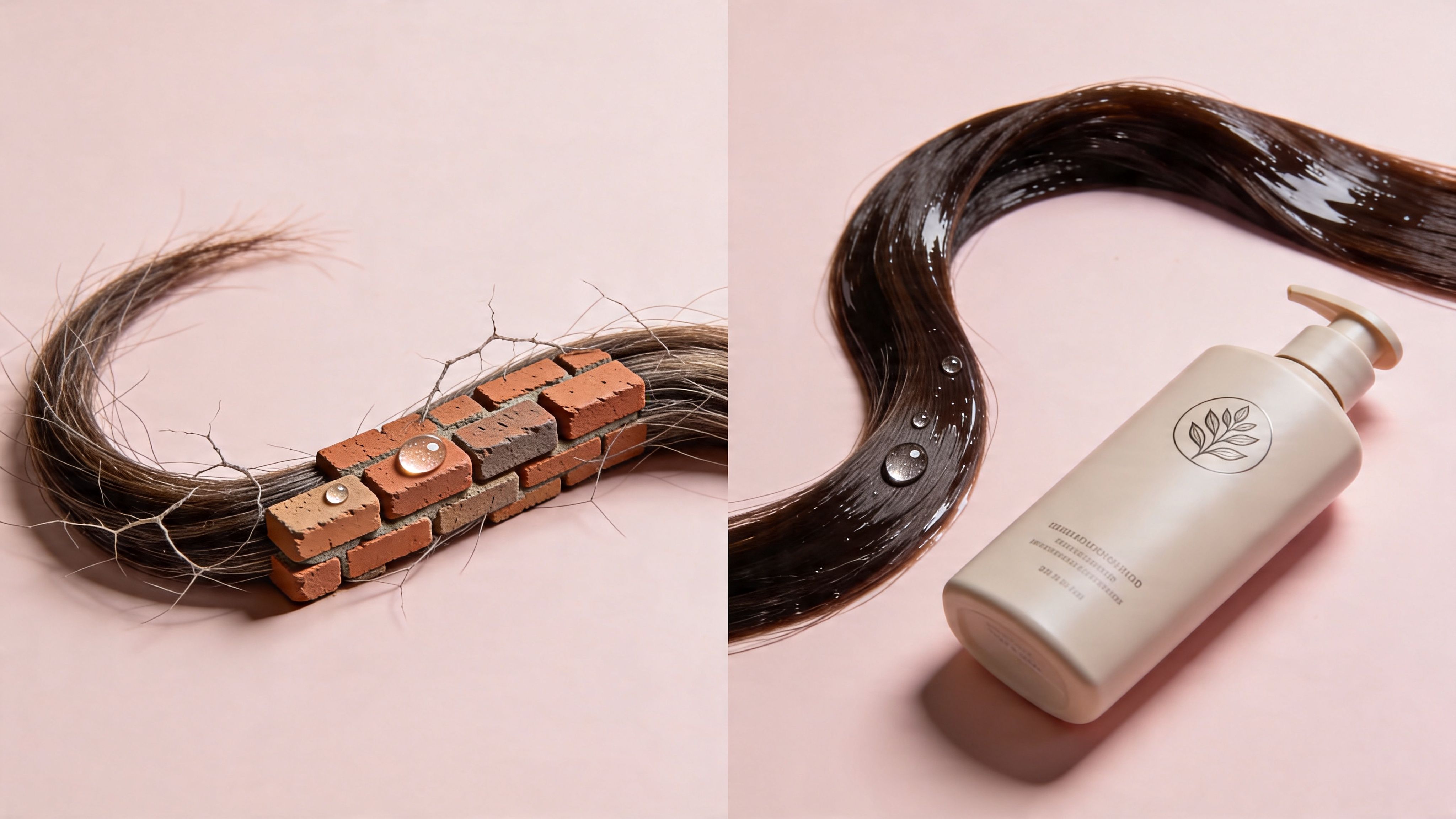
Silicones are another area where people get confused. They are not automatically evil, but many curl routines struggle with heavy silicone buildup. Think of some silicones as a raincoat on the hair. A light raincoat can be helpful in some situations. A thick plastic tarp that never comes off can trap old residue and make hair feel dull, stiff, or oddly dry underneath a smooth surface.
Drying alcohols can also create trouble, especially in styling products used often. They evaporate quickly and can leave hair dehydrated. Curly hair then frizzes because it is searching for moisture from the air.
Parabens and phthalates come up often in clean beauty discussions too. Many people choose to avoid them because of irritation concerns or because they prefer simpler formulas.
Ingredients that support curl behavior
Now for the helpful side of the label.
Gentle cleansers
These are the ingredients that clean without acting like degreaser on a silk blouse. Mild surfactants help remove sweat, dirt, and product while leaving more of the hair’s natural protective layer intact.
Look for shampoos that feel cleansing but not stripping. If your scalp feels raw or your lengths feel rough right after washing, your cleanser may be too aggressive.
Humectants
Humectants attract water. They can help curls stay soft and springy when used in the right environment and amount.
Examples from the verified information include glycerin and aloe vera. If you want a practical companion read on ingredient roles, this overview of aloe vera shampoo and conditioner is a useful example of how soothing, water-attracting ingredients are often discussed in hair care.
Emollients and oils
These make hair feel smoother and more flexible. Plant oils and butters can soften the cuticle and reduce the rough, raised feel that contributes to frizz.
The key is amount and fit. A rich butter can be wonderful on very dry curls and too much for finer waves.
Proteins
Proteins help support strength. Hydrolyzed proteins are broken into smaller pieces so they can better interact with the hair surface.
Protein is useful when curls feel limp, overly stretchy, or fragile. But too much can make hair feel stiff, rough, or straw-like. The goal is balance, not constant protein at every step.
A simple label-reading shortcut
When you pick up a product, start with the first five ingredients. They often tell you the formula’s main personality.
Here is a quick guide:
| What you see early on | What it may suggest |
|---|---|
| Water plus gentle cleansers | A milder shampoo base |
| Rich oils and butters high on the list | A heavier, more sealing formula |
| Protein listed near the top | A strengthening focus |
| Multiple film-formers and resins | More hold and cast for styling |
| Fragrance high on the list with little conditioning support | A formula that may prioritize feel or scent over performance |
This is not a rigid rule. It is a practical starting point.
The junk food and balanced meal analogy
Some products behave like junk food for hair. They give a quick hit of smoothness or shine but do not support long-term moisture balance. Hair can look good for a day, then become drier, flatter, or more brittle over time.
Other products behave more like a balanced meal. They cleanse appropriately, add water, soften the surface, and strengthen where needed. That is what many individuals are really looking for when they search for clean hair products for curly hair.
Why Hair Porosity Is Your Secret Weapon
You can buy a beautifully formulated product and still hate the result. Porosity often explains why.

Porosity describes how your hair takes in and holds moisture. A simple way to picture it is roof shingles. If the shingles lie flat, water moves differently than if they are lifted and worn down.
What low, medium, and high porosity feel like
Low porosity
Low-porosity hair tends to resist water at first. Products can sit on top instead of sinking in.
That often means heavy butters, thick oils, and dense creams create buildup fast. Hair may look shiny but feel coated, limp, or slow to dry.
Medium porosity
This is often the easiest category to work with. Hair usually accepts moisture reasonably well and holds style without extreme effort.
These curls often do best with balanced routines. Not too heavy, not too protein-packed.
High porosity
High-porosity hair takes in water quickly but loses it quickly too. It may dry fast, frizz easily, and feel rough or inconsistent.
This is common in color-treated, heat-damaged, or heavily processed hair. A frequently overlooked concern is how clean formulas behave on damaged curls. Recent data shows that 22% of clean curly shampoos contain mild chelators that can accelerate color fade in high-porosity hair, which matters because 40% of women aged 18 to 35 with curls also color-treat their hair (Innersense curly collection).
Why porosity changes product performance
A leave-in with rich oils may be perfect for high-porosity curls because it helps slow moisture loss. The same formula can flatten low-porosity hair.
A protein treatment may help damaged curls regain structure. On hair that is already balanced, that same treatment may leave strands stiff.
This is the part many curl guides skip. They give ingredient advice without explaining how the hair’s structure changes the result.
The question is not “Is this a good ingredient?” The better question is “How does my hair respond to this type of ingredient?”
If you want a more specific starting point for damaged or porous curls, this high porosity hair routine guide can help you match product types to that hair structure.
Ways to check porosity without guessing
A lot of people rely on the float test, but it can be misleading. Product residue, oil, and even the way the hair was washed can affect the result.
A more reliable home approach is observation:
- Notice wetting time. Does water bead up for a while, or does hair soak immediately?
- Watch drying time. Does it take ages to dry, or does it air-dry quickly?
- Track product absorption. Do creams disappear into the hair, or sit on top?
- Feel the strand. Does it feel smooth and sealed, or rough and worn?
Later, it helps to confirm your pattern with a structured quiz rather than a single strand trick.
A visual walkthrough can help if this concept still feels abstract.
The aha moment most curl users have
Many “bad” product experiences are really porosity mismatches. The cream was not bad. It was too heavy. The protein treatment was not wrong. It was too frequent. The shampoo was not weak. It was gentler than the harsh cleanser your scalp had adapted to.
When you know your porosity, ingredient shopping becomes far less random.
How to Analyze Your Current Hair Products
Before buying anything new, audit what you already own. Most routines reveal the problem quickly once you look at the formulas side by side.
Start with the label, not the marketing
Front labels say things like “curl enhancing,” “repair,” or “hydrating.” The ingredient list tells you whether the product is built to do that.
Check the first five ingredients first. Then scan for category clues:
- Harsh cleansers if your shampoo leaves hair rough
- Heavy coating ingredients if your hair looks dull or gets greasy fast
- Protein-rich formulas if your hair feels stiff or brittle
- Strong fragrance or potential irritants if your scalp feels itchy
You do not need to decode every term manually. A faster option is to use a tool that scans ingredient lists and flags patterns. The full set of hair ingredient and routine tools is useful for this kind of product audit because it lets you review individual formulas and think about how products interact inside a routine.
Look for routine conflicts
A single product may look fine on its own and still create problems in combination.
Here are common examples:
- Too many heavy layers. A rich leave-in, thick cream, and oil topper can smother finer curls.
- Too much protein in one wash day. Protein shampoo, protein mask, and protein styler can leave hair rigid.
- Not enough true moisture. A routine full of oils and sealants may still lack water-based hydration.
- A clean shampoo plus stubborn buildup. Sometimes the shampoo is mild, but the styling stack is too coating.
A simple product audit worksheet
Use this checklist on your shelf:
Shampoo Does it leave your scalp fresh but your lengths comfortable?
Conditioner or mask Does it add slip and softness, or only surface smoothness?
Leave-in Does it improve moisture, or just make hair feel coated?
Styler Does it define curls without crunch that never softens?
Finisher Is the oil or serum helping, or hiding dryness for a few hours?
If your hair feels worse on day two than on wash day, the issue is often buildup, imbalance, or layering too many products that do the same job.
A good audit saves money too. Many people do not need more products. They need fewer conflicts.
Building Your Personalized Clean Curly Routine
A personalized curl routine works like a recipe. Each step should do one job well, and the ingredients should work together instead of competing on your hair. That matters because curls react fast to imbalance. Too much weight can flatten definition. Too much protein can make strands feel rigid. Too little hold can let humidity pull curl clumps apart.
Start with the order of the routine, then adjust the formula weight and ingredient profile to fit your porosity, density, scalp comfort, and styling goals.
Step one with shampoo
Shampoo sets up everything that comes after it. If the scalp still has oil, sweat, or styling residue sitting on it, your conditioner and stylers have to fight through that layer first.
For curly hair, a good cleanser removes buildup without leaving the lengths rough. Mild surfactants usually suit frequent wash days better because they clean without creating that tight, stripped feeling. If you use lots of gel, cream, or oil, a stronger wash every so often may still make sense. Clean does not mean barely washed. It means your scalp feels fresh and your curls still feel like hair, not straw.
Step two with conditioner or mask
Conditioner is where slip, softness, and flexibility come back in. You can picture it as the step that helps strands line up instead of snagging against each other.
Low-porosity hair often prefers lighter conditioning because heavy butters and oils can sit on the surface like a winter coat in warm weather. The hair feels covered, yet still thirsty underneath. High-porosity or damaged hair usually loses water more easily, so richer formulas often help it stay softer and more elastic.
A simple question helps here. Does your conditioner make detangling easier and curls more supple, or does it only leave a temporary coated feel?
Step three with leave-in and stylers
This is the stage where routines become personal.
Leave-ins support moisture and softness. Stylers shape how the curl dries and how long that shape lasts. Gels, foams, creams, and serums are not just different textures. They create different behavior on the strand.
- Fine or easily weighed-down curls often do better with a light leave-in and a foam or gel that gives hold without much residue.
- Dry, coarse curls usually need more cushion from a leave-in or cream before adding a hold product.
- Frizz-prone curls often respond well to stylers that form a light cast, because that cast keeps curl groups together while they dry.
- Damaged curls usually need softness first, then targeted strength support rather than protein in every single step.

A practical layering example
Two common layering patterns can help, but they are starting points, not rules.
LOC
Liquid, oil, cream. This approach can suit very dry hair that loses moisture quickly, especially if the final cream helps slow that moisture loss.
LCG
Leave-in, cream, gel. This pattern is common for curls that need both softness and lasting definition, because the gel adds a stronger finish around the curl clump.
The better method is the one your hair responds to. If your curls look plush on wash day but limp by afternoon, reduce heavy layers. If they feel soft while wet but explode into frizz as they dry, increase hold or switch to a styler that forms a better film around the strand.
Personalization matters more than product count
More products do not automatically create better curls. A shorter routine often works better because each formula has room to do its job.
Ask yourself a few practical questions:
- Does my scalp feel better with more frequent gentle cleansing?
- Does my hair need more water-based hydration, or less surface buildup?
- Do my curls need softness, structure, stronger hold, or a mix of all three?
- Do my products match my climate, porosity, and styling goal?
If you want a curl-specific framework, this curly hair routine guide can help you compare your current lineup with a structure built around curl behavior.
IsItClean also includes tools for matching ingredient patterns to your own hair traits, including quizzes for hair type, porosity, and scalp sensitivity, plus a routine analyzer for spotting formula mismatches. That makes the science more usable. Instead of guessing whether a product is "clean enough," you can choose formulas based on how your curls respond.
Clean Ingredient Formulations for Common Curl Concerns
A product label makes more sense once you read it like a curl behavior map. The goal is to match ingredients to what your curls are doing on your head, not to chase a formula that works for someone else.
When frizz shows up the minute humidity rises
Humidity frizz usually means your hair is pulling in moisture from the air, but not evenly. Some parts of the strand swell faster than others, which lifts the cuticle and breaks up curl clumps. A good styler helps create a flexible outer layer, almost like a light raincoat for the curl, so the shape stays more consistent as the air changes.
Look for a formula pattern like this:
- Water near the top of the ingredient list so the product starts with hydration
- Conditioning ingredients that help the cuticle lie flatter
- Film-forming hold ingredients that keep curl groups together
- A lighter oil profile if your hair gets puffy at the same time it falls flat
If glycerin-heavy stylers seem to make your hair expand too much, your hair may respond better to a formula that relies more on hold agents and lighter conditioners.
When curls feel weak after color, bleach, or heat
Overprocessed curls often need two jobs done at once. They need softness so they can bend without snapping, and they need some internal support so the curl pattern can spring back instead of collapsing.
That is why the best treatment formulas for this concern are usually balanced, not extreme.
Look for:
- Hydrolyzed proteins or amino acids to patch weak areas along the strand
- Conditioning agents and fatty alcohols to improve slip and flexibility
- Emollients that soften without leaving the hair greasy
A useful way to judge the formula is by the result. If your hair feels coated but still mushy or limp, the product may be giving softness without enough structure. If it feels stronger but rough, the formula may need more moisture support.
When hair feels stiff, dry, and strangely hard
This texture often points to too much strengthening in the routine. Hair needs some structure, but too many protein-rich or bond-focused products can make curls lose stretch. The strand starts acting more like a dry twig than an elastic ribbon.
Common clues include:
- Hair snapping easily instead of stretching
- Curls looking tighter but feeling rough
- Several repair or strengthening products layered in the same routine
If that pattern sounds familiar, pause the repair products for a wash or two and return to simpler moisturizing formulas. As noted earlier, protein overload often improves when the routine becomes softer and less crowded.
Healthy curls need both bounce and bend. A treatment is doing its job when hair feels more elastic after it dries, not harder.
When your scalp feels fine but your ends stay dry
This is one of the most common curl mismatches. The scalp is close to natural oils and fresh water during wash day. The ends are older, more weathered, and often more porous. They usually need more water retention and more protection from friction.
Oils can help with sealing, but they are more like wrap on top of food than water inside a sponge. If the strand is dry underneath, oil alone cannot fix that. A better match is usually a leave-in or conditioner built around water, humectants, and softening conditioners, with sealing ingredients added after.
Here is a simple way to match the concern to the formula pattern:
| Concern | Formula pattern to look for |
|---|---|
| Dry lengths | Water, humectants, softening conditioners |
| Flat roots and frizzy ends | Lightweight leave-in plus stronger hold styler |
| Brittle damaged curls | Moisture-first treatment with measured protein support |
| Buildup and dullness | Gentle cleanser followed by balanced conditioner |
This kind of pattern reading is what turns ingredient science into routine decisions. It also helps explain why two products that both claim to be "clean" can behave completely differently on the same head of curls. If you use IsItClean to check formulas against your porosity, damage level, and styling goals, those ingredient lists become much easier to sort into products that add definition, reduce frizz, and fit your hair.
Your Journey to Consistently Great Curls Starts Now
Great curls rarely come from luck. They come from matching ingredients to how your hair behaves.
This represents a key shift. Clean hair products for curly hair are not just about avoiding a few ingredients. They are about choosing formulas that respect moisture, support definition, fit your porosity, and work together inside one routine.
If your hair has felt confusing, there is a good chance it has been mismatched. A product that strips too much, coats too much, or strengthens too aggressively can make healthy curl behavior harder to see.
The upside is clear. Once you understand ingredient jobs, porosity, and routine balance, the process becomes less emotional and more consistent. You stop chasing random recommendations and start making decisions with a reason behind them.
Ready to stop guessing and create a routine that fits your curls? Start with the tool that puts your hair type, porosity, scalp needs, and styling goals into one plan.
Ready to make your routine simpler and more personal? Try IsItClean and use the Hair Routine Builder to get a customized plan for your curls, ingredients, and goals.