
You booked the bleach appointment, did the second round of color at home, or kept reaching for the flat iron because your hair looked smoother for a day. Then one wash later, everything changed. Your hair felt rough, stretchy, puffy, or weirdly stiff. The ends tangled into little knots. Wet strands started snapping in the shower.
That moment can feel awful. A lot of people think they have “ruined” their hair for good.
You probably have not. But you do need a different plan now.
How to fix over processed hair starts with understanding what kind of damage you are dealing with. Over-processed hair is not just “dry hair.” It can be highly porous, protein-depleted, moisture-starved, or overloaded from too many bond-building and protein-heavy products. If you guess wrong, you can make brittle hair stiffer or make mushy hair even weaker.
The good news is that damaged hair responds best to calm, consistent care. Small changes matter. Better wash habits matter. Trims matter. Product labels matter. And getting the diagnosis right matters most of all.
That Sinking Feeling When Your Hair Is Over Processed
It usually starts with something small.
Maybe your hair no longer air-dries the way it used to. Maybe your curls look limp on one side and frizzy on the other. Maybe your blonde feels great right after styling, then turns into a dry cloud by bedtime. Wet hair can feel gummy. Dry hair can feel like straw. Both can happen on the same head.

What over-processing means
Over-processing happens when chemical services or repeated heat wear down the hair shaft faster than your routine can support it. Bleach, permanent color, relaxers, perms, and frequent hot tools all raise the risk.
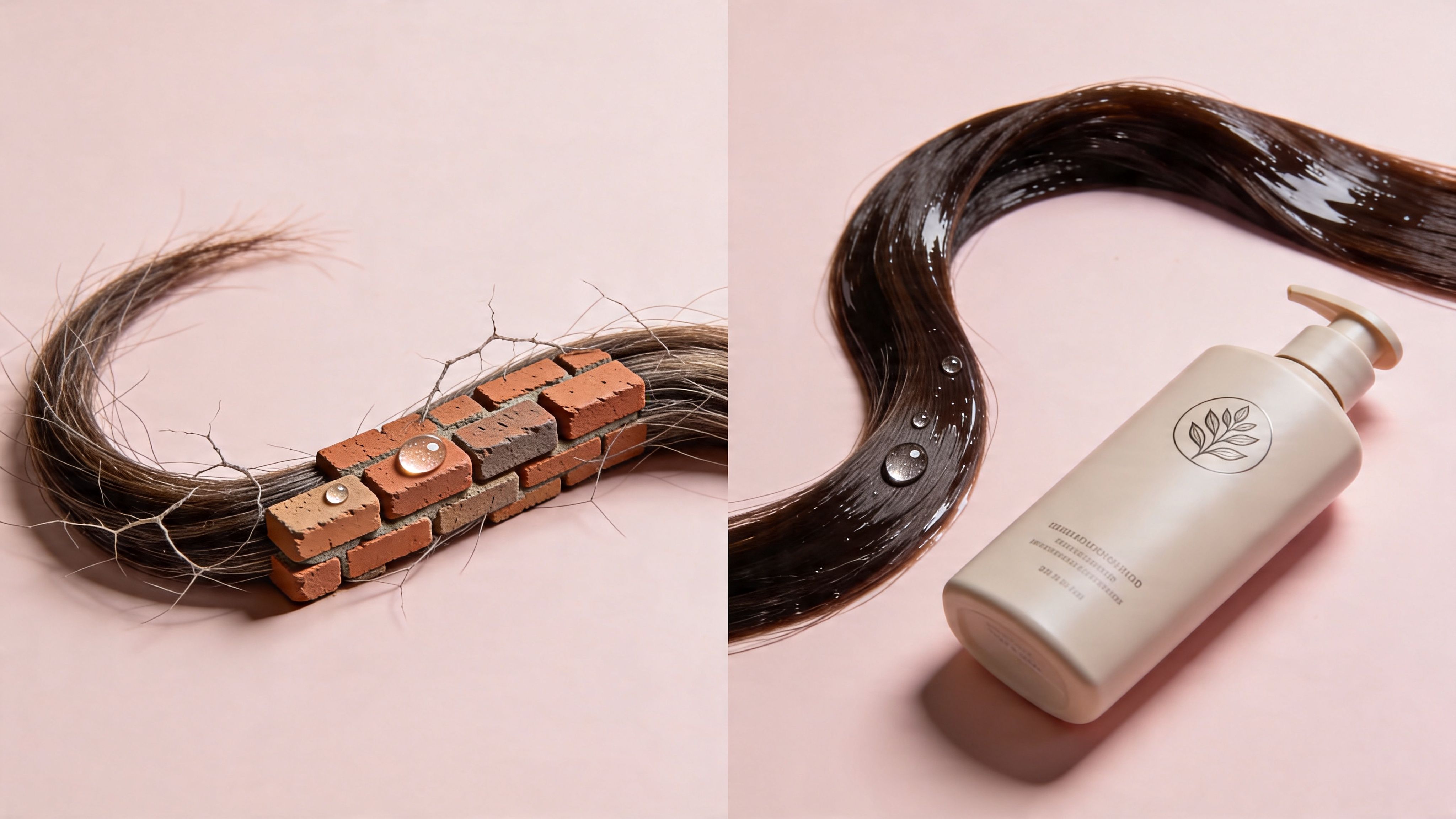
A scientific study published in PMC found that damaged hair shafts can show 40 to 60% higher surface irregularity than healthy strands, and that roughness correlates with 30 to 50% loss in tensile strength. In plain language, the outer layer gets rougher and weaker, so the strand handles stress poorly.
The signs people notice first
Some clues are obvious. Others are easy to dismiss at first.
- It tangles faster: Mid-lengths and ends start knotting even after conditioner.
- It behaves differently when wet: Hair stretches too much, feels mushy, or snaps while detangling.
- It looks bigger but feels thinner: Frizz expands, but the strand feels fragile.
- It stops holding moisture: You add oils and masks, but it still feels off.
If your hair seems to get worse no matter what product you use, the problem may be misdiagnosis, not lack of effort.
That is why rescue starts with detective work, not another random mask.
First Diagnose Your Specific Type of Hair Damage
Many individuals skip this part. They search how to fix over processed hair, buy the strongest repair mask they can find, and hope for the best.
That can backfire.
A common mistake is assuming all damaged hair needs more protein. In reality, about 62% of women with color-treated hair experience protein overload from repeated bond-building treatments, which can leave hair brittle and stiff, according to Healthline. That is why diagnosis matters before treatment.

Start with porosity
Porosity describes how easily your hair absorbs and loses moisture. Over-processing often lifts and chips away at the cuticle, which leaves gaps in the strand.
Hair with higher porosity often does this:
- Soaks up water fast
- Dries fast
- Feels frizzy soon after styling
- Gets puffy in humidity
- Tangles at the ends easily
A simple at-home check is the float test. Take a clean shed strand and place it in water. This can give you a clue, but it is not perfect. Product buildup can throw it off.
If your hair tends to absorb products quickly and still feel dry, you may want to review a high porosity hair routine for a more suitable repair approach.
Then check elasticity
Elasticity tells you how well the strand stretches and returns without breaking. This is one of the clearest ways to separate moisture issues from protein imbalance.
Try this with a wet strand:
- Gently stretch one shed hair between your fingers.
- Watch what it does.
- Notice both the stretch and the feel.
Here is how to read it:
| Strand behavior | What it often suggests |
|---|---|
| Snaps quickly with little stretch | Hair may be too stiff or protein-heavy |
| Stretches a lot and stays limp | Hair may need structural support |
| Stretches slightly and bounces back | Better balance |
Learn the difference between dry, mushy, and stiff
People often use “dry” to describe every form of damage. It helps to get more specific.
When hair needs more moisture
Moisture-deficient hair often feels rough, dull, and hard to smooth. It may puff up after washing and feel thirsty no matter how much oil you add.
This hair usually benefits from humectants and rich conditioners, not a stack of protein products.
When hair needs more structure
Some over-processed hair feels stretchy, weak, and overly soft when wet. That is different from ordinary dryness. The strand lacks support.
A carefully chosen protein or bond-repair treatment can help here, especially if your hair has been bleached or chemically altered.
When hair has protein overload
Protein overload often feels confusing because the hair seems damaged, but more repair products make it worse. The usual signs are stiffness, brittleness, and snapping.
Brittle hair is not always under-treated. Sometimes it is over-treated.
Look at the whole head, not just one strand
Damage is rarely perfectly even. Your front pieces may be fried from heat. Your crown may feel healthier. Your ends may be porous while your roots are not.
Check a few areas:
- Hairline pieces
- Crown
- Mid-lengths
- Very ends
If your hair is curly or wavy, also notice whether some sections have lost their pattern. Over-processing can make certain areas looser or straighter.
Keep your diagnosis simple
You do not need a lab report. You just need a starting point.
Write down which of these sounds most like your hair right now:
- Porous and frizzy
- Dry and rough
- Mushy and stretchy
- Stiff and brittle
- Mixed damage with healthier roots and fragile ends
That one step makes the rest of your plan smarter.
Your Immediate 48-Hour Triage Plan
The first two days matter because they stop the spiral. When hair is freshly over-processed, a lot of breakage comes from normal habits you have not changed yet.
Put all heat on pause
Flat irons, curling tools, and high-heat blow drying need to stop for now. Even “just touching up the front” can keep weak areas from stabilizing.
Air-drying is safer. If you need to remove water faster, gently press with a soft T-shirt or microfiber towel instead of rubbing.
Do one careful repair wash
For immediate repair, professional protocols from Fekkai and Pureology emphasize a pre-shampoo bond repair treatment, and clinical trials showed this step could help lead to 65% stronger hair within four weeks according to Fekkai.
A simple first wash looks like this:
- Apply a bond-repair pre-treatment to damp hair and let it sit.
- Use a sulfate-free shampoo with lukewarm water.
- Follow with a deep conditioner or mask matched to your diagnosis.
- Rinse gently and avoid rough towel drying.
If your hair is stiff and brittle, start with moisture-focused conditioning. If it is overly stretchy and weak, use a balanced repairing mask rather than the richest butter you own.
Change how you detangle
Wet damaged hair breaks easily. The method matters as much as the product.
Use a wide-tooth comb, not a brush. Start at the ends, then work upward in small sections. Add more slip if needed instead of forcing knots apart.
Book the trim you do not want
Split ends do not stay politely at the bottom. Once the strand is splitting, that damage can keep traveling upward.
Regular trims every 6 to 8 weeks are recommended in expert guidance for over-processed hair care in the Davines article. Even a small trim can make the rest of your hair easier to detangle and protect.
A trim is not giving up on your length. It is protecting the length you still have.
Sleep like your hair is fragile
For the next couple of nights, treat your hair gently.
- Use a loose style: A soft braid or low bun reduces friction.
- Skip tight ties: Choose a silk or satin scrunchie.
- Keep hands off: Constant touching creates extra stress on weak ends.
This is triage, not perfection. You are creating a calmer baseline so your weekly routine can work.
Building Your Weekly Hair Repair Routine
Once the emergency phase settles down, your hair needs rhythm. Repair usually comes from repeated gentle choices, not one dramatic product.
A consistent routine that includes bi-weekly deep conditioning can restore 70 to 80% of hair’s strength and reduce breakage within 4 to 6 weeks, and experts also recommend co-washing on off-days to avoid stripping fragile strands, according to Davines.

The weekly rhythm that works
Think in patterns, not product hype. Individuals recovering from over-processing often benefit from three categories of care:
- Gentle cleansing
- Deep treatment
- Low-stress styling
If your hair is very fragile, fewer wash days often help. On non-shampoo days, conditioner-only washing can refresh the hair without pulling away as much moisture.
Sample Weekly Over-Processed Hair Recovery Schedule
| Day | Action |
|---|---|
| Monday | Gentle wash with sulfate-free shampoo, then deep moisture mask |
| Tuesday | Leave-in conditioner and low-tension style |
| Wednesday | Co-wash if needed, then detangle gently |
| Thursday | Rest day, add a little serum or oil to ends if needed |
| Friday | Wash day with balanced repair or protein treatment if your hair tolerates it |
| Saturday | Air-dry, loose braid or bun |
| Sunday | Scalp check, assess softness, stretch, and tangling |
Match the routine to the type of damage
If your hair is dry, frizzy, and porous
Use moisture treatments more often than protein. Look for masks with ingredients such as aloe, glycerin, honey, or rich conditioning agents. Follow every wash with leave-in conditioner.
You want softness, smoother detangling, and less puffiness after drying.
If your hair feels stretchy and weak
Add a protein or bond-repair step, but do it carefully. Hydrolyzed proteins and bond builders can help support the strand when used in moderation.
Watch how your hair behaves after each use. Better elasticity is the goal. Stiffness is a sign to pull back.
If your hair is curly or wavy
Processed curls often need extra slip and less friction. Wide-tooth combs, leave-ins, and low-tension styles matter even more here.
If you are trying to rebuild definition while reducing breakage, a curly hair routine can help you think through product order and wash day habits.
Keep your wash routine boring on purpose
A lot of damage comes from too many switches. Try staying consistent for a few weeks before deciding something “doesn’t work.”
Here is a strong baseline:
- Wash gently: Use sulfate-free shampoo only as often as needed.
- Deep condition: Use a mask one or two times a week based on your hair’s feel.
- Leave in moisture: Apply leave-in conditioner after every wash.
- Seal the ends: A lightweight oil or serum can help reduce roughness.
- Style softly: Loose braids, buns, twists, or air-dried styles reduce stress.
Your hair does not need a complicated recovery routine. It needs a repeatable one.
How to adjust without overreacting
If your hair feels softer but too limp, add a little more structure next wash day. If it feels stronger but starts snapping, increase moisture and cut back on protein-heavy products.
Use touch and behavior as your guide:
- easier detangling
- less snapping during wash day
- softer ends
- better bend and bounce
- less frizz immediately after drying
Those are real signs of progress, even before your hair looks “perfect.”
Choosing Products with Ingredient-Safe Formulas
When hair is over-processed, ingredients matter more than marketing. Two bottles can both say “repair,” but one may support your hair while the other leaves it coated, stripped, or brittle.

What to be careful with
Start by reading the ingredient list, not just the front label.
Sulfates
Sulfates are strong cleansers. On healthy hair, some people tolerate them well. On over-processed hair, they can remove too much oil and leave the cuticle feeling rougher.
If your hair already feels squeaky, puffy, or stripped after shampooing, harsh cleansing is probably not helping.
Heavy silicone buildup
Some silicones can create slip and shine, which can be useful in certain routines. But heavy, non-water-soluble buildup can make it harder for moisture-focused products to reach the hair properly.
If your hair feels coated, limp, or strangely dry underneath the smoothness, buildup may be part of the problem.
Drying alcohols
Short-chain alcohols can make fragile strands feel worse, especially if they appear high on the list in leave-ins or styling products.
These are worth watching if your ends keep getting crisp no matter how often you condition.
What usually helps
Bond-rebuilding treatments became more prominent after 2014 and changed over-processed hair care by targeting severed disulfide bonds. Clinical trials showed they could reduce breakage rates by 40 to 60% after a single professional application, according to Coveteur.
That does not mean every product belongs in every routine. It means the right category can help when the hair’s internal structure has been compromised.
Look for ingredients and product types such as:
- Bond builders: Used when chemical processing has weakened internal bonds.
- Hydrolyzed proteins: Small proteins that can temporarily reinforce damaged areas.
- Humectants: Ingredients like honey, aloe, or glycerin that help attract moisture.
- Emollients and oils: Ingredients that soften and help reduce roughness.
- Rich conditioners: Helpful for porosity and easier detangling.
Shop with a filter, not hope
A practical way to evaluate a product is to ask three things:
| Product question | Why it matters |
|---|---|
| Does this cleanse too aggressively? | Over-cleansing can worsen roughness and dryness |
| Does this formula add support or just cosmetic slip? | Damaged hair needs more than temporary shine |
| Will this fit my diagnosis? | Stiff hair and mushy hair do not need the same treatment |
If you want to screen products before buying or using them, you can analyze product ingredients for safer hair care choices.
A good repair product should make your hair easier to handle over time, not just smoother for one afternoon.
Keep expectations realistic
No ingredient can turn severely damaged ends back into untouched hair. Products can support the strand, improve feel, reduce breakage, and help you keep more of your length while healthy hair grows in.
That is still a big win.
Your Long-Term Recovery Timeline and When to See a Pro
Recovery gets easier when you stop expecting a one-week transformation. Damaged hair does not heal like skin. The strand you can see is not living tissue, so progress looks more like management, prevention, and gradual improvement.
What progress often looks like
The first signs are usually practical, not dramatic.
You may notice:
- Detangling gets easier
- Your ends catch less on clothing
- Wash day feels less stressful
- Your hair holds softness longer
- Breakage becomes less constant
Some people get discouraged because the oldest damaged parts still look worn. That is normal. The goal is to make those lengths more manageable while protecting new growth.
Why trims and patience matter
If you keep every split end in the name of length, your routine has to work much harder. Small regular trims remove the worst damage and make the rest of the hair easier to care for.
This is also why consistency beats intensity. A calmer routine repeated over months usually does more than rotating through every viral repair product.
Do not ignore the scalp
Over-processing can affect more than the strand. It can disrupt the scalp’s microbiome and contribute to sensitivity and itchiness in 25 to 35% of women with color-treated hair, according to Wella.
If your roots feel sore, itchy, flaky, or unusually reactive after processing, your recovery plan should include scalp care too.
Helpful habits include:
- Gentle cleansing: Avoid piling on harsh cleansers while your scalp is irritated.
- Less friction: Skip tight styles that tug at tender roots.
- Calmer formulas: Fragrance-heavy or drying products may feel worse during recovery.
Know when home care is not enough
There is a point where a professional should step in.
Consider booking a stylist or trichology consultation if:
- Hair is snapping off in clusters
- Wet hair feels mushy and falls apart
- You have ongoing scalp pain or irritation
- Breakage is severe despite consistent gentle care
- You suspect overlapping bleach or chemical damage near the roots
A skilled stylist can assess whether you need a haircut, a bond-repair service, a temporary pause on all chemical services, or a simpler routine.
If your hair is giving you clear distress signals, getting help early can preserve more length than trying to push through at home.
Stay focused on the right goal
The true goal is better elasticity, less breakage, easier wash days, calmer ends, and healthier new growth. That is what long-term success looks like.
Build Your Custom Plan for Healthy Hair
By now, you know that how to fix over processed hair is not one trick. It is a sequence.
You diagnose the type of damage first. You stop the habits that are making it worse. You build a weekly rhythm around moisture, structure, and low-stress styling. You choose formulas that support repair instead of just covering up roughness. Then you stay patient long enough to let those choices add up.
That might sound simple, but it can still feel hard when your own hair is giving mixed signals. One wash day it feels soft. The next day it feels brittle again. Your roots and ends may need completely different things. That is why personalization matters so much with damaged hair.
A routine for high-porosity bleached waves is not the same as a routine for relaxed hair with protein overload. A person with scalp sensitivity should not blindly copy someone else’s repair shelf. The strongest routine is the one that matches your hair’s actual condition.
If you want to make this easier on yourself, gather a few basics before changing everything at once:
- Your damage notes: stiff, mushy, frizzy, porous, split, or mixed
- Your current products: shampoo, mask, leave-in, serum, styling products
- Your habits: heat use, wash frequency, detangling, tight styles
- Your goals: less breakage, softer texture, curl recovery, better scalp comfort
That gives you a practical starting point. It also makes it much easier to see progress when it happens.
Hair recovery is rarely dramatic day to day. It is often quiet. Less hair in the comb. Fewer knots at the nape. Ends that do not feel shredded by evening. Those small wins count.
If you want help turning all of this into a routine you can follow, try IsItClean and use the Hair Routine Builder to create a personalized plan for your hair type, porosity, damage level, and product preferences. It is the easiest way to stop guessing and start building a repair routine that fits your hair.