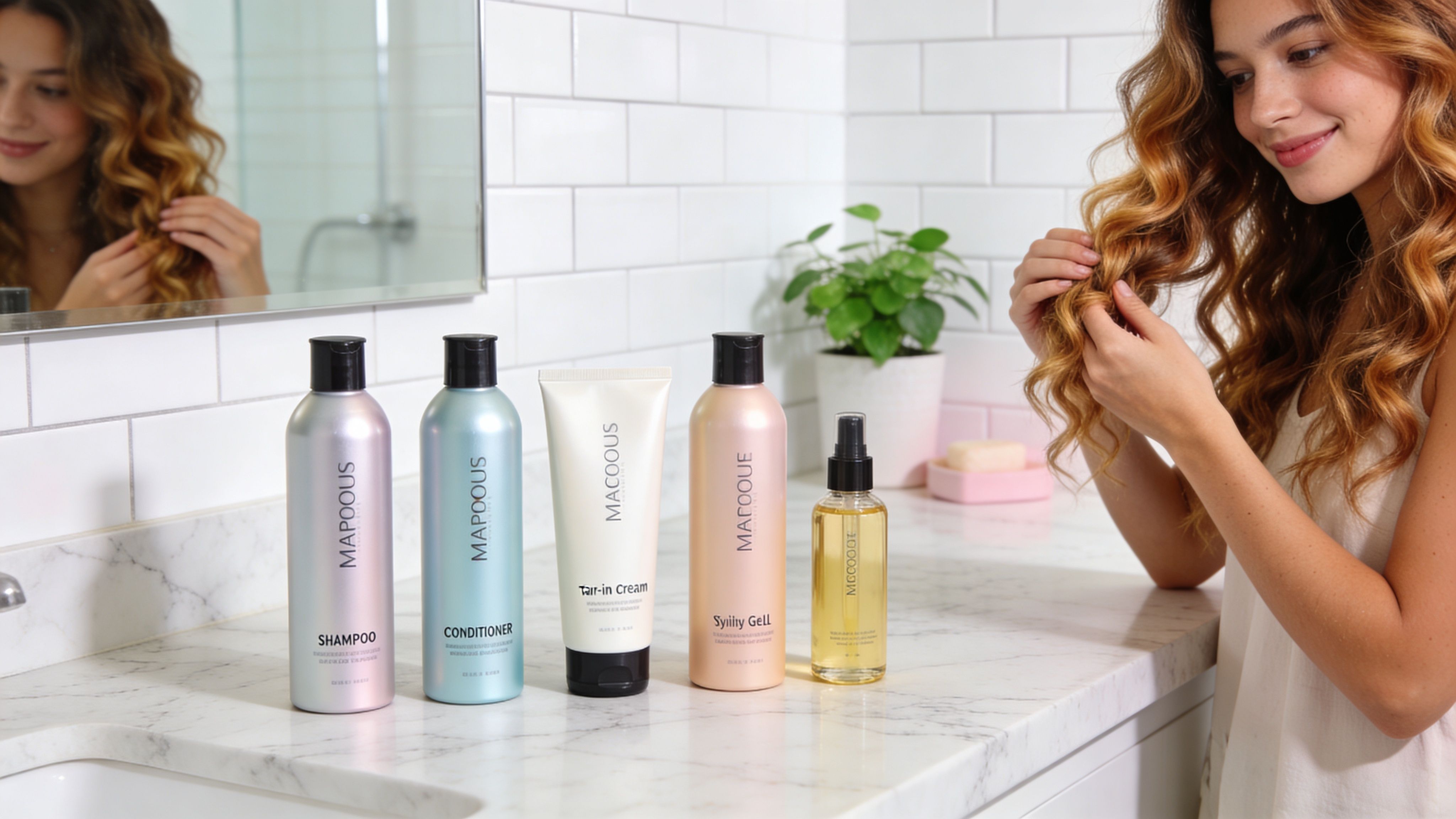
Some mornings your hair dries into soft bends. Other days, a few pieces coil into ringlets and the rest puff out. You try a “curl cream” and your roots go flat. You switch to a light wave spray and your ends feel rough by noon.
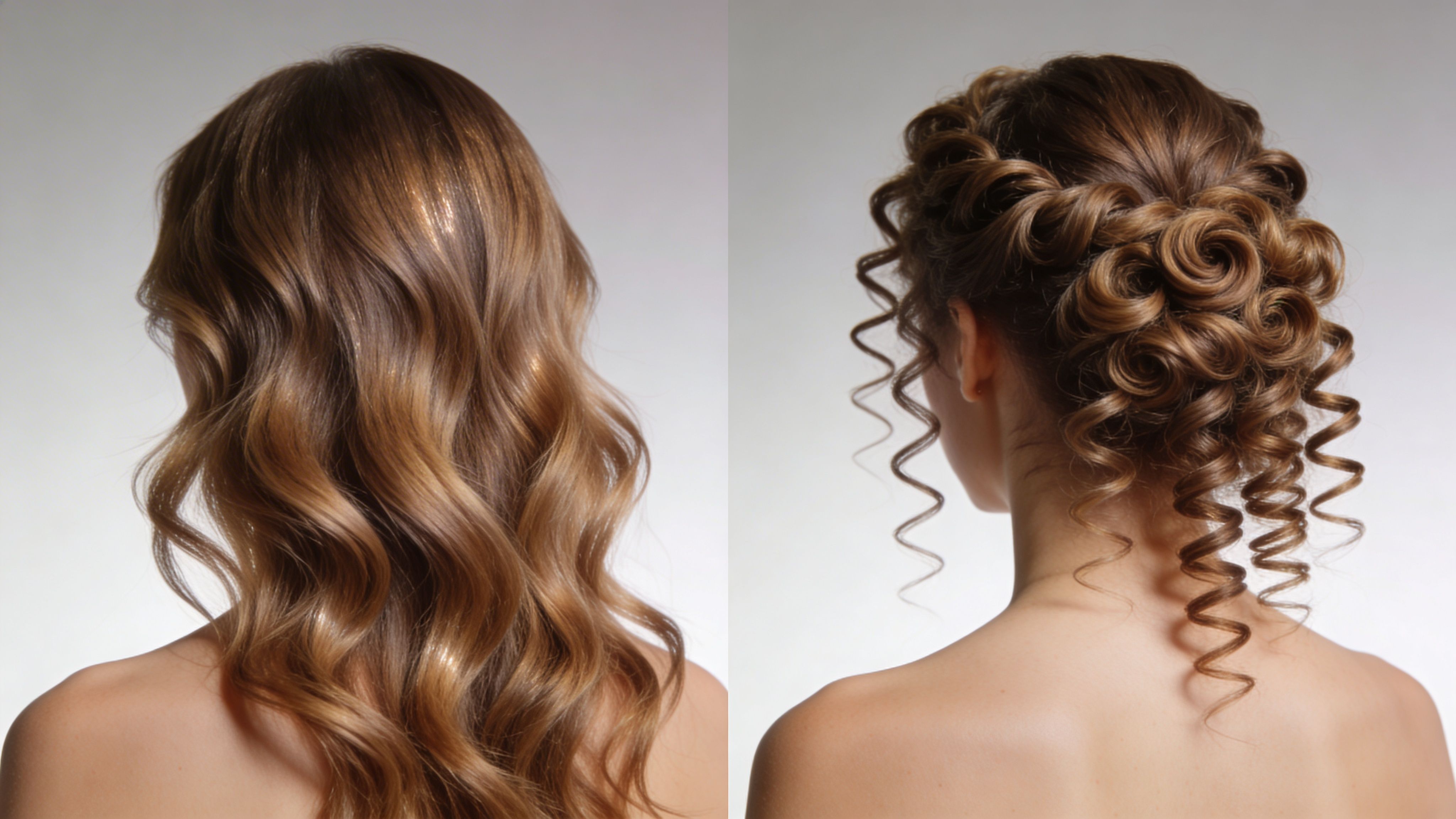
That confusion is common. Hair does not always present itself neatly, and the difference between curly and wavy hair is not just about how it looks in the mirror. It starts with structure, and that structure affects moisture, frizz, shrinkage, detangling, and which ingredients help.
A simple chart can only take you so far. What helps most is understanding why one pattern needs lighter support and another needs richer moisture. Once that clicks, your routine gets much easier.
| Feature | Wavy Hair | Curly Hair |
|---|---|---|
| Pattern shape | S-shaped bends | Full spirals or ringlets |
| Typical category | Type 2 | Type 3 |
| Root behavior | Often flatter at the root | More lift from the root |
| Oil movement | Easier along the strand | Harder along the strand |
| Common complaint | Frizz plus loss of definition | Dryness, shrinkage, tangles |
| Product preference | Lightweight hydration | Richer moisture and stronger hold |
Is It Wavy Or Is It Curly Finding Your True Hair Type
Maya thought she had “frizzy wavy hair” for years. On wash day, the top layer dried in loose S-shapes, but underneath she found springier sections that wrapped around themselves. She bought products for both hair types, used them interchangeably, and got inconsistent results every week.
That happens because many people do not have one perfectly uniform pattern across the whole head. The front may be looser. The crown may be stretched by brushing or heat. The underside may hold more definition.
The useful question is not, “What label do I deserve?” It is, “What is my hair doing naturally when it is clean, hydrated, and left alone?”
A few clues usually separate the two:
- Wavy hair tends to bend back and forth in an S pattern.
- Curly hair tends to wrap into loops or spirals.
- Mixed hair often has waves in some areas and curls in others.
A hair type label should guide care, not box you in.
If your hair seems wavy when wet but curlier as it dries, or curly underneath and looser on top, you are not doing anything wrong. You are seeing how structure, moisture, styling habits, and damage interact.
That is why people get stuck. They focus only on pattern, when the answer sits underneath pattern: strand shape, oil movement, and how the hair responds to water.
The Scientific Difference Hair Follicle and Shaft Shape
Two people can wash their hair the same way, use the same leave-in, and still get very different results. The reason often starts under the scalp, before frizz, shrinkage, or dryness show up.
Hair grows from a follicle, and the shape of that follicle influences the shape of the strand. A rounder follicle usually produces hair that bends gently. A flatter, more oval follicle is more likely to produce a strand that twists and curves more dramatically as it grows.

What the strand shape changes
Wavy hair usually forms an S-pattern. Curly hair usually forms loops or spirals. That pattern is not random. It reflects how evenly, or unevenly, the hair fiber is built along its length.
Here is the simple version. If a strand is fairly balanced, it bends in a looser way. If the strand has more asymmetry, it curves more strongly and can wrap around itself. That is why curl pattern charts help only up to a point. The more useful question is what the strand is physically doing, because structure affects behavior.
Why oil moves differently on waves and curls
Sebum is your scalp’s natural oil. On wavy hair, it usually has a smoother path down the strand. On curly hair, every bend slows that trip. The oil has to travel around more curves, so the mid-lengths and ends often feel drier even when the scalp itself is not dry.
That helps explain a common point of confusion. Hair can look shiny near the roots and still feel rough at the ends.
Porosity adds another layer. If the cuticle is raised or worn, moisture escapes faster, and dryness shows up sooner. If that sounds familiar, a high porosity hair routine guide can help you match your routine to how quickly your hair gains and loses water.
Why this matters for real product choices
Structure tells you what kind of support your hair needs.
Wavy hair often does best with lighter products that help the strand keep its shape without pulling it flat. Curly hair usually needs more slip, more moisture retention, and ingredients that help the cuticle stay smoother along all those turns. That is also why frizz control is rarely just a styling problem. It is a structure and moisture-management problem, which is what How to Reduce Frizzy Hair Naturally addresses well.
The practical takeaway is simple. The difference between wavy and curly hair is not just how it looks in a chart. It starts with follicle and shaft shape, then shows up in how your hair holds oil, loses moisture, reacts to humidity, and responds to products. That is the reason one person needs airy definition and another needs richer cushioning, even if both say their hair is "frizzy."
From Structure to Behavior Frizz Shrinkage and Dryness
You step out of the shower and your hair hangs long and smooth. An hour later, the waves have lifted or the curls have tightened, the outline looks bigger, and a soft halo of frizz shows up. That change is your hair structure in action.

Why curls shrink more
A curved strand behaves like a spring. The tighter the bends, the more the strand draws upward as it dries. That is why curly hair often looks much shorter once the water leaves the hair shaft, while wavy hair usually keeps more of its visible length.
Shrinkage often surprises people because wet hair can mask the hair's pattern. Water adds weight, stretches the strand, and temporarily loosens the shape. As the hair dries, its natural pattern returns.
Shrinkage does not mean the hair is unhealthy. It usually means the pattern has more spring and recoil.
Why frizz and dryness show up differently
Frizz is often a moisture and surface problem. On a straighter strand, natural scalp oil can travel down the hair more easily. On a wavy or curly strand, every bend slows that trip. Curly hair usually has more bends, so the mid-lengths and ends often lose softness first.
That is why two people can both say, "My hair is frizzy," and need very different routines. Wavy hair often frizzes because lightweight strands are reacting to humidity or being coated with products that are too heavy. Curly hair often frizzes because the cuticle is rougher along the bends and the strand needs more slip and moisture retention to stay aligned.
Breakage follows the same pattern. A strand with more twists has more spots where friction can catch during detangling, towel drying, or brushing. The practical fix is simple. More slip, less force, and styling on damp hair instead of dry brushing.
Where porosity changes the picture
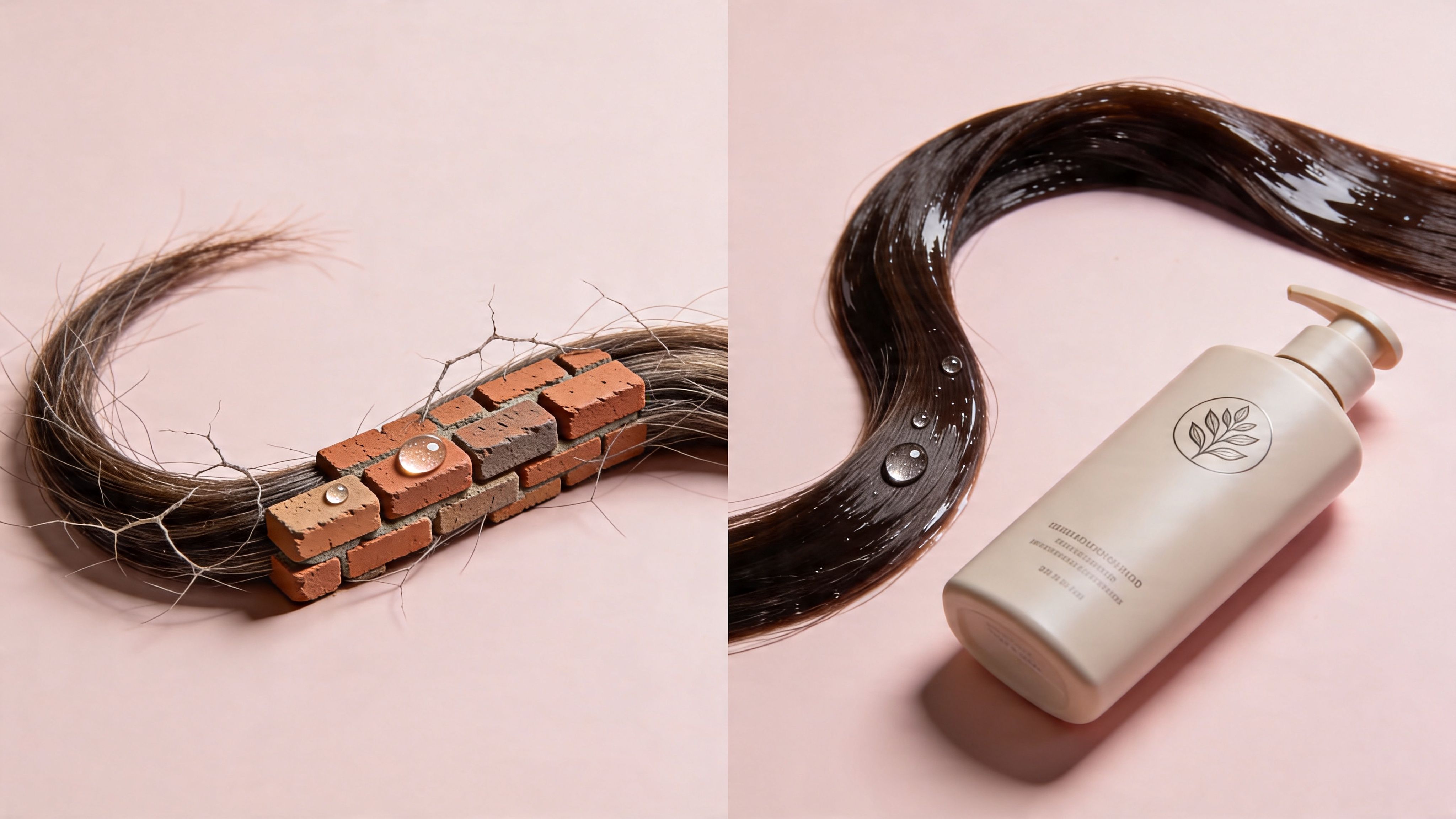
Porosity explains why some hair seems to drink up moisture and still feel dry later. If the cuticle is lifted or worn, water moves in fast and escapes fast too. That can leave waves puffy and undefined, or make curls feel rough even after conditioning.
If your hair dries quickly, frizzes easily, or feels dry again soon after wash day, a high porosity hair routine guide can help you match products to that behavior.
Frizz is often hair reacting to uneven moisture, raised cuticles, or a formula that does not match the strand.
Ingredient choice follows structure. Wavy hair usually responds better to lighter leave-ins, mousses, or gels that support shape without dragging it down. Curly hair often does better with richer conditioners, film-forming stylers, and ingredients that help the cuticle stay smoother through all those bends. For broader daily habits that support that goal, How to Reduce Frizzy Hair Naturally offers useful tips that pair well with a gentler routine.
How to Diagnose Your Hair Type at Home
You wash your hair, let it air dry, and end up asking the same question again. Are these loose curls, strong waves, or a mix of both? A good at-home check can answer that if you start with hair in its natural state and watch how it behaves without much interference.

Start with a reset wash
Use a gentle shampoo and conditioner, then skip heavy creams, oils, and strong hold stylers for this check. Let your hair dry with minimal touching. The goal is simple. You want to see your pattern, not the pattern created by product weight or brushing.
Then look for these signs:
Pattern shape Long, stretched S-shaped bends usually point to wavy hair. Loops, spirals, or full ringlets point to curly hair.
Where the pattern starts Waves often stay flatter near the scalp and show up more from the mid-lengths down. Curls often begin closer to the root because the strand is curving more consistently from the start.
What happens during drying If the hair springs up, gets shorter, or forms tighter sections as water leaves the strand, you are likely dealing with curlier hair than it first appeared.
How much the pattern changes with brushing Wavy hair often loosens fast when brushed dry. Curly hair usually expands, frizzes, or separates into a fuller shape instead of falling straight.
Check more than one area
Many heads of hair are mixed. The crown may look wavy, the hairline may coil, and the underneath layers may form tighter spirals. That is normal.
Check at least three sections: crown, sides, and nape. If one area behaves differently, build your routine around the most fragile part, which is often the driest or curliest section. If you want help sorting out that mix, a curly hair routine guide can help you match care steps to what each section is doing.
Pay attention to behavior, not just pattern
Curl charts are useful, but behavior tells you more. Ask a few practical questions.
- Does your hair lose shape under rich products? That often points to waves or finer strands.
- Does it shrink a lot after washing? That points to a curlier structure.
- Does it tangle most at the ends or at every bend along the strand? More bends usually mean more friction points.
- Does it dry fast and turn puffy? That can signal higher porosity, which changes how both waves and curls respond to products.
This part matters because structure affects routine. Two people can both have an S pattern, but the one with higher porosity or tighter bends may need more slip, more film-forming hold, and gentler drying habits.
Try a simple elasticity check
Take one shed strand while your hair is damp.
- If it stretches slightly and returns, the strand has decent flexibility.
- If it snaps quickly, the hair may need more moisture and gentler handling.
- If it stretches too far and stays limp, it may need protein or lighter formulas.
A visual demo can help if you are unsure what to look for:
Use a few low-friction clues
Your sleep setup can reveal a lot too. If your pattern looks rougher, flatter, or fuzzier after one night, friction may be disrupting the cuticle and breaking up clumps. A silk pillowcase can reduce that rubbing, which makes it easier to tell what your natural texture is doing from day to day.
If your results still seem inconsistent, keep notes for two or three wash days. Hair type is not diagnosed from one photo. It becomes clearer when you watch the same signals repeat.
Caring for Wavy Versus Curly Hair
The care difference comes down to one idea. Waves need enough moisture to stay defined, but not so much that they collapse. Curls need enough moisture and slip to stay flexible and resist breakage.
Wavy vs. Curly Hair Care at a Glance
| Care Aspect | Wavy Hair (Type 2) | Curly Hair (Type 3) |
|---|---|---|
| Cleansing | Gentle cleansing that removes buildup without flattening texture | Gentle cleansing that protects natural moisture |
| Conditioning | Lightweight conditioner, focused on mid-lengths and ends | Richer conditioner with more slip for detangling |
| Detangling | Usually easier with a wide-tooth comb on damp hair | Best done slowly on very slippery, conditioned hair |
| Leave-in products | Light leave-in or spray if needed | Creamy leave-in often works better |
| Styling weight | Mousses, foams, and light gels | Curl creams and stronger hold gels |
| Main risk | Buildup and limp roots | Dryness, frizz, and breakage |
| Overnight care | Protect shape without crushing roots | Protect curl clumps and reduce friction |
What wavies usually do best
Wavy hair often likes a lighter hand. Too much butter, oil, or thick cream can pull the pattern down and leave hair looking straighter than it is.
A good routine often includes:
- A balanced cleanser that removes residue without making the hair rough
- A light conditioner used mainly on lengths and ends
- A light hold styler that supports clumping without stiffness
What curls usually need more of
Curly hair usually benefits from more slip during wash day and more moisture retention after it. Detangling with conditioner in the hair is often safer than detangling after the rinse.
If your strands tend to feel parched, a dedicated curly hair routine can help organize cleansing, conditioning, and styling in a more consistent way.
If your scalp gets irritated easily, texture care gets harder fast. A scalp sensitivity quiz can help you narrow down gentler cleanser choices.
Small habits that help both types
One of the easiest upgrades is reducing friction while you sleep. If you are comparing fabric options, this guide to choosing a silk pillowcase is a useful place to start because overnight rubbing can disturb both waves and curls.
Styling Wavy and Curly Hair for Definition
You style your hair after wash day, let it dry, and end up even more confused. Your waves may puff out and look undefined, or your curls may stretch, frizz, and lose their spring. In many cases, the issue is not your hair type. It is a mismatch between your hair’s structure and the way you are styling it.

Definition starts with how strands group together. Wavy hair usually forms loose S-shapes, so it often needs help staying in organized clumps as it dries. Curly hair forms loops or spirals, so it usually needs help keeping those spring-like groupings intact without breaking them apart.
That difference changes the whole styling approach.
What waves usually want from styling
Wavy hair often looks best with support, not pressure. If you coat it with dense creams or too much oil, the pattern can relax under the extra weight, much like a light ribbon droops when it gets wet.
A wave-friendly styling routine often works best when you:
- apply products on very wet hair so strands can gather into larger clumps
- choose mousse, foam, or a light gel for hold without heaviness
- avoid over-touching during drying, which can separate clumps into frizz
If your pattern keeps falling flat by the end of the day, a wavy hair routine built for lightweight definition can help you match product texture to your strand needs.
What curls usually want from styling
Curly hair usually needs more grip and more slip at the same time. Slip helps strands group together during application. Hold helps those curl clumps keep their shape once water evaporates.
A simple comparison helps here. Waves often need encouragement. Curls often need protection. If you rake through curly hair too aggressively or style it too dry, you can break up natural curl families into smaller pieces, which often leads to frizz and less definition.
Curly styling usually works better when you:
- apply stylers to soaking wet or very damp hair
- smooth or scrunch product in sections to preserve curl clumps
- use enough gel or custard to create a cast that holds shape while drying
Technique changes the result
Product choice matters, but technique decides how evenly that product sits on the hair shaft.
Praying hands application smooths product over the surface and can help reduce outer-layer frizz. Raking can distribute stylers through dense areas, but too much finger-combing can split up clumps, especially in curls. Scrunching helps both types, though it usually gives curls more spring and waves more lift. Micro-plopping removes excess water with less disturbance than rough towel drying.
Small changes can reveal your pattern. If your hair looks undefined by midday, check method before blaming your texture.
The Right Ingredients for Your Hair Type
Ingredient labels matter more with textured hair because the wrong formula can hide your pattern.
Sulfates and why textured hair reacts strongly
Curly hair tends to struggle more with dryness, so harsh cleansing agents can make that worse. The verified data provided for this article notes that sulfates and silicones appear in many mass-market shampoos and are ingredients curly, high-porosity users often need to avoid in favor of gentler formulas.
Wavy hair is not automatically fine with harsh cleansers either. If a shampoo leaves your lengths rough, fluffy, or squeaky, your hair may be losing too much surface comfort during wash day.
Silicones and product weight
Silicones are tricky because they can make hair feel smooth at first while also creating buildup issues for some people. On waves, heavy buildup can flatten the pattern. On curls, a resistant coating can make moisture routines feel less effective.
A good question to ask is not, “Are all silicones bad?” It is, “Does this formula leave my hair balanced, or coated and dull?”
If you want to inspect what is in your current products, you can analyze your ingredients with the IsItClean checker. This is especially helpful when labels market themselves as hydrating but your hair keeps feeling heavy or dry.
Protein and moisture need balance
Protein can help support structure, but too much can make hair feel stiff or brittle. Too little can leave it overly soft, limp, or unable to hold a pattern well.
Signs people often confuse:
- Possible overload: hair feels hard, straw-like, or snaps easily
- Possible under-support: hair feels mushy, weak, or loses shape quickly
- Possible moisture mismatch: hair frizzes, swells, or dries rough despite conditioning
If you are stuck in that cycle, take a protein overload test. You can also use the Routine Analyzer to spot when multiple products are doing the same thing and pushing your hair out of balance.
Good routines are rarely about chasing trends. They are about matching ingredients to behavior.
Build Your Perfect Wavy or Curly Hair Routine Today
Once you understand the difference between curly and wavy hair, your routine gets much less random.
You can read your pattern more accurately. You can tell whether dryness is coming from strand shape, porosity, or product choice. You can style for what your hair naturally wants to do instead of fighting it. This understanding allows you to stop buying products for the wrong problem.
Wavy hair usually needs lighter support, careful buildup control, and styling that keeps the S-pattern intact. Curly hair usually needs more moisture preservation, more slip for detangling, and stronger definition support. Mixed textures often need both approaches in different areas.
The most useful next step is turning that knowledge into a routine you can follow. Instead of guessing, compare your pattern, porosity, scalp comfort, and ingredient preferences in one place, then build from there with the Hair Routine Builder.
If you want help turning all of this into a practical plan, try IsItClean. It can help you check ingredients, understand your hair type and porosity, and build a routine that fits your hair instead of a generic curl chart.