If you've been fighting a losing battle with frizz and hair that has a mind of its own, I get it. We've all been there. A good curly hair routine for beginners really boils down to three simple things: cleansing gently, hydrating deeply, and styling with intention. This isn't about getting perfect curls overnight, but about making steady progress toward hair that's healthier and more defined than ever before.
Your First Steps Into The World Of Curls

Learning to love your natural texture starts with one truth: curly hair is fundamentally different from straight hair. The twists and turns in each strand make it tough for the natural oils on your scalp to travel down to the ends. This is a one-way ticket to dryness and frizz.
It also explains why the products and tricks your straight-haired friends swear by just don't cut it for your curls, often leaving them looking flat and undefined.
So, let's skip the overly complicated rules and confusing science jargon for now. We’re going to focus on the core habits that actually get results. It’s all about learning to listen to your hair and understanding what it needs.
Understanding Your Unique Hair
Before you spend a single dollar, the most important thing you can do is get to know your own hair. So many beginners make the classic mistake of buying products a friend (or influencer) recommended, only to find they don't work. Your hair's unique properties are your personal roadmap to success.
The main characteristics that define your curls are:
- Curl Pattern: The actual shape of your hair, from loose waves (Type 2) to tight coils (Type 4).
- Porosity: This is all about how well your hair can absorb and hold onto moisture. It's a game-changer.
- Density: Simply put, how much hair you have on your head (thin, medium, or thick).
- Texture: The thickness of an individual strand of hair—is it fine, medium, or coarse?
Understanding these four traits is far more important than chasing the latest trend. It's the key to knowing exactly what your hair needs to thrive, instead of just guessing.
To start off on the right foot, take a minute to figure out your curl pattern with this super easy Hair Type Quiz. It gives you the baseline you need to start your journey with confidence.
Knowing your hair type helps you immediately narrow down the overwhelming world of products and techniques. It sets you up for a future of happy, healthy curls—not another bathroom cabinet full of failed experiments.
Discovering What Your Curls Really Need

Before you buy a single product, we need to figure out what your hair actually needs. Most beginners get hung up on their curl pattern (from 2A waves to 4C coils), but there's a much more important factor at play: porosity.
Here’s the deal: curl type tells you how your hair bends, but porosity tells you how it drinks. It's your hair's ability to absorb and hold onto moisture, and it's the number one reason why some products feel amazing while others leave your hair a greasy, dry, or frizzy mess.
Nailing this one concept is the ultimate shortcut. It ends that frustrating cycle of buying products that just sit on your hair or disappear without a trace.
What Is Hair Porosity
Simply put, porosity is all about your hair’s cuticle—its outer layer. Think of it like a shingled roof. How open or closed those "shingles" are determines how easily water and products can get in and, more importantly, stay in.
There are three levels to know:
- Low Porosity: The cuticles are very tight and flat. This hair is moisture-resistant. It takes forever to get wet in the shower and just as long to dry. Products tend to sit on top instead of soaking in.
- Medium Porosity: The cuticles are looser. This is the sweet spot. Hair absorbs and retains moisture well, making it relatively low-maintenance.
- High Porosity: The cuticles are raised and open, often from damage. This hair sucks up moisture like a sponge but loses it just as fast. The result? Chronic dryness and frizz.
Key Takeaway: Focusing on porosity first helps you pick the right product weights and ingredients. This is a much faster path to success than just matching your curl pattern to a product label.
It's a common struggle. A recent survey found that while 58% of adults have textured hair, many don't know how to care for it. For example, high porosity is a feature in about 30% of damaged hair; it soaks up conditioner but can't hold it, which is why sealing oils or creams become so critical. You can see more of these curly hair insights and statistics on Holistic Enchilada.
How To Find Your Porosity At Home
Ready to play detective? You don't need a fancy lab for this—just a strand of clean hair and a glass of water.
- The Float Test: Grab a single strand of clean, product-free hair and drop it into a glass of room-temperature water.
- Wait and Watch: Set a timer for about 2-3 minutes.
- Floats at the top? You have low porosity hair.
- Hovers in the middle? You likely have medium porosity.
- Sinks straight to the bottom? That's high porosity.
This quick test gives you a solid direction. For an even more detailed analysis, you can also use a dedicated Hair Porosity Test to confirm your results and get personalized advice. Once you have this piece of the puzzle, building a routine that finally works becomes so much easier. If you discovered your hair has low porosity, for instance, you can dive straight into our guide for creating the perfect low porosity hair routine.
Building Your Beginner-Friendly Product Toolkit
Walking down the hair care aisle can feel like a pop quiz you didn't study for. There are endless rows of bottles, all promising miracle results. For a beginner, it's just plain confusing. Let's cut through that noise. A great curly hair routine for beginners doesn't start with a dozen expensive products; it starts with four core essentials.
This isn't about grabbing the fanciest bottle on the shelf. It’s about choosing the right products—ones with ingredients that will actually help your curls, not sabotage them. Your first toolkit should be simple, effective, and completely free of the harsh stuff.
Your Four Essential Products
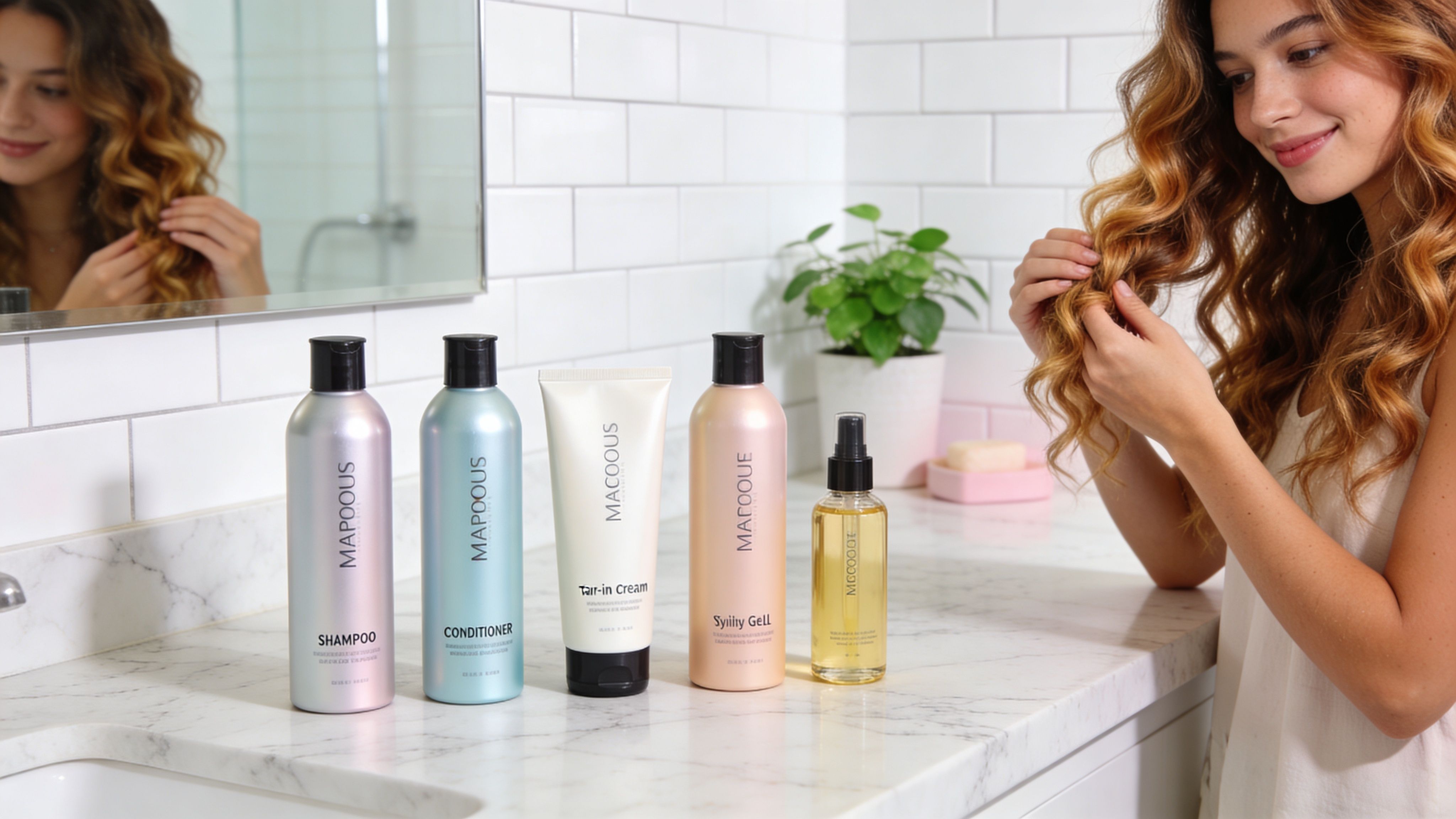
To get started, you really only need four types of products. Think of these as the non-negotiable foundation of your entire routine.
- A Sulfate-Free Cleanser: This is your shampoo. Its job is to clean your scalp without using harsh detergents that strip away the natural oils your curls desperately need to stay hydrated and happy.
- A Hydrating Conditioner: This is arguably the most critical player in your lineup. A good conditioner restores moisture, provides "slip" to make detangling a breeze, and helps smooth the hair cuticle to shut down frizz before it starts.
- A Leave-In Conditioner: Think of this as an extra layer of moisture that you don't rinse out. Applied to clean, wet hair, it keeps your curls soft and manageable all the way to your next wash day.
- A Styler (Gel or Mousse): This is what gives your curls their shape, definition, and longevity. A good styler forms a protective "cast" around your curl clumps as they dry, which locks in moisture and keeps frizz from ruining your hard work.
That’s it. With just these four items, you have everything you need for a fantastic wash day. The trick is making sure they contain the good stuff and none of the bad. For some pre-vetted, curl-safe options, you can explore the best products for curly hair to see what others are using.
What to Avoid When Reading Labels
Knowing what not to put on your hair is just as important as knowing what to use. So many common ingredients are notorious for causing dryness, frizz, and stubborn buildup on curly hair types.
Key Insight: Many mainstream hair products are formulated for straight hair and contain ingredients that actively work against your curls' natural structure. Learning to spot them on a label is a game-changing skill.
When you're shopping, you'll want to become a bit of a detective. Here's a quick cheat sheet on the most common ingredients to avoid and what you should look for instead.
Harmful vs Helpful Ingredients For Curly Hair
| Ingredient to Avoid | Why It's Harmful for Curls | Safe Alternative to Look For |
|---|---|---|
| Harsh Sulfates (e.g., Sodium Lauryl Sulfate) | They act like aggressive detergents, stripping your hair of its natural moisture and causing extreme dryness and frizz. | Gentle Cleansers (e.g., Cocamidopropyl Betaine, Coco-Glucoside) |
| Drying Alcohols (e.g., Alcohol Denat, Isopropyl Alcohol) | These evaporate almost instantly, sucking moisture right out of the hair strand. This leads to brittle, fragile hair. | Fatty Alcohols (e.g., Cetyl Alcohol, Stearyl Alcohol) |
| Non-Soluble Silicones (e.g., Dimethicone) | They create a plastic-like coating for artificial shine but build up over time, blocking actual moisture from ever getting in. | Natural Oils (e.g., Jojoba Oil, Argan Oil) or Amodimethicone |
Feeling overwhelmed by those long, scientific-sounding ingredient lists? You're definitely not alone. Instead of trying to memorize a chemistry textbook, you can simply check your product ingredients using an online tool. It's a quick way to shop with confidence, knowing every product you pick is genuinely curl-friendly.
Your First Wash Day Made Simple
Alright, this is where the theory ends and the real fun begins. Let's walk through your very first curly wash day. We’re not aiming for perfection, we’re building a foundation with techniques that actually work, without making things complicated.
Cleanse Your Scalp Correctly
Grab that sulfate-free cleanser you picked out. Your focus here is 100% on your scalp.
Using the pads of your fingers—never your nails—gently but firmly massage your scalp for at least 60 seconds. This isn't just a quick scrub; you're actively working to lift away oil, sweat, and any product residue that’s been hanging around.
Don't worry about scrubbing the lengths of your hair. As you rinse, the suds will cascade down the hair shaft, giving it all the cleaning it needs without stripping it or creating a tangled mess.
Condition for Maximum Hydration
This is arguably the most important step for getting soft, defined curls. Apply a generous amount of your conditioner, focusing only on the mid-lengths and ends. Your scalp makes its own oil; it doesn’t need any help.
Gently work the conditioner through, using your fingers or a wide-tooth comb to detangle any knots. Your hair should feel smooth and slick, like seaweed.
This is where the magic happens. To really push moisture into your hair, try the "squish to condish" method. As you're rinsing, cup water in your hands and scrunch it upwards towards your scalp. You should hear a squishy sound. That’s the sound of your hair absorbing the water and conditioner, creating those juicy, hydrated curl clumps you're after.
Rinse until your hair feels soft, but maybe not perfectly clean. Leaving just a little bit of that "slippery" feeling can be great for some hair types, but for fine hair, it can lead to weigh-down. Experiment to see what works for you.

At its core, a solid routine really is this simple. It's all about using the right type of product in the right order.
Apply Your Styler for Definition
The single most important tip for styling? Your hair needs to be soaking wet. Not damp, not towel-dried—dripping. This is non-negotiable for avoiding frizz.
Now, it’s time for your gel or mousse. These products create a "cast," which is a slightly crunchy shell that locks in your curl pattern as it dries. We’ll get rid of the crunch later, I promise.
- Raking: Squeeze a quarter-sized amount of product onto your palms and rake it through your hair from root to tip to make sure every strand is coated.
- Praying Hands: To encourage curl clumps to form, add a little more product and glide it down your hair with your palms pressed together.
- Scrunching: Finally, tilt your head from side to side and gently scrunch your hair upwards toward the scalp. This encourages your curls to spring up.
If you’re unsure which techniques or product types are best for your hair, you can build your personalized hair routine with our tool. It takes your unique hair properties and gives you a step-by-step plan.
Dry Your Curls Without Frizz
How you dry your hair is just as critical as how you wash it. There's one golden rule: do not touch your hair while it dries. Seriously. Fiddling with it is the fastest way to break up your curl clumps and create a halo of frizz.
A great technique for beginners is called "plopping."
Lay a cotton t-shirt or microfiber towel on your bed or a chair. Flip your hair forward, lowering it onto the center of the fabric. Then, wrap it up and let it sit for 10-20 minutes. This absorbs excess water without friction and can dramatically boost your curl definition. After plopping, you can let it air-dry the rest of the way or use a diffuser.
Solving The Most Common Curly Hair Challenges
Even when you do everything right, you’re going to hit a few roadblocks on your curly hair journey. It happens to everyone. Think of this as your go-to guide for those days when your curls just refuse to play along.
Don't panic—these hurdles are universal, and the fixes are usually way simpler than you'd expect.
The big three beginner struggles are almost always the same: relentless frizz, chronic dryness, and the dreaded product buildup. The interesting part? They often all point back to one single, core concept that can be a real headache to master: the protein-moisture balance.
Understanding The Protein-Moisture Balance
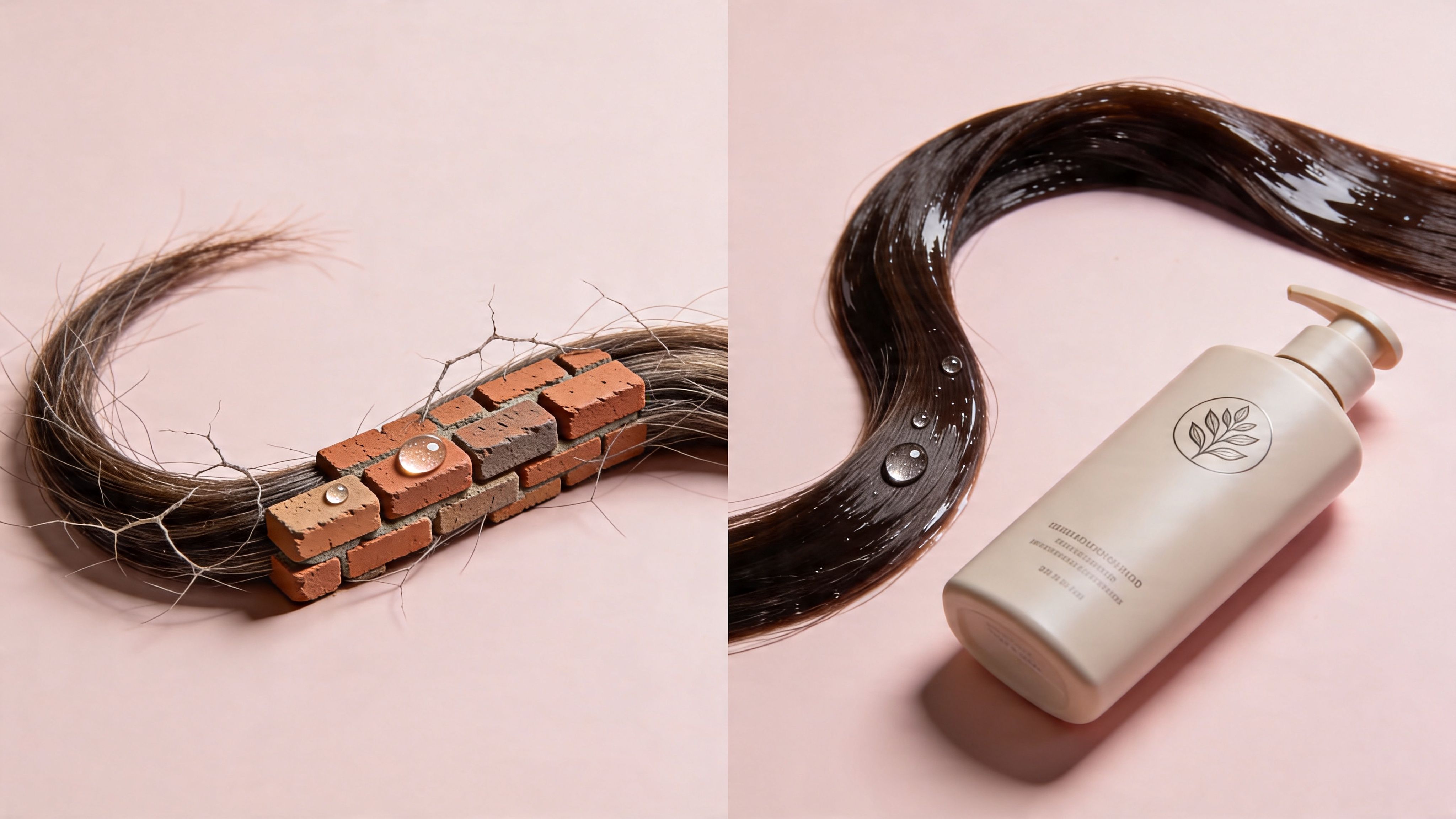
Imagine your hair is like a brick wall. Moisture is the mortar holding it all together, keeping it pliable and flexible. Protein provides the strong, solid bricks that give it structure and strength. Your hair absolutely needs both to thrive, but getting that ratio just right is a delicate dance.
- Too much moisture, not enough protein: Your hair feels mushy, overly soft, and just won't hold a curl. It often looks limp and undefined, even right after you wash it.
- Too much protein, not enough moisture: Your hair feels brittle, snaps easily, and has that distinct straw-like texture. Your curls might look defined, but they feel rough and dry to the touch.
Key Insight: When a routine that was working perfectly suddenly stops delivering results, it's almost always a sign your protein-moisture balance has gone off-kilter. Your hair’s needs are always changing with the seasons, new damage, or even different styling choices.
If you suspect your hair feels rough and straw-like even when wet, it could be a sign of protein overload. A quick Protein Overload Test can help you confirm this and get your hair back on track.
Tackling Frizz, Dryness, And Buildup
Once you get a feel for that balance, fixing these common issues becomes so much easier. Let's dig into the usual suspects and how to handle them.
For Persistent Frizz:
- Cause: Frizz is usually just a symptom of dryness (a lack of moisture) or applying your products incorrectly. High porosity hair is especially frizz-prone because its open cuticles struggle to seal in hydration.
- Solution: Make sure your hair is soaking, dripping wet when you apply your stylers—not just damp. Use a gel with a strong hold to form a solid "cast," and most importantly, do not touch your hair while it's drying. If this sounds like you, our guide to a high porosity hair routine will be a game-changer.
For Chronic Dryness:
- Cause: Your hair either isn't getting enough moisture, or it can't hold onto it. The culprit could be harsh ingredients in your products, skipping weekly deep conditioning, or using products that are too lightweight for your hair's porosity.
- Solution: Make a weekly deep conditioning treatment non-negotiable, and make sure it’s a moisture-focused one. Check that your regular conditioner and leave-in are truly hydrating. The "squish to condish" method is also fantastic for manually pushing extra water into the hair shaft during your wash day.
Making Your Routine Last: Maintenance & Evolution
Your beginner routine is a fantastic starting point, but it's not the final word. The real secret to long-term curly hair success is learning how to adapt. Your hair's needs will change, and the goal is to become your own expert, ready to troubleshoot on the fly.
Think of it less like a rigid set of rules and more like a flexible framework. What works in a humid summer might fail you in a dry winter. Learning to read the signs your hair is giving you is the most important skill you can develop.
Protect Your Curls Overnight
You can't expect your wash day results to last if you're not protecting your hair while you sleep. A standard cotton pillowcase creates friction, which is a direct recipe for frizz, tangles, and flattened curl clumps.
Luckily, this is an easy fix with two simple habits.
- The "Pineapple": This just means gathering your hair into a very high, loose ponytail right on top of your head. It keeps the length of your hair from getting crushed and tangled as you move around.
- Switch to Satin or Silk: A satin or silk pillowcase is a game-changer. The smooth surface lets your hair glide without friction. A satin bonnet or scarf works just as well.
These small adjustments are the key to getting great day two, three, or even four hair.
Adjust for Seasons and Listen to Your Hair
Your hair will always tell you what it needs—you just have to learn its language. Seasonal changes are one of the biggest factors that will force you to adjust your routine.
Humid air can make even well-moisturized hair swell into a frizzy halo. On the other hand, dry winter air can literally pull moisture from your strands, leaving them brittle and thirsty.
This is where you get to put your knowledge into practice.
- Feeling dry, brittle, or straw-like? Your hair is screaming for moisture. It's time for a rich deep conditioner or a protein-free hair mask.
- Feeling limp, greasy, or weighed down? You're likely dealing with product buildup. A clarifying shampoo is in order to give your scalp and strands a fresh start.
If your current products just aren't working anymore, you can use a Routine Analyzer to see where you might need to make a swap.
The Non-Negotiables: Clarifying and Deep Conditioning
Two maintenance steps are absolutely essential for keeping your curls healthy in the long run: clarifying and deep conditioning.
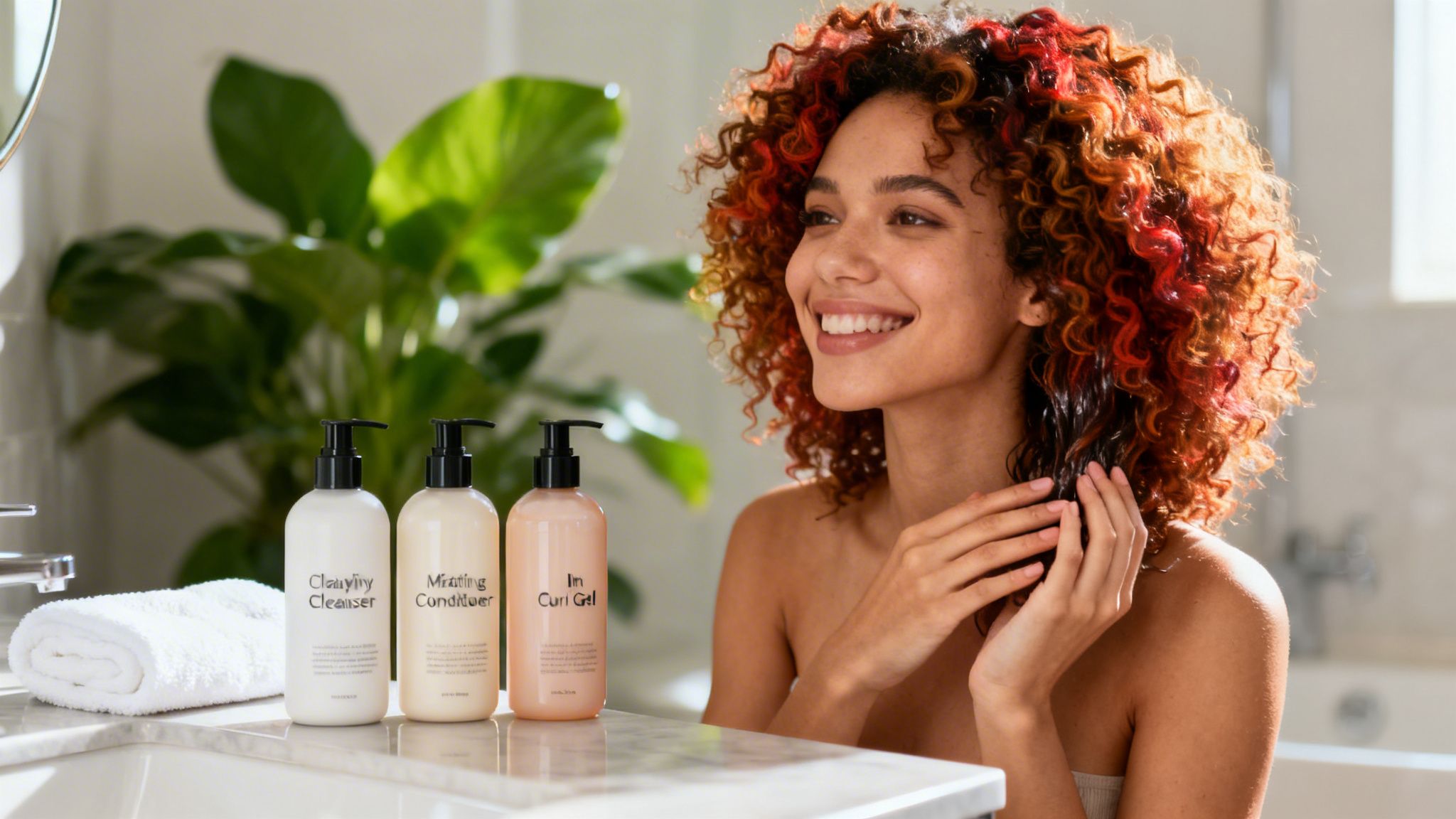
- Clarifying: Think of this as a "reset" for your hair. Use a clarifying shampoo about once a month, or whenever you feel that tell-tale buildup. It deep cleans everything—product residue, hard water minerals, pollutants—that your regular shampoo leaves behind. This allows moisture to actually penetrate your hair shaft again.
- Deep Conditioning: This is your "recharge." You should aim to use a deep conditioner or hair mask weekly. This is what replenishes moisture, improves elasticity, and keeps your hair soft, bouncy, and resilient against breakage.
These two steps are the backbone of any healthy curly hair routine, no matter your hair type.
Stop guessing what might work and start building a plan based on what you know. You can take all the guesswork out of the process when you build your personalized hair routine. It creates a plan tailored specifically to your hair type, porosity, and goals, ensuring your curls stay healthy and beautiful for the long haul.
Ready to stop guessing and start seeing results with a plan that's made just for you? Instead of piecing together advice from different sources, use the Hair Routine Builder to get a complete, step-by-step guide based on your unique hair properties. It’s the smartest and fastest way to finally achieve the healthy, defined curls you've always wanted.