Staring at those tell-tale white flakes on your dark shirt can be incredibly frustrating. Add in the constant, nagging itch and discomfort, and it's enough to drive anyone crazy. If you're tired of this cycle, you’ve come to the right place. An effective at-home plan to treat a dry scalp is well within reach, and it all starts with figuring out what’s really going on up there.
Finding Relief for Your Itchy, Flaky Scalp

Before you buy another product, it's crucial to clear up a very common misconception: dry scalp is not the same as dandruff. While they both cause flakes, they have completely different origins.
- Dry Scalp: This is purely a moisture issue. The skin on your scalp is dehydrated, just like dry skin on your face or hands. The flakes are usually small, white, and dry.
- Dandruff: This is often tied to an overgrowth of a yeast that lives on the scalp, called Malassezia. It results in larger flakes that can be yellowish and feel oily or greasy.
Getting this distinction right is the most important first step. It's the difference between finding a solution that actually works and just wasting more money.
Why Scalp Health Is So Important
Think of your scalp as the soil in a garden—it's the foundation for your hair. An unhealthy, dehydrated scalp simply can't support healthy, vibrant hair growth.
When the skin is tight, irritated, and lacking moisture, you'll probably notice other issues crop up, like increased frizz, dullness, and even more hair breakage. It's all connected.
This isn't just a niche concern anymore; it’s a major focus for people serious about hair health. The global scalp care market was valued at USD 14.73 billion in 2025 and is projected to hit USD 23.81 billion by 2032. This huge growth shows just how many of us are looking for real answers. You can discover more about this growing market on Coherent Market Insights.
Key Takeaway: Your dry scalp is a direct signal that your skin is asking for two things: more moisture and a much gentler approach. The good news is that you can provide this relief without spending a fortune at a salon.
This guide will walk you through pinpointing the real cause of your dryness and building a targeted strategy to fix it. Instead of guessing which products might work, you can create a plan that addresses your specific needs from the get-go. A great way to start is to build your personalized hair routine with a tool that considers your unique scalp condition from day one. By using the right ingredients and techniques, you can finally get the calm, hydrated, and flake-free scalp you deserve.
Pinpointing the Triggers Behind Your Dry Scalp

Before you can fix a dry scalp, you have to play detective. Those frustrating flakes and that maddening itch are just symptoms—the real key is figuring out why it's happening in the first place. This is the most important step, because lasting relief comes from treating the cause, not just the symptom.
For so many of us, the answer is right outside the window. Think about it: does your scalp get significantly worse when the temperature drops and the indoor heat kicks on? Or maybe you spend your days in a bone-dry, air-conditioned office. Both scenarios suck the moisture right out of the air, and your skin—scalp included—is the first to notice.
Your daily habits can also be sneaky culprits. A long, steaming hot shower feels incredible, I get it. But it’s also one of the fastest ways to strip your scalp of its natural protective oils, known as sebum. This leaves your skin’s barrier damaged, dehydrated, and vulnerable.
How Your Wash Routine Can Backfire
The way you wash your hair is a delicate balancing act. It seems logical to wash less often to preserve those precious oils, but that can backfire. Washing too infrequently lets dead skin cells, sweat, and product residue pile up.
This buildup can literally suffocate your hair follicles, causing irritation and flakiness that looks and feels just like dryness. On the flip side, washing too often—especially with harsh shampoos—strips away the moisture you’re so desperate to keep. Finding your personal "just right" frequency is everything.
Your Scalp's Cry for Help: Think of that tight, itchy feeling as your scalp's way of telling you its protective moisture barrier has been compromised. The goal is to identify what's breaking it down so you can start to build it back up.
To get a clearer picture of what’s setting your scalp off, it can be really helpful to take a quick scalp sensitivity quiz. Understanding your specific reactions is the foundation for choosing a home treatment that actually works.
The Hidden Culprits in Your Shampoo Bottle
Beyond when you wash, what you wash with is a massive piece of the puzzle. A lot of the most popular shampoos on the shelf are loaded with aggressive cleansers that are great at removing dirt but terrible for a sensitive scalp.
The biggest offenders are sulfates, like Sodium Lauryl Sulfate (SLS) and Sodium Laureth Sulfate (SLES). They’re responsible for that rich, satisfying lather we’ve been taught to associate with "clean," but they are notoriously stripping and can easily dehydrate an already struggling scalp.
Certain alcohols in styling products and even conditioners can be just as bad. Keep an eye out for ingredients like "denatured alcohol" or "isopropyl alcohol" high up on the ingredient list. They evaporate quickly, taking your skin's moisture with them.
Common Scalp Stressors to Investigate:
- Environmental Shifts: Do symptoms flare up with seasonal changes, especially in winter or dry climates?
- Water Temperature: Are you a fan of long, extra-hot showers?
- Washing Frequency: Are you washing daily with a harsh soap, or only once a week while using heavy styling products?
- Harsh Ingredients: Check your product labels. Are sulfates (SLS/SLES) or drying alcohols listed near the top?
Connecting the dots between these potential triggers and what you’re experiencing is the first, most powerful step you can take. It moves you from just chasing flakes to actually solving the root problem. Once you know your enemy, you can build a routine to defeat it.
Your Action Plan for Soothing a Dry Scalp
Alright, you’ve figured out what’s likely causing the itch and flakes. Now it’s time to get that scalp feeling good again. We’re aiming for two things here: immediate relief from the discomfort and a solid long-term routine to keep the dryness from coming back. Let's get into the gentle, effective things you can start doing right now.
Relief often starts before you even turn on the shower. A pre-shampoo treatment, or "pre-poo," is your first line of defense. Think of it as creating a protective barrier on your skin, shielding your scalp from the stripping effects of shampoo—even the gentle ones—and helping it hang on to its natural moisture.
Immediate Relief with At-Home Remedies
You don’t need to rush out and buy a cartful of expensive products. Some of the best fixes for a dry scalp are probably already in your kitchen cabinet. These simple, natural remedies are packed with the good stuff your scalp is craving.
- Nourishing Oil Treatments: This is a classic for a reason. Applying a lightweight oil to your scalp about 30 minutes before you wash can make a huge difference. Jojoba oil is a fan favorite because its structure is incredibly similar to our skin's own sebum. Argan and sweet almond oils are also fantastic, loaded with fatty acids and Vitamin E to calm inflammation and hydrate thirsty skin.
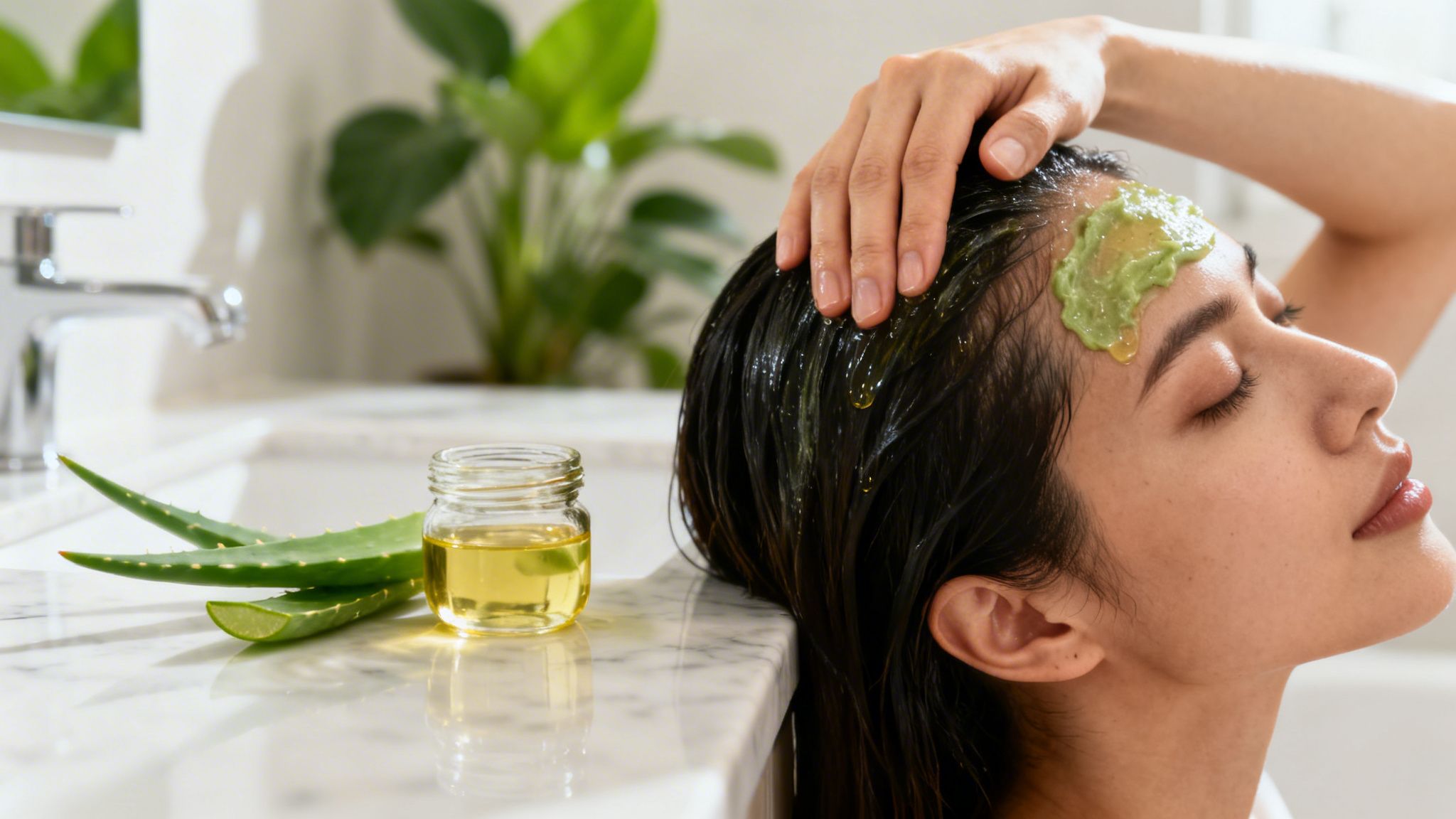
- DIY Aloe Vera Mask: Aloe vera is a hydration hero. It’s naturally cooling and anti-inflammatory, which is exactly what an itchy scalp needs. Just apply pure aloe vera gel straight to your scalp, let it sit for 20-30 minutes to soothe everything down, and then rinse.
These pre-wash steps are like a comforting hug for your scalp, getting it ready for a gentle cleanse without making the dryness worse.
Choosing the Right Cleanser
If you're dealing with a dry scalp, your shampoo is the single most important product in your routine. The wrong one will sabotage all your efforts, but the right one will cleanse your scalp effectively without stripping away its natural oils.
The number one rule? Look for gentle, sulfate-free cleansers.
Sulfates, like Sodium Lauryl Sulfate (SLS), are what create that big, bubbly lather, but they are way too aggressive for dry, sensitive skin. You want to see milder cleansing agents on the label, often derived from coconut or fruit sugars. They get the job done without wrecking your scalp's delicate moisture barrier.
Pro Tip: When you wash, concentrate the shampoo on your scalp. Use your fingertips—never your nails—to gently massage it in. This lifts away flakes and buildup without scratching or irritating your skin. Just let the suds run down the length of your hair to clean the strands. No need to pile it all on top of your head.
Dry Scalp Care Ingredient Cheat Sheet
Trying to read an ingredient label can feel like you need a chemistry degree. To make it easier, we put together this cheat sheet to help you spot the heroes and the villains in your hair products. Knowing what to look for is half the battle.
A huge shift in the market shows just how much this matters. People are actively searching for products with ingredients like tea tree oil, aloe, and coconut oil, and avoiding harsh chemicals. It’s clear we’re all getting smarter about what we put on our scalps. You can see more data on this consumer shift at Fortune Business Insights.
Here’s a quick-reference guide to help you check your labels.
| Ingredient Type | What to Look For (The Heroes) | What to Avoid (The Villains) |
|---|---|---|
| Cleansers | Coco-Glucoside, Decyl Glucoside, Sodium Cocoyl Isethionate | Sodium Lauryl Sulfate (SLS), Sodium Laureth Sulfate (SLES) |
| Moisturizers | Glycerin, Hyaluronic Acid, Aloe Vera, Panthenol (Vitamin B5) | Propylene Glycol (in high concentrations) |
| Oils & Butters | Jojoba Oil, Argan Oil, Shea Butter, Squalane | Mineral Oil, Petrolatum (can be occlusive and trap dead skin) |
| Alcohols | Cetyl Alcohol, Stearyl Alcohol, Cetearyl Alcohol (fatty alcohols) | Alcohol Denat., Isopropyl Alcohol, SD Alcohol 40 (drying alcohols) |
Still feeling a little lost? Don't sweat it. You can instantly analyze your ingredients with our checker to find out if they’re helping or hurting your scalp.
By pairing these soothing pre-wash treatments with a truly gentle cleansing routine, you’re building a strong foundation for a healthy, comfortable scalp. The next step is to pull all these pieces together into a consistent routine that works for both your scalp and your hair type.
Building a Personalized Scalp Care Routine
If you've ever felt like you're just throwing random products at your dry scalp, you're not alone. The truth is, a one-size-fits-all approach almost never works. The routine that brings one person glorious relief can leave another feeling greasy or even more irritated than before.
The secret isn't finding a single "miracle" product. It's understanding your hair's unique blueprint—specifically its type and porosity. These two factors dictate what your hair and scalp truly need, helping you move from guessing games to a strategic plan that actually restores balance.
Matching Your Routine to Your Hair Type
Your hair's physical structure plays a huge role in how you should tackle a dry scalp at home. Someone with fine, low-porosity hair, for instance, needs lightweight hydration that won't plaster their hair to their head. On the flip side, someone with thick, high-porosity curls can—and should—embrace much richer creams and intensive oils.
Let's break down what this looks like with two very different hair profiles.
Example Routine for Fine, Low-Porosity Hair This hair type gets weighed down easily, and its tightly sealed cuticles make it tough for moisture to get in. The goal here is all about light hydration and very gentle cleansing.
- Pre-Wash: Use a very light oil like grapeseed or sweet almond oil on the scalp only. Let it sit for just 15-20 minutes before you wash. Steer clear of heavy hitters like castor or coconut oil.
- Cleanse: Stick to a sulfate-free shampoo with gentle cleansers (look for coco-glucoside). Washing 2-3 times per week is usually enough to prevent buildup without stripping your scalp.
- Condition: A lightweight, silicone-free conditioner is your friend. Apply it only from the mid-lengths to the ends, keeping it far away from your scalp to avoid a greasy situation.
- Post-Wash: Think light. A few spritzes of a water-based hydrating toner on the scalp, especially one with aloe vera or hyaluronic acid, can work wonders.
Example Routine for Coarse, High-Porosity Hair This hair type is thirsty. Its open cuticle layer drinks up moisture fast but loses it just as quickly. Your mission is to deliver rich moisture and then seal it all in.
- Pre-Wash: Be generous. Apply a richer oil like argan or avocado oil, or even shea butter, to both your scalp and hair. Give it at least 30-60 minutes to really sink in.
- Cleanse: Reach for a creamy, moisturizing co-wash or a super hydrating shampoo. For many with this hair type, washing only 1-2 times per week is perfect.
- Condition: Go for a thick, deeply moisturizing conditioner with ingredients like shea butter or mango butter. Apply it liberally and give it a few minutes to work its magic before rinsing.
- Post-Wash: This is a crucial step. Layer a leave-in conditioner followed by a sealing oil or cream on both your hair and scalp to lock that hydration in for the long haul.
These two examples show just how different a good routine can look. The first step to figuring out your own is to check your hair porosity and determine your hair type. Knowing these details is half the battle.
This simple decision tree can help you visualize the first question to ask: is my scalp angry and irritated, or is it just thirsty for moisture?

As you can see, figuring out your primary goal—soothing vs. hydrating—points you in the right direction, whether that's toward calming ingredients like aloe or nourishing oils.
Putting It All Together With the Right Tools
The good news is you don't have to guess your way to a healthy scalp. Once you have a better understanding of your hair, you can finally build a routine that gives you consistent, reliable results. It's time to turn all this knowledge into a concrete plan.
Your personalized routine is your roadmap. It ensures every product works in harmony, addressing both your dry scalp and your specific hair needs, so you’re not accidentally solving one problem while creating another.
Now is the perfect time to plug your insights into a system built for this exact purpose. Instead of another round of trial and error, you can build your personalized hair routine with a tool that takes all these factors into account. It will help you choose products and map out a schedule so every step works together. A consistent, personalized routine is your best weapon against recurring dryness. When you align your products and techniques with your hair's biology, you can finally move beyond temporary fixes and build lasting scalp health.
Maintaining a Healthy Scalp for Good
So you’ve finally gotten the flakes and itch under control. Great! Now, how do you make sure they stay gone for good?
Getting lasting relief isn't about a single miracle product. It's about building simple, consistent habits that keep your scalp balanced and happy. This means looking beyond your shower routine and thinking about the small, everyday factors that have a huge impact on your skin's hydration.

A Healthy Scalp Starts From Within
Your scalp is just skin, and like the skin on your face, it’s directly impacted by your environment and diet. A few key lifestyle habits can make all the difference in preventing dryness from creeping back in.
One of the easiest changes is managing your indoor air. Running a humidifier at night, especially during dry winter months when the heat is blasting, puts moisture back into the air. This simple step prevents your skin—and scalp—from losing precious hydration while you sleep.
Hydration from the inside out is just as critical. Drinking plenty of water is a non-negotiable foundation for healthy skin everywhere. Your diet also plays a huge role.
- Eat More Omega-3s: Foods like salmon, walnuts, and flaxseeds are packed with omega-3 fatty acids, which help support your skin’s natural lipid barrier and reduce inflammation.
- Boost Your Vitamins: Vitamins A, C, and E are powerful antioxidants that protect skin cells from damage and support overall skin health.
Treat your scalp with the same care you give your face—through hydration, diet, and environmental control. This builds a foundation of health that makes your scalp far more resilient to dryness.
Master Your Wash Day Technique
How you wash your hair is just as important as what you wash it with. A few simple tweaks can stop you from accidentally causing the very dryness you're trying to fix.
First, turn down the heat. Always use lukewarm water for washing and rinsing. Super hot water might feel nice, but it strips your scalp of its natural protective oils, leaving it tight, exposed, and prone to dryness.
When you shampoo, use your fingertips—never your nails—to gently massage your scalp. This motion helps lift dead skin cells and boosts circulation without creating micro-tears or irritation. And finally, rinse like you mean it. Leftover product residue is a common culprit for buildup, irritation, and flakes.
Know When to Re-Evaluate Your Routine
Your scalp's needs aren't set in stone. They change with the seasons, your stress levels, and even hormonal shifts. The routine that worked wonders in the summer might not cut it during a harsh winter.
If you feel that familiar tightness or see flakes starting to return, it’s a sign that you need to take another look at your regimen. It might be time to analyze your current hair care routine and see where the gaps are. The Routine Analyzer can help you spot products that are no longer serving you, allowing you to stay one step ahead of a full-blown flare-up.
Thankfully, the huge growth in e-commerce for scalp care means finding new products is easier than ever. This has given people everywhere access to specialized, clean-ingredient products that were once hard to find. You can read more research about the dandruff treatment market trends here.
Knowing When to Call a Professional
While most dry scalp issues can be managed at home, some situations require an expert eye. If your symptoms are severe, painful, or just won't go away, it's time to see a pro.
See a dermatologist or trichologist if you experience:
- Sores, bleeding, or persistent crusting on your scalp
- Severe or unbearable pain and itching
- Noticeable or sudden hair loss
- Flakes that don't improve after several weeks of consistent at-home care
These could be signs of an underlying condition that needs a proper diagnosis and prescription-strength treatment. Don't wait it out. A healthy scalp doesn't have to be a constant battle. By adopting these long-term habits and knowing when to adjust your strategy, you can maintain a balanced, comfortable, and flake-free scalp for the long haul.
Common Questions About Treating Dry Scalp
When your scalp is driving you crazy with itchiness and flakes, the internet is full of conflicting advice. It's easy to get overwhelmed. Let's tackle the biggest questions I hear all the time so you can get relief, fast.
Dry Scalp or Dandruff?
This is where so many people go wrong, and using the wrong treatment will only make things worse. You have to know what you’re dealing with. The key difference is in the flakes themselves.
Dry Scalp Flakes: Think fine, white, powdery dust that falls easily from your hair. Your scalp probably feels tight and itchy, just like the skin on your face gets in the winter. It’s a moisture issue.
Dandruff Flakes: These are a different beast. They’re often larger, clumpier, and can look yellowish or feel greasy to the touch. They tend to stick to your hair and scalp because they're caused by an overgrowth of yeast, not just dryness.
How Often Should I Wash My Hair?
Finding the right washing frequency is a balancing act. The old myth that you shouldn’t wash your hair at all with a dry scalp is totally wrong—in fact, it can make it worse. Not washing allows dead skin, oils, and products to build up, leading to even more irritation.
On the flip side, washing too often, especially with a harsh shampoo, will strip your scalp of the natural oils it desperately needs.
For most people struggling with dryness, washing 2-3 times per week with a gentle, sulfate-free shampoo is the sweet spot. But your hair type and lifestyle matter. The best way to know for sure is to build your personalized hair routine and get a schedule tailored to your exact needs.
Pro Tip: Listen to your scalp. If it feels tight, stripped, or "squeaky clean" after a wash, you're overdoing it or your shampoo is too harsh. If it’s itchy and greasy just a day later, you might need to wash a little more often.
Can Essential Oils Actually Help?
Yes, they absolutely can—but you have to use them correctly. Certain essential oils are powerhouses for calming an inflamed scalp. Tea tree oil is famous for its antimicrobial properties that combat itchiness, while peppermint oil gives that incredible cooling sensation and boosts circulation.
The golden rule: Never apply essential oils directly to your scalp. They are extremely potent and can cause irritation or even chemical burns if used undiluted.
Always mix them with a carrier oil first. Jojoba, coconut, and sweet almond oil are all fantastic choices. A safe and effective ratio is 2-3 drops of essential oil for every one tablespoon of carrier oil. Massage it in, let it sit, and then shampoo it out.
Ready to Build Your Perfect Scalp Care Routine
Your journey to a healthier scalp is a personal one, and the right routine makes all the difference. Stop guessing and start creating a plan that's made just for you. Take everything you've learned and build your personalized hair routine today to achieve the lasting relief you deserve.