If you're constantly battling dry, frizzy, or brittle hair, the secret to finally winning the fight often comes down to one powerful group of ingredients: humectants. Think of them as moisture magnets. Found in many humectants hair products, they work by drawing water vapor from the air right into your hair strands, giving your hair that plump, elastic, and healthy look.
What Are Humectants And Why Your Hair Needs Them

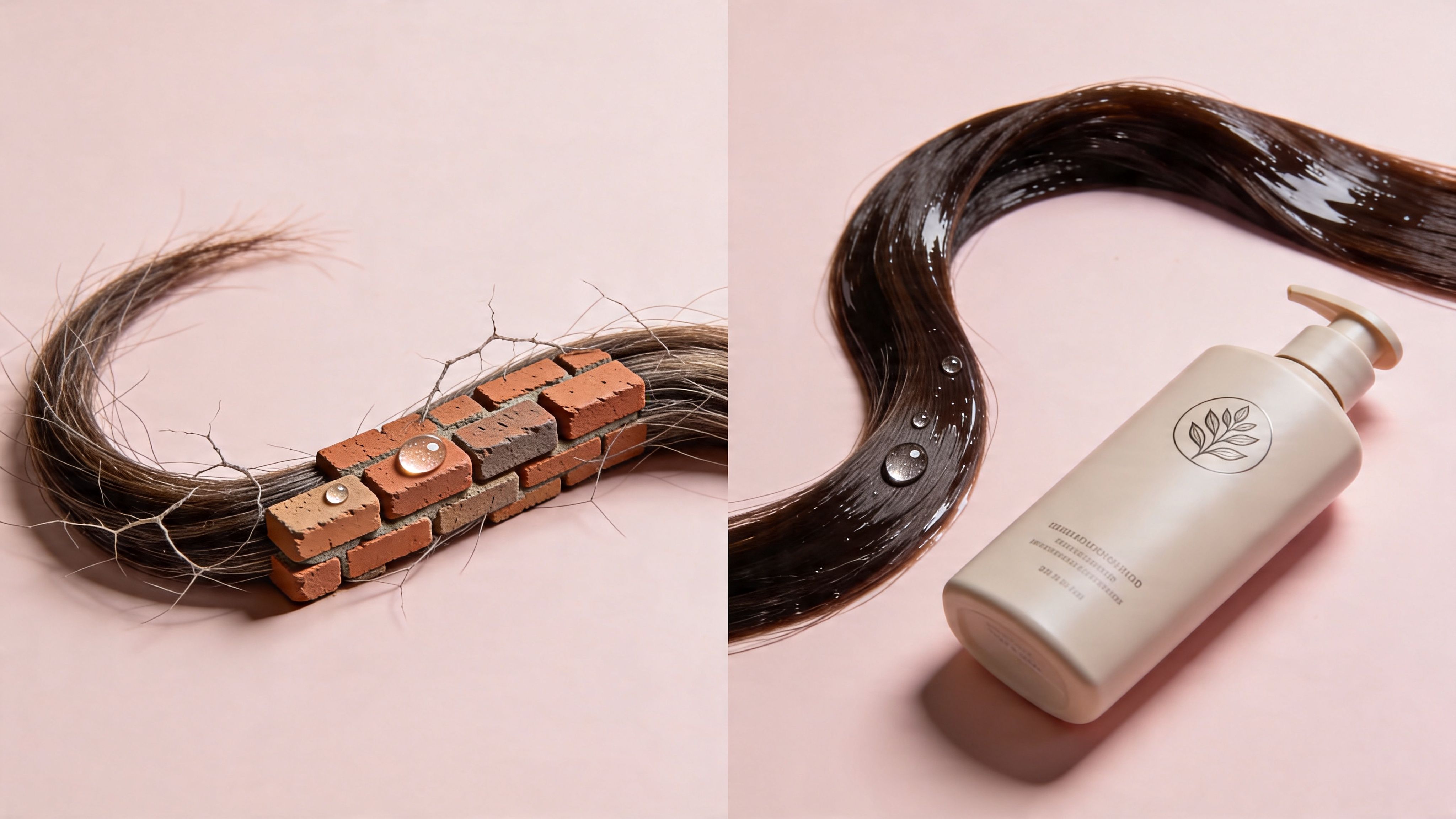
Picture a dry, stiff kitchen sponge. It's brittle and totally inflexible. But the moment you run it under water, it becomes soft, pliable, and expands. Humectants do something very similar for your hair. Instead of just getting wet, they actively pull in and hold onto water molecules, making them a cornerstone ingredient in the fight against dryness.
These ingredients are hydrophilic, which is just a scientific way of saying they are "water-loving." Their unique chemical structure allows them to form powerful hydrogen bonds with water. This is what gives humectants hair products their ability to infuse your hair with lasting moisture. When they're formulated into shampoos, conditioners, or leave-ins, they work around the clock to keep your hair hydrated from the inside out.
The Foundation of Hair Hydration
The biggest benefit of using humectants is maintaining your hair's essential moisture balance. And when your hair is well-hydrated, it isn’t just softer—it’s also far stronger and more resilient. That's because proper moisture improves elasticity, which is your hair's ability to stretch without snapping.
Here’s a quick look at why this is so important:
- Prevents Breakage: Elastic, hydrated hair is much less prone to split ends and breakage from everyday styling and brushing.
- Adds Shine: A hydrated hair cuticle lies flat and smooth, allowing it to reflect light more effectively. The result? A brilliant, healthy-looking shine.
- Reduces Frizz: By keeping the hair strand properly moisturized, humectants stop it from desperately trying to absorb excess moisture from humid air—a primary cause of frizz.
The magic of humectants is their ability to transform hair from the inside. They don't just coat the strand; they help it retain the water it needs to be pliable, strong, and visibly healthy.
A First Look At Your Hair Products
Understanding this basic principle is the first step toward building a hair care routine that actually works. Go ahead and take a quick look at the ingredient lists on your current products. Do you see names like glycerin, panthenol, or aloe? These are common humectants that might already be part of your routine.
But here’s the catch: not all humectants work the same way for everyone. Factors like your hair's porosity and natural texture play a huge role in how it responds. An ingredient that works wonders for one person might leave another's hair feeling sticky or weighed down, especially in certain climates.
This is where personalization becomes critical. Before we dive into specific ingredients, it's essential to understand your hair's unique needs. You need to use products with not just any humectants, but the right kind of humectants for your specific hair type to see real, lasting results. Finding the perfect products can feel overwhelming, but a great first step is to build your personalized hair routine with a tool that does the hard work for you.
How Humectants Actually Transform Your Hair

So, how do these ingredients actually work? Let's skip the dense science and get straight to it. Think of each of your hair strands as containing a tiny, thirsty sponge. Humectants are what allow that sponge to grab onto water and, crucially, hold it there. This simple action is what transforms your hair's health from the inside out.
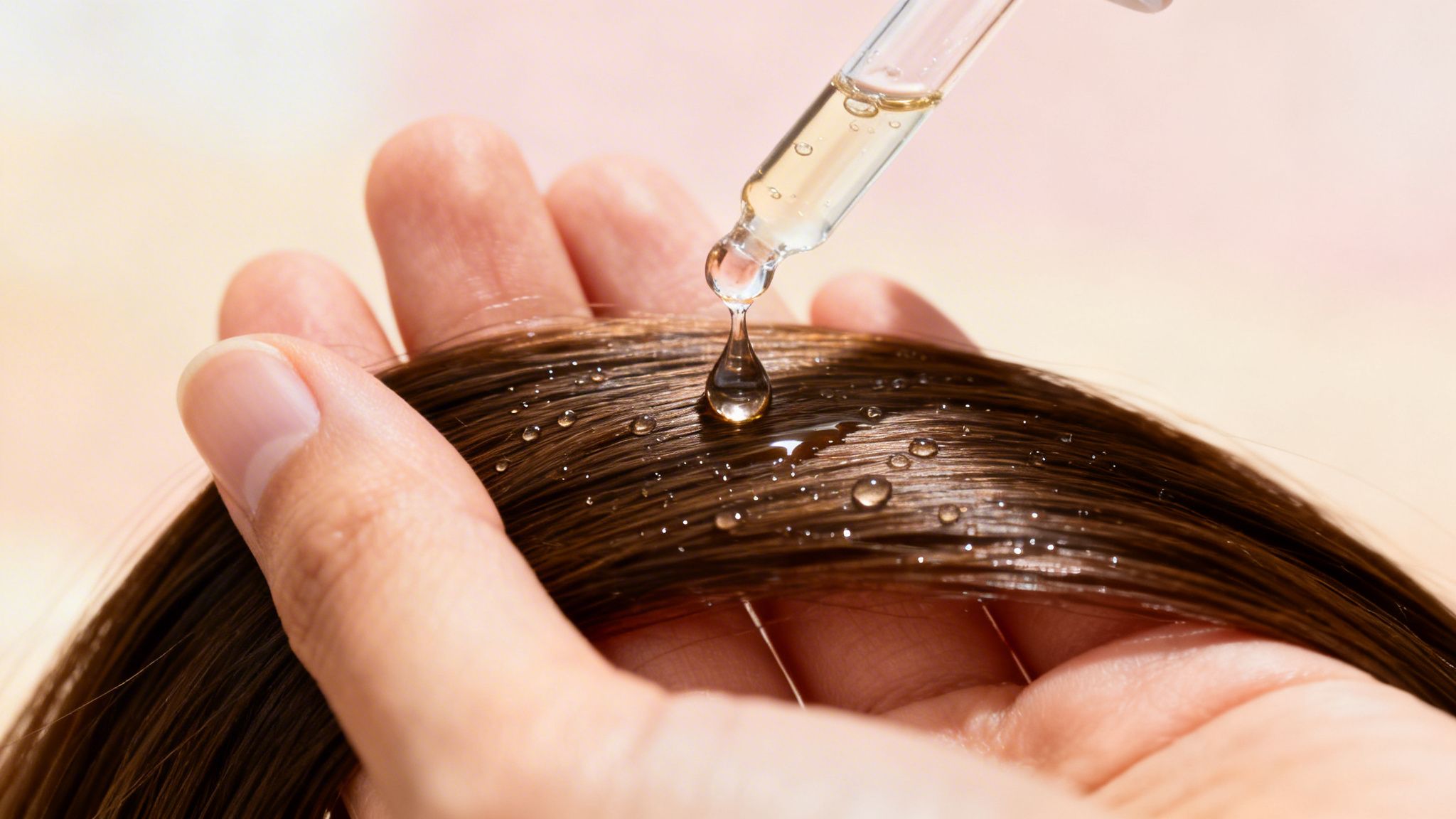
When you use humectants hair products, powerhouse ingredients like glycerin, aloe vera, and hyaluronic acid get to work immediately. Their unique molecular shape is practically magnetic to water. They pull moisture right out of the air and from the product itself, drawing it deep into the hair's cortex—the very core of the strand.
From Science To Shine
This internal hydration is more than a quick fix. It creates real, visible changes in how your hair looks and feels. By plumping up the cortex with moisture, humectants fundamentally improve your hair's texture, strength, and appearance.
This mechanism is so powerful that it’s become a cornerstone of modern hair care. The global hair conditioner market, which depends heavily on humectants, is set to skyrocket from USD 10.49 billion in 2024 to USD 15.59 billion by 2033. That growth makes sense when you consider that 60% of women name frizz as their number one hair issue, and a good humectant conditioner can boost manageability by 25-40% after just one wash. You can explore more about these industry trends and their impact on hair care products.
Here’s what that deep hydration really does for your hair:
- Increased Elasticity: Moisturized hair can stretch and bend without snapping. This means way less breakage when you brush, style, or just live your life.
- Brilliant Shine: When the hair shaft is hydrated, its outer cuticle layer lies perfectly flat. A smooth surface reflects light beautifully, giving you that healthy, glossy shine we all want.
- Enhanced Definition: This is a game-changer for waves and curls. Proper moisture helps curl clumps form more consistently, giving you better definition, less frizz, and a much bouncier look.
Building Resilience Against Damage
Strong hair starts with hydration. Think of it as building a protective shield from within. When your hair strands are full of moisture, they are far more resilient against the daily wear and tear that leads to damage.
A hydrated hair strand is a flexible hair strand. This flexibility is your first line of defense against split ends and the mechanical stress from styling tools, hair ties, and even environmental factors like wind.
Understanding this is the first step to unlocking your hair's potential. But remember, not all hair is the same. Your hair's unique structure dictates how well it can absorb and hold onto moisture. To figure out where your hair stands, you can take our quick hair type quiz for some personalized insights. Armed with this knowledge, you can go beyond just buying random products and start building an intelligent routine that actually works.
Decoding The Label To Find The Best Humectants
Don't let the long ingredient list on your hair products intimidate you. Learning to read a label isn't about memorizing every chemical name—it's about learning to spot the good stuff. Think of it as scanning a menu for your favorite dishes. Once you know what you’re looking for, the powerhouse ingredients pop right out.
Knowing just a few key humectants is your shortcut to finding products that actually deliver on their promise of hydration. These are the ingredients that will make a real difference in how soft and manageable your hair feels.
Spotting Humectants On Your Products
When you flip over a bottle, remember that ingredients are listed from the highest concentration to the lowest. For a humectant to be effective, you'll want to see it somewhere in the top or middle of the list—not hiding at the very end.
Keep an eye out for superstar hydrators like Hyaluronic Acid. It’s a game-changer found in innovative products like these Hyaluronic Acid in shampoo and conditioner bars. This powerhouse ingredient can hold up to 1,000 times its weight in water, making it a true hero for thirsty hair.
To make spotting these ingredients easier, here’s a quick-reference guide to the most common humectants you’ll find on hair product labels.
Common Humectants Found in Hair Products
This table will help you quickly identify different types of humectants and understand what they do for your hair.
| Humectant Name | Type (Natural/Synthetic) | Key Benefit |
|---|---|---|
| Glycerin | Natural (from plant oils) | Draws moisture into the hair shaft, providing softness and preventing dryness. |
| Hyaluronic Acid | Natural (can be synthetic) | An ultra-powerful hydrator that plumps hair strands for a fuller appearance. |
| Panthenol (Pro-Vitamin B5) | Synthetic | Penetrates the hair cuticle to deliver moisture and adds shine and slip. |
| Sorbitol | Natural (from fruits/plants) | A sugar alcohol that helps hair feel soft and prevents moisture loss. |
| Aloe Vera | Natural | Not just a humectant, it also soothes the scalp and contains vitamins. |
| Propylene Glycol | Synthetic | Helps other ingredients penetrate the hair and provides lightweight moisture. |
| Honey | Natural | A natural humectant that also has emollient properties to smooth the hair cuticle. |
Seeing these names on a label is a great sign that the product is formulated to boost your hair's moisture levels.
Natural vs. Synthetic Humectants
You’ll notice the table has both natural and synthetic options. It’s easy to assume "natural" is always the better choice, but in cosmetic science, it's not that simple. The real magic is in the overall formula and how well the ingredients work together.
Key Insight: A well-formulated synthetic humectant can easily outperform a poorly formulated natural one. Focus on the ingredient's function and its position on the label, not just its origin.
Take Panthenol, for example. It's a synthetic version of Vitamin B5, yet it's one of the most celebrated ingredients for deeply moisturizing and strengthening hair. Don't let the word "synthetic" scare you off—what really matters is the result. If you want to dive deeper, you can find a whole range of helpful cosmetic ingredients and analysis tools to understand what’s in your products.
Making Ingredient Checking Simple
Let's be honest: nobody wants to stand in a store aisle squinting at tiny print and trying to remember a long list of ingredients. The good news is, you don't have to.
You can easily analyze your ingredients with our checker tool. Just snap a picture of the ingredient list on any product. The tool instantly analyzes it, highlighting beneficial ingredients like humectants and flagging anything you might want to avoid. It gives you a clear, simple breakdown so you can feel confident that the humectants hair products you choose will give your hair the hydration it truly needs.
The Humidity Dilemma And How To Solve It

Here's a crucial piece of the puzzle many people miss: humectants hair products can sometimes work a little too well. Since they are powerful moisture magnets, their performance is tied directly to the amount of moisture in the air. This creates a double-edged sword known as the dew point effect.
On a steamy, high-humidity day, humectants pull in way too much moisture from the air. This causes the hair shaft to swell up, leading to the exact frizz and puffiness you were trying to fight. Your hair can end up feeling mushy, overly soft, and completely lose its definition.
On the flip side, in extremely dry air—like a room with the heat blasting in winter or an arid desert climate—humectants can't find enough moisture in the atmosphere. Their powerful attraction for water doesn't just switch off; instead, they start pulling moisture from the deeper layers of your hair and releasing it into the dry air. The result? Your hair can become even more dehydrated than before.
Understanding Dew Point And Your Hair
Think of the dew point as the "Goldilocks" number for your hair. It’s the temperature at which the air becomes 100% saturated with water vapor. When the dew point is just right, humectants strike a perfect balance, pulling just enough moisture from the air to keep your hair beautifully hydrated.
Here’s a simple breakdown of how this plays out for your hair:
- High Dew Points (Very Humid): Humectants draw in too much water, causing hair to swell into a frizzy, undefined poof.
- Low Dew Points (Very Dry): Humectants can pull water out of your hair, leading to dryness, brittleness, and static.
Your hair’s natural structure also plays a huge part in this. If your hair absorbs water easily, you’re probably more prone to frizz on humid days. You can easily check your hair porosity with a simple test to find out if your strands are more likely to be affected by these weather shifts.
The Secret To Controlling Humectants
So, how do you get all the benefits of humectants without falling into the humidity trap? The secret isn't to avoid them entirely but to use them strategically. The key is pairing them with another category of ingredients: occlusives.
Occlusives are ingredients that create a protective barrier on your hair strand. Think of them as the lid on a jar of water. While humectants draw moisture in, occlusives seal it, preventing too much water from getting in on humid days and stopping it from escaping on dry days.
By combining humectants with occlusives, you create a balanced system. The humectant hydrates from within, and the occlusive locks in that hydration, giving you consistent results no matter the weather.
Common occlusive ingredients to look for in your humectants hair products include:
- Shea Butter
- Jojoba Oil
- Argan Oil
- Lanolin
- Certain lightweight silicones (like dimethicone)
Creating A Climate-Proof Routine
Building a routine that works in any climate is about more than just finding one "perfect" product. It's about having a flexible system that allows you to adapt.
For example, on a humid summer day, you might lean on a leave-in conditioner with a strong film-forming occlusive. On a dry winter day, you could use a lighter humectant cream followed by a sealing oil to lock everything in.
This might sound complicated, but it doesn't have to be. The goal is to find the right combination of products with the ideal balance of ingredients for your specific needs. If you're tired of the guesswork, you can build your personalized hair routine with our smart tool. It analyzes your hair type, porosity, and concerns to recommend products that contain the right mix of humectants and sealants, helping you achieve beautiful, frizz-free hair every day.
Choosing The Right Humectants For Your Hair Type
When it comes to hair care, personalization isn't just a buzzword—it's everything. Using the wrong products can leave you with a head full of frustration, whether it's greasy buildup or a persistent halo of frizz. And with humectants hair products, matching the ingredient to your hair’s structure is non-negotiable for getting that healthy, hydrated look.
The logic is simple. You wouldn't use a heavy cream on oily skin, and you wouldn't use a lightweight gel on dry, cracked skin. The same principle applies to your hair. Your hair's porosity and texture will dictate which humectants it loves and which ones will only make things worse.
High Porosity Hair: The Thirsty Sponge
High porosity hair acts like a sponge with big, open holes. It soaks up moisture in a flash but, unfortunately, loses it just as quickly. The hair cuticles are raised and open, making it a magnet for frizz, tangles, and serious dryness, especially when the air is dry.
The game plan here isn't just to add moisture—it's to lock it down.
For this hair type, you need to find products with powerful humectants that are paired with richer, sealing ingredients (occlusives). This creates a one-two punch: the humectant draws water into the hair, and the occlusive creates a barrier to keep it there.
- Powerful Humectants: Glycerin and Hyaluronic Acid are your best friends. They are superstars at pulling in massive amounts of moisture to quickly quench thirsty hair.
- Essential Occlusives: Look for products that also list ingredients like shea butter, argan oil, or castor oil. These heavier ingredients form a protective layer that stops all that newfound moisture from escaping.
Without that sealing layer, humectants can actually backfire in dry weather. They'll start pulling moisture from the core of your hair, leaving it even drier and more brittle than before. A balanced formula is your only defense.
Pro Tip: If you have high porosity hair, deep conditioners and leave-in creams that contain both humectants and butters or oils are essential. They deliver the sustained hydration your hair needs to stay supple and strong.
Low Porosity Hair: The Repellent Shield
On the flip side, low porosity hair has a tightly sealed cuticle layer that acts like a raincoat. It naturally repels water, which makes it a real challenge for moisture to actually get inside the hair shaft. While this means it's less prone to frizz on humid days, it also means products tend to just sit on the surface.
The result? Greasy, weighed-down hair.
For this hair type, less is always more. You need lightweight humectants that can gently coax moisture into the hair without smothering it. Heavy oils and butters will almost always lead to limp, lifeless strands.
- Lightweight Humectants: Look for ingredients like Panthenol, Propylene Glycol, and Sorbitol. These have a smaller molecular size, giving them a better chance of slipping past that tight cuticle layer.
- Avoid Heavy Occlusives: Steer clear of thick butters and heavy oils. If you need a sealant, opt for much lighter oils like grapeseed oil or jojoba oil.
The key is finding products that hydrate without leaving behind a greasy film. Lightweight sprays and serums are often a much better bet for daily moisture than thick, heavy creams.
Textured Hair: Curls, Coils, And Waves
For anyone with textured hair, humectants are practically a holy grail ingredient. The natural twists and turns in curls and coils create weak points where the cuticle is slightly raised. This makes textured hair inherently drier and far more susceptible to frizz.
Humectants come to the rescue by plumping the hair shaft with moisture. This encourages beautiful curl clumps to form, boosts definition, and delivers that springy bounce everyone is after.
The global humectants market has exploded, growing from USD 15.9 billion in 2022 to a projected USD 30 billion by 2032. This boom is fueled by their proven results, especially for hair that needs a little extra love. For example, properly hydrated hair can see a reduction in split ends by up to 30%—a massive win for fragile or color-treated curls. You can learn more about the growth of the humectants market and what it means for the products on your shelf.
But here’s the catch: the humidity dilemma is very real for curly hair. A glycerin-heavy product might give you incredible definition on a perfect 70-degree day, but it can create a frizzy mess in a humid climate. That's why so many curly-haired people layer their products, starting with a humectant-based leave-in and following up with a gel or mousse containing film-formers to lock the curl pattern in place.
Trying to match ingredients to hair types can feel like a complicated science experiment. But you don't have to guess your way through it.
Instead of playing roulette with products, you can build your personalized hair routine with our intelligent tool. It analyzes your unique hair profile to find products with the right balance of ingredients for your exact needs. If you’d rather browse on your own, you can always explore our full database of clean and effective hair products.
Building A Complete Hydration Routine
Alright, let's turn all that theory into a practical, powerhouse routine. It's time to build a complete hydration system that works for your hair.
A truly great routine isn’t about finding one miracle product. It's about assembling a team of humectants hair products—from your shampoo all the way to your final styler—that work together to draw in and lock down moisture.
Getting this right means knowing what each product brings to the table. The goal is a perfectly synced system that leaves your hair feeling strong, soft, and genuinely resilient.
The Core Components of Hydration
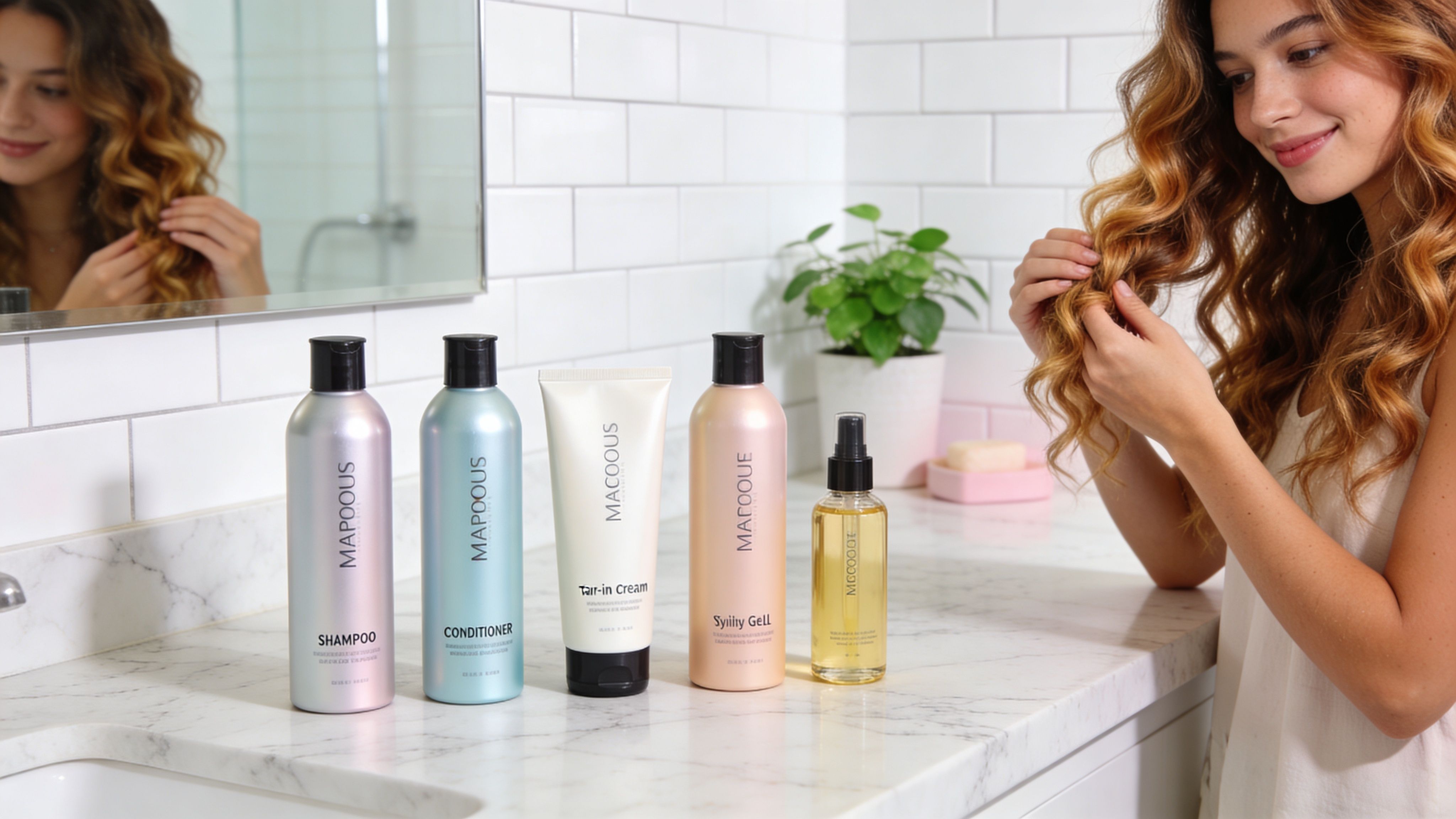
Every solid hydration routine is built on a few key pillars. You'll need a good shampoo, a conditioner loaded with humectants, a targeted leave-in, and a styling product that seals everything in.
To really level up your routine, adding a deep conditioning treatment like the Argan Magic Hair Mask can make a world of difference for moisture and shine.
Remember, your hair's porosity is a huge piece of the puzzle. This chart breaks down how your porosity determines what your hair actually needs.

Think of high porosity hair as a sponge that needs help holding onto water, while low porosity hair is more like a shield that needs help letting water in.
And the results are proven. There's a reason the market for humectant products is set to grow by 7.4% CAGR from 2026 to 2033. For the 70% of women aged 18-35 who worry about dryness, a well-built routine can restore 50% more shine and even reduce damage from bleaching by 20-35%. You can dig into more of the numbers behind the humectants market growth.
Personalizing Your Product Lineup
It's not just about moisture, either. You have to strike the right balance with protein. Too much protein leaves hair feeling stiff and brittle, but too much moisture can make it feel limp and mushy. If you think something is off, our protein overload test can give you the answer.
Don't forget your scalp! If you're dealing with irritation or flakes, a quick scalp sensitivity quiz can point you toward gentle, effective solutions that won’t mess with your hydration goals. Your hair and scalp are a single ecosystem, after all.
Instead of trying to figure all this out with endless trial and error, you can skip the guesswork. The IsItClean Hair Routine Builder takes everything we've talked about and creates a completely customized regimen for you. It ensures every single product works in harmony to give you your healthiest, most hydrated hair.
Got Questions About Humectants? We've Got Answers.
Diving into the world of humectants hair products can feel a bit overwhelming, but it doesn't have to be. Let's clear up some of the most common questions so you can build a hydration strategy that actually works.
Can I Use Too Many Humectant Products?
Absolutely. It’s entirely possible to have too much of a good thing. If you overload your hair with humectants—especially when it's humid outside—you can end up with sticky, limp strands that just won't hold their shape. This is because the ingredients are pulling excessive moisture from the air, causing the hair shaft to swell up and go limp.
The secret is all about balance. Your routine needs to include products with sealing ingredients (occlusives) like shea butter or even lightweight oils to lock in the right amount of moisture. If you’re not sure where your current routine stands, you can always analyze your hair care routine to see if you have a good ingredient mix.
Are Natural Humectants Always Better?
Not necessarily. While fantastic natural humectants like aloe vera and honey get a lot of love, their real-world performance depends entirely on the product's complete formula. A thoughtfully formulated synthetic, like Panthenol (Pro-Vitamin B5), can often deliver more reliable and targeted moisture than a product that just throws in a natural ingredient without much thought.
What truly matters isn't whether an ingredient is natural or synthetic, but how it performs in the formula and if it's a good match for your hair. Always focus on the results you're getting, not just the marketing claims on the label.
How Do I Know If My Hair Needs More Moisture?
Oh, your hair will tell you. It sends out some pretty clear signals when it's thirsty. Look for signs like dullness, a rough or straw-like feel, an uptick in frizz, and strands that snap easily when you gently stretch them. If your hair feels perpetually dry no matter what you slather on it, that's a huge clue it's lacking deep hydration.
For a more definitive answer, it really helps to understand your hair's unique structure. You can easily check your hair porosity with a simple test at home. Knowing this will tell you exactly how well your hair absorbs and holds onto moisture, giving you the power to choose humectants that will make the biggest difference.
Ready to stop the guesswork and finally build a routine that delivers game-changing hydration? Take all the confusion out of finding the right products with our Hair Routine Builder. It looks at your unique hair profile and goals to recommend a complete, personalized regimen with the perfect balance of humectants and other key ingredients for your best hair ever.