A low poo shampoo is a gentle, low-lather cleanser that washes your hair without stripping away its natural, protective oils. It cleans effectively using milder detergents than traditional shampoos, making it a game-changer for anyone with curly, dry, or color-treated hair.
The "low" in the name refers to low suds, not low performance.
What Does Low Poo Shampoo Actually Mean?

Let's clear up the confusion around the term 'low poo.' It’s more than just a type of product; it’s a whole philosophy of gentle cleansing. The goal is to clean your hair and scalp without stripping the natural oils (sebum) that keep your hair moisturized, protected, and shiny.
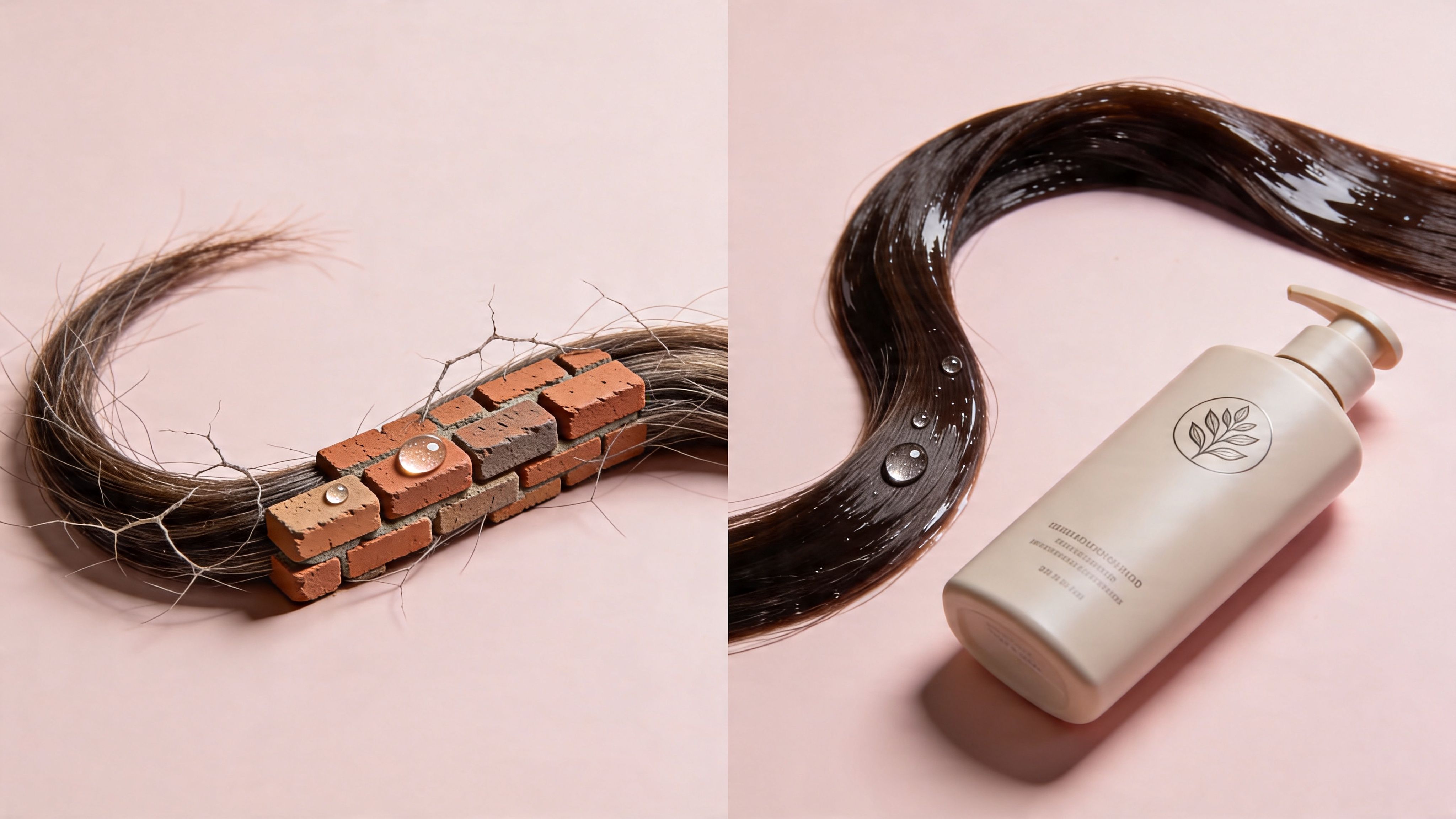
Think of it this way: using a harsh, sulfate-filled shampoo is like power-washing a delicate silk shirt. Sure, it gets the dirt out, but it also shreds the fabric, leaving it rough and vulnerable. A low poo shampoo, on the other hand, is like using a specialized, pH-balanced detergent that lifts away grime while keeping the material’s integrity intact.
The Problem with "Squeaky Clean"
Many of us grew up thinking that a mountain of foamy lather and that "squeaky clean" feeling meant our hair was truly clean. But that squeak is actually a warning sign. It signals that your hair's natural lipid layer has been completely obliterated, leaving the cuticle exposed and ready for dryness, frizz, and damage.
Low poo shampoos flip that script by focusing on what your hair actually needs. They skip the harsh sulfates that create those huge, bubbly suds—which is why you'll often hear them called "low-lather."
The big idea here is moving away from the myth that huge lather equals a deep clean. Instead, it’s about smart formulations that protect your hair’s natural defenses while still getting the job done.
This gentle approach also helps create a much healthier scalp environment. In fact, research shows that when people wash less often because their shampoo is too stripping, it can lead to issues like dandruff. You can explore the research on scalp health and cleansing frequency to see the science behind it.
Let's break down the key differences in a simple table.
Traditional Shampoo vs. Low Poo Shampoo at a Glance
| Feature | Traditional Shampoo | Low Poo Shampoo |
|---|---|---|
| Primary Cleansers | Harsh Sulfates (SLS, SLES) | Mild Surfactants (Cocamidopropyl Betaine) |
| Lather Level | High, bubbly foam | Low, creamy lather or no lather |
| Effect on Natural Oils | Strips them completely | Preserves them |
| Hair Feel After Wash | Squeaky, sometimes straw-like | Soft, hydrated, and clean |
As you can see, the entire approach is fundamentally different, designed to work with your hair's natural biology, not against it.
What to Expect When You Switch
When you make the move to a low poo shampoo, you’ll notice a few key things right away:
- Less Lather: The foam will be minimal and creamy, not big and bubbly like you're used to.
- A Softer Feel: Your hair will feel soft and hydrated after washing, not stripped, rough, or tangled.
- Better Scalp Health: With its natural oils in balance, your scalp may become less irritated and produce oil more consistently (which means less swinging between greasy and dry).
Getting these basics down is the first step. But to see real, lasting results, you'll want to build your personalized hair routine with products and techniques that are right for your specific hair needs.
The Science Behind Low Poo Ingredients

To really get what makes a low-poo shampoo different, you have to peek behind the curtain at its ingredient list. The secret sauce is all in the surfactants—the cleansing agents that actually lift dirt and oil from your hair.
Traditional shampoos often go for the nuclear option, using harsh sulfates like Sodium Lauryl Sulfate (SLS) and Sodium Laureth Sulfate (SLES). Think of these as industrial-strength degreasers for your head. They create a massive lather and are great at removing buildup, but they're so aggressive they often strip your hair and scalp of their natural, protective oils, leaving everything feeling dry and irritated.
Low-poo formulas are much smarter. They ditch those harsh sulfates for gentler, often plant-derived cleansers that get the job done without declaring war on your scalp.
The Gentle Cleansers
Instead of a scorched-earth approach, low-poo cleansers selectively remove the gunk you don't want while leaving your hair's natural moisture barrier intact. This is why your hair feels soft and hydrated after washing, not "squeaky clean"—which is really just a sign that it's been stripped bare.
Here are a few of the hero ingredients you'll see in a good low-poo shampoo:
- Cocamidopropyl Betaine: Derived from coconut oil, this multitasker gently cleanses while also adding a bit of conditioning.
- Decyl Glucoside: This one is a super-mild cleanser made from corn and coconuts. It’s so gentle, it’s a favorite in products for sensitive skin.
- Sodium Cocoyl Isethionate: Another coconut-derived gem that creates a rich, creamy lather without any of the harshness of sulfates.
These ingredients clean effectively without wrecking your scalp's natural ecosystem. That's a huge win for anyone trying to maximize moisture, like those following a specific high porosity hair routine where keeping hydration locked in is the number one goal.
Ingredients To Avoid
The low-poo philosophy isn't just about what you add; it's also about what you leave out. Beyond sulfates, the two biggest offenders to watch for are non-soluble silicones and certain drying alcohols.
Silicones (like Dimethicone) wrap your hair in a synthetic, plastic-like film. It gives you that instant hit of shine and slip, but it's a temporary illusion. Because these silicones aren't water-soluble, they build up layer after layer, blocking actual moisture from getting into the hair shaft. The only way to remove them? Harsh sulfates. This creates a vicious cycle of buildup and stripping.
Then you have drying alcohols, like Alcohol Denat or Isopropyl Alcohol. These literally pull moisture out of your hair, leading straight to dryness and frizz. Don't confuse them with "fatty alcohols" (like Cetyl Alcohol), which are totally different and are actually fantastic moisturizers.
Decoding a long ingredient label can feel like a pop quiz you didn't study for. But you don't have to do it alone. You can analyze your ingredients with our checker to instantly see what's helping, what's hurting, and what's just there—so you can make a smart choice right there in the store.
Low Poo vs No Poo vs Co-Wash
Navigating the world of gentle hair care can feel like learning a new language. You’ve probably heard terms like low poo, no poo, and co-wash thrown around, all promising healthier, happier hair. But it’s easy to get them mixed up.
Let's clear up the confusion once and for all. We'll break down exactly what each method is, who it's for, and where it fits on the cleansing spectrum.
A low poo shampoo is your perfect middle ground. It uses mild, sulfate-free cleansers to gently lift away dirt, oil, and buildup without aggressively stripping your hair’s natural moisture. You still get a satisfying, traditional cleansing experience—often with a creamy, low-volume lather—but with much kinder ingredients.
The Spectrum of Cleansing
The biggest difference between these methods is their cleansing power. Think of it as a sliding scale, from a gentle but thorough wash to no "shampoo" at all.
Low Poo: This is your gentle daily driver. It uses mild detergents for a soft yet effective clean. It’s the closest you’ll get to a traditional shampoo and is often the easiest transition for anyone new to gentle hair care.
Co-Wash: Short for "conditioner-only washing," this method uses a special cleansing conditioner. These products have just a tiny amount of cleansing agent mixed into a deeply moisturizing base. It washes and conditions in one step, prioritizing maximum moisture over deep cleaning.
No Poo: This is the most minimalist approach. The "no poo" method ditches conventional shampoos entirely. Instead, you rely on alternatives like water-only rinsing, apple cider vinegar (ACV) rinses, or clay-based washes to manage oil and remove impurities.
The core idea is simple: a low poo shampoo cleanses gently, a co-wash prioritizes moisture over cleansing, and no poo eliminates detergents entirely. Choosing the right one is all about listening to your hair.
For instance, someone with fine, easily weighed-down waves might find co-washing makes their hair look greasy. A low poo shampoo would give them the perfect balance of clean and conditioned. On the flip side, very dry, coily hair might absolutely thrive on the intense moisture of a co-wash routine.
Understanding your hair's unique personality is everything. Taking our Hair Type Quiz can give you the clarity you need to pick the best starting point for your hair journey.
Cleansing Method Comparison
Let's put these methods side-by-side to see exactly how they stack up. This table breaks down what makes each approach unique and helps you match a method to your hair's needs.
| Method | Cleansing Agents | Best For | Potential Drawbacks |
|---|---|---|---|
| Low Poo | Mild, sulfate-free detergents | Most hair types, especially wavy, curly, fine, or dry hair. | May not be strong enough for very heavy product users. |
| Co-Wash | Conditioning agents with trace cleansers | Extremely dry, coarse, or coily hair needing constant moisture. | Can easily weigh down fine hair or lead to scalp buildup. |
| No Poo | None (water, clays, botanicals) | Those with very dry, resilient scalps; minimalists. | High risk of buildup, scalp issues, and a long, tricky transition phase. |
| Sulfate-Free | Varies (mild to strong non-sulfate detergents) | A broad category; good for avoiding sulfates but can still be harsh. | "Sulfate-free" doesn't automatically mean gentle; some alternatives are still stripping. |
Ultimately, there is no single "best" method—only the best method for you. Finding it often involves a little bit of experimentation. The journey to healthier hair starts with understanding your unique needs.
Is a Low Poo Shampoo Right for Your Hair
So, is a low-poo shampoo the solution your hair has been waiting for? While almost any hair type can benefit from a gentler cleanse, this approach is a total game-changer for anyone with curly, coily, and wavy hair.
The unique S-shaped or Z-shaped structure of textured hair makes it a real challenge for your scalp's natural oils to travel down the hair shaft. This often leaves the mid-lengths and ends chronically dry, making moisture the number one priority. A low-poo shampoo gets your scalp clean without causing the widespread moisture loss that leads to frizz, dullness, and breakage.
Beyond the Curls
But this isn't just a curly-hair secret. A low-poo shampoo is also a fantastic choice if you have:
- Dry or Damaged Hair: If your hair feels brittle, straw-like, or is recovering from heat or chemical processing, a low-poo formula is non-negotiable. It helps you hang on to every bit of precious moisture.
- Color-Treated Hair: Harsh sulfates are notorious for stripping color molecules right out of the hair shaft, causing your expensive dye job to fade shockingly fast. Gentle low-poo cleansers protect your investment and extend the vibrancy of your color.
- A Sensitive Scalp: If you struggle with redness, itchiness, or general irritation, the aggressive detergents in traditional shampoos are a common trigger. Making the switch to a milder formula can bring immediate relief. Our Scalp Sensitivity Quiz can help you pinpoint triggers and find soothing solutions.
The massive popularity of routines like the Curly Girl Method, which has exploded with over 90 million social media views, shows just how critical gentle cleansing is. For these communities, a low-poo shampoo isn't a trend—it's a fundamental necessity for healthy hair. You can discover more insights about low poo and curly hair to see how it's shaping the market.
Know Your Hair to Know Your Needs
Ultimately, the only way to know if low-poo is right for you is to get personal with your hair's unique properties. Is it fine and easily weighed down, or coarse and constantly thirsty for moisture? Does it soak up water like a sponge or seem to repel it? Answering these questions is the key to everything.
Taking a moment to figure out your hair's profile with a hair type quiz can give you the clarity you need to stop guessing and start choosing products that actually work.
Even more important is understanding how your hair handles moisture. You can easily check your hair porosity with a simple test at home to see if your strands are high, low, or medium porosity. For example, if you find out you have low porosity hair, you'll need lightweight products that won't just sit on top and cause buildup—a common issue we cover in our guide to a low porosity hair routine. Armed with this knowledge, you can confidently decide if a low-poo shampoo is the hero your hair care routine has been missing.
How to Make the Switch to a Low Poo Routine
Let’s be real: switching from your regular shampoo to a low poo isn't always a seamless, overnight change. There's often a bit of an awkward "transition phase" where your hair might feel oilier or heavier than you're used to. Don't panic—this is totally normal.
Think of it this way: for years, harsh sulfates have been aggressively stripping your scalp's natural oils. In response, your scalp went into overdrive, producing more and more oil to compensate. When you finally switch to a gentler low poo cleanser, your scalp needs a minute to realize the emergency is over and it can finally calm down.
Navigating the Transition Phase
This adjustment period usually lasts 2-4 weeks. Your scalp has to re-learn how to regulate itself, and during that time, you might feel like you have greasier hair than when you started. Stick with it. Once your scalp rebalances, you’ll break that frustrating cycle of stripping and overproducing oil for good.
You can read more about managing scalp oil production to get into the nitty-gritty science of how it all works.
Before you even start, this chart can help you figure out if a low poo shampoo is the right move for your hair and scalp.

As you can see, low poo is a game-changer for anyone with curly, dry, damaged, or sensitive hair, but it’s not for everyone.
Ready to make the switch? Here are a few tips to make the transition smoother:
- Start with a clarifying wash. Before you touch your new low poo, use a sulfate-based (but silicone-free) shampoo one last time. This is your reset button—it gets rid of any old silicone buildup and gives you a clean slate to work with.
- Stretch your wash days. If you’re a daily washer, try pushing it to every other day, and then eventually every three days. This gives your scalp the time it needs to adjust its oil production naturally.
- Be patient. Seriously. Give your hair at least a month to fully adapt. The end result—softer, healthier, more balanced hair—is definitely worth a few weeks of awkwardness.
If you have a feeling your current products are part of the problem, you can analyze your hair care routine to see exactly how your old shampoo might be sabotaging your transition.
Building Your Complete Low Poo Hair Routine

Nailing your low-poo shampoo is a huge first step, but it’s only half the battle. To get the results you're after, every single product in your lineup needs to play by the same rules.
Think about it—what’s the point of using a gentle, sulfate-free cleanser if your conditioner and stylers are loaded with heavy silicones that it can’t wash out? You end up with buildup, and your hair feels weighed down and greasy all over again. The goal is to build a system where every product supports the next one.
The 3 Pillars of a Low-Poo Routine
Creating a routine that works doesn't need to be overwhelming. It really just comes down to three foundational steps.
1. Cleanse with Intention Start with your chosen low-poo shampoo. Since you're no longer using harsh detergents, your technique matters more than ever. Spend a solid 60 seconds really working the shampoo into your scalp with your fingertips. This manual scrubbing is what does the heavy lifting to break up oil and debris.
2. Condition the Right Way Next, grab a silicone-free conditioner. This is critical. Apply it only from the mid-lengths to the ends, which are the oldest, driest parts of your hair and need the moisture most. Use your fingers or a wide-tooth comb to gently detangle while the conditioner is still in. This gives you slip and dramatically reduces breakage.
3. Style to Seal in Moisture Apply your leave-ins, creams, and gels while your hair is still soaking wet—not just damp. This is the secret to locking in hydration and getting an even product distribution. Again, make sure all your stylers are silicone-free to prevent the stubborn buildup that low-poo shampoos struggle to remove.
The most important thing to remember is that there's no one-size-fits-all answer. A perfect routine for someone with fine, wavy hair will look completely different from one for coarse, coily hair. It all comes down to your hair type, porosity, and what you want your hair to do.
If you’re just getting started and want a solid framework, our guide to building a foundational curly hair routine is a great place to begin. The strategy is simple: start with the basics, see how your hair responds, and make small tweaks from there.
Ready to stop guessing and start getting results? Take the guesswork out of your hair care by using the Hair Routine Builder. It creates a completely personalized plan based on your unique hair type and goals, ensuring every product and step is right for you.