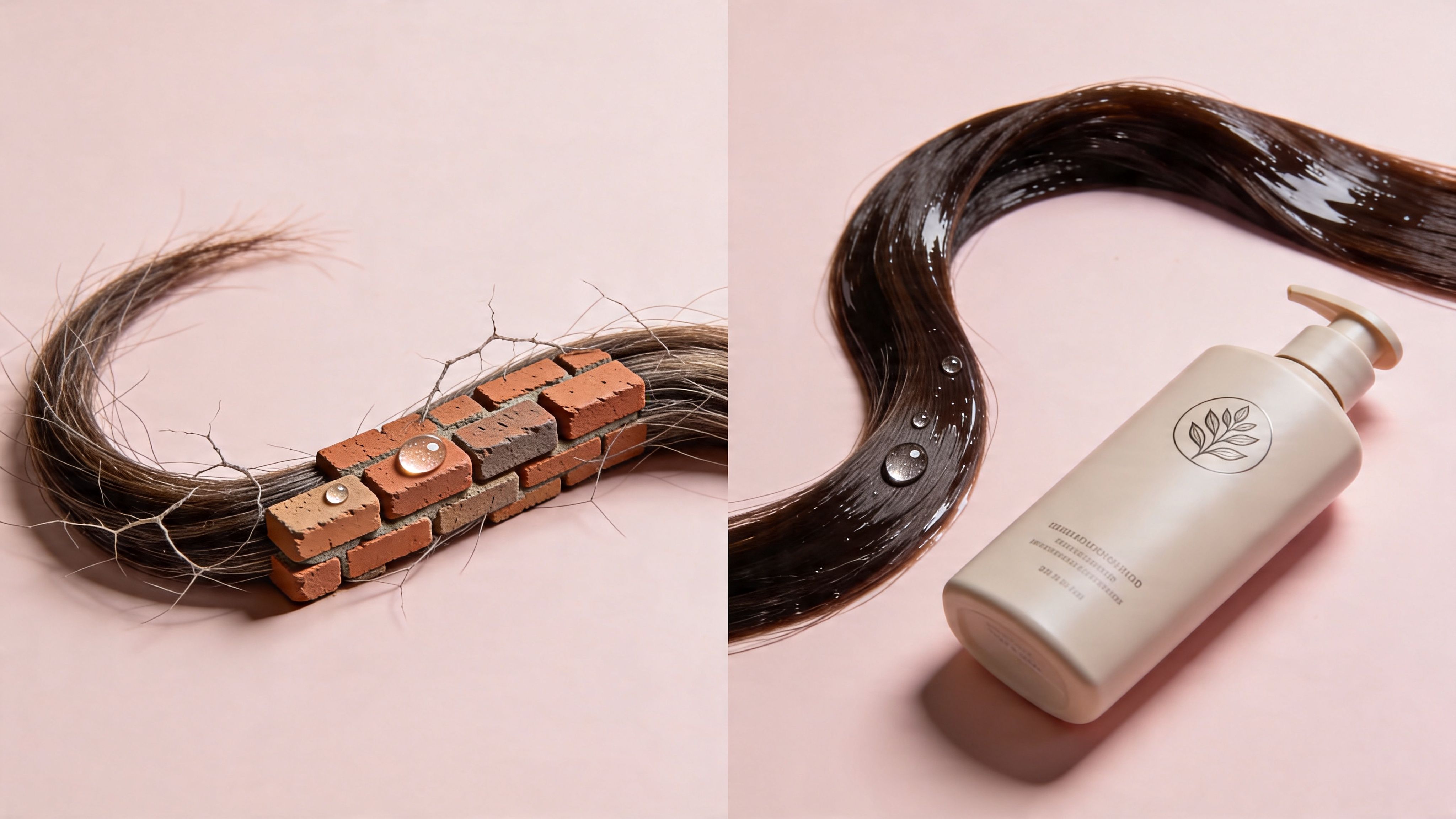
If you've ever felt like your products just sit on top of your hair, creating a greasy film instead of actually sinking in, you probably have low porosity hair. It’s a common frustration. Your hair takes forever to get wet in the shower and, once it is, it seems to take hours to dry.
This isn’t a sign of “bad” hair. It just means your hair’s cuticle layer—its protective outer shell—is tightly packed and lies flat. Think of it like shingles on a roof sealed down tight, making it tough for water to get in. The key to a great low porosity routine is working with this structure, not against it. It's all about lightweight hydration, using gentle heat to coax that cuticle open, and steering clear of heavy products that just sit on the surface.
Do You Have Low Porosity Hair?

Before you can fix the problem, you need to be sure you know what it is. You might have heard of the "float test" where you drop a hair strand in water, but honestly, its reliability is debatable. A much better way to know for sure is to simply pay attention to how your hair behaves day-to-day.
Definitive Signs of Low Porosity Hair
If these signs sound painfully familiar, you're in the right place. The traits of low porosity hair are pretty distinct and all come down to how it resists moisture.
- Products Sit on Top: Instead of absorbing, creams and oils just coat your hair, often leaving a whitish residue or a heavy, greasy feeling. You can literally see the product just sitting there.
- Water Beads Up: When you spritz your hair with water, you'll see tiny little droplets form on the surface before they slowly—very slowly—sink in.
- Takes Ages to Get Wet: You have to stand under the shower for what feels like an eternity before your hair finally feels completely saturated.
- Drying Takes Forever: Because moisture struggles to get in, it also has a hard time getting out. It's not uncommon for low porosity hair to stay damp for many hours after washing.
This hair type is incredibly common, especially for those with natural waves and curls. About 65% of the global female population has a curly or wavy texture, and a huge number of them deal with low porosity hair. Its tightly bound cuticles are the direct cause of that stubborn product buildup and drying times that can be up to 30-50% longer than for high porosity hair.
Why Knowing Your Porosity Matters
Figuring out you have low porosity hair isn't about slapping a label on it; it's about finding the cheat code to care for it properly. A one-size-fits-all routine will never work. Those heavy butters and rich oils that high porosity hair loves will only weigh your hair down, leaving it limp and lifeless.
The secret is to work with your hair’s structure, not against it. That means focusing on lightweight products, using gentle heat to help them absorb, and clarifying regularly to prevent buildup.
Before you go tossing out your entire product collection, it's smart to confirm your hair's properties. If you want a clear answer without the guesswork, you can check your hair porosity with a quick, guided test. Getting this right is the difference between another frustrating cycle of trial and error and finally building a routine that gives you results.
Once you know for sure, you can craft a game plan that caters to your hair’s unique needs. To make it even easier, you can build your personalized hair routine with an AI-powered tool that recommends the perfect products and techniques for low porosity hair. You can explore this and other helpful resources by checking out the IsItClean hair care tools to help with all your hair and scalp concerns.
The Ingredients Your Hair Loves and Hates
Trying to read a product label can feel like a pop quiz in chemistry, but when you have low porosity hair, getting the ingredients right is everything. Since your hair’s cuticle is so tightly sealed, the wrong stuff will just sit on top, leading to a greasy, waxy mess without ever actually moisturizing your hair.
The right ingredients, on the other hand, can gently work their way in to deliver hydration that lasts. Honestly, this is the entire secret to a happy low porosity routine. It’s all about choosing lightweight hydrators and dodging the heavy, film-forming ingredients that block moisture out. Once you know what to spot, shopping for products gets so much easier.
Lightweight Hydrators Your Hair Will Actually Absorb
Your hair is thirsty for moisture, but it can only drink it up if the molecules are tiny enough to slip past that tight cuticle. Think of your hair strand as a locked door—you need the right key, not a battering ram. That’s why water-based products are your absolute best friend.
When you scan an ingredient list, look for these names near the top:
- Water (Aqua): This is the ultimate hydrator. If water is the first ingredient, you’re generally on the right track.
- Aloe Vera: This is a fantastic plant-based humectant that’s brilliant at hydrating without adding any weight. It’s mostly water, making it a perfect match for parched, low porosity strands.
- Glycerin (in moderation): Glycerin is a powerful humectant, which means it pulls moisture from the air right into your hair. But here’s the catch: in high humidity, it can grab too much moisture and cause frizz. In very dry air, it can do the opposite and pull moisture out of your hair. Use it with caution and see how your hair responds.
These ingredients should be the foundation of your routine. They ensure your hair gets the water it desperately needs to stay elastic, healthy, and manageable.
The goal isn't to force moisture into the hair with heavy products, but to coax it in with lightweight ingredients it can actually absorb. This shift in mindset is crucial for managing low porosity hair.
To make this even simpler, here's a quick reference guide to help you choose the right ingredients at a glance.
Ingredient Guide for Low Porosity Hair
This table breaks down the types of ingredients you'll find in products, helping you spot the lightweight hydrators you want and the heavy culprits you need to avoid.
| Ingredient Category | Choose These (Lightweight & Hydrating) | Avoid These (Heavy & Coating) |
|---|---|---|
| Oils | Grapeseed, Argan, Jojoba, Sunflower | Coconut, Castor, Olive |
| Butters | Mango Butter (use sparingly) | Shea Butter, Cocoa Butter |
| Humectants | Aloe Vera, Glycerin (in moderation) | Petrolatum, Mineral Oil |
| Proteins | Hydrolyzed Silk, Amino Acids (small amounts) | Whole Proteins, Overuse of any protein |
Remember, this is about finding a balance. Your hair might tolerate a small amount of a heavier ingredient if the product is mostly water-based, but as a general rule, sticking to the "Choose These" column will save you a lot of frustration.
The Best Sealing Oils That Won’t Cause Buildup
After you’ve hydrated your hair, you need to lock that moisture in. For low porosity hair, this is a very delicate balancing act. Heavy oils and butters will just sit on the hair's surface, creating a waterproof seal that prevents any future moisture from getting in. This leads to that dreaded combo: hair that’s both greasy and bone-dry underneath.
Instead, you need lightweight, fast-absorbing oils that can penetrate just enough to seal the cuticle without suffocating the hair shaft.
Oils to Embrace:
- Grapeseed Oil: It’s incredibly lightweight, non-greasy, and a fantastic sealant.
- Argan Oil: Packed with fatty acids and antioxidants, it absorbs well and adds a beautiful shine without weighing hair down.
- Jojoba Oil: Its molecular structure is remarkably similar to the natural sebum your scalp produces, making it an effective and highly compatible moisturizer.
- Sunflower Seed Oil: Another light option that’s high in linoleic acid, which is much more agreeable with low porosity textures.
Ingredients to Avoid at All Costs
Just as important as what you use is what you don’t use. Heavy ingredients are the sworn enemy of low porosity hair. They are the #1 cause of product buildup, limpness, and that frustrating feeling that your hair is never truly clean or moisturized.
When you’re looking at a label, treat these as immediate red flags:
- Heavy Butters: Shea butter and cocoa butter are simply too dense to get past the cuticle. They will coat the strands and block out any and all moisture.
- Thick Oils: Coconut oil, castor oil, and olive oil are generally too heavy. While they work wonders for other hair types, their large molecules can’t penetrate low porosity hair and will only cause buildup.
- Certain Proteins (in excess): Low porosity hair is often protein-sensitive. While small amounts of hydrolyzed proteins can add strength, overloading your hair with them will make it feel stiff, brittle, and straw-like.
Not sure if a product will work for you? You can analyze your ingredients instantly with the IsItClean Ingredient Checker to make sure you're choosing products that will help, not hurt, your hair. Getting your product lineup right is a huge step, and a little help can make all the difference.
Your Weekly Low Porosity Wash Day Ritual
For low porosity hair, wash day is everything. This isn't just about getting your hair clean—it’s a strategic mission to deliver moisture that actually stays put. Because your hair has such a tightly sealed cuticle, every single step, from the water temperature to how you apply conditioner, makes a huge difference.
Let's ditch the generic advice. What you need is a repeatable blueprint that focuses on two things: clearing away buildup and gently coaxing that moisture inside the hair shaft. It’s time to make your wash day a targeted, restorative ritual instead of a weekly chore.
Hit the Reset Button with a Deep Cleanse
Low porosity hair is basically a magnet for product buildup. Since ingredients tend to sit on the surface instead of sinking in, they eventually form a film that blocks even the most lightweight hydrators from getting through. That’s why a clarifying or chelating shampoo isn't just a good idea—it's non-negotiable.
- Why You Need to Clarify: Your regular shampoo probably isn’t strong enough to cut through stubborn residue from silicones, heavy oils, or even the minerals left behind by hard water. Think of a clarifying shampoo as a hard reset for your hair, giving you a perfectly clean slate.
- How Often Should You Do It? For most low porosity hair, clarifying once a week or every other week is the sweet spot. Your hair will tell you when it’s time—if it starts feeling limp, looks greasy, or your products just stop working, it’s time to clarify.
Always use warm water when you shampoo. The warmth gently helps the hair cuticle lift just enough, prepping it for the most important step that comes next.
Use Gentle Heat to Supercharge Your Conditioner
This is the make-or-break moment of your entire wash day. If you just slap conditioner on and rinse it out, most of it will slide right off your hair’s sealed-off surface. To get the conditioner to actually penetrate, you need to create the right environment.
The secret? Gentle, indirect heat. Heat helps to temporarily lift those tight cuticle scales, opening a window for all the moisture and nutrients to finally get inside the hair shaft where they belong.
Effective Heat Methods:
- Hair Steamer: This is a fantastic tool. It surrounds your hair with warm, moist air, opening the cuticles for maximum absorption. Apply your deep conditioner, then sit under the steamer for 15-20 minutes.
- Thermal Cap: After slathering on conditioner, pop on a plastic shower cap and cover it with a heated thermal cap. These are usually filled with gel or flaxseed and you can just warm them in the microwave for sustained, gentle heat.
- The Warm Towel Trick: No fancy tools? No problem. Put on your conditioner and a plastic cap, then wrap a hot, damp towel around your head. You might have to swap it out for a fresh hot one as it cools, but it gets the job done.
Do not skip this. Using heat with your conditioner is the difference between a product just sitting on your hair and actually working for your hair. It’s the key to unlocking real hydration.
Style on Soaking Wet Hair—No Exceptions
After you’ve deep conditioned and rinsed (use cool water to help seal the cuticles back down!), it's time to apply your stylers. For low porosity hair, the golden rule is to apply everything—leave-ins, creams, and gels—while your hair is still soaking wet.
When your hair is fully saturated with water, the cuticles are still slightly raised. This gives you the perfect opportunity to lock that water in with your products before the door slams shut. If you wait until your hair is just damp or towel-dried, you’re basically asking for frizz and poor product absorption. Work in sections to make sure every strand is coated, then scrunch or smooth to encourage your natural texture.
This simple ingredient flow is the best way to build a lightweight routine that works.

As you can see, the focus is always on starting with water-based hydrators, sealing with light oils, and avoiding the heavy butters that just cause buildup.
This science-backed approach is gaining traction for a reason. Studies show that using chelating shampoos weekly can dissolve stubborn mineral buildup from hard water. Plus, salon-quality low-porosity masks used with heat caps have been found to cause up to a 50% reduction in frizz. Even the technique of applying products to soaking wet hair is backed by data—it can lead to 25% better penetration, ensuring moisture gets locked in. You can dive deeper into these trends in the latest hair care market report.
Figuring this all out on your own can feel like a lot of trial and error. If you’d rather skip the guesswork, you can build your personalized hair routine with an AI tool that recommends the right products and techniques for your exact hair profile.
This wash day system gives your hair the moisture it’s been begging for and gives you the structure for consistent, amazing results. It stops being a guessing game and becomes a targeted plan that works with your hair’s unique biology.
Ready to build the perfect routine from start to finish? The Hair Routine Builder is the perfect next step. It takes your porosity, texture, and goals into account to create a customized plan with product recommendations, so every wash day leaves you with hydrated, healthy hair.
Advanced Techniques to Maximize Hydration

So, you’ve got your wash day basics down, but you feel like your hair could still be more hydrated. It's time to fine-tune your routine with a few advanced strategies.
These aren't about reinventing the wheel. Instead, they’re about learning to work with your hair's stubborn, tightly-sealed cuticles. The goal is to get moisture to penetrate deeply and, more importantly, stay there.
Adapting Layering Methods Like LCO
You've probably come across the LCO (Liquid-Cream-Oil) or LOC (Liquid-Oil-Cream) methods. While they’re gold for some hair types, following them blindly with low-porosity hair can lead to a greasy, weighed-down mess. The secret is to adapt the method using ultra-lightweight products.
A modified LCO method usually works best for us:
- Liquid (L): Water is everything. Always start with soaking wet hair right out of the shower. A watery leave-in spray or even some pure aloe vera juice also counts as your liquid step.
- Cream (C): Your "cream" should be more like a light lotion than a thick butter. Look for water-based formulas that feel thin and absorb quickly, adding a soft layer of moisture without any heaviness.
- Oil (O): Finally, seal it all in with just a few drops of a lightweight oil. Think argan, grapeseed, or jojoba oil. The goal is to create a thin barrier that locks in the water and cream, not to coat your strands in a slick film.
The success of layering on low-porosity hair depends entirely on the weight of your products. If a product feels heavy in your hand, it will feel ten times heavier in your hair. Always, always choose featherlight options.
Try the Greenhouse Effect for Intense Hydration
If your hair is feeling particularly parched or you live in a dry climate, the "Greenhouse Effect" can be a total game-changer. It’s an overnight treatment that uses your own body heat to gently open the hair cuticle and push moisture deep inside.
Here’s how you do it:
- Right before bed, lightly spritz your hair with water or a watery leave-in conditioner.
- Apply a tiny amount of your favorite lightweight oil to your ends to seal in that moisture.
- Pop on a plastic shower cap and then cover it with a beanie or scarf to trap the heat.
Your scalp naturally releases heat and moisture as you sleep. The cap traps it all, creating a warm, humid environment that helps your hair absorb the products. In the morning, you can rinse it out or just style as usual.
Mastering the Protein-Moisture Balance
This is where things can get tricky. Low-porosity hair has a naturally strong cuticle structure, which makes it prone to protein-sensitivity. Too much protein, even from "strengthening" products, can quickly make your hair feel stiff, brittle, and straw-like.
That doesn't mean you should avoid protein entirely. Small, hydrolyzed proteins (like silk amino acids) can be beneficial in moderation. The key is balance, with most low-porosity routines thriving on a protein-to-moisture ratio of about 1:5 to avoid overload. In fact, an estimated 40% of users mistake protein buildup for dryness. The best modern routines prioritize heat and ingredients with a low molecular weight, such as hydrolyzed oat extracts, which can achieve up to a 95% absorption rate.
If your hair suddenly feels rough and snaps easily even though you’re piling on moisturizing products, you might have protein overload. Don't guess—check. Using a specialized protein overload test gives you a clear answer, allowing you to temporarily cut protein-heavy products and get your hair back to a soft, hydrated state.
If you are looking for more tips and tricks, feel free to read also our other blog articles for further guidance on healthy hair care.
Troubleshooting Common Low Porosity Problems
Even when you’ve done everything right, low porosity hair can still hit some frustrating roadblocks. Your hair has a mind of its own, and sometimes it throws a curveball that leaves you wondering what went wrong.
Don't worry, this is completely normal. Knowing how to spot these common snags is the key to getting your routine back on track. We'll walk through the most frequent issues and give you clear, actionable solutions to fix them.
Diagnosing Flash Drying
Have you ever applied a leave-in or cream to your soaking wet hair, only for it to feel dry and crunchy just minutes later? That’s a classic case of "flash drying."
It happens when certain ingredients—often humectants like glycerin in the wrong environment—pull moisture out of your hair instead of drawing it in from the air.
This is especially common in very dry climates or super-humid ones. In dry air, there’s no atmospheric moisture for the humectant to grab, so it steals it straight from your hair shaft. To fix this, check your product labels and try swapping out glycerin-heavy stylers for ones that use fatty alcohols or aloe for moisture.
Why Is My Hair Still Frizzy?
Dealing with a halo of frizz even on a perfect low-humidity day is a tell-tale low porosity problem. If you’ve already clarified and used a deep conditioner with heat, the culprit is probably your application technique or your water.
Here are a few things to check:
- Not Enough Water: Is your hair truly soaking wet when you apply products? Just being damp isn't enough. Water is the real moisturizer; your products are just meant to seal it in.
- Hard Water Buildup: Minerals from hard water can create a film on your strands, blocking moisture from getting in and leaving your hair feeling rough and frizzy. A chelating shampoo designed to remove mineral buildup can be a total game-changer.
- Styling Friction: Are you being too rough? Aggressively scrunching with a cotton towel or even a t-shirt can rough up the hair cuticle and invite frizz. Try gently “pulsing” or “glazing” products onto your hair with minimal friction instead.
That Feeling That Nothing Absorbs
This is the ultimate low porosity frustration. You apply products, and they just sit on top of your hair, creating a greasy, filmy layer while the strands underneath remain bone dry.
This is a major absorption issue, and it almost always points to one of two things: buildup or simply using the wrong products for your hair.
When your hair seems to reject every product you try, it's not being stubborn—it's sending a clear signal. This is a sign to simplify, clarify, and re-evaluate the ingredients you're using.
If you’ve already clarified and are using lightweight products, the problem could be a specific ingredient that your hair just hates. Even "good" ingredients can build up over time and block out moisture.
Instead of guessing and buying a bunch of new products, you can be much more strategic by analyzing your hair care routine. Using a tool to break down your current lineup helps you pinpoint specific ingredients that might be causing trouble. This lets you make one targeted swap instead of overhauling your entire routine, saving you time, money, and a whole lot of frustration.
Building a Routine That Lasts
A great low-porosity hair routine isn't about achieving one perfect hair day. It's about building a sustainable system that works for you long-term. Your hair isn't static, and your routine shouldn't be either.
Think of it less like a rigid set of rules and more like a flexible framework. The real goal is learning to read your hair’s cues so you can make small, smart adjustments as its needs change with the seasons, its health improves, or your lifestyle shifts.
Tracking Your Progress and Knowing When to Adapt
Consistency is important, but so is paying attention. What gives you amazing results in the dry winter air might turn into a frizzy, weighed-down mess during a humid summer. The easiest way to get a handle on this is by keeping a simple "hair journal."
You don't need to write a novel. Just jot down a few notes after each wash day:
- What you used: List the specific clarifier, conditioner, and stylers you applied.
- How your hair felt: Was it bouncy and defined, or limp, frizzy, or greasy?
- How long your style lasted: Did your curls hold up for one day or four?
After just a few weeks, you'll start to spot clear patterns. Maybe you'll notice your hair is always happier when you clarify weekly, or that a certain styling cream only works well when the humidity is low. This data is your secret weapon for fine-tuning your routine.
Adjusting to Seasonal Changes
Your environment has a huge impact on how your low-porosity hair behaves. A routine that delivers perfect moisture in one season can cause a complete disaster in another.
- High Humidity (Summer): When the air is heavy with moisture, your focus shifts to frizz control without adding weight. This is the time for stronger-hold gels and fewer heavy creams. You'll also want to be careful with high-glycerin products, which can pull too much moisture from the air and lead to puffy, undefined hair.
- Low Humidity (Winter): Dry air will try to steal every last drop of moisture from your hair. Now is the time to double down on hydration. A good leave-in conditioner under your styler becomes non-negotiable, and moisture-boosting techniques like the "Greenhouse Effect" can be a total game-changer.
If you need to restock your arsenal for the changing seasons, you can find a huge selection of IsItClean-approved hair care products perfect for your low-porosity needs.
A truly effective low porosity hair routine isn't about finding one perfect product; it's about building a system that allows for flexibility. Your hair's needs will change, and your routine should be ready to change with them.
This journey is all about moving from frustrating trial-and-error to confident, consistent results. When you understand why you’re doing something—like clarifying to bust buildup or using heat to help your deep conditioner penetrate—you gain the power to troubleshoot any issue that comes your way. You are in control.
The path to consistently beautiful hair starts with a plan built just for you. With IsItClean, you can take all the guesswork out of the equation. Stop wondering which products to buy or what techniques to use. Let our advanced AI do the heavy lifting and design your ideal regimen from start to finish. Ready for results you can count on? Build your personalized hair routine today and unlock the hydrated, healthy hair you've been waiting for.