
If you're constantly finding snapped strands on your shirt or a shower full of split ends, I get it. The good news is that stopping hair breakage isn't about some magic potion—it's about gentle handling, nailing your hair's protein-moisture balance, and ditching a few damaging habits and ingredients.
You can start to see less breakage almost immediately by strengthening your hair from the inside out, turning down the heat, and actually understanding what your hair needs.
Why Your Hair Keeps Breaking and How to Fix It
Seeing those little broken hairs all over the place is beyond frustrating, especially when you feel like you’re already doing everything right. But the real reasons your hair keeps breaking are usually a mix of your daily habits and some sneaky issues hiding in your products.
Figuring out those root causes is the absolute first step toward getting stronger, more resilient hair that can actually grow long.
The most common culprits are what you’d expect: mechanical stress from styling, chemical treatments, and heat damage. But there's a huge—and often overlooked—factor at play: the delicate protein-moisture balance in each strand. When that balance is off, your hair gets either stiff and brittle or weak and mushy. Either way, it's going to break.
To get you started, here are the most frequent reasons for breakage and the one thing you can do right now to start fixing it.
Common Causes of Hair Breakage and Quick Fixes
This table breaks down the main culprits behind weak, snapping hair and gives you an immediate, actionable fix for each. Think of it as your starting point for triage.
| Cause of Breakage | What It Looks Like | Immediate Actionable Fix |
|---|---|---|
| Mechanical Stress | Short, snapped pieces near the crown, a "halo" of frizz from broken hairs. | Swap your cotton pillowcase for a silk or satin one to reduce friction overnight. Ditch tight hair ties for scrunchies or claw clips. |
| Heat Damage | Dry, brittle texture, white dots on the hair shaft (trichorrhexis nodosa), split ends that travel up the hair. | Commit to using a heat protectant every single time you style. No exceptions. Turn the temperature on your tools down to below 350°F (175°C). |
| Chemical Damage | Gummy or mushy feeling when wet, extreme dryness, loss of curl pattern, visible breakage after coloring or relaxing. | Start using a bond-building treatment (like Olaplex or K18) once a week to repair broken disulfide bonds from the inside out. |
| Protein Overload | Hair feels stiff, straw-like, brittle, and snaps easily with little stretching. It tangles constantly. | Stop all products with protein and do a clarifying wash followed by a deep moisturizing mask (with zero protein) to restore softness. |
| Moisture Overload | Hair feels overly soft, limp, mushy, and stretches excessively before breaking. It won't hold a style. | Use a light protein treatment or a rice water rinse to add back some structure and rigidity to the hair shaft. |
While this table gives you quick wins, building a long-term strategy means digging a bit deeper into why this is happening to your hair specifically.
The Main Triggers Behind Damaged Hair
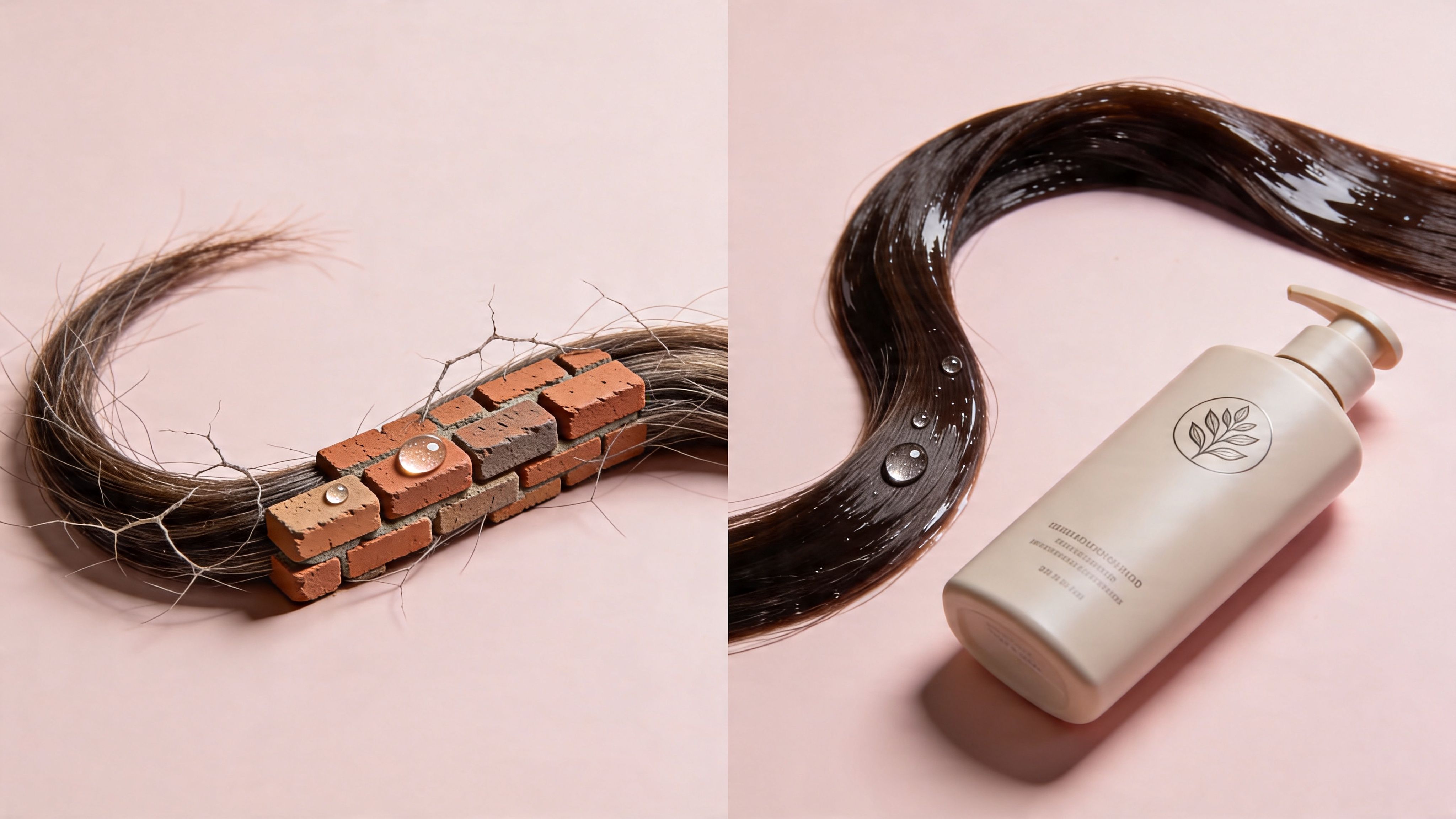
So many of our daily habits chip away at the hair’s cuticle, which is its protective outer layer. Think of the cuticle like shingles on a roof—when they get lifted or broken, the inner core of the hair is left exposed and weak.
This kind of damage usually comes from:
- Mechanical Stress: We're talking about tight ponytails, ripping through tangles with a brush (especially when your hair is wet and at its most fragile), and even the nightly friction from your pillowcase.
- Heat Damage: Constantly using flat irons, curling wands, and high-heat blow dryers literally boils the water inside your hair, stripping its natural moisture and leaving it parched and weak.
- Chemical Treatments: Bleach, color, and chemical straighteners all work by fundamentally changing your hair's internal structure, which makes it much more prone to snapping.
If you’re dealing with this, you are far from alone. Repairing hair damage is a top concern for nearly 32% of Americans, according to consumer trend data. That number jumps even higher for those of us with color-treated or frequently styled hair. You can explore more consumer haircare trends to see just how common this battle is.
Key Takeaway: Breakage isn't just one thing. It’s the result of daily habits, styling choices, and product ingredients all conspiring to weaken your hair’s defenses. The goal is to pinpoint your specific triggers and tackle them one by one.
Hidden Culprits in Your Hair Products
Beyond the physical stuff, the ingredients in your shampoo, conditioner, and stylers play a massive role. Harsh sulfates can strip your hair's natural oils, while certain drying alcohols can suck the moisture right out of it.
This creates a vicious cycle of dryness and fragility that no amount of gentle detangling can fix on its own.
Recognizing your specific cause is the first step. Next, we need to turn that knowledge into a real plan by building a routine that directly targets your hair's weak spots. A targeted approach always beats guessing games. The easiest way to get started is to build your personalized hair routine with a tool that takes your unique hair profile into account.
Diagnose Your Hair's Unique Needs
Before you buy a single new product, you have to play detective. Tossing random masks and oils at your hair is like trying to navigate a new city without a map—you might eventually stumble upon the right street, but you'll probably just end up frustrated and lost.
Getting to the root of your hair's specific issues is the only way to stop breakage for good. This is how you move from guessing what might work to knowing exactly what your hair is crying out for.
Understand Your Hair's Porosity
One of the biggest a-ha moments in anyone's hair journey is finally understanding porosity. It's a simple term that describes how well your hair’s outer layer, the cuticle, can absorb and hold on to moisture.
Knowing your porosity level dictates which products will save your strands and which will just sit on top, doing more harm than good.
Low Porosity: The cuticle is clamped shut, making it tough for water and products to get in. This hair type is notorious for product buildup because conditioners and creams just coat the outside of the strand.
Medium Porosity: This is the "just right" of the hair world. The cuticle is loose enough to let moisture in easily and tight enough to hold onto it. It still needs a balanced routine, though.
High Porosity: Your cuticle has gaps and tears, so while it soaks up moisture like a sponge, it loses it just as fast. This often leads to hair that feels perpetually dry, frizzy, and snaps easily.
Don't just guess. Take a few minutes to check your hair porosity with a quick strand test. This single piece of information is the foundation for everything else.
Uncover the Protein-Moisture Balance
The next piece of the puzzle is the delicate protein-moisture balance. Think of it like a seesaw. For hair to be healthy, it needs a perfect equilibrium—protein provides strength and structure, while moisture gives it softness and flexibility. When that seesaw gets tipped too far in either direction, breakage is inevitable.
This chart can help you visualize how different stressors push your hair toward breakage.

As you can see, breakage doesn't just happen. It's the direct result of things like heat styling, chemical treatments, or even just rough handling. Pinpointing your main stressor is a huge step forward.
So, how do you know if your own seesaw is out of whack?
Too Much Protein (Protein Overload): Does your hair feel stiff, brittle, or like straw? When you pull on a strand, does it snap immediately with almost no stretch? That’s a classic sign of protein overload. Your hair has too much structure and not enough flex.
Too Much Moisture (Moisture Overload): Is your hair limp, overly soft, or mushy when it's wet? Does it stretch and stretch… and stretch… before finally breaking? You're looking at moisture overload, also called hygral fatigue.
If you suspect one of these is your problem, taking a test for protein overload in your hair will give you a clear answer. This is critical for choosing treatments that restore balance instead of making things worse. For a deeper dive, check out our guide on the effects of hormones on hair health.
Check In on Your Scalp Health
Finally, never forget where healthy hair starts: your scalp. An irritated, inflamed, or clogged scalp simply cannot grow strong, resilient hair.
Issues like dandruff, chronic itchiness, or layers of product buildup can compromise the follicle itself. This means the hair is weaker and more fragile from the moment it emerges. Pay attention to these signals—they aren't just minor annoyances. You can take a scalp sensitivity quiz to see if underlying irritation is contributing to your hair health issues.
Once you have a handle on these three areas—porosity, protein-moisture balance, and scalp health—you're no longer fighting in the dark. Now you have the intel you need to build a routine with precision.
The Ingredient Blacklist for Breakage-Prone Hair
You could have the most gentle hair care habits in the world—careful detangling, no heat, protective styling—but still find yourself stuck in a frustrating cycle of breakage. Why? The answer is often hiding in plain sight on your product labels.
Learning which ingredients to sidestep isn't about memorizing a long, scary list. It's about understanding why certain ingredients weaken your hair from the inside out. Once you know what to look for, you can finally stop the breakage at its source.

It’s a sneaky trick of the trade: many popular products are formulated for a great first impression, giving you immediate shine or slip, but they're causing serious structural damage over time. It’s time to flip over those bottles and see what’s really going on.
Harsh Sulfates: The Cuticle Strippers
Sulfates are the power-washing detergents behind that satisfying, bubbly lather we’ve all been taught means "clean." The problem is, harsh sulfates like Sodium Lauryl Sulfate (SLS) and Sodium Laureth Sulfate (SLES) are a little too good at their job.
They don't just remove dirt and product buildup; they strip away your hair's natural, protective oils. This aggressive cleansing action physically lifts and erodes the hair's cuticle—its protective armor. With a damaged cuticle, your hair's inner cortex is left exposed, leading to rapid moisture loss, higher porosity, and strands that snap with the slightest tension.
Key Takeaway: Using a harsh sulfate shampoo is like washing a silk scarf with dish soap. Sure, it’ll get clean, but you’ll also destroy its natural texture, leaving it brittle and fragile. That’s exactly what these sulfates do to your hair.
Heavy Silicones: The Moisture Blockers
Silicones are polymers that give your hair that signature silky, slippery feeling. They make hair look shiny and healthy on the surface. But while not all silicones are villains, the heavy, non-water-soluble types are a disaster for hair that’s already prone to breaking.
Keep an eye out for ingredients like Dimethicone and Amodimethicone. These create a plastic-like film around each hair strand that causes two major problems:
- It blocks moisture out. This suffocating film prevents the nourishing ingredients in your conditioners and masks from actually getting inside the hair shaft. Your hair can be starving for hydration, even when it feels smooth to the touch.
- It creates heavy buildup. Since these silicones don’t rinse away with water, they build up in layers. The sheer weight can weaken the hair, and removing this buildup requires—you guessed it—a harsh sulfate shampoo, trapping you in a vicious cycle of stripping and coating.
The end result is hair that’s suffocated, dehydrated, and primed to break. A much healthier choice is to use products with water-soluble silicones or, better yet, go silicone-free and opt for natural oils and butters for that slip and shine.
Drying Alcohols: The Moisture Evaporators
Not all alcohols in your hair products are bad news. In fact, fatty alcohols like Cetyl and Stearyl alcohol are excellent for moisturizing. The ones you need to worry about are the short-chain, drying alcohols often found in hairsprays, gels, and mousses to help them dry faster on your hair.
Be on the lookout for these on your labels:
- Alcohol Denat. (Denatured Alcohol)
- SD Alcohol
- Isopropyl Alcohol
These ingredients have a "flash-drying" effect, meaning they evaporate almost instantly and take your hair's precious moisture with them. For hair that's already dry or fragile, this can be the final straw, causing the cuticle to roughen up and making the strand immediately more brittle.
Your Secret Weapon: The Ingredient Checker
Feeling a bit overwhelmed? You don't have to become a cosmetic chemist overnight or carry a cheat sheet to the store. The smartest and fastest way to audit your products is to let technology do the hard work.
Instead of squinting at tiny ingredient lists, you can analyze your ingredients by simply checking them in an analyzer tool. It instantly flags harsh sulfates, heavy silicones, drying alcohols, and other potential irritants. It gives you a clear "yes" or "no" on whether a product aligns with your goal of stopping breakage. It’s like having a hair care expert in your pocket.
Making these ingredient swaps is one of the most powerful moves you can make for your hair's health. The next step is to combine this new knowledge with a solid, strengthening routine tailored just for you.
Crafting Your Anti-Breakage Hair Routine
Alright, you’ve figured out your hair’s unique profile—its porosity, its protein needs, and how your scalp behaves. Now comes the fun part: using that knowledge to build a routine that actually stops breakage in its tracks.
This isn't about just grabbing a bunch of trendy products off the shelf. It’s about creating a targeted system where every single step works together to support your hair. What saves your friend’s high-porosity, protein-hungry hair could be a complete disaster for your low-porosity, protein-sensitive strands. Personalization is everything.
The Core Four: Cleanse, Condition, Treat, and Style
A truly effective hair care routine always comes down to four key pillars. Your mission is to pick the right products and techniques for each stage, all based on the intel you gathered about your hair.

Think of it as reinforcing your hair’s strength at every opportunity, from the moment you step into the shower to your final styling touch.
Nailing Your Cleanse and Condition
The foundation of healthy hair starts at the sink. Your shampoo and conditioner choices set the tone for everything else.
For High Porosity Hair: Your main goals are to cleanse gently without stripping your hair, and then to seal in as much moisture as possible. Look for sulfate-free shampoos and thick, rich conditioners loaded with sealing ingredients like shea butter, avocado oil, or ceramides. These ingredients help patch up the "holes" in your porous hair cuticle.
For Low Porosity Hair: You need lightweight moisture that can actually get past your hair’s tightly-bound cuticle. Heavy butters and oils will just sit on top, leading to greasy buildup. Instead, you want products with smaller molecules that can penetrate, like glycerin, aloe vera, and hyaluronic acid. A clarifying shampoo should also be a regular part of your routine to keep the surface of your hair clean.
One tiny technique change here can make a huge impact. Try the "squish to condish" method. As you rinse your conditioner, cup water in your hands and scrunch it upward into your hair. This physically helps the conditioner absorb deeper instead of just sliding off the surface.
Adding in Targeted Treatments
Treatments are your heavy hitters. They’re the specialized products you bring in to fix specific problems, whether it's brittleness from dryness or mushiness from over-conditioning. The trick is knowing what to use and when.
Pro Tip: A quick feel test tells you everything. If your hair feels brittle and snaps easily when you pull a strand, it's begging for moisture. If it feels gummy, overly soft, and stretchy, it needs a protein treatment to rebuild its structure. The sweet spot is alternating between the two to keep that balance.
You’re not alone in this battle. Breakage is such a common struggle that the hair loss product market is expected to jump from USD 5.03 billion to over USD 8.52 billion by 2033. Studies have shown that a well-balanced routine, including weekly protein treatments, can slash breakage by up to 35%, depending on the hair's starting condition.
Styling for Strength
Your final styling step shouldn’t just be about looks; it's your hair's first line of defense against the day. The goal is to use products that create your desired style while also shielding your strands from damage.
Always, always start with a leave-in conditioner that matches your porosity—a creamy one for high porosity hair, and a lightweight spray for low porosity. And if you’re using any heat at all, a great heat protectant is completely non-negotiable.
Trying to find products that tick all these boxes can feel like a nightmare. Instead of standing in a store aisle with your phone out, cross-referencing endless ingredient lists, let our tools handle it for you. The absolute fastest way to get a full regimen is to use the IsItClean Hair Routine Builder to create a personalized plan. Just plug in your hair profile, and it will generate a complete, ingredient-safe routine in minutes.
Explore some of our recommended products to get started and see the difference a truly personalized routine can make.
Lifestyle Habits That Make Hair More Resilient
If you think the right products alone will stop hair breakage, you're only seeing half the picture. The real secret to strong, resilient hair is hiding in your daily habits—how you sleep, how you dry your hair, even how you wear your ponytail.
Think of it like this: your products are the treatment, but your habits are the prevention. Making a few small, intentional changes can create an environment where your hair is protected from the daily physical stress that leads to snaps and splits.
Upgrade Your Sleep and Towel Game
Believe it or not, two of the most damaging things you do to your hair happen when you’re barely paying attention: sleeping and towel-drying. A standard cotton pillowcase snags and frays your hair cuticle all night long, and that rough terrycloth towel you use? It's basically a frizz-factory that lifts the cuticle and creates weak spots.
The fixes are surprisingly simple and make a huge difference.
Switch to a Silk or Satin Pillowcase: These fabrics have much less friction. Your hair glides across the surface instead of getting caught and roughed up. This one change can drastically reduce morning tangles and those tiny, broken hairs on your pillow.
Use a Microfiber Towel or T-shirt: Stop rubbing your hair dry. Instead, gently squeeze or "plop" it in a microfiber towel. This wicks away moisture without disturbing the delicate cuticle, which is at its most vulnerable when wet.
Master Safe Detangling and Styling
How you handle knots and choose your hairstyle can be the difference between preserving your length and creating a halo of breakage. The goal here is to minimize tension and physical strain at all costs.
One of the most common mistakes is brushing from the root down. This just shoves all the tangles into one giant, unmanageable knot at the bottom. Instead, always start detangling from the ends of your hair and gently work your way up to the root with a wide-tooth comb. This coaxes knots out instead of ripping right through them.
When it comes to styling, give your hair a break from high-tension looks like tight, slicked-back ponytails or buns. These put constant, damaging strain on both the hair shaft and the follicle itself.
Try This: Opt for protective styles that tuck your ends away and don’t need much day-to-day handling. Loose braids, gentle updos secured with claw clips, or soft silk scrunchies are far kinder choices that prevent mechanical breakage.
Reduce Harm from Heat Styling
Look, avoiding heat altogether is the gold standard for stopping breakage, but that’s not always realistic. If you're going to use heat, your strategy should be harm reduction. Your two most important tools are a quality heat protectant and a lower temperature setting.
A heat protectant isn't just a nice-to-have; it's a non-negotiable step. It creates a thermal shield between your hair and the hot tool, preventing moisture from boiling inside the hair shaft—a primary cause of brittle, "fried" strands.
The temperature you use is just as crucial. Most hair types can be styled effectively at temperatures below 350°F (175°C). Cranking the heat higher doesn't make your style last longer; it just inflicts more damage.
Even with these adjustments, remember that your hair's needs aren't static. Maybe your heat-styled hair starts feeling more brittle, or your scalp reacts to a new protective style. The key is to pay attention and adapt. If you're unsure whether your habits are creating new problems, you can always analyze your hair routine to see if your products are still a good match.
Building a truly holistic plan that combines the right products with these gentle daily habits is the ultimate strategy for resilient hair.
Putting It All Together: Your Plan to Stop Breakage for Good
You've just absorbed a lot of information, and it's easy to feel a little overwhelmed. But don't be. We can boil this entire guide down to a simple, actionable game plan. It's not about an overnight miracle; it's about making smart, consistent changes that lead to strong, resilient hair.
The journey starts with diagnosing your hair’s real needs, clearing out products that are secretly sabotaging you, and then building a routine that actually supports your goals.
From Diagnosis to Daily Routine
The single most important rule in fixing hair breakage is that a personalized approach is non-negotiable. What saves your friend’s bleached hair could be a disaster for your fine, low-porosity strands. This is why you absolutely have to start with your own hair profile.
Here’s how to put all the pieces together:
Get to Know Your Hair: Before you buy a single new product, take a few minutes to diagnose your hair. The two biggest game-changers are understanding your hair porosity and figuring out if you need to discover your hair type.
Do a Shelf Audit: It's time to play detective with your current products. Grab your bottles and use an ingredient checker to quickly scan for culprits like harsh sulfates, drying alcohols, or buildup-causing silicones. Be ruthless—if it's not serving your hair, it's got to go.
Build Your New Routine: Now you have the "why"—you know your porosity, your protein needs, and the ingredients to avoid. This is where you build a targeted regimen.
Feeling stuck on which products to choose? That's the hardest part, but we've made it simple. You've done the work to understand your hair, so let us connect the dots for you.
Take everything you've just learned and plug it into our personalized hair care routine builder. In just a few minutes, it will give you a complete, customized routine—the smartest, fastest way to finally get the healthy hair you deserve.
Your Top Hair Breakage Questions, Answered
Even with a solid plan, you're bound to have questions. It's totally normal. Let's tackle some of the most common ones I hear so you can move forward with confidence.
How Long Does It Take to See Less Breakage?
You can actually notice some changes almost immediately. Simple swaps, like using a silk pillowcase or being extra gentle when you detangle, can stop physical snapping overnight.
But for the deep, lasting strength that really transforms your hair? Give it about three months. That's the magic number. It gives your hair enough time to respond to new treatments, for your new routine to really set in, and to see a real difference in your hair's resilience.
Can Split Ends Be Permanently Repaired?
Let’s get straight to it: no. Once a hair strand splits, there’s no magic glue to fuse it back together permanently.
Products that claim to "repair" split ends are using silicones or bonding agents to temporarily seal them. It's like putting a tiny bandage on the problem—it helps prevent the split from traveling further up the hair shaft and makes things look smoother for a while.
The only real cure for a split end is to snip it off. This is why regular trims are non-negotiable for keeping breakage at bay.
How Often Should I Use a Protein Treatment?
This is where personalization is key. The right answer depends entirely on your hair's porosity and current health. Using too much protein can be just as bad as not using enough, leading to stiff, brittle hair.
- High Porosity or Damaged Hair: Your hair is like a sponge that loses protein easily. Start with a light protein treatment once a week to give it the frequent top-ups it needs.
- Low Porosity or Healthy Hair: Your hair has a tightly sealed cuticle, so it holds onto protein well. You might only need a treatment once every 4-6 weeks. Any more than that, and you risk protein overload.
Not sure if your hair is crying out for protein or moisture? The easiest way to know for sure is to do a quick protein overload test before you apply anything.
Feeling confident about your next steps is the most important part of this journey. You have the knowledge; now it's time to put it into a seamless plan. Let IsItClean do the heavy lifting by taking your unique hair profile and transforming it into a complete, effective regimen. Stop guessing and start seeing results by using the Hair Routine Builder today.