
It’s a frustrating cycle. You invest in good shampoo, but your hair still ends up dry, frizzy, or brittle. That hidden culprit could be lurking right on the ingredient list: certain types of alcohol. The truth is, switching to a shampoo no alcohol formula is one of the most powerful changes you can make to finally beat that persistent dryness.
Why Your Shampoo Might Be Secretly Harming Your Hair
Ever feel like you’re doing everything right, but your hair still feels perpetually thirsty and impossible to manage? You’re definitely not alone. The problem often comes down to a simple misunderstanding of one little word on the ingredient list: "alcohol." When most of us see it, we picture the harsh, stripping kind—and for good reason.
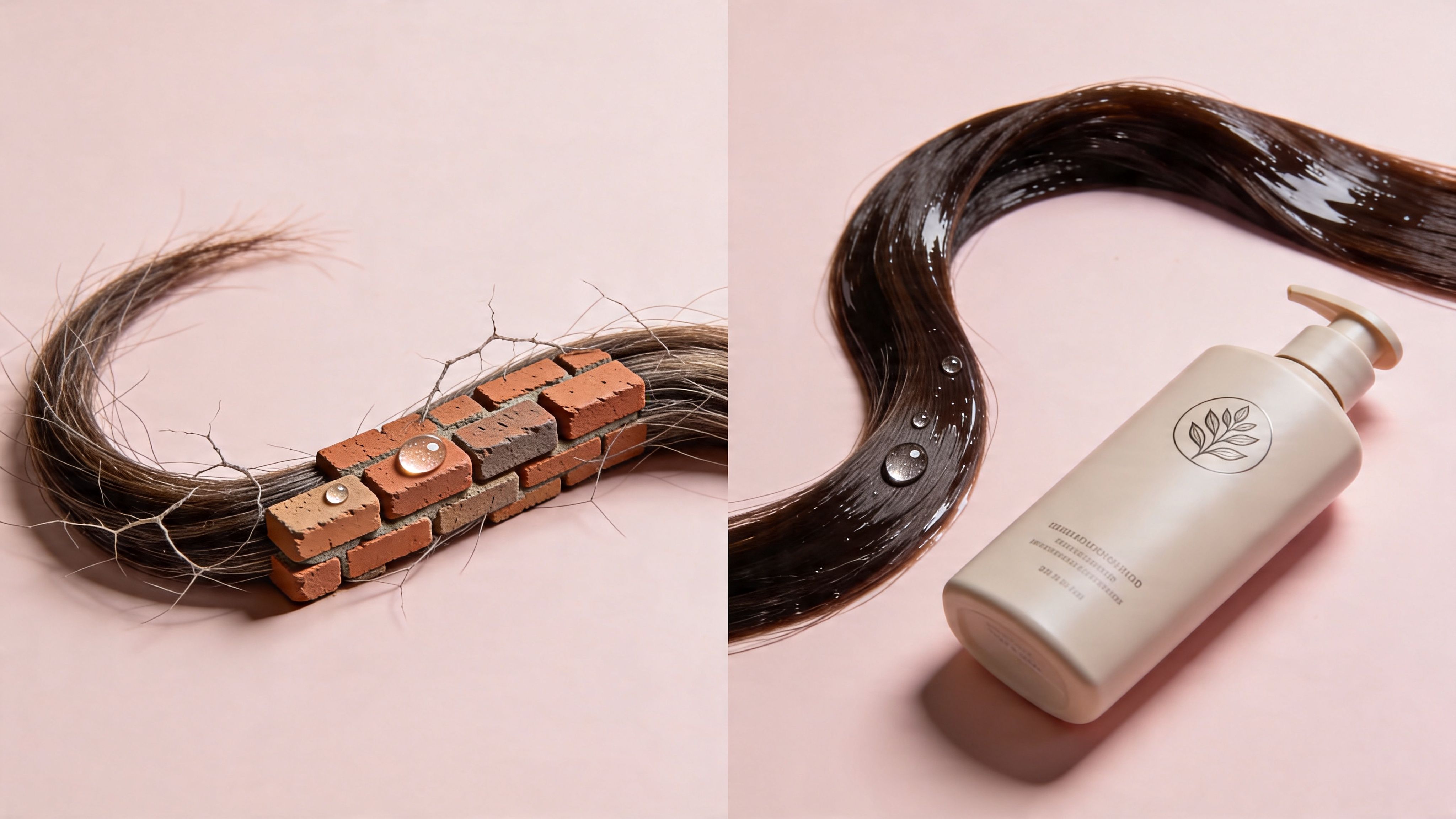
Think of these drying alcohols as overeager cleaners. In a formula, their main job is to help ingredients mix together and give the product that quick-drying, weightless feel. The downside? When they hit your hair, they act like a thief, stripping away your hair’s natural moisture and protective oils. This process roughs up the hair's outer layer (the cuticle), leaving each strand exposed, brittle, and wide open to frizz.
Not All Alcohols Are Created Equal
But here's where it gets interesting—not all alcohols are the enemy. In fact, some are incredibly good for your hair. We call these fatty alcohols, and they do the complete opposite of their drying cousins.
Unlike their harsh, short-chain counterparts, fatty alcohols are derived from natural sources like coconut or palm oil. They are larger, heavier molecules that don't evaporate quickly. Instead, they act as emollients, providing slip, smoothness, and protection.
Imagine them as a nourishing conditioner that’s built right into your shampoo. They get to work by:
- Sealing the Cuticle: They smooth down the hair's outer layer, effectively locking moisture inside where it belongs.
- Providing Slip: This makes your hair so much easier to detangle, which means less pulling, snagging, and breakage.
- Adding Softness: They leave your hair feeling soft and conditioned, never stripped or squeaky.
Getting this key difference is the first real step toward becoming a savvy shopper. It’s not about avoiding all alcohols; it’s about knowing how to spot and avoid the drying ones. When a label advertises "shampoo no alcohol," it's specifically calling out the harmful, short-chain alcohols that are notorious for causing damage.
Knowing which alcohols to welcome and which to avoid is the key to solving the mystery of chronic hair dryness. This knowledge gives you the power to see past the marketing hype and choose products that will actually nurture your hair. The journey to healthy, hydrated hair starts with building a routine based on the right ingredients for your unique needs. If you’re ready to see what a truly compatible regimen looks like, you can build your personalized hair routine and get a clear roadmap to success.
The Good vs. Bad Alcohols In Haircare
Let's be honest, scanning a shampoo's ingredient list can feel like you're about to take a chemistry test you didn't study for. The moment you spot the word "alcohol," the alarm bells probably start ringing. But here's the thing: not all alcohols are the villains they're made out to be. They actually fall into two completely different camps—the good and the bad.
When a bottle proudly claims to be a shampoo no alcohol formula, it's really talking about the "bad" guys. These are the short-chain alcohols, and they’re the ones that have given all alcohols a bad rap.
The Drying Alcohols to Avoid
Think of short-chain alcohols—like Isopropyl Alcohol or Ethanol—as tiny, hyperactive molecules. Formulators use them because they help other ingredients dissolve and give you that fast-drying, squeaky-clean feeling. But there's a major catch. They evaporate almost instantly, and when they go, they take your hair's natural moisture right along with them.
This lightning-fast evaporation process actually lifts and roughs up the hair's protective outer layer, the cuticle. And a rough cuticle is the number one cause of frizz, dullness, and that awful straw-like texture. If you have hair that’s already dry, curly, or color-treated, these ingredients are a recipe for disaster.
This diagram breaks down the two main alcohol families you'll find in haircare, showing you exactly which ones to steer clear of and which ones are your friends.

As you can see, some alcohols are genuinely destructive (hence the skull icon!), while others are incredibly nourishing. This is why learning to read labels is such a game-changer.
The Good Alcohols That Hydrate
Now for the good guys. On the other side of the aisle, we have long-chain fatty alcohols. These are the unsung heroes of hair hydration, often derived from natural sources like coconut or palm oil.
Unlike their harsh cousins, fatty alcohols are made of large, heavy molecules that don't evaporate. Instead of stripping moisture, they act as emollients, coating the hair shaft to leave it soft, conditioned, and much easier to manage.
Think of them as a conditioner built right into your shampoo. Here’s what they do:
- Smooth the Cuticle: They lay the hair's cuticle flat, which is essential for sealing in moisture. This is what gives your hair that healthy, glossy shine we're all after.
- Add Slip: Their lubricating texture makes detangling a dream, which means less friction, less tugging, and ultimately, less breakage and fewer split ends.
- Improve Texture: They leave hair feeling soft and moisturized, never stripped or squeaky.
Common fatty alcohols to look for are Cetyl Alcohol, Stearyl Alcohol, and Cetearyl Alcohol. Spotting these on a label is a fantastic sign that the product is formulated to be gentle and conditioning. It's a key skill for building a routine that truly puts hair health first.
Good Alcohols vs Drying Alcohols: Your Quick Reference Guide
To make things even easier, I've put together a simple cheat sheet. Use this table the next time you're squinting at a shampoo bottle in the store aisle. It’ll help you quickly tell the good from the bad.
| Alcohol Type | Common Names on Labels | Effect on Hair |
|---|---|---|
| Drying Alcohols | Alcohol Denat., Ethanol, SD Alcohol, Propanol, Isopropyl Alcohol | Strips natural moisture, lifts the hair cuticle, causes frizz, dryness, and brittleness. |
| Fatty Alcohols | Cetyl, Stearyl, Cetearyl, Lauryl, Myristyl Alcohol | Moisturizes, smooths the cuticle, adds slip for detangling, leaves hair soft and shiny. |
With this table in your back pocket, you can confidently pick a shampoo that will nourish your hair instead of working against it.
Now that you know the difference, you can start making smarter choices that go beyond the marketing hype. An equally important piece of the puzzle is understanding your hair's own needs. For example, taking a hair porosity test can reveal just how prone your hair is to moisture loss, making it even more critical to avoid those drying alcohols.
Armed with this knowledge, you’re ready to build a product lineup that actually works for you. Instead of guessing which products will deliver, you can use a tool to build your personalized hair routine based on your exact hair type and goals. This ensures every single step is working to give you the healthy, hydrated hair you deserve.
How Drying Alcohols Affect Your Specific Hair Type

The trouble with drying alcohols is that they don’t cause one single type of damage. Instead, they prey on your hair's specific weak spots, turning what could be a great hair day into a constant struggle. If your hair is already a bit delicate, washing with a shampoo full of drying alcohols is like using a harsh cleaning solvent on a silk shirt.
For some of us, the damage is immediate and obvious—hello, instant frizz halo. For others, it’s a slow, sneaky process that dulls our color or weakens strands over months. Getting to know how these alcohols mess with your particular hair type is the first step to finally winning the war against your biggest hair woes.
For Curly and Wavy Hair
If you’ve got curls or waves, you live by one rule: moisture is everything. Drying alcohols are basically the mortal enemy of a defined, happy curl. They strip away the natural oils your hair desperately needs to form those beautiful, bouncy clumps. Understanding your unique pattern is key, and a hair type quiz can provide valuable insights.
The results are as predictable as they are frustrating:
- Ruined Curl Patterns: Without moisture, curls lose their shape and go limp, stringy, or just plain inconsistent.
- A Frizz Explosion: These alcohols rough up the hair’s cuticle, creating that frayed, staticky texture we all know as frizz.
- That Awful "Crunchy" Feeling: When hair is stripped of its moisture, it's left feeling brittle and straw-like.
For anyone with texture, using a shampoo no alcohol isn't just a good idea—it's a must. It’s the only way to make sure your hair holds onto the hydration it needs to form healthy, defined, frizz-free spirals.
For Color-Treated Hair
You put in the time (and money) to get your hair color just right. The last thing you want is to see it wash down the drain. Unfortunately, drying alcohols are famous for speeding up that fade.
The tiny molecules in drying alcohols are small enough to wiggle their way under the hair cuticle, which is already more porous after being colored. As they quickly evaporate, they take little bits of color pigment with them. The result is dull, faded hair, way sooner than you expected.
Think of it this way: your colored hair is a fresh coat of paint, and harsh alcohols are the solvent slowly stripping it away. Making the switch to a gentle, alcohol-free formula is one of the best ways to protect your investment and keep your color looking rich and vibrant.
For High Porosity Hair
High porosity hair has a naturally open and raised cuticle structure. This means it can soak up moisture in a second, but it loses it just as quickly. It’s like trying to fill a bucket riddled with tiny holes—the water goes in, but it won’t stay put.
This hair type is a prime target for drying alcohols. Because the hair’s outer defenses are already compromised, these ingredients can instantly strip away what little moisture it’s holding onto. This leads directly to extreme dryness, relentless tangles, and a much higher risk of breakage. If this sounds familiar, you can check your hair porosity with a simple test at home. Once you know your porosity, it becomes crystal clear why an alcohol-free shampoo is a must-have for keeping that moisture locked in.
For a Sensitive or Dry Scalp
It’s easy to forget, but your scalp is skin. And just like the skin on your face, it can get dry, irritated, and reactive. Drying alcohols are well-known irritants that can completely strip the scalp's protective moisture barrier, leading to itching, flaking, tightness, and even inflammation. If you’re constantly dealing with an angry scalp, your shampoo might be the culprit. Our scalp sensitivity quiz can help you start connecting the dots.
This growing awareness is why the beauty world is changing. People are ditching the harsh stuff, and the demand for gentler products is booming. The sulfate-free market alone—which often overlaps with alcohol-free formulas—is projected to hit USD 5.8 billion by 2028. It’s obvious that we’re all wising up and choosing products that nurture our hair and scalp, not strip them.
No matter what you're dealing with, choosing a shampoo without drying alcohols is a huge step toward healthier hair. If you want to take the guesswork out of it, you can build your personalized hair routine with our tool. It looks at your unique hair type and goals to create a perfectly matched regimen.
How To Find a Truly Alcohol-Free Shampoo
Now that we've separated the good alcohols from the bad, how do you actually find products that fit the bill? Reading ingredient labels can feel like a chemistry exam, but it doesn't have to be.
Here's a quick pro tip for when you're in the store: ingredients are always listed from the highest concentration to the lowest.
If you spot a drying alcohol like Alcohol Denat. or Isopropyl Alcohol in the first five ingredients, that’s a major red flag. It means it’s a primary part of the formula and will likely strip your hair. If it's way down at the bottom of the list, it's a much smaller amount—but for very dry or sensitive hair, I'd still recommend skipping it.
A Better Way to Check Your Labels
Let's be honest, nobody enjoys squinting at the tiny print on the back of a shampoo bottle, trying to remember which alcohols are which. Instead of manually decoding every label, you can let technology do the heavy lifting for you.
This is more important than ever. The clean beauty movement is huge, with the natural shampoo market growing at a 6.92% CAGR. In Europe alone, 42% of shoppers are already checking labels to avoid ingredients they don't want. The demand for transparency is real, and thankfully, the tools are catching up.
Imagine just taking a quick photo of an ingredient list and getting an instant, clear-cut answer with an ingredient checker.

This kind of instant analysis is a total game-changer. As you can see, the IsItClean tool immediately spots potentially harmful alcohols, tells you what they do, and gives you a simple score so you can make a smart choice in seconds.
Building Your Alcohol-Aware Routine
Using a tool like this is the simplest way to make sure every product you buy actually supports your hair goals. It cuts right through the marketing fluff and gets straight to the facts on the ingredient list.
Here’s why it works so well:
- It’s Fast and Accurate: No more second-guessing or trying to memorize complex chemical names. Just snap a photo for a clear verdict.
- It Teaches You: The tool doesn't just say "good" or "bad." It explains why an ingredient is flagged, making you a more knowledgeable shopper over time.
- It’s for Your Whole Routine: You can check everything—conditioners, masks, stylers—to build a complete routine that’s free from harsh ingredients. You can even analyze your entire hair care routine to spot any hidden issues.
This isn't just about avoiding one bad ingredient. It's about creating an entire hair care system where every product works together to build healthy, resilient hair. The ingredient scanner is a great starting point, but you can also explore the full suite of tools to build your perfect routine.
Taking back control of your hair health starts with knowing exactly what you're putting on it. With the right help, you can confidently choose products that will finally give you the hydrated, happy hair you’ve been working for.
Building Your Ultimate Hydrating Hair Care Routine
Switching to a shampoo no alcohol formula is a huge win for your hair's hydration. But what about the conditioner, the leave-in, and the styling cream that follow? True, lasting hair health comes from a complete system where every single product works together, not against each other.
Imagine you use a fantastic shampoo that gently cleanses without stripping moisture. If you follow it with a conditioner or styler loaded with drying alcohols, you’ve just cancelled out all that good work. This is why a big-picture approach is so critical—it’s about creating an entire ecosystem for your hair that supports hydration at every single step.
From a Single Product to a Complete System
Moving from one good product to a full, compatible routine can feel like a massive leap. How do you actually know if your conditioner, mask, and styling cream will play nicely together? The truth is, most of us find out through expensive and frustrating trial and error.
This is where a little strategy goes a long way. Instead of just fixing a single problem (like a harsh shampoo), you can build a system for long-term health. The goal is to make sure your entire lineup, from wash to style, is free from damaging ingredients and perfectly aligned with your hair's unique needs.
A truly effective routine isn't just a collection of good products; it's a synergistic system. Each product should complement the others, creating a cumulative effect that leads to consistently healthy, hydrated, and resilient hair.
This system-based mindset takes the guesswork out of hitting your goals, whether that's less frizz, better curl definition, or just softer, shinier strands.
How to Create Your Personalized Routine
The key to building this system is personalization. Your routine won't look like your friend's, because your hair has its own specific profile—its type, porosity, density, and unique challenges. Creating a regimen that honors all those factors is the secret to getting results that actually last.
Instead of pouring more time and money into products that might not even work, you can map out your ideal regimen from the start. This is exactly why we created a tool to help you build your personalized hair routine.
It’s an intelligent system designed to do the hard work for you. Here’s how it transforms your approach:
- It Starts With You: The builder asks for key details about your hair—is it wavy or coily? High or low porosity? Color-treated or prone to getting oily?
- It Defines Your Goals: Are you fighting frizz, craving volume, or trying to repair damage? Your goals dictate the types of products and ingredients you actually need.
- It Creates a Full Regimen: Based on your hair profile and goals, it recommends a complete and compatible routine, from cleanser to styler. It ensures every product is free from harmful ingredients, like drying alcohols, and works for your hair.
This proactive approach is how you finally move from constantly reacting to hair problems to preventing them in the first place. You can stop guessing and start building a real foundation for the healthy, hydrated hair you've always wanted.
Your Action Plan for Healthier Hydrated Hair
Alright, let's take a breath. We've covered a lot of ground, but the core message is simple: you are officially in the driver's seat. You can finally tell the difference between "good" and "bad" alcohols, read an ingredient label without feeling overwhelmed, and understand exactly how your shampoo no alcohol choice impacts your unique hair.
That knowledge is power. The days of frustrating trial-and-error are behind you. The only thing left is to put what you’ve learned into practice and start seeing the healthy, hydrated results you've been working for.
From Knowledge to Action
The best way forward is to build a hair care plan that’s genuinely yours. This means looking beyond just your shampoo and creating a whole routine where every single product works together to hydrate and strengthen your hair. A great routine always starts with your hair's unique properties, like its texture and condition.
You've done the learning; now it's time for the doing. The final step is translating your understanding of ingredients into a real-world strategy that will unlock your hair's health. This is where you go from just fixing problems to building lasting hair wellness.
Instead of guessing which conditioner or styler will play nicely with your new shampoo, you can build a complete system from the ground up. This ensures every product—from your mask to your leave-in—is pulling in the same direction.
Create Your Custom Hair Care Plan
We want you to stop the guesswork and start building a smarter routine today. The best way to turn all this information into a practical plan is by using a tool designed for that exact purpose.
Give the IsItClean Hair Routine Builder a try. It’s the perfect tool for turning everything you've just learned into a simple, actionable strategy. It takes your hair type, concerns, and goals into account to create a fully customized regimen that will help you achieve the healthy, hydrated hair you deserve.
This is how you take your newfound power and make it work for you.
Frequently Asked Questions About Alcohol In Shampoo
As you start digging into ingredient labels, a few questions are bound to pop up. Deciding to find a great shampoo no alcohol is a fantastic first step, but it's smart to clear up any confusion before you shop. Here are the answers to the questions we get asked all the time.
Is Any Amount of Drying Alcohol Bad?
Not always, but the context is everything. The ingredient list tells you the whole story.
If a drying alcohol like Alcohol Denat. shows up at the very end of the list, the concentration is probably so small it won’t have a noticeable impact. But if you see it in the top five to seven ingredients? That’s a major red flag. It means the alcohol is a primary component, and you should definitely steer clear if you have dry, curly, or color-treated hair.
For zero risk, your safest bet is always to stick with formulas that are completely free of them.
Can I Use Fatty Alcohols On Oily Hair?
Yes, absolutely! This is one of the biggest misconceptions out there. Fatty alcohols like Cetyl Alcohol or Stearyl Alcohol are not greasy and will not make your scalp produce more oil.
These beneficial alcohols are lightweight emollients. They work by smoothing the hair cuticle and providing moisture without weighing hair down. By preventing the harsh stripping that can send oil production into overdrive, they can actually help your scalp find better balance over time.
My "Natural" Shampoo Lists Alcohol—Is It Okay?
You still need to play detective here. A lot of "natural" or "organic" brands use alcohol that comes from a natural source, like corn. But if the ingredient is listed as Alcohol Denat., it acts exactly like its synthetic version—it's still a drying alcohol.
A "natural" label doesn't automatically mean an ingredient is good for your hair. Always flip the bottle over and check the specific name on the ingredient list. The easiest way to be sure is to check your ingredients with a dedicated tool.
The best way to turn your new knowledge into real-world results is with a personalized strategy. At IsItClean, we've designed our tools to give you that clarity. Stop the cycle of trial-and-error and start building a routine that guarantees hydration and health. We highly encourage you to build your personalized hair routine and discover the perfect products for your hair.