
If you’ve ever felt that twinge of guilt while straightening your hair, you're not alone. We all want that polished, just-from-the-salon look, but the fear of heat damage is real.
Good news: you don't have to choose. The secret to healthy heat styling really boils down to two non-negotiables: always use a heat protectant and style on the lowest temperature that actually works for your hair. Master these, and you can keep your hot tools without wrecking your hair’s health. Let's get into exactly how.
The Reality of Heat Styling and Hair Health

We love our flat irons and curling wands, but that sleek finish often comes with a side of worry. The good news is that with the right knowledge, you can move from fear to confidence.
First, we need to understand what’s actually happening when heat meets hair, and why a one-size-fits-all approach is set up to fail.
Why Your Hair Type Matters
At its core, heat damage is a breakdown of your hair's protein structure—the keratin that keeps it strong. High temperatures flash-boil the water inside your hair strands and degrade these proteins. The result is all too familiar:
- Uncontrollable frizz and flyaways
- A dry, brittle, or "crunchy" texture
- Noticeable split ends and breakage
- A dull appearance and loss of natural shine
What works for fine, straight hair will do very little for thick, coily hair. A lightweight spray might be enough for fine strands, but high-porosity curls often need a substantial cream to create a proper barrier. Your hair's unique needs are the starting point. If you're not sure, taking a quick hair porosity test is a fantastic way to get clues on how your hair handles moisture.
It turns out there’s a major disconnect between how we see our hair and reality. A recent Dyson Global Hair Science Study found that while 70% of people think their hair is damaged, a surprising 67% of those same people still describe their hair as 'healthy'. This shows just how important it is to spot and prevent damage before it gets severe. Learn more about the global hair study findings from Dyson.
Instead of guessing your way through it, you can start to build a personalized hair routine that is tailored to your specific hair type and styling habits. Using science-backed methods and the right products is the key to maintaining healthy, vibrant hair you can feel great about.
Understanding How Heat Actually Damages Hair
Ever wonder what really happens when a hot tool touches your hair? It's more than just smoothing or curling; it's an intense chemical and physical reaction. Getting a handle on the science behind the sizzle is the first step to truly protecting your hair before damage even starts.

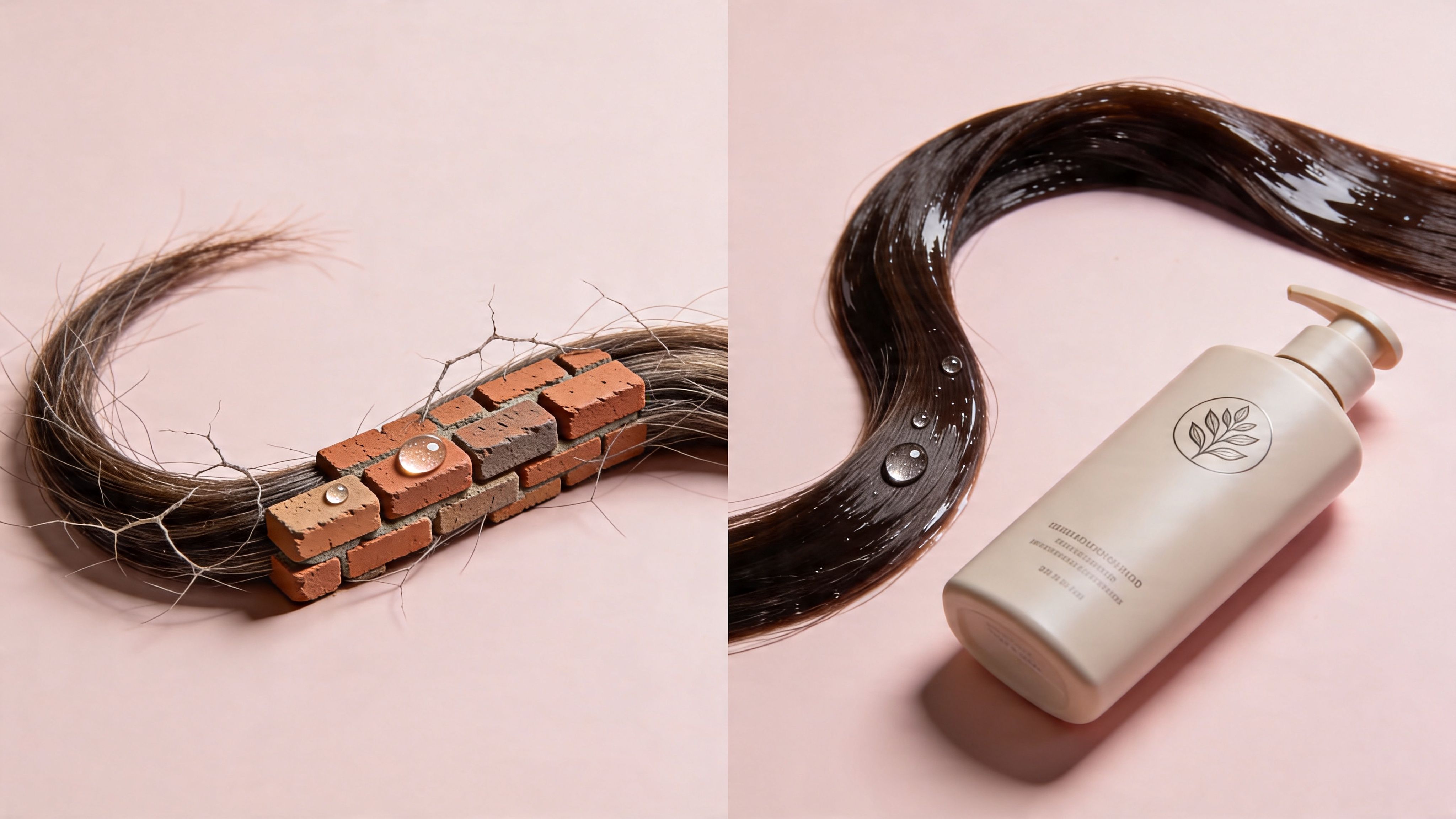
Deep inside each strand, there’s a small amount of water. When you crank up the heat past 300°F (150°C), that water can literally flash-boil inside the hair’s cortex. This creates tiny, destructive steam explosions that form permanent gaps and fractures from the inside out—a phenomenon called "bubble hair."
This internal damage is irreversible. It’s a direct ticket to breakage, split ends, and that rough, brittle feeling we all dread.
The Problem With Protein
Beyond the boiling water, extreme heat wages war on your hair's core structure: protein denaturation.
Think about what happens when you cook an egg. The clear, liquid egg white turns solid and opaque. You can’t turn it back into a liquid, right? A very similar, permanent change happens to the keratin proteins that make up over 90% of your hair.
High heat permanently alters the shape of these proteins, weakening their natural bonds. This is exactly why heat-fried hair loses its natural curl pattern, goes limp and lifeless, and snaps at the slightest touch. It has lost its structural integrity.
Do Natural Oils Work As Heat Protectants?
It's a common myth that slathering on coconut or argan oil is enough. While these natural oils can add some nice shine and lubrication, they are not true heat protectants.
These oils don't have the specific chemistry needed to form a proper thermal shield or slow down heat transfer. They sit on the surface, giving you a false sense of security while the heat penetrates and essentially fries your hair from within.
Knowing which temperature is right for your hair is half the battle. This table breaks down what’s happening at different heat levels so you can make a smarter choice.
| Heat Styling Temperatures and Their Effects on Hair | ||
|---|---|---|
| Temperature Range (°F/°C) | Impact on Hair | Recommended Hair Types |
| Below 300°F (150°C) | Safest range. Gently removes moisture without boiling it internally. Minimal risk of protein damage. | Fine, damaged, color-treated, or bleached hair. |
| 300°F - 375°F (150°C - 190°C) | The "caution zone." Water begins to boil, and protein (keratin) starts to denature. Damage is more likely. | Healthy, medium-textured, or wavy hair. Use with a good protectant. |
| 375°F - 450°F (190°C - 232°C) | High-risk range. Causes rapid water loss and significant, irreversible protein damage. Cuticle degradation occurs. | Coarse, thick, or very curly/coily hair only. Use for single-pass styling. |
Ultimately, staying in the lower temperature ranges whenever possible is your best defense against cumulative, long-term damage.
How Modern Heat Protectants Actually Work
This is where professionally formulated products become non-negotiable. A good heat protectant is a multi-layered defense system, not just a simple coating.
Here’s what they really do:
- Create a Protective Shield: Ingredients like copolymers and specialized silicones form a thin, even film over each strand. This shield slows down heat conduction, preventing hot spots and allowing moisture to evaporate more gently instead of boiling.
- Reinforce from the Inside: Many formulas include hydrolyzed proteins (like wheat or silk) and amino acids. These tiny molecules are small enough to penetrate the hair's cortex, where they patch up weak spots and reinforce your natural keratin structure. This makes your hair more resilient to heat stress.
- Lock In Crucial Moisture: Humectants such as glycerin and panthenol act like magnets for moisture, drawing it into the hair shaft. This keeps your hair hydrated and flexible, preventing it from becoming dry and brittle during styling.
The data speaks for itself. High-quality protectants can slash breakage by up to 85% during blow-drying. Some formulas can even reverse cuticle damage equivalent to 20 days of UV exposure.
Key Takeaway: No heat protectant makes your hair invincible. Its real job is to act as a crucial buffer—slowing heat transfer and reinforcing the hair strand, giving you just enough time to style your hair before permanent damage sets in.
Now is a good time to take a hard look at what’s in your current products. You can use an ingredient checker to see if your spray is packed with effective film-formers and proteins, or if it’s just relying on basic silicones that offer minimal real protection. Making an informed choice here is a game-changer for your hair's health.
Your Non-Negotiable Pre-Styling Ritual
A great style doesn’t start with a hot tool. It starts with the prep work you do long before you even plug in your flat iron. Think of this as the primer for your hair—get it right, and your styling tools work more effectively with way less damage.
First thing's first: always start with clean hair. Trying to style hair that’s full of old product, oil, and daily grime is like trying to cook on a dirty pan. All that buildup just gets baked onto your hair shaft by the heat, leading to splotchy heat distribution and preventing your heat protectant from creating an even shield.
Ditch the Rough Towel Dry
How you dry your hair right out of the shower matters more than you think. Your standard cotton bath towel might feel soft on your skin, but its rough texture creates a ton of friction against your hair. This friction roughs up the delicate cuticle layer, inviting frizz and causing breakage before you've even started styling.
Make a simple swap to a microfiber towel or even a soft cotton t-shirt. These materials are far smoother and more absorbent, letting you gently squeeze out excess water without the damaging friction. This one little change not only reduces frizz but can seriously cut down your blow-drying time, which means less time under the heat.
How to Actually Apply Heat Protectant
This is the step that makes or breaks your hair health, and it's where most people go wrong. A quick, random spritz just isn't going to cut it. For a heat protectant to truly work, it needs to be applied with intention.
Always apply it to damp, not soaking wet, hair. Hair is like a sponge; when it's damp, it's primed to absorb product evenly. If it’s sopping wet, the product just gets diluted and drips right off. If your hair is already bone-dry, the protectant can’t spread properly and you’ll get patchy coverage.
Now, for the application itself. It’s all about even distribution.
- Section your hair. At a minimum, divide your hair into four sections. This is the only way to ensure every single strand gets coated.
- Mist, don't drench. Hold the bottle about 6-8 inches away from your head and lightly mist each section from the roots to the ends.
- Comb it through. This is a critical step. Use a wide-tooth comb to gently distribute the product. This guarantees there are no unprotected spots vulnerable to the heat.
Give it a minute or two to fully absorb before you bring in the blow dryer. This brief pause allows the protective ingredients to form that essential film over the hair's surface.
Damp vs. Dry Styling Formulas
Not all heat protectants are built for the same job, and using the wrong one can do more harm than good. They generally fall into two categories:
- For Damp Styling (Blow-Drying): These are your creams, lotions, and non-aerosol sprays. They’re designed to be worked into damp hair to provide a foundational layer of protection before you blow-dry.
- For Dry Styling (Irons & Wands): These are typically very lightweight, flash-drying aerosol sprays. They are meant to be used only on completely dry hair, right before using a flat iron or curling wand. Applying a wet, cream-based product to dry hair and then hitting it with a 400°F iron can literally cause the water to boil inside the hair shaft, a phenomenon known as "bubble hair."
For the ultimate defense, a two-step approach is ideal. Use a protective cream or lotion before you blow-dry. Then, on days when you're touching up your style on dry hair, use a dry styling spray before the iron or wand comes anywhere near your strands.
Pro Tip: Your hair’s porosity makes a huge difference here. If you have low porosity hair, a heavy cream will just sit on top and feel greasy. You're much better off with a lightweight spray. High porosity hair, on the other hand, will drink up a richer cream, which gives it the moisture and strong barrier it needs.
Knowing what your hair needs makes it so much easier to cut through the noise and find effective heat protection products that will actually do the job.
Your Heat Styling Technique: How to Get it Right
Having the right heat protectant is half the battle, but your styling technique is what wins the war against damage. Using your hot tools like a pro isn't about speed; it's about precision. It’s about working smarter, not hotter, to get the look you want without frying your hair.

Think of your pre-styling prep in three simple stages: Clean, Protect, and Absorb. This little ritual creates the perfect canvas for styling, ensuring your hair has a full, even layer of protection that’s had time to properly set.
Choose Your Tool: Why the Material Matters
The plates on your flat iron or the barrel of your curling wand are not all the same. The material directly impacts how heat is transferred to your hair, and picking the right one for your hair type can make a huge difference.
- Ceramic: This is the go-to for most hair types. Ceramic heats up evenly and uses gentle, far-infrared heat. It’s perfect for fine, damaged, or color-treated hair because it prevents hot spots that can scorch fragile strands.
- Tourmaline: Often used as a coating on ceramic plates, tourmaline is a crushed mineral that releases negative ions. These ions fight the positive ions found in dry or frizzy hair, helping to seal the cuticle, lock in moisture, and add shine. It’s a fantastic choice if you're battling frizz.
- Titanium: This metal is a powerhouse heat conductor. It gets hot fast and stays hot. Because of this intensity, titanium tools are best left to those with healthy, coarse, or very thick hair that tends to resist styling.
No matter which material you choose, an adjustable heat setting is non-negotiable. If a tool only has an "on/off" switch, walk away. It gives you zero control and usually runs at one dangerously high temperature.
Adopt the Low and Slow Method
The single biggest mistake people make is cranking the heat to the max and rushing through styling. This forces you to make multiple passes over the same section of hair, piling on the damage with every swipe.
The better way is the "low and slow" method. This means you should use the lowest possible temperature that effectively styles your hair in a single pass. A quick, scorching pass is far more damaging than one slower, deliberate pass at a lower temperature.
A single, controlled pass at 375°F is significantly less damaging than three quick passes at 450°F. The goal is to apply heat once, do it right, and move on.
Finding your ideal temperature takes a little trial and error. Start on the lowest setting and gradually increase it until you find the minimum heat needed to get the job done.
Your Ideal Temperature Guide
While everyone's hair is unique, these are solid guidelines to start from.
| Recommended Heat Settings by Hair Type | |
|---|---|
| Fine, Color-Treated, or Damaged Hair | Stay below 300°F (150°C). Your hair is more vulnerable, and anything hotter will quickly cause irreversible damage. |
| Medium or Healthy Hair | Aim for 300°F - 375°F (150°C - 190°C). This range is effective for most styles without being overly aggressive. |
| Coarse, Thick, or Very Curly Hair | You can go up to 400°F (205°C), but only if absolutely necessary. Use this heat with caution and focus on that single, efficient pass. |
Remember, these temperatures assume you’ve already applied a heat protectant. Without that crucial barrier, even these "safe" temperatures will cause damage over time.
Great technique is key, but it can only do so much if your other products are working against you. You can find all the tools you need to build and analyze your current hair care routine to spot any hidden issues. A good routine ensures every product works together toward the same goal: strong, resilient hair that can handle the heat.
Post-Heat Aftercare and Repair Strategies
What you do after you turn off the flat iron is just as important as what you do before. The job isn't done when your style is set; this is where you lock in health, replenish what was lost, and set your hair up for a strong recovery.
The first move is always to seal the cuticle. Heat styling can leave this protective outer layer lifted and vulnerable, so a good finishing oil or serum is your best friend. Look for lightweight, non-greasy formulas that smooth down the cuticle to lock in moisture, tame flyaways, and create that polished, reflective shine.
Sealing the Deal Without Silicones
Many popular finishing serums get their instant gloss from heavy, non-soluble silicones. While they look great at first, they can build up over time, blocking moisture from actually getting into your hair. The result? Dryness and brittleness—the very things you're trying to prevent.
This is a major red flag for anyone with dry or damaged hair. It’s also a top concern for the clean beauty community, which now accounts for a massive 39.5% of the market. Instead of masking the problem, look for advanced ingredients that offer real protection. Some modern compounds can provide a 97% shield from heat-induced protein damage and over 50% protection for the hair's internal disulfide bonds, preserving its core strength. You can discover more about these market insights on Dataintelo.com.
The Crucial Protein-Moisture Balance
Heat styling throws your hair’s delicate protein-moisture balance completely out of whack. The high heat zaps moisture, leaving hair brittle and thirsty. The natural reaction is to pile on the conditioning treatments, but that can tip the scales too far in the other direction, leading to mushy, overly soft hair that won’t hold a style.
On the flip side, overdoing it with protein treatments makes hair stiff, rigid, and prone to snapping. Finding that perfect equilibrium is the key to resilience.
Key Insight: If your hair feels mushy, stretchy, and won’t hold a curl, you likely have moisture overload. If it feels rough, brittle, and snaps easily, you’re probably dealing with protein overload.
Knowing the signs is half the battle. If your hair feels brittle and straw-like, a quick protein overload test can confirm your suspicions and help you get your routine back on track.
Incorporate a Weekly Recovery Ritual
To counteract the stress of heat styling, a weekly deep conditioning or bond-building treatment is non-negotiable. Think of it as a dedicated recovery session for your hair.
Deep Conditioners & Masks: These are loaded with emollients, humectants, and oils that dive deep into the hair shaft to restore moisture and elasticity. Look for ingredients like shea butter, avocado oil, and glycerin.
Bond-Building Treatments: If your hair is showing signs of real structural damage (especially if it's also color-treated), these are essential. They work on a molecular level to repair the broken disulfide bonds that give your hair its strength and shape.
Just 20-30 minutes once a week can bring back softness and resilience, making your hair much better equipped to handle the next styling session.
A strong, nourished foundation is your hair's ultimate defense. The final step is to stop guessing and start planning. You can build your personalized hair care routine to strategically map out your styling days, wash days, and treatments. This proactive approach ensures recovery isn't an afterthought—it's a core part of your strategy for healthy, beautiful hair.
Your Heat Protection Questions Answered
Even with the best routine, you’re bound to have questions. Let's tackle some of the most common ones I hear, so you can style with total confidence and keep your hair healthy.
Can I Use Heat Protectant on Dry Hair?
Yes, but you have to use one specifically made for dry hair. These are almost always lightweight, flash-drying aerosol sprays for a reason.
Applying a water-based cream or lotion (the kind meant for damp hair) right before you clamp down with a hot iron is a recipe for disaster. You're essentially steaming your hair from the inside out, causing what's known as a "bubble hair" effect—and it's every bit as damaging as it sounds.
The best strategy is a two-step approach:
- Apply your go-to protective cream or lotion to damp hair before you even think about blow-drying. This builds your foundational layer of defense.
- On day two or three, when you’re touching up with a flat iron or curling wand on dry hair, mist on a light, dry-application spray for targeted, last-minute protection.
To make sure your dry styling spray isn't just loading your hair up with heavy silicones that cause buildup, you can easily check the ingredients before you buy. This guarantees you’re getting real protection, not just a cosmetic coating.
How Often Can I Safely Use Heat on My Hair?
This really comes down to your hair's current health, your hair type, and how seriously you take your protection routine. That said, a solid general guideline is to limit high-heat tools like flat irons and curling wands to a maximum of two to three times per week.
If your hair is fine, color-treated, or already showing signs of damage, you need to be even more conservative. The most important thing is to listen to what your hair is telling you. If you notice it’s feeling drier, you're seeing more split ends, or there's unusual breakage on your brush, it's a clear signal to step back on the heat.
Building a schedule with dedicated "rest days" is essential for long-term hair health. It gives your hair a chance to rebalance its natural moisture and prevents the cumulative damage that comes from daily styling.
The easiest way to stay on track is to build your personalized hair routine. A structured plan helps you balance your styling goals with your hair’s recovery needs, making rest days a planned part of your week, not just an afterthought.
Does Thick Hair Really Need a Heat Protectant?
Absolutely. This is one of the biggest misconceptions out there, and it leads to a ton of preventable damage. While it’s true that a thick strand of hair is more resilient than a fine one, it is far from heat-proof.
In fact, because styling coarse or thick hair often requires higher temperatures to get the job done, it can be just as susceptible to moisture loss and protein degradation. The thicker strands are just better at hiding the damage—until it suddenly becomes severe.
Think of a heat protectant as a non-negotiable insurance policy for every single hair type. It’s not just a nice-to-have; it performs several critical jobs:
- It forms an essential buffer, slowing down how quickly your hair's core heats up.
- It helps distribute heat more evenly across the hair shaft, preventing "hot spots" that cause scorching.
- It stops your hair from being 'cooked' from the inside out, which is what preserves its internal moisture and protein structure.
Without that buffer, even the strongest hair will eventually show signs of stress and breakage from repeated heat.
What Ingredients Make a Good Heat Protectant?
A truly effective heat protectant is never just one ingredient. It’s a smart blend of film-formers, strengthening agents, and moisturizing components all working together as a team.
When you're scanning labels, here are the key players you should be looking for:
- Film-Formers: These are your primary shields. Ingredients like PVP/DMAPA Acrylates Copolymer and certain silicones (like Dimethicone) are what create that protective barrier on the hair's surface.
- Strengthening Proteins: Hydrolyzed proteins from sources like wheat, quinoa, soy, or silk are fantastic. They are broken down into particles small enough to penetrate the hair shaft, where they patch up weak spots and make the hair more resilient.
- Moisture-Retaining Humectants: Look for glycerin and panthenol (Pro-Vitamin B5). These ingredients act like tiny magnets for water, drawing moisture into the hair to keep it flexible and far less prone to snapping under heat.
While natural extracts and oils can add wonderful shine and softness, consider them bonus ingredients, not the main protective agents. For a deeper dive into what’s what on an ingredient list, our blog offers in-depth articles on hair ingredients that can help you become an expert at reading labels.
Build Your Resilient Hair Routine Today
You now have the science-backed strategies to style your hair without the fear of damage. The journey to stronger, healthier hair isn't about giving up your tools—it’s about consistency and making smart choices that actually work for you.
Real protection comes from a holistic plan. It’s a routine that considers your unique hair, from its texture and porosity to your go-to styling habits. This is how you stop the endless cycle of damage and repair.
Personalize Your Path to Healthy Hair
Imagine knowing exactly which day is for deep conditioning, when to clarify, and how often you can safely use your flat iron without causing breakage. This is the power of a personalized routine. It turns hair care from a chore into a powerful act of self-care.
Building this structure is easier than you think. A great first step is to get clarity on your hair's specific needs. Do you know your porosity or exact hair type? Answering these questions can completely change your approach.
Discover your starting point: A quick hair type quiz can reveal whether your hair is straight, wavy, curly, or coily, which dictates the types of products that will work best for you.
Understand your hair's needs: Knowing if you have a sensitive scalp can guide you toward gentler products. Our scalp sensitivity quiz provides clarity on irritation and what might be causing it.
Taking control of your hair's health starts now. The goal is to build resilience from the ground up, creating hair that not only looks great but is genuinely strong enough to handle the heat, day after day.
Ready to create a plan that protects your hair and achieves your styling goals? Start by taking the IsItClean Hair Routine Builder. Our tool makes it easy to design a personalized weekly schedule based on your unique hair profile, ensuring you balance styling with the recovery your hair needs to thrive.