You buy a conditioner everyone swears by. You smooth it on, wait, rinse, and your hair still feels like the product never got in. Or worse, it feels coated.
That pattern frustrates a lot of people because it looks like a product problem when it is often a porosity problem. If your hair resists water, takes a long time to get fully wet, and seems to collect products on the surface, a low porosity hair test can help you figure out why.
Most guides stop at the float test and call it a day. That is where people get stuck. A single test can mislead you, especially if your strands still have residue on them or you used the wrong water conditions. A better approach is to test your hair from more than one angle, then compare the results with how your hair behaves in real life.
Does Your Hair Refuse to Absorb Anything?
A common low porosity story sounds like this.
You shampoo. You apply conditioner. Water rolls off parts of your hair in the shower. Then your leave-in sits there, your oil sits there, and by the next day your hair feels dull or sticky instead of soft.
That does not automatically mean your products are bad. It often means your hair cuticle is less willing to let water and ingredients move in.
Signs people notice first
Low porosity hair usually gives clues long before anyone does a formal test.
- Water beads on the surface instead of soaking in quickly.
- Hair takes a long time to get wet in the shower.
- Products seem to sit on top and leave a film.
- Hair takes a long time to dry once it is finally saturated.
- Moisturizing routines feel inconsistent because hair can look dry even after you used several products.
One of the most confusing parts is that low porosity hair can feel dry and heavy at the same time. Dry because moisture is not getting in easily. Heavy because layers of product are staying on the outside.
Tip: If your hair feels “moisturized” only when it is coated with product, that is a clue to look at porosity, not just dryness.
Why this matters for your routine
Porosity affects more than moisture. It changes how your hair responds to conditioners, leave-ins, oils, protein treatments, and even styling products.
That is why two people with similar curl patterns can need very different routines. One person’s hair drinks up rich cream. Another person’s hair turns limp and waxy from the same formula.
If this sounds familiar, it helps to check your strand behavior before changing your whole shelf. A digital tool can be a useful starting point if you want to check your hair porosity quickly, but your daily clues matter too. Hair that resists saturation, gathers buildup easily, and needs lighter layers often points in the same direction.
The Science Behind Low Porosity Hair
Low porosity hair has a cuticle layer that lies very flat against the strand. The cuticle is the hair’s outer barrier, and that barrier controls how easily water gets in and how quickly it gets back out.
A flatter cuticle acts a bit like a tightly zipped rain jacket. Water does not move through it quickly. That is why low porosity hair can seem resistant even when it is healthy.

What tightly packed cuticles do
Flat, compact cuticles create a smoother surface. That often reduces friction and can help hair hold onto moisture once it finally gets inside. The tradeoff is slower wetting and slower product penetration.
That helps explain a common contradiction. Low porosity hair can feel dry to the touch while also feeling coated. The strand itself is not taking in water or conditioner easily, but product residue can still collect on the outside.
Here is the pattern low porosity hair often shows:
- Water stays on the surface at first
- Conditioners need more time and often more heat to sink in
- Heavy oils, waxes, and butters collect quickly
- Hair feels smooth, but resistant
High porosity hair behaves differently because the cuticle is more lifted. Water gets in faster, but it also escapes faster. Both low and high porosity hair can look dull or frizzy, which is why a single symptom is not enough. The better question is how the hair behaves during wetting, conditioning, and drying.
What the science says
Researchers use methods such as dynamic vapor sorption to measure how hair responds to moisture in a controlled setting. Those tests support the basic idea behind porosity. Hair with a tighter outer structure absorbs moisture more slowly than hair with a more open cuticle, as explained in Medical News Today’s summary of low porosity hair.
That scientific point matters because popular advice often skips over one detail. Slow absorption is not always true low porosity. It can also come from product buildup sitting on the cuticle, or from testing hair in water that is too hot or too cold. Both can change how quickly a strand wets and make a simple float test look more convincing than it seems.
If you want a broader look at how strand testing and scalp-level analysis fit together, this Hair Analysis Test Guide is a useful companion read.
Why products can feel wrong even when they are well-formulated
A product can contain good conditioning ingredients and still sit badly on low porosity hair. The issue is often the delivery. Rich formulas, strong film-formers, and repeated layering can create a coating before the strand has absorbed much water.
This is also why low porosity advice gets oversimplified. People are often told to blame every problem on porosity, even when buildup is the issue. If hair suddenly starts rejecting products that used to work, a coated cuticle can mimic low porosity behavior.
Key takeaway: Low porosity hair has a more sealed outer layer, so absorption tends to be slower. To identify it accurately, you need to separate true strand behavior from false positives caused by residue, formula weight, and test conditions.
How to Perform At-Home Low Porosity Hair Tests
A good low porosity hair test is not one test. It is a small protocol.
Start with clean, dry, product-free hair. That part is essential. Residue can throw off your result and make you read your hair incorrectly.

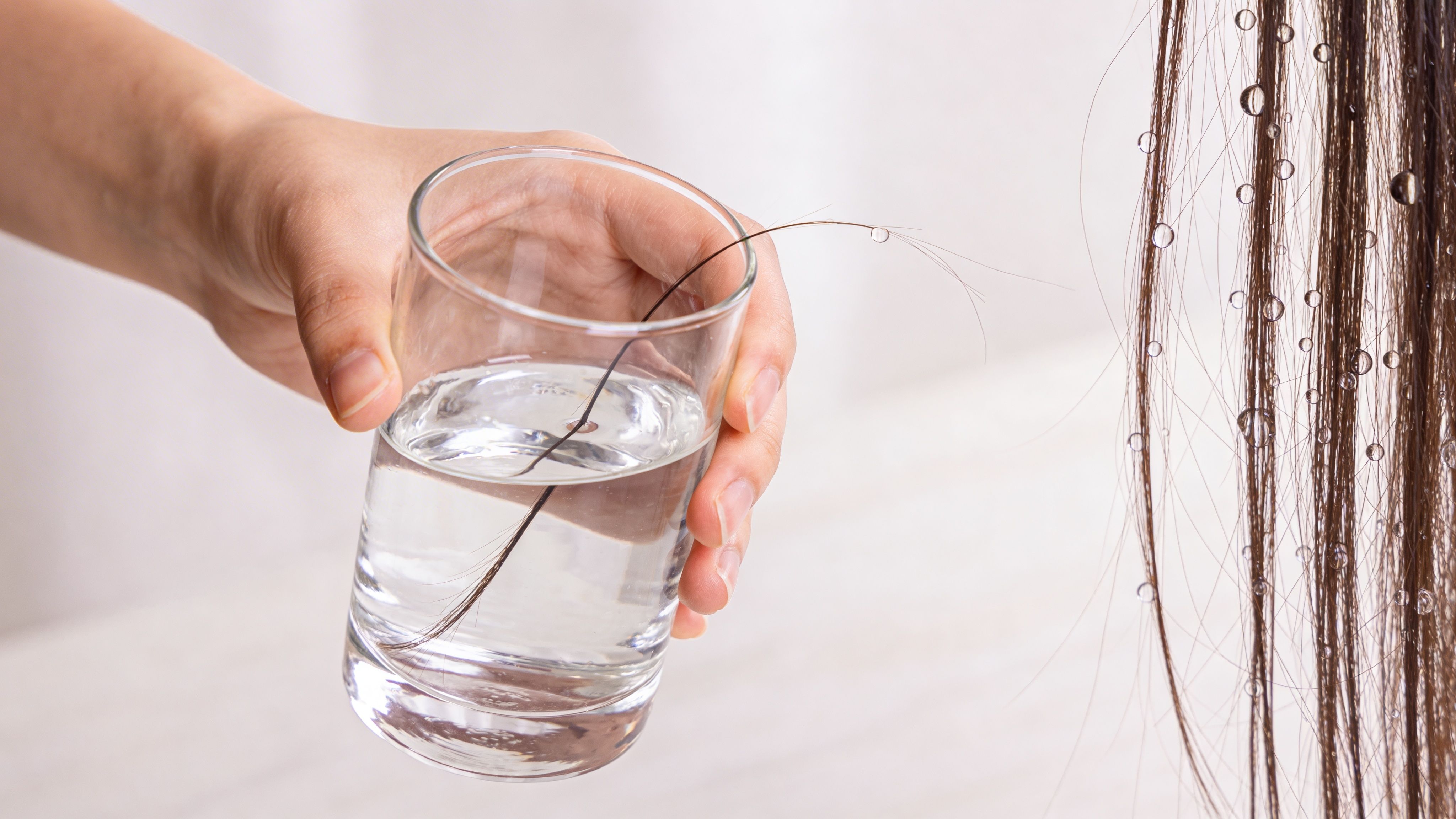
Test one with the float test
The float test is the best-known at-home option, and it is still useful if you do it carefully.
According to this step-by-step guide to carrying out a hair porosity test, the most reliable method is to use 2 to 4 clean, dry strands from different parts of the head and place them in room-temperature water. Hair that floats on top for 2 to 4 minutes indicates low porosity. The same source notes 75 to 85% consistency when repeating the test with multiple strands, but also a 40% failure rate when hair is unclean or the water is not room temperature.
How to do it
- Fill a clear glass with room-temperature water.
- Collect 2 to 4 clean, shed strands from different areas.
- Drop them into the water gently.
- Wait 2 to 4 minutes.
- Watch where they stay.
How to read it
- Floating near the surface suggests low porosity.
- Hanging in the middle points more toward medium porosity.
- Sinking quickly suggests higher porosity.
Use more than one strand because one piece of hair is not your whole head. Crown hair, nape hair, and ends can behave differently.
Test two with the spray test
The spray test is often more realistic because it mimics what happens when you wet your hair.
Mist a small section of clean, dry hair with water and look closely.
If the water forms visible droplets and sits on the strand instead of disappearing quickly, that leans low porosity. If the section darkens and absorbs the mist quickly, that points away from low porosity.
Why people like this test
- It is fast.
- You can see the behavior directly.
- It reflects real wash-day experience.
A lot of people trust this test more than the float test because it is harder to over-interpret a single loose strand when you can watch how a whole section responds.
Here is a visual walkthrough if you like seeing the process before trying it:
Test three with the slip test
This one is simple. Take a clean strand and slide your fingers upward from the ends toward the root.
A smoother feel generally lines up with flatter cuticles, which often means lower porosity. A rougher or bumpier feel suggests a more raised cuticle pattern.
This test is less dramatic than the float test, but it is useful as a tie-breaker. If your spray test suggests low porosity and the strand also feels smooth, that combination is more persuasive than either test alone.
A better way to judge your results
Think in patterns, not one-off answers.
A practical at-home protocol looks like this:
- First clue: Your hair takes a long time to get wet.
- Second clue: Water beads during a spray test.
- Third clue: Multiple strands float for several minutes in room-temperature water.
- Fourth clue: The strand feels smooth in the slip test.
If most of those line up, your diagnosis is stronger.
If you want more context on comparing methods and what hair analysis can include beyond one DIY trick, this Hair Analysis Test Guide is a useful companion read.
For routine planning, it also helps to pair porosity with texture. A person with fine straight low porosity hair will not choose products the same way as someone with dense wavy low porosity hair, which is why a hair type quiz can help clarify the bigger picture.
Interpreting Your Results and Spotting False Positives
The biggest mistake people make is treating one float test like a final diagnosis.
That is risky because hair strands do not float or sink based on porosity alone. Surface residue changes buoyancy. Water conditions matter. Different parts of your head may behave differently too.

The false positive problem
One of the most overlooked issues is product buildup. As noted in Clever Curl’s guide to determining hair porosity, existing content often fails to address reliability limits, especially when residue is present. The same source warns that buildup from silicones or heavy conditioners can alter a strand’s buoyancy, leading to misdiagnosis and the use of products that create even more buildup.
That means your “low porosity result” may sometimes be a “my strand is coated” result.
When your result deserves a second look
Use this quick check if your test and your real-life experience do not match.
| What you saw | What it may mean |
|---|---|
| Strand floated, but your hair usually gets wet fast | The strand may still have residue on it |
| Water beads, but only after heavy styling weeks | Surface buildup may be blocking absorption |
| Some strands float and others sink | Your hair may vary by area or level of damage |
| Slip test feels smooth, but ends act thirsty | You may have mixed porosity from damage or color treatment |
Tip: If your hair is color-treated or damaged, the roots and the ends may not behave the same way. Test more than one area.
A better interpretation rule
Ask two questions.
First, does the test result match what happens on wash day? Second, did I control the obvious variables like clean hair and room-temperature water?
If the answer to either is no, repeat the test after a clarifying wash and compare again. You can also review whether your current products may be skewing the result by using a hair care routine analyzer.
Sometimes the answer is that your hair is not fully low porosity or fully high porosity across every inch. If your mid-lengths and ends behave very differently, it can help to compare your routine against a high porosity hair routine and notice where your hair’s needs split.
Your Low Porosity Hair Care Playbook
You confirm low porosity, buy the richest mask on the shelf, smooth it on carefully, and your hair still feels coated instead of hydrated. That pattern is common. Low porosity hair usually responds better when you improve access to the strand, not when you keep adding heavier product.

Choose lighter hydration
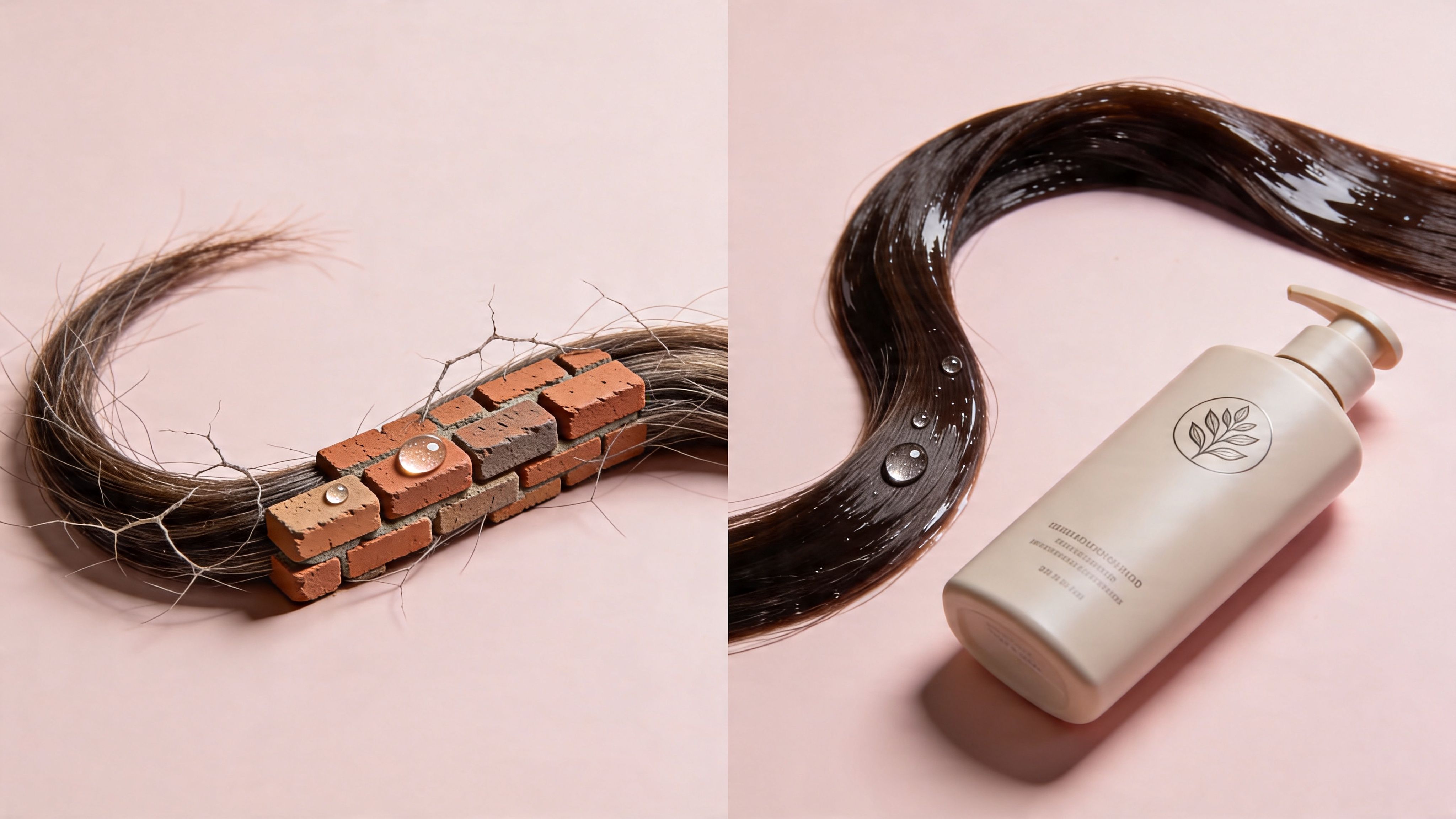
The cuticle on low porosity hair tends to lie flatter, so product can sit on the surface like lotion on a rain jacket. That is why thick butters and dense oils often feel helpful at first but leave hair filmy by day two.
A better filter is texture and behavior, not marketing words like "ultra-moisturizing."
- Pick fluid conditioners, lightweight leave-ins, and water-based stylers that spread easily through damp hair.
- Use more caution with heavy butters, thick oils, and rich silicones if your hair gets greasy, dull, or coated quickly.
- Judge by results such as softness, movement, and how long hair stays fresh after wash day.
Start small. If a nickel-size amount works, a palmful will not absorb better. It usually just creates a false "my hair rejects moisture" moment when the issue is too much product sitting outside the cuticle.
Change how you apply products
Technique often matters as much as the formula.
Use warmth
Warmth helps conditioner spread and stay pliable, which gives it more time to work along the surface of the strand. You do not need intense heat. Warm rinse water, a warm towel, or gentle heat during deep conditioning is usually enough. If you want a practical setup, this guide to using a bonnet dryer attachment for deep conditioning is a useful reference.
Apply on very damp hair
Water helps with distribution. On low porosity hair, that matters because uneven application often leaves some areas coated and others untouched. If hair is almost dry, leave-in and cream are more likely to sit on top.
Layer less
Low porosity hair can trick you into overapplying. The immediate feel may not be silky, so it is easy to add a second cream, then an oil, then a mousse. A simpler stack usually works better. Try one leave-in plus one styler, then stop and assess.
Key takeaway: Low porosity hair usually improves with lighter formulas, moderate warmth, and less layering, not heavier product.
Keep buildup under control
Buildup is one of the biggest reasons low porosity routines seem to fail. Residue from oils, butters, conditioners, and stylers can block water the same way soap scum blocks a shower door. Hair then feels dry and coated at the same time.
Use a simple maintenance rhythm:
- Clarify when hair starts feeling waxy, limp, or harder to wet.
- Watch strength products carefully if hair begins feeling stiff instead of flexible.
- Notice scalp changes because excess product can affect comfort, flaking, and freshness.
This matters for testing too. A strand covered in residue can act low porosity even when buildup is the primary problem. That is why a good care routine and a good testing routine support each other.
If your texture is curly or coily, you still need slip and definition. You just want them in formulas that do not pile up too fast. Comparing your routine with a curly hair routine for curls that need definition without heavy layering can help you adjust product weight without losing shape.
Build Your Personalized Low Porosity Routine
Knowing your porosity gives you a direction. It does not build your full routine by itself.
You still need to factor in texture, density, scalp behavior, styling habits, and whether your hair is color-treated or damaged. Low porosity fine hair usually needs a different wash and styling rhythm than low porosity dense waves or curls.
What a useful routine should answer
A strong routine should tell you:
- How often to cleanse when buildup happens easily
- What kind of conditioner texture your hair handles best
- Whether your hair also shows signs of protein imbalance
- How much styling product is enough before hair starts feeling coated
- How to adjust for damage on the ends even if roots are less porous
That is why one-size-fits-all low porosity advice often disappoints people. The porosity label is helpful, but it is not the whole diagnosis.
If you already know low porosity is part of your picture, comparing your habits against a low porosity hair routine can give you a useful benchmark. It can help you spot whether your current lineup is too heavy, too layered, or just mismatched to your texture.
The next practical move is to stop experimenting randomly and start building around your hair pattern. If you want to build your personalized hair routine, use the Hair Routine Builder. It is one of the easiest ways to turn porosity knowledge into a routine that makes sense day to day, especially if you are tired of buying products that sit on top of your hair instead of helping it.
If you want a routine that fits your porosity, texture, and hair goals in one place, try IsItClean. Its Hair Routine Builder can help you move from “I think I have low porosity hair” to a clear routine you can follow.