Let's be real—reading a hair product's ingredient list can feel like you need a chemistry degree. This guide is your cheat sheet, here to slice through the marketing jargon and help you finally understand what all those natural hair care ingredients actually do.
Beyond the "Natural" Hype

We've all been there. You buy a product that promises the world, only to have it sit in your shower, completely useless for your hair. The good news? Understanding what's inside the bottle is the single most powerful step you can take to get the results you've been chasing.
There's a reason so many of us are ditching harsh synthetics for plant-based alternatives. But what does "natural" even mean in hair care? It’s about using ingredients derived from nature—oils, butters, and botanical extracts—that work with your hair's biology, not against it.
Why Ingredients Beat Marketing Every Time
Think of your hair care routine like baking a cake. You can't get a delicious result from cheap, subpar ingredients, no matter how fancy the recipe sounds. The same logic applies to your hair. The secret isn't brand loyalty; it's ingredient literacy.
When you can pinpoint the function of specific natural ingredients, you stop the expensive cycle of trial-and-error. You can finally start choosing products with a clear purpose. That’s exactly what this guide will teach you.
The goal is to shift from frustrating guesswork to intentional, educated choices. Learning to decode a label gives you the power to invest in products that deliver real, visible health for your unique hair.
Ultimately, this knowledge is the bedrock of a routine that actually works. Instead of following the latest trend, you can build your personalized hair routine with products chosen specifically for your hair's needs and goals.
By the end of this guide, you’ll be able to:
- Identify which oils, butters, and extracts will benefit your hair type.
- Understand how these ingredients tackle common problems like dryness and frizz.
- Confidently pick out products that will truly nourish and strengthen your hair.
How Natural Ingredients Actually Work

To really get how natural ingredients work their magic, it helps to think of a single hair strand like a house.
The outside layer is the cuticle. It’s like the shingles on a roof, made of tiny overlapping scales that protect everything inside. The inner core, the cortex, is the "living space" of the house—it’s where the hair's strength, moisture, and even its color pigments are stored.
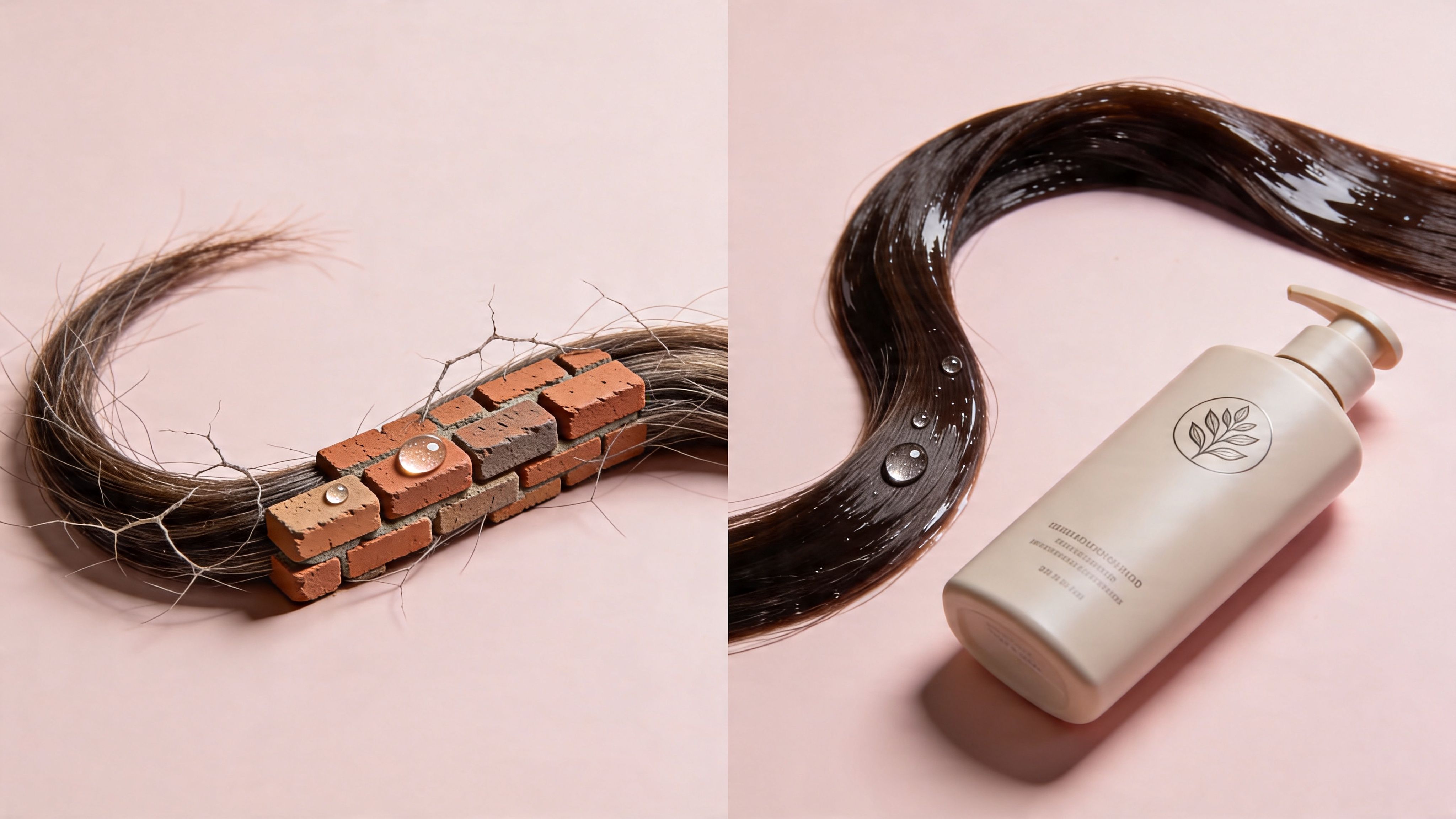
When your hair is healthy, those "shingles" lie flat and smooth. But when it's dry or damaged, the shingles get ruffled and raised. This creates gaps that let precious moisture escape, making your hair feel rough, frizzy, and weak.
Natural ingredients have two main jobs. Some are like a finishing coat of paint, smoothing down those raised shingles from the outside. Others are small enough to get past the shingles and deliver nutrients directly inside to the cortex, fixing things from within.
This is exactly why choosing the right ingredients is a game-changer. It’s about giving your hair what it needs, precisely where it needs it.
Decoding Your Hair's Blueprint
Before you can pick the right tools for the job, you need to look at the blueprint of your "house." In hair care, that blueprint is hair porosity—your hair's natural ability to absorb and hold onto moisture.
It’s probably the single most important thing to know about your hair, because it determines which ingredients will be your holy grails and which will just sit there, doing nothing.
- Low Porosity Hair: The cuticle "shingles" are packed down very tight. This makes it tough for water and products to get in. The good news? Once moisture is in, it stays in. The bad news? Products often sit on the surface, leading to greasy buildup.
- High Porosity Hair: The cuticle "shingles" are raised, with gaps in between—like a roof that's seen a few too many storms. This hair soaks up moisture in a second, but it loses it just as fast. It’s often the hair type that struggles with chronic dryness and frizz.
Figuring out your porosity is step one. Seriously. Before you even glance at another ingredient list, you need to check your hair porosity. This is what turns you from a frustrated product-guesser into someone who can solve their own hair problems.
The Science of Penetrating vs. Sealing
Not all oils and butters are the same. On a molecular level, they fall into two distinct camps, and knowing the difference is key to getting results.
Penetrating Ingredients have a tiny molecular structure. They're small enough to slip right past the cuticle layer and get deep into the cortex. Think of them as the repair crew that goes inside the house to fix the plumbing. They're fantastic for deep moisturization and internal strengthening. Coconut oil and avocado oil are classic examples.
Sealing Ingredients, on the other hand, are made of much larger molecules. They can’t fit inside the hair shaft, so they work on the outside, forming a protective film. This coating smooths the cuticle, locks in moisture that's already there, and gives your hair that beautiful, healthy-looking shine. Jojoba oil and shea butter are the perfect "topcoat."
The secret to a great hair routine isn't just using oils; it's using the right type of oil at the right time. For instance, slathering a heavy sealing oil on dry, low porosity hair will just create a greasy mess, blocking any real moisture from getting in.
This kind of ingredient-first thinking is taking over. The global hair care market is expected to rocket from $122.04 billion in 2026 to $216.94 billion by 2034, largely because people are demanding plant-based products that actually work. Shampoos, which make up 34.25% of the market, are now packed with vitamins and botanicals to improve scalp health—a huge win for everyone. You can dig into the data yourself in this market analysis from Fortune Business Insights.
Once you nail these core ideas—your hair's porosity and the difference between penetrating and sealing—you can finally build a personalized hair routine that delivers.
If you're ready for more practical tips on tackling specific hair goals, feel free to explore the other guides on our blog.
Choosing the Right Oils and Butters
Walking down the natural hair care aisle can feel overwhelming. With endless options, it's easy to fall into a cycle of trial and error. But oils and butters are the foundation of many great routines, and picking the right one isn't about luck—it's about science.
The real difference between one oil and another comes down to its molecular structure. This single factor determines whether an oil will sink deep into your hair strand or coat its surface. This puts them into two camps: penetrating and sealing. Getting this distinction right is the first major step to building a routine that actually works.
Penetrating Oils for Deep Nourishment
Think of penetrating oils as a delivery service for your hair’s core. Their molecules are incredibly small, allowing them to slip right past the outer cuticle and get to work inside the hair shaft, or cortex. They deposit fatty acids and nutrients where they're needed most, fortifying your hair from the inside out.
If your hair feels brittle, weak, or perpetually dry despite piling on products, it's practically begging for the deep repair that only a penetrating oil can offer.
Some of the best penetrating oils include:
- Coconut Oil: Famous for its lauric acid content. Its tiny molecular size allows it to bond with your hair's natural proteins, dramatically reducing protein loss when you wash your hair.
- Avocado Oil: A true superfood for hair, it’s packed with monounsaturated fats and vitamins that provide intense moisture and strength.
- Argan Oil: Often called "liquid gold" for a reason. It's rich in fatty acids and vitamin E, which help restore elasticity and bring a beautiful shine back to dull, tired strands.
These oils shine brightest when used as a pre-shampoo treatment or in a deep conditioner, where they have enough time to soak in. Applying them to clean, damp hair gives them a clear path to do their job.
Sealing Oils and Butters to Lock in Moisture
Now, let’s talk about the guardians of your hair: sealing oils and butters. Their molecules are much larger, so they can’t get inside the hair shaft. Instead, they create a protective shield on the outside.
Think of it like this: you've just watered a thirsty plant. A sealing oil is the layer of mulch you add on top to stop all that precious water from evaporating. They don’t add moisture; they lock in the water and products you’ve already applied. This smooths the cuticle, fights frizz, and gives your hair that healthy-looking sheen.
This is a non-negotiable concept in natural hair care: Oils and butters seal in moisture that's already there. This is why you should always apply them to damp hair.
Here are some top-tier sealants:
- Shea Butter: A lifesaver for coarse or high-porosity hair. Its rich, thick texture is fantastic for smoothing down a raised cuticle and trapping every last drop of moisture.
- Jojoba Oil: This one is a smart oil. Its molecular makeup is incredibly similar to the sebum our own scalp produces, making it a fantastic lightweight sealant that won't leave you feeling greasy.
- Castor Oil: Known for its thick, viscous consistency, castor oil is a heavy-duty sealant. It’s perfect for coating the ends of your hair to protect against split ends and breakage.
The choice between penetrating and sealing really boils down to your hair's porosity. Low porosity hair, with its tightly-bound cuticle, does better with lighter penetrating oils that won’t just sit on top and cause buildup. High porosity hair, which loses moisture as fast as it absorbs it, desperately needs those heavier sealing butters to keep it hydrated.
Matching Oils and Butters to Your Hair
Finding the right match is what ends the cycle of product frustration. A lightweight oil might be a game-changer for someone with fine waves, but it will do next to nothing for thick, coily hair that thrives on rich butters.
If you're trying to figure out which oils and butters are hiding in your current products, our guide on how to find the best products for your hair can help you decode those labels.
To make things even clearer, let's compare some of the most popular options head-to-head.
Comparing Natural Oils and Butters for Hair Care
This table breaks down some of the most popular natural oils and butters. Use it as a quick cheat sheet to find the right ingredient for your hair's specific needs and porosity level.
| Ingredient | Type (Penetrating/Sealing) | Best for Porosity | Key Benefit |
|---|---|---|---|
| Coconut Oil | Penetrating | All, but use lightly on low porosity | Reduces protein loss and strengthens hair from within. |
| Shea Butter | Sealing | High Porosity | Excellent for locking in moisture on porous, coarse hair. |
| Jojoba Oil | Sealing | Low to Medium Porosity | Lightweight sealing that mimics natural scalp sebum. |
| Argan Oil | Penetrating | All Porosities | Improves elasticity and restores shine to damaged hair. |
| Avocado Oil | Penetrating | Medium to High Porosity | Deeply moisturizes and strengthens with vitamins and fats. |
| Castor Oil | Sealing | High Porosity | A heavy-duty sealant that protects ends and fights frizz. |
Once you have this knowledge, you're no longer just guessing at the store. You're making strategic choices for your hair's health. You can look at a product label and know instantly whether its star ingredients are going to serve you well. This is how you start building a routine that finally gets you the results you’ve been looking for.
The Magic of Humectants and Botanicals
If oils and butters are the "sealants" in our routines, think of humectants as the "magnets." These fascinating natural ingredients have an incredible thirst for water, literally pulling moisture from the air around you and drawing it into your hair shaft. For anyone fighting that constantly thirsty, brittle feeling, humectants are an absolute game-changer.
Unlike oils, which work by locking in the moisture your hair already has, humectants actively bring new moisture to the party. This is what makes ingredients like aloe vera, glycerin, and honey so powerful at transforming dry, dehydrated strands into hair that feels genuinely soft and hydrated from the inside out.
Drawing Moisture from Thin Air
Let's use an analogy. Imagine your hair is a dry kitchen sponge. A sealing oil would be like wrapping the sponge in plastic to stop the tiny bit of water inside from evaporating. A humectant, on the other hand, actively pulls water vapor from the humid air in your bathroom right into the sponge, plumping it up with fresh hydration.
This is precisely why humectants are the star players in so many natural hair products. They offer a continuous source of moisture that keeps your hair flexible, elastic, and far less likely to snap.
You'll see these common humectants on many labels:
- Aloe Vera: It’s so much more than a sunburn soother. Aloe is packed with water and vitamins, hydrating the hair shaft while simultaneously calming the scalp.
- Glycerin: This is a hugely popular and effective humectant that can hold several times its own weight in water. Talk about a major hydration boost.
- Honey: A natural humectant that also has emollient properties, meaning it helps to smooth and soften your hair at the same time it’s moisturizing.
This unique ability to attract moisture is a top priority for modern products. In fact, experts predict that by 2026, haircare will increasingly mimic skincare by focusing on intense hydration and climate-adaptive protection, with humectants like honey leading the charge. With the haircare market set to grow 8% to $3.5 billion in 2025, it’s clear we're all demanding solutions that truly work. You can read more on how clean ingredients are shaping the future of haircare at Beauty Independent.
Beyond Moisture: Botanicals for a Happy Scalp
While humectants are busy hydrating your strands, botanical extracts often work their magic right at the source—the scalp. A healthy scalp is the foundation for healthy hair, and these plant-derived ingredients are concentrated powerhouses of antioxidants, vitamins, and anti-inflammatory compounds.
A healthy scalp is balanced, clear, and calm. But when your scalp is in distress from buildup, irritation, or dryness, it can lead to everything from flakes and itching to slowed growth. This is where the right botanicals can make a world of difference.
Think of botanical extracts as targeted serums for your scalp. Just like you'd choose a specific serum for a facial concern, you can use botanicals to address scalp issues head-on.
For instance, if you're dealing with a particular scalp problem, keep an eye out for these ingredients:
- Green Tea Extract: Known for its potent antioxidants, it can help invigorate the scalp and foster a healthy environment for hair growth.
- Chamomile Extract: Famous for its calming properties, chamomile is brilliant for soothing an itchy or irritated scalp.
- Nettle Extract: This botanical is fantastic for helping to balance oil production, making it a great choice if you struggle with a greasy scalp.
If you suspect your scalp is reactive but aren't sure why, you don't have to guess. Taking a moment to complete a scalp sensitivity quiz can help you pinpoint potential triggers and find the right calming botanicals for your needs. It's a simple step that helps you move from just treating symptoms to addressing the root cause.
This flowchart can also help guide your ingredient choices based on your hair's porosity.

The key takeaway here is pretty simple: low porosity hair benefits from lighter, more hydrating ingredients, while high porosity hair craves richer butters and oils to seal all that precious moisture in.
Strengthening Hair with Proteins and Clays
If humectants are your hair's moisture magnets, then proteins are the construction crew. Think of them as the essential building blocks that patch up gaps and reinforce the very structure of each strand. This is absolutely critical for hair that’s feeling the strain from heat styling, color treatments, or just everyday life.
When your hair's cuticle—its protective outer layer—gets damaged, it leaves the inner cortex exposed and vulnerable. Natural proteins in hair products are hydrolyzed, meaning they're broken down into smaller pieces so they can get inside the hair shaft. Once in, they fill in those weak spots, restoring strength and elasticity from the inside out.
Finding Your Protein-Moisture Balance
Proteins are miracle workers for repair, but it's all about balance. Too much protein without enough moisture can trigger "protein overload." This is a dreaded state where hair becomes stiff, brittle, and feels like straw. It's like building a rigid frame with no flexibility—it just snaps under pressure.
It’s a common frustration, but luckily, it’s also easy to avoid. The key is learning to read your hair's signals.
- Signs you need protein: Hair feels mushy when wet, overly soft, or won't hold a style no matter what you do.
- Signs you need moisture: Hair feels rough, dry, or brittle.
If your strands feel stiff and snap easily, you might be dealing with too much protein. A quick protein overload test can give you a clear answer and help you adjust your routine before your hair gets too brittle. It's a simple way to figure out if you should pause the protein treatments and double down on deep conditioning.
The Power of Detoxifying Clays
While proteins rebuild, natural clays give your hair a much-needed reset. Think of clays as a powerful magnet for all the gunk that builds up on your scalp and hair—product residue, hard water minerals, excess oil, and pollution. Over time, this buildup can suffocate your hair follicles and weigh down your strands, leaving them dull and lifeless.
Unlike harsh sulfate shampoos that strip away everything (including the good stuff), clays offer a deep, effective cleanse without being overly aggressive. They work by using a negative electrical charge to attract the positively charged gunk in product buildup and other impurities.
When you mix clays like Bentonite and Rhassoul with water, they swell up and literally bind to toxins, gently lifting them away as you rinse. This leaves your hair and scalp feeling exceptionally clean, refreshed, and ready to actually absorb moisture and nutrients again.
Two Essential Clays for Your Routine
If you’re looking to give your hair a clean slate, keep an eye out for these two powerhouse natural hair care ingredients:
- Bentonite Clay: This one is highly absorbent and famous for its detoxifying skills. It's fantastic for clarifying the scalp and removing heavy buildup, making it perfect for anyone who uses a lot of styling products or has an oily scalp.
- Rhassoul Clay: Sourced from Morocco, this clay is loaded with minerals like silica and magnesium. It not only cleanses but also helps soften the hair and improve its elasticity. It’s a gentler choice that pulls double duty, offering both cleansing and conditioning benefits.
Bringing these strengthening and clarifying ingredients into your routine is a game-changer. By using proteins to repair and clays to purify, you’re creating the perfect foundation for healthy hair. This knowledge helps you look at your routine as a whole and build your personalized hair routine with products that truly tackle both strength and cleanliness.
Build Your Personalized Hair Routine
All this science about oils, butters, and humectants is fantastic, but it's only powerful once you actually put it to work. Now, we get to the fun part: moving from theory to a real, concrete plan for your hair.
Building a routine isn't about hoarding dozens of products. It’s about being strategic and choosing a small, effective team of products that work together for your hair's specific needs.
Think of it like building a specialized task force. You need a gentle cleanser, a targeted conditioner, a hydrating leave-in, and a styler that gives you the look you want. The trick is making sure every single product contains the natural hair care ingredients that match your hair profile.
Examples in Action
So, what does this look like in the real world? A good routine is all about solving your specific hair problems with the right tools.
Frizz-Control Routine for High Porosity Curls: This hair type is like a leaky bucket—it loses moisture fast. The goal is to seal it all in. The routine might start with a co-wash or sulfate-free shampoo, followed by a deep conditioner rich in a penetrating oil like avocado. A water-based leave-in with aloe vera adds hydration, and a styler with sealing butters like shea or mango locks it all down.
Lightweight Moisture Routine for Fine, Low Porosity Waves: This hair gets weighed down at the mere thought of heavy products. The routine needs to be light and clean. A clarifying shampoo is key to prevent buildup, paired with a lightweight conditioner containing argan oil. A simple spray leave-in provides moisture without the grease, and a mousse or light gel gives hold without sacrificing volume.
Feeling more confident about what your hair actually needs? The next step is to build your personalized hair routine with product recommendations that are perfectly matched to your goals and hair type.
Fine-Tuning Your Existing Routine
Maybe you've already got a routine that's mostly working, but you know it could be better. This is where a little analysis goes a long way. Sometimes, a single "wrong" ingredient in one product can throw off your entire system, leading to unexpected frizz or buildup.
Our Routine Analyzer was built for exactly this scenario. It helps you pinpoint gaps in your current lineup or suggests simple swaps that could give you much better results.
This ingredient-first approach is no longer a niche idea. The demand for products with effective natural ingredients is soaring. The natural hair care market was valued at USD 3.99 billion in 2025 and is expected to climb to US$5.03 billion by 2030. A massive 40% of buying decisions are now driven by the natural ingredients listed on the label. This proves that people are more informed and empowered than ever. You can dive deeper into this trend in this detailed research from Maximize Market Research.
Understanding your hair is the foundation for everything. If you're still putting the puzzle pieces together, you can find all the diagnostic resources you need by exploring our full suite of IsItClean hair care tools.
Common Questions About Natural Ingredients
Diving into the world of natural hair care is exciting, but it definitely brings up some questions. Let's walk through a few of the most common ones I hear, so you can feel totally confident in your routine.
Can I Just Use Raw Coconut Oil from My Kitchen?
I get this question all the time! And while you absolutely can, it might not give you the amazing results you're picturing. Raw, unformulated oils can be really heavy, especially for fine or low porosity hair. The result? Greasy, weighed-down strands and a ton of buildup.
Professionally formulated products are different. They blend oils with other ingredients that help them absorb better and spread more easily, delivering all the good stuff without overwhelming your hair. If you love using raw oil, a great place to start is using it as a pre-shampoo treatment. To see if your current products have the right balance, you can always analyze your ingredients with our simple tool.
How Long Until I See Results from Going Natural?
Patience is your best friend here. When you ditch silicones and sulfates, your hair will likely go through a "detox" period for about 2-4 weeks as it sheds all that synthetic buildup. During this phase, it might feel a little weird or different than you're used to. Don't panic—this is normal.
You'll usually start seeing real, positive changes—like better hydration and more defined curls—within 4-6 weeks of sticking with your new routine. The truly amazing, long-term benefits, like improved strength and overall health, become much more obvious after about 3-6 months. Trust me, the payoff is worth the wait.
The most common mistake is giving up during that initial detox phase. Your hair is just recalibrating. Think of it as a necessary adjustment period on the road to healthier hair.
What Is the Difference Between Natural and Organic?
It’s easy to get these two mixed up, but they have key differences. "Natural" usually just means an ingredient came from a plant or mineral source. The catch? This term isn't regulated by any official agency, so it can be used pretty loosely.
"Organic," on the other hand, is a regulated term. It's a guarantee that the ingredient was grown and processed without synthetic pesticides, herbicides, or fertilizers, and this is verified by an official certification. While both are great, an "organic" label gives you an extra layer of assurance about an ingredient's purity. It’s a helpful distinction to know when you're scanning labels for the best natural hair care ingredients.
Why Does My Hair Still Feel Dry with Natural Oils?
This is an incredibly common frustration, and it almost always comes down to one simple fact: oil seals, but water moisturizes. If you put oil straight onto dry hair, you're just coating the dry strands and locking that dryness in.
Here’s the golden rule: always apply your oils and butters to damp hair. Do it right after washing or after spritzing your hair with water or a water-based leave-in conditioner. This strategy traps precious water molecules inside the hair shaft, keeping it truly hydrated for much, much longer.
Feeling a bit lost trying to piece all this information together? That’s exactly why we built IsItClean. Instead of guessing which ingredients will work for you, let us do the heavy lifting. You can build your personalized hair routine in just a few minutes and get product recommendations perfectly matched to your hair's unique needs.