
A pre-poo for low porosity hair is simple: you apply a lightweight, penetrating oil or conditioner to your dry hair before you shampoo. Think of it as a protective primer for your strands, shielding them from being stripped by your shampoo while gently helping your tightly-sealed cuticles open up for a dose of hydration.
Why Your Hair Fights Moisture and How to Win
If you have low porosity hair, you know the struggle. Products just seem to sit on top of your hair, water beads up and rolls right off, and getting real moisture into your strands can feel like a losing battle. It’s not in your head—it’s just how your hair is built.
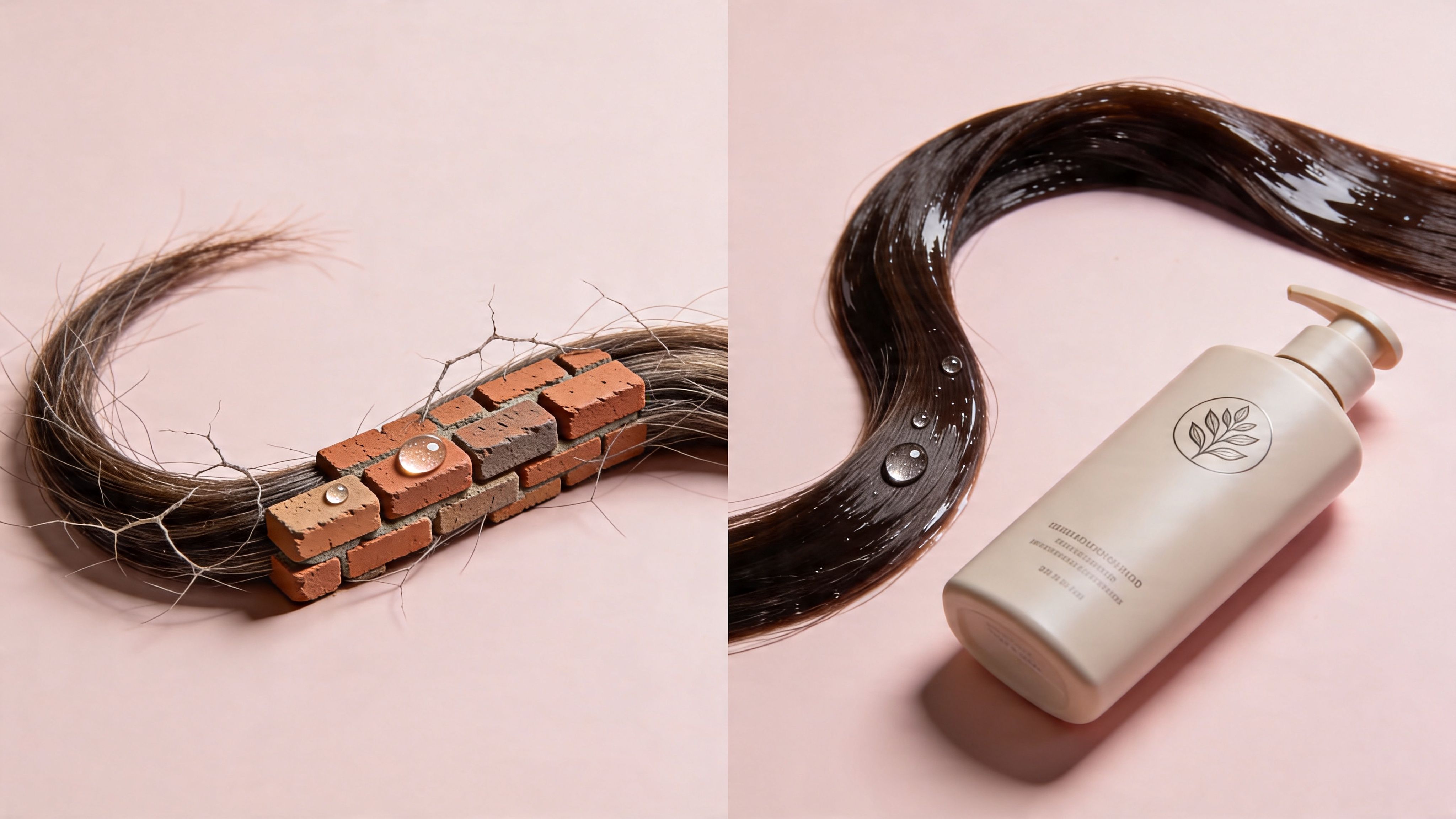
Your hair’s outer layer, the cuticle, is made of tiny overlapping scales. For low porosity hair, these scales are packed down incredibly tight, creating a strong defensive wall.
“Think of the cuticle like roof shingles,” explains Color Wow Chief Chemist, Dr. Joe Cincotta. “When they lie flat and tight—as in low porosity hair—they’re incredibly effective at keeping water out. That’s great for moisture retention… but challenging when you're trying to get hydration in.”
This is exactly why a pre-poo treatment for low porosity hair is so essential. It’s not just an extra step; it’s the key that unlocks your hair's ability to finally get hydrated.
The Science of Pre-Pooing
For moisture-resistant hair, a pre-poo serves two critical functions. First, it wraps your strands in a protective film that shields your natural oils from being stripped away by even the gentlest shampoos. This is huge for minimizing dryness and preventing hygral fatigue—the constant swelling and shrinking of the hair shaft that leads to weakness and breakage.
Second, when you add a little gentle heat, the right pre-poo ingredients can coax those stubborn cuticles to lift just enough to let moisture in. This one move turns your wash day from a fight against dryness into a strategic hydration mission. But does it actually make a difference?
The proof is in the results seen all over the natural hair community. Research shows that a huge chunk of people, roughly 40-45% of those with textured hair, have low porosity. For them, pre-pooing is a tried-and-true solution. In fact, studies have found that people who regularly pre-poo can see breakage rates drop by up to 30-40%. It’s a testament to its protective power. You can learn more about mastering low porosity hair on Cosmetize.com.
Customizing Your Pre-Poo Strategy
Not totally sure if you have low porosity hair? The signs are usually pretty obvious:
- Your hair takes forever to get fully wet in the shower.
- Products tend to sit on your hair and cause buildup instead of absorbing.
- It takes hours and hours for your hair to air-dry.
If that sounds all too familiar, a quick quiz can help you check your hair porosity and give you a more certain answer. Figuring this out is the first real step. The next is creating a wash day plan that works with your hair's nature, not against it. When you plan out every step—from pre-poo to styling—you can finally win the fight for moisture. The best way to do this is to build your personalized hair routine, making sure every single product serves your hair's unique needs.
Choosing Ingredients That Actually Penetrate Your Hair
When you have low porosity hair, picking the right pre-poo ingredients isn't just a suggestion—it's everything. Because your hair has those tightly-sealed cuticles, many of the most popular oils and butters will just sit on top of your strands. The result? A greasy, weighed-down mess instead of the moisture you were hoping for.
Your goal is simple: choose ingredients with a molecular structure small enough to slip past your hair’s natural armor. Think lightweight and penetrating. Anything heavy or film-forming will just add to the product buildup your hair is already fighting against.
Lightweight Oils and Humectants Are Your Best Friends
The ingredients that actually work for a low porosity pre-poo fall into two main camps: lightweight penetrating oils and moisture-attracting humectants. These are the ones that work with your hair's stubborn structure, not against it.
Lightweight Penetrating Oils:
- Grapeseed Oil: This one is incredibly light and non-greasy. It absorbs in a flash without leaving behind a heavy film.
- Sweet Almond Oil: It’s packed with vitamins and does a fantastic job of softening and conditioning, all while being light enough to actually get inside the hair shaft.
- Argan Oil: Often called "liquid gold," it’s famous for its ability to moisturize and boost shine without weighing things down.
- Jojoba Oil: The chemical makeup of jojoba oil is surprisingly similar to your scalp's own sebum, making it a perfect match for balancing moisture.
Moisture-Boosting Humectants:
- Aloe Vera Juice/Gel: A true hydration powerhouse. This humectant pulls moisture from the air and draws it right into your hair shaft.
- Honey or Glycerin: Both are amazing at attracting water, but you’ll want to use them sparingly in any pre-poo mix to keep things from getting sticky.
Understanding why this selection matters is the key. As this infographic shows, the right pre-poo doesn't just coat your hair; it primes it for wash day and creates a shield against damage.

By priming your hair with ingredients it can actually absorb, you’re creating a protective barrier that directly leads to less breakage when you shampoo.
A Clear Guide to Pre-Poo Ingredients
To make your next DIY session or shopping trip a little less stressful, here’s a quick-reference guide to what helps and what hurts low porosity hair.
Pre Poo Ingredient Guide for Low Porosity Hair
| Ingredient Category | Best Choices (Penetrating & Lightweight) | Use With Caution (Can Cause Buildup) |
|---|---|---|
| Oils | Grapeseed, Argan, Sweet Almond, Jojoba, Sunflower | Coconut Oil, Castor Oil, Olive Oil |
| Butters | N/A (Generally too heavy for pre-pooing low porosity hair) | Shea Butter, Mango Butter, Cocoa Butter |
| Humectants | Aloe Vera Juice/Gel, Honey (diluted), Glycerin | Undiluted honey or glycerin can feel sticky |
| Other Additives | Lightweight conditioners (silicone-free) | Heavy protein treatments, thick cream-based products |
Staring at an ingredient list can feel like a chore, but it’s your best defense against buildup. Before you commit to a new product, it’s a smart move to check the ingredients to spot any heavy oils or silicones that might coat your strands.
There are a ton of helpful hair care tools available that can do the heavy lifting for you. This simple check ensures your efforts lead to deeply moisturized hair, not just another layer of product sitting on the surface.
Your Guide to Applying a Pre-Poo for Maximum Absorption
Having the right lightweight oils and conditioners is a great start, but it's your technique that truly unlocks a pre-poo treatment for low porosity hair. Your hair's cuticles are naturally sealed tight, so just slathering on product and hoping for the best won't get you very far. You need a bit of strategy to coax that moisture in.

The single most important rule? Always apply your pre-poo to dry hair. Think about it: your hair already resists water. Applying oil on top of wet strands is a losing battle—the product simply can't get past the water to penetrate the hair shaft. Starting with dry hair gives your pre-poo direct, barrier-free access.
Sectioning and Application Mastery
To make sure every strand gets coated, you can't just slap the treatment on. Sectioning is non-negotiable, especially for thicker hair.
Start by parting your hair into four to six manageable sections. This little bit of prep work prevents you from missing spots and makes detangling so much easier later.
Once you’re sectioned off, work the pre-poo through your hair, moving from the roots all the way down to the ends. Give extra attention to your mid-lengths and ends—they're the oldest and driest parts of your hair. A great technique is using the "praying hands" method to smooth the product down the hair shaft, which helps tame the cuticle and cut down on frizz.
The biggest payoff from a careful pre-poo is how much it cuts down on wash-day breakage. By coating and softening your hair first, you create incredible slip that lets your fingers or a comb glide right through tangles with almost no resistance.
This is where you'll start to see a real difference in hair retention. In fact, pre-poo treatments are a game-changer for preventing breakage at the line of demarcation if you're transitioning to natural hair—a struggle for 35-50% of people. Studies show that using coconut oil specifically can reduce protein loss and cut breakage by 25-35% over 12 weeks. You can learn more about the benefits of pre-pooing for natural hair on Curly Hair Lounge.
The Secret Weapon: Gentle Heat
This is where the real magic happens for low-porosity hair. Gentle heat is the key to convincing your stubborn cuticles to lift just enough for the pre-poo to sink in deeply. Without it, even the best ingredients will just sit on the surface.
You've got a few great options for adding heat:
- A Thermal Heat Cap: These insulated caps trap your own body heat, creating a warm, steamy little sauna for your hair. Just pop one on after applying your treatment for a simple, hands-free session.
- A Hair Steamer: If you have one, a steamer is fantastic. It provides moist heat that’s perfect for infusing hydration into low-porosity strands.
- The "Greenhouse Method": This is the easiest and most budget-friendly option. Simply cover your hair with a basic plastic shower cap. Your body heat gets trapped inside, creating a warm, humid environment that helps the treatment do its job.
Timing Your Treatment for Success
So, how long should you leave it on? The sweet spot really depends on your hair's needs and your schedule, but a good starting point is at least 30 minutes with gentle heat. This gives the oils and conditioners enough time to work their way into the hair shaft.
If your hair is feeling extra dry, you can go for a deeper treatment by leaving it on for a few hours or even overnight. If you choose the overnight route, make sure you cover your hair with a plastic cap and then wrap it in a scarf or bonnet to protect your pillowcase.
Mastering this application process is a huge part of a successful wash day. When you build your personalized hair routine, incorporating these specific pre-poo techniques will set the stage for better moisture absorption and healthier, stronger hair in the long run.
DIY Recipes Versus Store-Bought Pre Poo Treatments
When it comes to a pre poo treatment for low porosity hair, the first big question is: do you DIY it or buy it? There’s no single right answer here. The best choice really comes down to your lifestyle, your budget, and what you want to get out of your routine.
Let's get real about the pros and cons of heading to the kitchen versus the store.

The allure of DIY is obvious: total control and major cost savings. You know every single thing going onto your hair, sticking to simple, pure ingredients that your low-porosity strands will actually absorb. This route is fantastic if you enjoy the process or if your hair is sensitive to preservatives and fragrances found in many products.
Simple DIY Pre-Poo Recipes
Here are a couple of my go-to, no-fuss recipes that are practically foolproof for low-porosity hair.
- Hydrating Aloe & Grapeseed Oil Mix: Grab a spray bottle and mix 3 parts aloe vera juice with 1 part grapeseed oil. Aloe is an amazing humectant for lightweight hydration, and grapeseed is one of the lightest oils out there, so it sinks in without just sitting on top of your hair.
- Softening Conditioner & Jojoba Oil Blend: In a small bowl, take a few pumps of your favorite lightweight, silicone-free conditioner and stir in a teaspoon of jojoba oil. Jojoba is brilliant because its molecular structure is incredibly close to your scalp's own sebum, giving you amazing softness and slip without the greasy buildup.
But let's be honest, DIY has its frustrations. These homemade potions have zero preservatives, so they go bad fast. You’re basically stuck making a fresh batch every single wash day, which can feel like a chore when life gets busy.
The biggest win for a store-bought pre-poo is the sheer convenience and smart formulation. Brands have chemists who create elegant, stable products with specialized ingredients designed to penetrate the hair shaft—something a simple oil-and-water mix can’t always replicate.
Choosing the Right Store-Bought Pre-Poo
If you’re leaning toward convenience, you have to become a good label reader. So many pre-poos are packed with heavy butters (like shea) or film-forming silicones that are a total nightmare for low-porosity hair.
Your mission is to find products marketed as lightweight and scan the ingredient list. If you see those heavy hitters high up on the list, put it back.
Not sure if a product passes the test? Before you spend your money, you can use a tool to analyze your routine's ingredients and spot anything that might lead to greasy, weighed-down strands. It's the best way to make sure you're investing in something that will actually work.
At the end of the day, it doesn’t matter if your pre-poo comes from a bottle or a bowl. Consistency is what will give you results. The key is finding a method that you’ll actually stick with, wash day after wash day.
Building Your Complete Low Porosity Hair Routine
A fantastic pre poo treatment for low porosity hair is the perfect start to wash day, but it's really just the opening act. The rest of your routine is what locks in that moisture and determines whether you’ll have a good hair day or just end up back at square one.
What you do after rinsing out your pre-poo is just as critical as the treatment itself. The goal is to get your hair and scalp clean without undoing all the hard work you just put into getting that moisture in.
The Perfect Post-Poo Strategy
Once the pre-poo is rinsed, your next moves should focus on gentle cleansing and lightweight conditioning. Anything too harsh or heavy will sabotage your efforts.
Gentle, Sulfate-Free Cleansing: This is non-negotiable. A sulfate-free shampoo is essential for lifting away any pre-poo residue and product buildup without completely stripping your hair bare. It’s all about maintaining that delicate moisture balance you just created.
Lightweight, Silicone-Free Conditioner: After cleansing, you need a conditioner that provides slip for detangling but won’t weigh your hair down. Hunt for formulas that are free of heavy silicones, butters, and oils. Your conditioner’s job here is simply to offer a final layer of hydration and help smooth the cuticle.
Getting the post-pre-poo steps right is what turns a single treatment into a successful, full-circle routine. It's about making sure every product works together, not against each other.
A well-structured plan, like the one generated above, ensures every product is chosen specifically for your hair's needs. This prevents the kind of ingredient conflicts that sneakily lead to buildup and dryness.
Navigating the Protein-Moisture Balance
Low porosity hair walks a very fine line with protein. While some protein is great for adding strength, too much can quickly lead to stiffness and that dreaded "protein overload," making hair feel brittle, straw-like, and even drier than before.
It’s crucial to recognize the signs before they get out of hand. Your hair might be in protein overload if:
- It feels unusually stiff, rough, or "crunchy."
- Your strands lose their natural stretch and snap easily.
- Curls or waves suddenly appear limp and less defined.
If you spot these symptoms, it’s a clear signal to scale back and switch to purely moisturizing, protein-free products for a while.
On the flip side, if your hair feels overly soft, mushy, or has no structure, you might actually need a light protein treatment. If you're struggling to tell the difference, taking a quick Protein Overload Test can give you the clarity you need to adjust your routine.
Building a complete routine is really a process of learning your hair's unique language. Instead of guessing, you can build a personalized hair routine that considers all these moving parts. This approach ensures every step, from your pre-poo to your final styling product, is perfectly aligned with your low porosity needs, leading to consistently hydrated, healthy hair.
Common Pre Poo Questions for Low Porosity Hair
Even when you have a solid plan, questions always come up, especially when you're trying to perfect a routine for notoriously stubborn low porosity hair. Let's tackle some of the most common hurdles so you can troubleshoot your way to better results.
Getting these little details right can be a game-changer. More often than not, a small tweak in your timing, ingredients, or technique is all it takes to go from frustratingly dry to flawlessly hydrated.
How Often Should I Pre Poo My Low Porosity Hair?
For most people with low porosity hair, pre-pooing every single wash day is the best approach. Your hair’s tight cuticle layer makes it incredibly prone to the drying effects of shampoo, so that protective pre-poo barrier is your first line of defense.
If you wash your hair once a week, you should pre-poo once a week. Simple as that. If you start to notice your hair feeling a little heavy or weighed down, you can try dialing it back to every other wash. But honestly, consistency is what leads to reduced breakage and better moisture retention over the long haul.
Can Pre Poo Cause Buildup on Low Porosity Hair?
Yes, it absolutely can. This is a huge one. Low porosity hair is basically a magnet for buildup because products struggle to absorb and end up just sitting on the surface.
To sidestep this common problem, you have to be picky about your ingredients. Stick with the lightweight, penetrating oils we’ve talked about—like argan, grapeseed, or sweet almond oil. This means avoiding the heavy hitters like raw shea butter and castor oil, which are almost guaranteed to cause buildup on this hair type. You can find more advice about specific hair concerns in our other hair care guides on the IsItClean blog.
A key takeaway here: if you suspect buildup, don't be afraid to use a gentle clarifying shampoo about once a month. This hits the reset button on your strands without completely stripping away all your hard-earned moisture.
Should I Apply Pre Poo to Wet or Dry Hair?
For low porosity hair, applying your pre-poo treatment to dry hair is almost always the better method. It just makes sense. Your hair cuticles are already sealed tight, and adding water first just creates another hurdle for the oil or conditioner to get through.
When you apply the treatment straight to dry strands, it can get to work softening your hair immediately. This makes the detangling process so much easier and safer before you even turn on the shower.
My Hair Still Feels Dry After Pre Pooing. What Am I Doing Wrong?
If your hair still feels parched after a treatment, let's play detective. First, are you using gentle heat? A thermal cap or even a warm towel for 20-30 minutes is non-negotiable for low-po hair. You need that warmth to gently coax the cuticle to lift and let the goodness in.
Second, take another look at your ingredients. Are you positive your oil isn't too heavy? A product that just coats your hair instead of penetrating it is giving you the illusion of moisture, not the real thing.
Finally, zoom out and look at your entire routine. A pre-poo is just the opening act. If you follow it up with a harsh, stripping shampoo or a conditioner loaded with heavy, non-soluble silicones, you're undoing all that great work. Perfecting this requires looking at the whole picture. The best way to make sure every step works in harmony is to build your personalized hair routine with products and techniques that are actually right for your hair.
Take the Guesswork Out of Your Hair Care
All these rules for a low-porosity pre-poo can feel like a lot to juggle. If you're tired of the endless cycle of buying products only to find they sit on top of your hair, you're not alone. The real secret to a successful routine isn't just about finding one perfect product, but making sure every step works together. Instead of playing a guessing game with your routine, you can get a clear, personalized roadmap. If you're ready to build a regimen that finally delivers consistent results, take a few minutes to use the IsItClean Hair Routine Builder. It analyzes your hair's specific properties to build out a complete regimen for you—from the right pre-poo and shampoo all the way to your stylers. It's the most straightforward way to make sure every single product is actually working for your hair, not against it.