If your hair feels crunchy and snaps at the slightest touch—even after slathering on every treatment in sight—you're likely dealing with protein overload. The answer isn't another strengthening mask. It's a protein-free deep conditioner, a treatment that delivers pure, unadulterated hydration to bring your brittle strands back from the brink.
Understanding the Need for Pure Moisture
Think of your hair like a balancing act. On one side, you have protein for strength and structure. On the other, you have moisture for softness and flexibility. When you go too heavy on protein-rich products, that scale tips. Your hair becomes rigid, stiff, and prone to snapping. It has all the structure but none of the bend.
A protein-free deep conditioner zeroes in on the moisture side of the scale. It temporarily hits pause on the strengthening ingredients, allowing your hair to soak up the hydration it's been desperate for. This "protein break" is what helps to:
- Bring back elasticity and bounce
- Get rid of stiffness and that awful "crunchy" texture
- Improve softness and make your hair easier to manage
- Stop breakage caused by brittleness
Diagnosing Your Hair's Needs
So, how can you tell if your hair is begging for moisture or crying out for protein? This is where so many people get stuck. The signs can feel confusingly similar, but a few key differences will point you in the right direction. Does your hair feel limp and mushy, or is it rough and brittle?
This little guide can help you figure out what your hair is trying to tell you.

To make it even simpler, here's a quick reference guide to help you play detective with your strands.
Protein vs. Moisture Quick Diagnostic Guide
| Symptom | What Your Hair Likely Needs | Recommended Action |
|---|---|---|
| Rough, brittle, straw-like texture | Moisture | Use a protein-free deep conditioner and avoid protein for a few washes. |
| Snaps easily when dry | Moisture | Focus on hydrating masks, leave-ins, and oils. |
| Looks dull and lacks shine | Moisture | Incorporate a moisture-rich deep conditioner weekly. |
| Feels limp, mushy, or overly soft | Protein | Use a strengthening treatment with keratin, amino acids, or hydrolyzed proteins. |
| Stretches excessively before breaking | Protein | Temporarily switch to a protein-based conditioner or mask. |
| Curls won't hold their shape | Protein | A protein treatment can help restore your curl pattern's structure. |
If you run through this checklist and your hair still feels rough and snaps easily, you're almost certainly in protein overload territory. A moisture-focused routine is your ticket back to balanced, healthy hair. If you're still on the fence, taking a quick Protein Overload Test can give you a clear answer.
Why Protein-Free Options Are So Popular
The buzz around intensive hair treatments is real. Deep conditioners are on track to grab a 38.4% share of the global hair conditioning market by 2026. This entire sector is expected to balloon from USD 8.0 billion to a massive USD 17.3 billion by 2034. Why the surge? With all the heat styling and chemical processing we put our hair through, we’re all searching for clean, powerful formulas that actually work.
For anyone with color-treated or damaged hair, protein-free options have become a game-changer. They restore shine and health using botanical oils and hydrating ingredients, letting you skip the very thing—excess protein—that can make damaged hair even more stiff and prone to breakage. You can read more about these market trends and how they're shaping the products we use.
At the end of the day, figuring out if you need a protein-free deep conditioner just comes down to listening to your hair. Once you know the signs of protein overload, you can swap in a moisture-rich treatment, restore that all-important balance, and bring your hair back to life.
Ready to find the perfect mix for your strands? The best way to guarantee your products work together is to build your personalized hair routine with the IsItClean Hair Routine Builder.
Understanding the Signs of Protein Overload
Have you ever been religious with your strengthening treatments, only to find your hair feeling worse? If that sounds familiar, you might be dealing with protein overload.
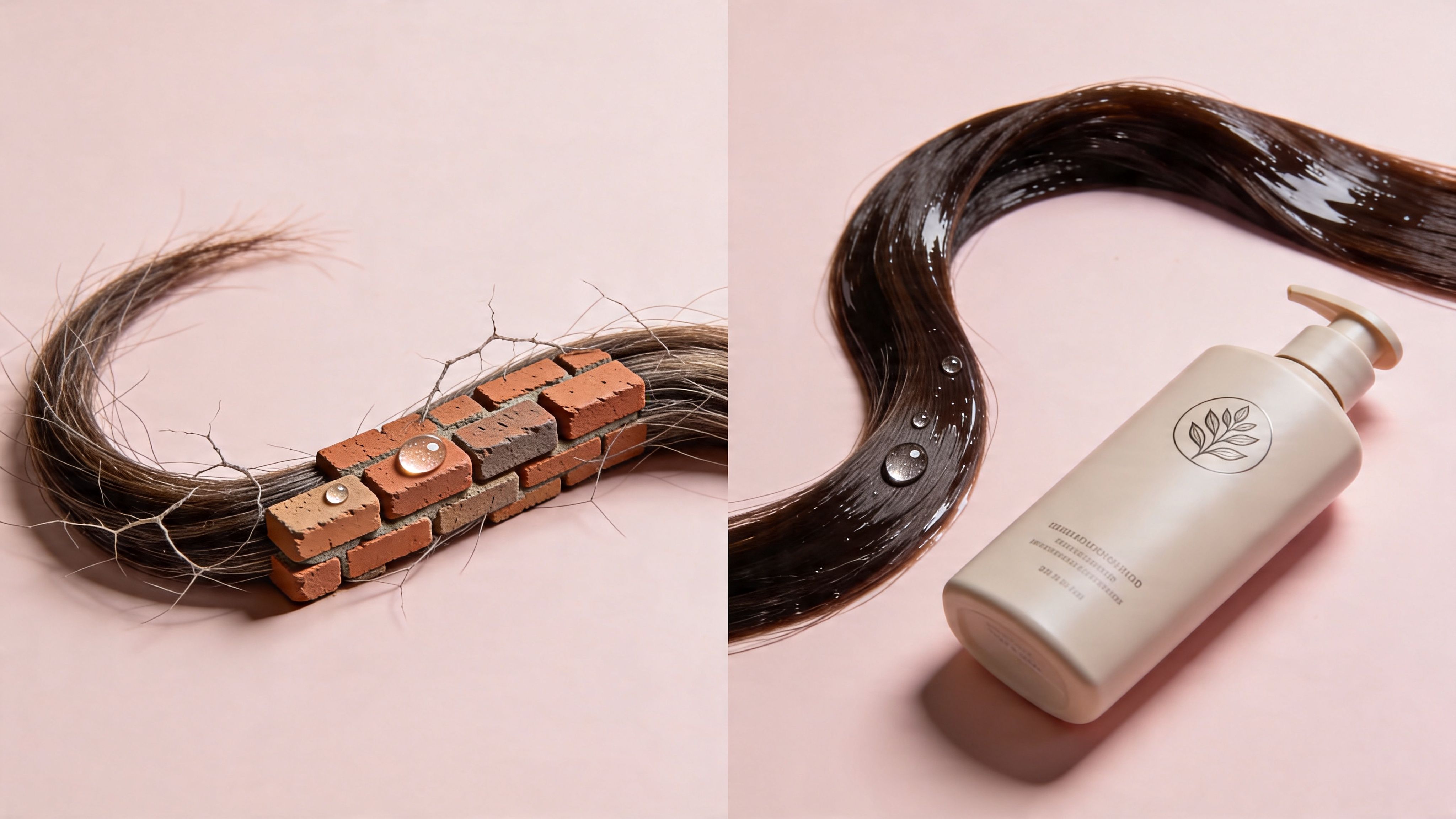
Think of your hair like a brick wall. Protein is the mortar that holds the bricks (your hair’s cuticle layers) together, giving it structure and strength. The right amount is absolutely essential. But too much mortar turns a flexible wall into a solid, rigid slab that cracks easily under pressure.
That's exactly what happens to your hair. Excess protein builds up and forms a stiff cast around the hair shaft. This coating literally blocks moisture from getting in, leaving your hair incredibly dry and brittle. Instead of strong and bouncy, it becomes stiff, fragile, and prone to snapping.
From Healthy Sheen to Crunchy Straw
How does this even happen? It’s usually a slow creep. You might be using a shampoo with wheat protein, a conditioner with keratin, and a leave-in with silk amino acids. On their own, they’re fine. But used together, day after day, they can overwhelm your hair—especially if it’s on the porous side.
This is a classic trap for anyone with high porosity hair. Damaged or color-treated hair often has a roughed-up cuticle that acts like a sponge, soaking up everything you put on it. It greedily absorbs all that protein until it becomes stiff and unmanageable.
Key Insight: Protein overload doesn't mean protein is the enemy. It's a sign that your hair's protein-moisture balance is off. Your hair has too much structure and not enough flexibility, causing it to break instead of bend.
The truly frustrating part? The symptoms of protein overload—dryness, frizz, and breakage—are the very things you were probably trying to fix. This can lock you in a vicious cycle where you keep adding more protein, thinking your hair needs more strength, when it’s actually screaming for pure, simple moisture.
Common Symptoms of Protein Overload
Not sure if this is your problem? Here are the tell-tale signs to look for. It’s usually not just one, but a combination of these symptoms.
- Extreme Dryness and Brittleness: Your hair feels rough, stiff, or like straw, no matter how much you moisturize it.
- A "Crunchy" or "Flash-Dried" Feeling: When you touch your hair, it feels strangely hard and might even make a slight crunching sound.
- Increased Breakage and Shedding: You’re noticing more short, broken pieces on your clothes, in your hairbrush, or on your pillow.
- Loss of Elasticity: Gently take one wet strand and pull it. If it snaps instantly with no stretch, that’s a red flag. Healthy hair should stretch a bit before bouncing back.
- Dullness and Lack of Shine: That protein film coats the cuticle and scatters light instead of reflecting it, making your hair look lifeless.
If you’re nodding along to this list, your hair is sending you a very clear SOS. It’s time to hit pause on the protein and give your hair the hydration it’s desperate for with a protein free deep conditioner.
How to Get a Definitive Answer
Guessing games get expensive, fast. Instead of buying yet another product and just hoping it works, you can get a much clearer picture of what’s going on.
First, see how well your experience lines up with the classic signs of an imbalance. Taking a quick Protein Overload Test gives you a personalized assessment based on your hair’s specific look and feel. It’s a simple quiz that helps you cut through the confusion and confirm if going protein-free is the right move.
Once you have a better idea, take a hard look at your current product lineup. Are there hidden proteins in your daily stylers or weekly masks? A Routine Analyzer can instantly scan your products and flag any that are contributing to the buildup. Using these IsItClean tools helps you stop guessing and start building a smarter, more balanced routine.
Who Benefits Most from Protein-Free Deep Conditioners?
Deciding to go protein-free isn't about jumping on a trend. It’s about listening to your hair. Some hair types just don't play well with protein-heavy formulas, and forcing it can lead to stiff, brittle strands—the exact opposite of what you want from a deep conditioner.
Let's break down exactly which hair types thrive on pure moisture and why skipping the protein can be the smartest move you make. First, you need to know what you're working with. If you're not sure, our Hair Type Quiz can give you a clear picture in just a few minutes.
Low Porosity Hair
Think of low porosity hair like a raincoat. Its cuticles are sealed so tightly that water and products just bead up and roll off. This "water-resistant" quality makes it incredibly difficult for ingredients to actually penetrate the hair shaft, which is why it’s so prone to product buildup.
When you slather on a deep conditioner packed with proteins, those protein molecules are often too large to get past the sealed cuticle. Instead of strengthening your hair from the inside, they just sit on the surface, creating a rigid film. Your hair ends up feeling stiff, coated, and weirdly dry because true moisture can't get in.
A protein-free formula is your best friend here. It focuses on lightweight, hydrating ingredients that have a much better chance of slipping past that tight cuticle to deliver moisture without causing that dreaded buildup.
Fine Hair
If you have fine hair, you already know the struggle—your strands are slender and get weighed down by almost everything. Heavy ingredients, including many common proteins, can instantly kill your volume, leaving your hair looking flat, limp, and even greasy.
Protein-free deep conditioners are the perfect match. They provide the deep hydration your strands need to stay flexible and healthy, but without the extra weight of large protein molecules. You get all the moisture and none of the baggage, helping you maintain that precious volume and bounce.
High Porosity and Color-Treated Hair
Now, this is where it can feel a little counterintuitive. High porosity hair, which often comes from chemical treatments, heat damage, or even just genetics, has a very open, sponge-like cuticle. It soaks up moisture and products instantly... but loses them just as fast.
You'd think this hair needs a constant supply of protein to patch up all those gaps and holes. And while some protein is definitely necessary for repair, high porosity hair can absorb it too well. This can easily tip the scales into protein overload, where the hair becomes so packed with protein that it turns brittle, crunchy, and snaps at the slightest touch.
Important Note: For high porosity or chemically damaged hair, it's all about balance. Use a protein-free deep conditioner to flood your hair with pure moisture, making it pliable and soft again. Once that flexibility is restored, you can reintroduce a protein treatment strategically when your hair starts feeling too soft or mushy.
Still unsure about your porosity? You can check your hair porosity with a simple at-home test to find out for sure.
This kind of personalized routine is quickly becoming the new standard. Within the North American hair conditioner market, which was valued at USD 4.5 billion in 2026, there's a noticeable move toward these specialized protein-free options. Ingredients like hydrolyzed keratin, while great for some, can build up on porous hair and cause the exact stiffness and breakage people are trying to fix. You can learn more about these hair care market findings to see how the industry is adapting.
By understanding your unique hair type and porosity, you can stop the endless cycle of trial-and-error. It’s time to start giving your hair exactly what it’s asking for.
The Best Moisturizing Ingredients to Look For

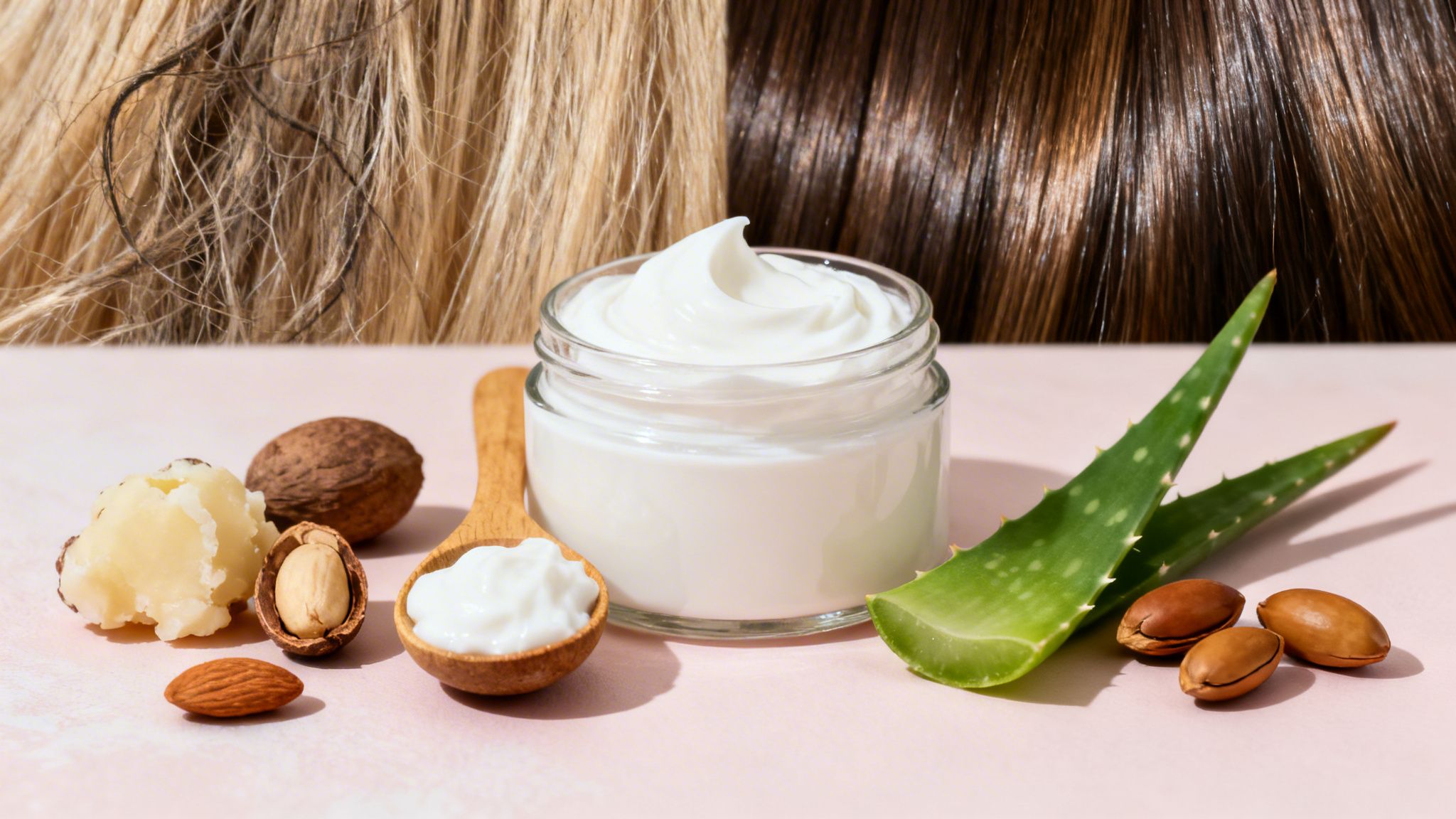
Now that you know why your hair might be crying out for a protein break, let’s talk about the what. When you’re on the hunt for a protein-free deep conditioner, the ingredient list is your most powerful tool. You’re looking for hydration heroes—ingredients that quench thirsty strands, restore flexibility, and leave your hair feeling soft and alive.
These powerhouse ingredients generally fall into two categories that work together: humectants and emollients. Think of them as a one-two punch for dryness.
Humectants: The Moisture Magnets
Think of humectants as tiny moisture magnets. They work by pulling water molecules from the air and drawing them deep into your hair shaft, which is exactly what dry, brittle hair needs to get its bounce back.
You'll find these common humectants in a great protein-free deep conditioner:
- Glycerin: A true classic. It’s highly effective at attracting and holding onto water, giving your hair that plump, moisturized feel.
- Aloe Vera: Way more than just a sunburn soother, aloe is packed with water, vitamins, and minerals that deeply hydrate and condition the hair.
- Panthenol (Pro-Vitamin B5): This ingredient doesn't just deliver moisture; it also creates a light film that boosts shine and adds that coveted slip.
These are your first line of defense against dryness, working to rehydrate your hair from the inside out.
Emollients: The Moisture Sealers
But attracting moisture is only half the battle. If you don't seal it in, that hydration can escape just as quickly—especially if you have high-porosity hair. This is where emollients shine.
Emollients are rich oils and butters that smooth down the hair cuticle, lock in all that moisture from the humectants, and create a protective barrier. They're responsible for that silky-soft feeling and incredible slip that makes detangling feel like a dream.
Keep an eye out for these top-tier emollients:
- Shea Butter: A rich, nourishing butter full of fatty acids that softens, seals, and protects the hair cuticle.
- Argan Oil: Often called "liquid gold" for a reason. It’s lightweight yet intensely moisturizing, fighting frizz and adding brilliant shine without weighing hair down.
- Avocado Oil: This oil actually penetrates the hair shaft for deep moisture while also coating the strand to prevent that moisture from leaving.
- Mango Seed Butter: Similar to shea butter, it provides amazing slip, seals in hydration, and leaves hair soft and pliable.
A truly effective protein-free formula will always have a smart blend of both humectants and emollients. This dynamic duo ensures your hair not only gets moisturized but actually stays moisturized.
This balanced approach is especially critical for anyone dealing with high-porosity or damaged hair. Since porous hair can absorb proteins too eagerly, leading to stiffness, protein-free formulas with rich emollients offer a safer way to hydrate.
How to Spot and Avoid Hidden Proteins
Becoming a savvy shopper means knowing what to look for—and what to run from. To keep your routine truly protein-free, you need to recognize how proteins can hide in plain sight on an ingredient list.
To simplify things, we've put together a quick-reference table. On one side, you have the moisturizing heroes you want to see. On the other, the common protein-based ingredients you’ll want to avoid if your hair is sensitive.
| Protein-Free Heroes vs. Hidden Proteins to Avoid | | :--- | :--- | | Moisturizing Ingredients to Seek | Protein Ingredients to Avoid | | Glycerin | Hydrolyzed Wheat, Soy, or Rice Protein | | Aloe Vera (Aloe Barbadensis Leaf Juice) | Keratin | | Shea Butter (Butyrospermum Parkii) | Amino Acids (e.g., Silk, Collagen) | | Argan Oil (Argania Spinosa Kernel Oil) | Peptides | | Avocado Oil (Persea Gratissima Oil) | Quinoa or Oat Extract/Flour | | Panthenol (Pro-Vitamin B5) | Biotin | | Mango Seed Butter (Mangifera Indica) | Cocoyl Hydrolyzed anything |
This cheat sheet is a great starting point, but remember that ingredient names can be tricky.
Feeling overwhelmed? You don’t have to memorize a chemistry textbook. If you're unsure about a product, you can use our Ingredient Checker to scan ingredients and instantly identify any hidden proteins. When you’re ready to shop, you can even browse through our approved products to find your next favorite with total confidence.
How to Use a Protein Free Deep Conditioner for Maximum Results

Having the right protein-free deep conditioner is only half the battle. How you use it makes all the difference. Think of it like this: you can have the best ingredients for a cake, but if you don't follow the recipe, you'll end up with a mess.
Let's walk through the right way to apply your treatment for that deep, lasting moisture your hair is craving.
First things first: always start with clean, damp hair. Applying conditioner to dirty hair is a waste of time and product—buildup blocks the good stuff from getting in. After shampooing, gently squeeze the excess water out. You want your hair to be damp, not dripping wet, so the conditioner can actually stick to your strands.
Now for the application. Concentrate the product on your mid-lengths and ends. This is the oldest, thirstiest part of your hair. Scoop out a generous amount, and work it through your hair section by section. Take a moment to smooth the conditioner down the hair shaft with your fingers; this helps the cuticle lay flat.
Boosting Your Treatment with Heat
Want to get even more out of your deep conditioning session? Add some gentle heat. Warmth helps to slightly open the hair cuticle, allowing all those moisturizing ingredients to penetrate much deeper. This step is a game-changer for low porosity hair, which naturally resists moisture.
You’ve got a couple of easy options here:
- Warm Towel: Slather on your conditioner, pop on a plastic shower cap, and then wrap a warm, damp towel over it. This creates a mini-steam treatment for your hair.
- Thermal Cap: These caps use your body's own heat to create a warm environment inside. They are super simple and completely mess-free.
Let the treatment sit for the time recommended on the bottle, which is usually between 15 and 30 minutes. When your time is up, rinse your hair thoroughly with lukewarm or cool water. The cooler water helps seal the cuticle back down, locking in all that moisture and giving you a great shine.
Pro Tip: As you rinse, don't aim for that "squeaky clean" feeling. You want your hair to still feel soft and have some slip. That silky feeling means the conditioning agents have coated your strands properly.
Finding Your Perfect Frequency
So, how often should you do this? It all comes down to your hair's porosity and current condition.
- For High Porosity or Damaged Hair: Start with a deep conditioning session once a week. This hair type loses moisture fast, so it needs regular, intense hydration to stay soft and prevent breakage.
- For Low Porosity or Healthy Hair: You’ll likely only need to deep condition every 2-4 weeks. Your hair holds onto moisture well, so this is more about maintenance than a rescue mission.
Plugging this step into a balanced weekly schedule is the secret to long-term hair health. The best way to stay on track is to build your personalized hair routine, mapping out which products to use and when. This gives you a simple, effective plan that takes the guesswork out of wash day.
Building Your Perfect Moisture-Rich Hair Routine
Let's be real: a single product, even an amazing protein-free deep conditioner, isn't a magic wand. Healthy, predictable hair doesn't come from one miracle jar. It comes from a complete routine where every product works together.
This means getting intentional about your hair care. The goal is to finally nail that delicate protein-moisture balance. As you've seen, too much protein makes hair feel like straw, but too little leaves it mushy and weak. Your routine should be a smart, flexible plan that gives your hair exactly what it needs, right when it needs it.
From Trial and Error to a Smart Plan
If you're tired of the endless cycle of buying products, hoping for the best, and ending up with a bathroom cabinet full of duds, it's time for a new approach. The secret to finding what actually works is to stop guessing and start understanding your own hair.
Think of it like this: you wouldn't just grab random ingredients and hope they make a great cake. You follow a recipe. The "recipe" for your hair starts with a few key pieces of data about its specific type, porosity, and sensitivities.
- Discover Your Hair Type: Is your hair fine or coarse, straight or coily? A quick Hair Type Quiz will give you the foundational knowledge you need.
- Check Your Porosity: This is a big one. How well does your hair actually absorb and hold onto moisture? Knowing this is a game-changer for choosing products. You can easily check your hair porosity to find out.
- Assess Your Scalp Health: Healthy hair starts with a healthy scalp. A Scalp Sensitivity Quiz can flag any underlying issues that might be holding your hair back.
By gathering these key data points, you're not just guessing anymore—you're creating a strategy. This is how you build a routine that delivers consistent, predictable results instead of constant frustration.
Once you have this personal knowledge, you can finally build a routine that works for you. This is your chance to move beyond just damage control and start building the strong, resilient hair you've always wanted. Each step will support the others, creating a system that keeps your protein-moisture levels perfectly in check.
Now you can put it all into practice. Take the information you've gathered about your hair and let our tools do the heavy lifting for you. We invite you to build your personalized hair routine with the IsItClean Hair Routine Builder. It's the final step in creating a customized, effective plan from start to finish that will guide you to your best hair ever.
Frequently Asked Questions
Got a few more questions? Let's clear up some of the most common things people ask about protein-free deep conditioners.
Can I Use One if My Hair Is Not Damaged?
Definitely. Think of these conditioners as a preventative measure, not just a fix. They’re fantastic for maintaining healthy moisture levels, especially if you have low porosity or protein-sensitive hair.
They drench your hair in hydration without the risk of protein buildup, which can make even healthy hair feel stiff and brittle over time. It’s all about keeping your hair soft, flexible, and easy to manage.
How Long Does It Take to Fix Protein Overload?
You should notice your hair feeling softer and more pliable after the very first use. That immediate relief is one of the best parts.
However, completely fixing a protein-moisture imbalance is more of a marathon than a sprint. It can take a few weeks of consistent, moisture-focused care to get your hair fully back on track.
To stay on track, we suggest you use our Routine Analyzer to monitor your products and progress. This helps you see what's working and ensures you're consistently avoiding hidden proteins.
Are All 'Natural' Deep Conditioners Protein-Free?
Not at all, and this is a huge trap many people fall into. Plenty of popular "natural" ingredients are actually proteins—think quinoa, oat, silk, keratin, or rice extracts.
This is exactly why you can't just trust the front of the bottle. Always, always analyze your ingredients before you commit.
Should I Alternate Between Protein and Protein-Free Conditioners?
Yes, this is a brilliant strategy for maintaining that perfect protein-moisture balance. It's all about listening to what your hair is telling you.
One week it might feel a bit weak and stretchy, begging for a protein boost. The next, it might feel coarse and snappy, a clear sign it's thirsty for moisture. Using tools to check your hair porosity helps you create a smart, responsive routine where you give your hair exactly what it needs, when it needs it.
Ready to stop the guesswork and build a routine that actually works for your unique hair? The IsItClean Hair Routine Builder takes everything you've learned and creates a personalized plan from start to finish. Get started today and discover your best hair.