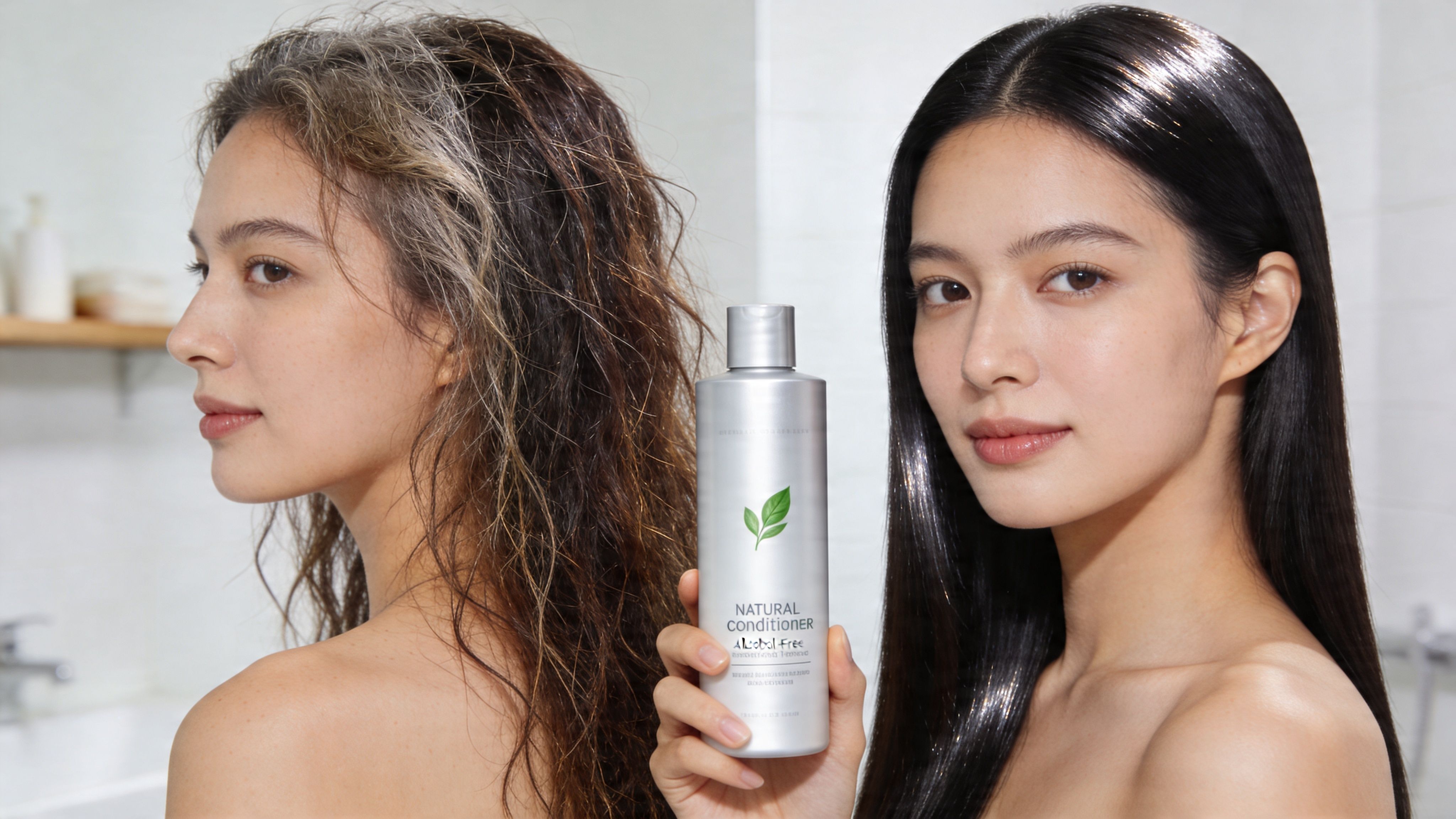
A lot of people shop for a conditioner without alcohol by doing one simple thing: they scan the label, spot the word “alcohol,” and put the bottle back.
That sounds careful. It also causes a lot of confusion.
Some alcohols can leave hair feeling rough, frizzy, and thirsty. Others help a conditioner feel creamy, make detangling easier, and support moisture retention. If you’ve ever avoided a product with cetyl alcohol or cetearyl alcohol because the word looked suspicious, you may have skipped the exact kind of formula your hair needed.
That’s why “alcohol-free” advice often falls apart in real life. It’s too broad to be useful.
You don’t need to memorize cosmetic chemistry to shop smarter. You just need to learn the difference between the alcohols that evaporate fast and the alcohols that behave more like softening lipids. Once you see that split clearly, labels stop looking intimidating and start looking readable.
The Truth About Alcohol in Your Conditioner
The biggest myth in hair care is that all alcohol in conditioner is bad.
It isn’t.

Some alcohols are the fast-evaporating kind that can dry hair out. Others are fatty alcohols, including cetearyl alcohol, cetyl alcohol, and stearyl alcohol, and these act as emollients that help with softness and moisture retention. Short-chain alcohols such as SD alcohol, alcohol denat, propanol, and isopropyl alcohol are the ones more often linked with dehydration because they evaporate quickly and can disturb the hair’s natural oils, especially on high-porosity or color-treated hair, as explained in Hair.com’s guide to alcohol in hair products.
Why shoppers get tripped up
The word “alcohol” shows up in both groups.
That’s the whole problem.
A label might say “alcohol-free,” and mean free from drying alcohols. Another product might include fatty alcohols and still be an excellent moisturizing option. A third might remove all alcohols entirely but then need extra humectants and conditioning ingredients to make up for the lost slip.
Practical rule: Don’t ask, “Does this conditioner contain alcohol?” Ask, “Which alcohols does it contain, and what are they doing there?”
What this means for your routine
A conditioner without alcohol can be helpful if you’re avoiding drying alcohols. But a formula that contains fatty alcohols may still be a smart choice, especially if your hair tangles easily, loses moisture fast, or feels rough after washing.
That’s the mindset shift that matters. Fear is less useful than understanding.
The Great Alcohol Divide Drying vs Fatty Alcohols
“Alcohol-free” sounds safe, but that label can hide the underlying question.
In conditioner, the word alcohol covers two very different ingredient families. One group can leave hair feeling drier. The other often helps a conditioner feel creamy, slippery, and easier to spread through the hair.

What makes them different
The split comes down to structure and behavior.
Fatty alcohols such as cetearyl alcohol, cetyl alcohol, and stearyl alcohol have longer carbon chains. That shape makes them waxy, not harsh. In a conditioner, they help soften the hair surface, improve slip, and reduce that squeaky, rough feeling some formulas leave behind.
Drying alcohols such as SD alcohol, alcohol denat., isopropyl alcohol, and propanol behave differently. They evaporate fast. That quick evaporation can make a product feel light at first, but it can also leave some hair types feeling parched, frizzy, or less flexible afterward.
If chemistry terms feel abstract, watch the after-effect on your strands. Hair that feels smoother and less tangled after rinsing often responds well to fatty alcohols. Hair that feels light for an hour and brittle later may be reacting to a faster-evaporating alcohol.
Drying alcohols vs fatty alcohols in conditioners
| Attribute | Drying Alcohols (Short-Chain) | Fatty Alcohols (Long-Chain) |
|---|---|---|
| Common names | SD Alcohol, Alcohol Denat., Isopropyl Alcohol, Propanol | Cetyl Alcohol, Cetearyl Alcohol, Stearyl Alcohol |
| How they behave | Evaporate quickly | Stay in the formula and on the hair longer |
| What they do in products | Can create a lighter feel or fast dry-down | Add creaminess, slip, softness, and structure |
| Effect on the cuticle | Can leave hair feeling stripped | Help smooth and coat the hair surface |
| Best known for | Volatility | Conditioning support |
| Higher-risk hair types | High-porosity, color-treated, frizz-prone hair | Often helpful across many hair types |
Why the cuticle response matters
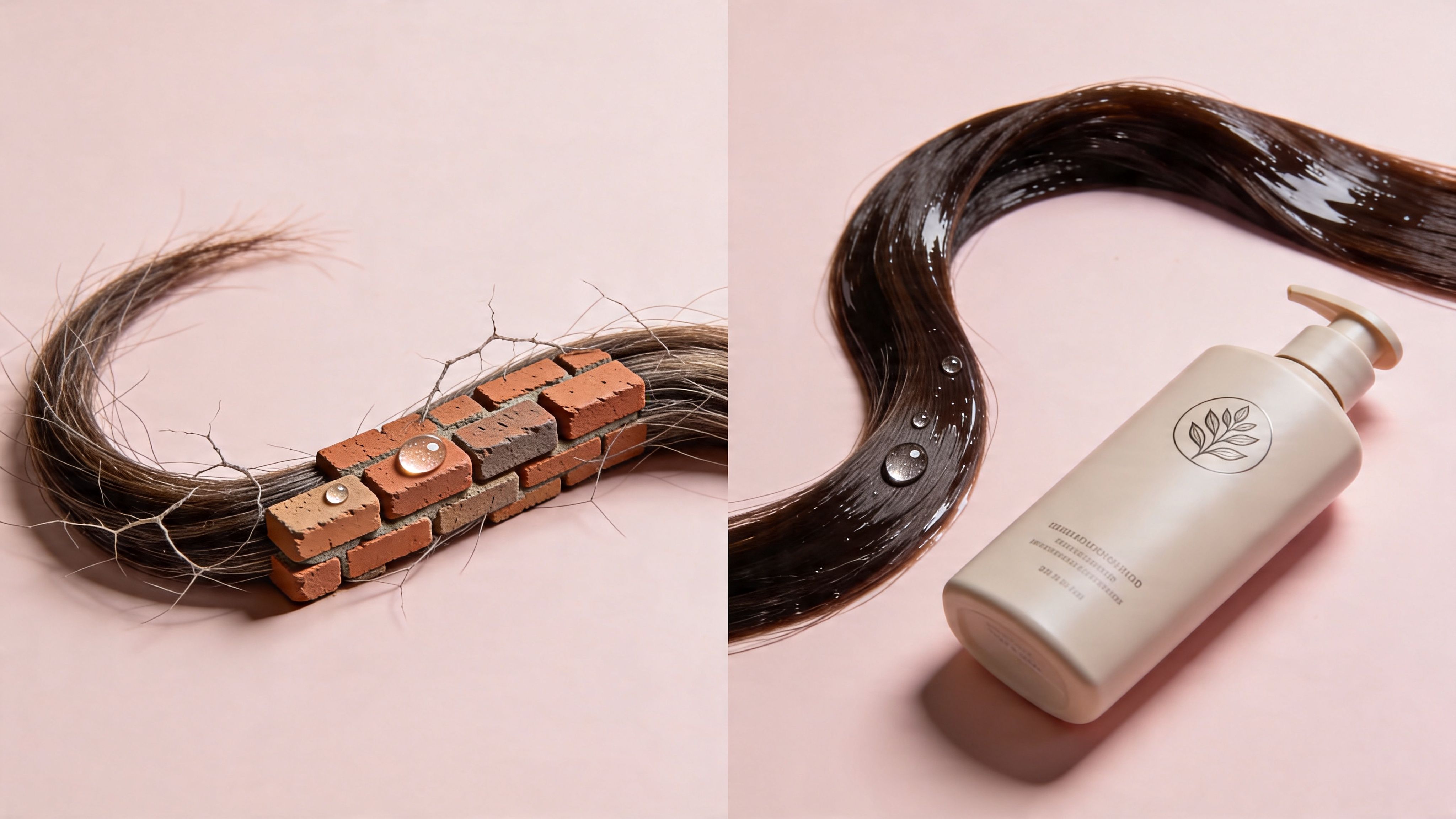
Your hair cuticle works like a layer of roof shingles. When those layers sit flatter, the strand usually feels smoother and holds onto moisture better. Fatty alcohols can help support that smoother surface feel.
Drying alcohols serve a different purpose. They are often used for quick-dry performance or a lighter finish, not for lasting softness.
That distinction matters if you are trying to shop smarter. A bottle labeled conditioner without alcohol may be avoiding the fast-evaporating kind, which can be useful for dry or damaged hair. But a conditioner that contains fatty alcohols may still be a strong match if your hair tangles easily, feels rough when wet, or loses moisture fast. If that sounds familiar, a high-porosity hair routine guide can help you connect ingredient choices to how your hair behaves.
A better way to read the label
At this point, you stop being a rule-follower and start being an ingredient detective.
Scan the ingredient list and separate alcohols into jobs. Cetyl alcohol, cetearyl alcohol, and stearyl alcohol usually point to softness, slip, and a richer texture. Alcohol denat., SD alcohol, isopropyl alcohol, and propanol deserve a closer look, especially if your hair is porous, color-treated, curly, or easily dehydrated.
Then check what surrounds them. A drying alcohol high on the list in a light styling product may not bother you much. The same ingredient high on the list in a conditioner for fragile hair is more likely to be a poor fit.
The useful question is not “Does this contain alcohol?” The useful question is “Which alcohol is here, and what job is it doing?”
How Alcohol Affects Your Hair Porosity and Type
Your friend’s favorite conditioner can make your hair feel awful for one reason: your hair doesn’t interact with ingredients the same way.
Porosity changes the whole story.

High-porosity hair usually feels the difference faster
If your hair absorbs water quickly, frizzes easily, dries out fast, or feels damaged at the ends, it may be high porosity.
That type of hair already struggles to hold moisture. So when a formula includes short-chain alcohols that evaporate quickly, the result can feel harsher. Curly and wavy shoppers are especially aware of this issue. 70 to 80% of curly and wavy hair consumers prioritize avoiding short-chain alcohols to prevent dryness and protect curl definition, according to All Things Hair’s alcohol-free conditioner guide.
If that sounds like your hair, it helps to explore a routine for high-porosity hair and choose conditioners that focus on moisture support rather than quick-dry performance.
Low-porosity hair has a different challenge
Low-porosity hair tends to resist moisture entry more than moisture loss.
That means it may not feel as instantly wrecked by the wrong alcohols, but it can still become dull or rough over time if the formula leans too drying. At the same time, very rich conditioners can feel heavy if they’re not balanced well.
Many people often get confused. They hear that fatty alcohols are moisturizing and assume “more is always better.” Not necessarily. Your hair may want fatty alcohols, just in a lighter formula with a different mix of oils, humectants, or proteins.
Curly, coily, fine, straight, damaged
Hair type changes how noticeable the effect becomes.
- Curly and wavy hair often loses moisture more easily, so drying alcohols can show up as frizz, puffiness, and weak curl clumping.
- Color-treated or damaged hair may feel rougher sooner because the cuticle is already stressed.
- Fine hair may need moisture without heaviness, so ingredient balance matters more than front-label claims.
- Straight hair can still get dry and static-prone, even if frizz shows differently.
If you don’t know your porosity or curl pattern, your product choices will feel random. Labels make more sense once you know what your hair is trying to hold onto or let go of.
Start with diagnosis, not guessing
A conditioner without alcohol won’t solve everything if you don’t know what your hair needs.
Two quick tools make this easier:
- Check your porosity with the Hair Porosity Test
- Figure out your pattern and care needs with the Hair Type Quiz
Those answers help you stop shopping by fear words and start shopping by fit.
Become an Ingredient Label Detective
“Alcohol-free” is one of the easiest claims to oversimplify.
A better question is: which alcohol, how much of it, and what job is it doing in this formula? Reading a conditioner label gets much easier once you treat the ingredient list like a cast list. Some ingredients are the lead actors. Others are support. A name only matters when you know its role.

First rule of label reading
Ingredient lists usually run from highest amount to lowest amount.
That gives you your first clue. If Alcohol Denat. sits near the top of a conditioner label, it deserves a closer look. If cetyl alcohol or cetearyl alcohol appears in the middle, that is often part of how the product gets its creamy feel and detangling slip. Fatty alcohols work a bit like the waxy structure in a lotion. They help hold water and oils together and help the formula spread evenly through the hair.
Position matters, but so does product type. A rinse-out conditioner is supposed to feel cushiony. A light spray leave-in may use a very different ingredient balance.
The names worth memorizing
You do not need to memorize fifty ingredients. Start with a short watchlist and build from there.
Usually in the drying alcohol group
- Alcohol Denat.
- SD Alcohol
- Isopropyl Alcohol
- Propanol
These tend to evaporate quickly, which can make a product feel light or fast-drying.
Usually in the helpful fatty alcohol group
- Cetyl Alcohol
- Cetearyl Alcohol
- Stearyl Alcohol
These are commonly used to add softness, slip, and a smoother texture.
Read the formula like a detective, not a search term
One ingredient rarely tells the whole story.
If you spot cetearyl alcohol beside ingredients like glycerin, panthenol, behentrimonium chloride, plant oils, or butters, you are probably looking at a conditioner built for softness and reduced friction. If you see a drying alcohol high on the list and very little else that cushions the hair, that formula may feel harsher on strands that already struggle to stay moisturized.
Your hair porosity helps you interpret that label. Low-porosity hair often does better with lighter conditioning systems that still use fatty alcohols, just without too much buildup. High-porosity hair usually benefits from more cushion and more film-forming support. If your hair gets coated easily, a low-porosity hair routine guide can help you connect label clues to what your strands tolerate.
The same ingredient-detective habit helps in other care categories too. This explanation of the impact of common irritants like Sodium Lauryl Sulfate shows how one ingredient can change how a product feels, even when the packaging sounds gentle.
Use a shortcut when a label gets crowded
INCI lists can feel like reading a recipe in another language.
A simple tool can speed up the first pass. The IsItClean Ingredient Checker lets you paste an ingredient list or upload a photo so you can quickly spot drying alcohols, fatty alcohols, and other ingredients that may or may not fit your hair goals.
That kind of check is useful when two bottles both say “moisturizing” but one is built for slip and softness while the other is built to feel light and dry down fast.
A quick visual walkthrough can help too.
Building Your Routine for Common Hair Concerns
Hair concerns rarely come from one bottle acting alone. A conditioner without drying alcohols can help, but the better question is more specific: what is your hair trying to hold onto, and what keeps pulling it off balance?
That ingredient-detective mindset matters here. Frizz, breakage, flatness, and scalp irritation can all push people toward the same "alcohol-free" claim, even though those problems usually need different routine choices.
Frizz-prone or curly hair
Curly hair often loses water faster because bends and twists make it harder for scalp oils to travel down the strand. That is why many curly routines focus on reducing friction, keeping slip high, and avoiding ingredients that dry down too fast.
Sales data and retailer trends show strong interest in alcohol-free conditioners for curly hair. The label itself is not the full answer, though. A useful conditioner for curls usually does three jobs at once: helps detangling in the shower, leaves enough lubrication behind, and fits your porosity so it does not sit on the hair like a waxy coat.
A simple way to picture it is this. Some conditioners act like a light jacket. Others act like a puffer coat. Curl patterns alone do not tell you which one you need.
Use these clues:
- Knots and snagging: Look for more slip and better rinse-out conditioning, not just a bottle that says "moisture."
- Crunchy or frizzy results after styling: Check the styler too. Fast-drying formulas can cancel out the softness your conditioner gave you.
- Hair that gets coated fast: Choose lighter support. A low-porosity hair routine guide can help you match that feeling to label clues.
SheaMoisture is one example people often choose for richer, more lubricating curl care. The better test is still your own strand response. If your curls feel soft on wash day but dull and heavy by day two, the formula may be too rich for your hair even if the ingredient story sounds right.
Color-treated or damaged hair
Coloring, bleaching, relaxing, and frequent heat styling can rough up the cuticle. Once that outer layer is less orderly, water escapes faster and strands catch on each other more easily.
That is why damaged hair often needs a conditioner that reduces drag first. Softness is not just about adding moisture. It is also about lowering friction so the strand stops getting scraped every time you comb, rinse, or style.
Protein can help some damaged hair, but damaged does not always mean protein-hungry. Hair can act stiff, wiry, or straw-like when a routine keeps piling on strengthening ingredients without enough flexibility from conditioners and film-formers. In other words, "repair" and "softness" are not the same setting.
Hair damage usually comes from repeated mismatch, not one dramatic mistake.
Dry or sensitive scalp
A scalp that feels hot, tight, or itchy needs a simpler routine, not a longer one. Here, the goal is to lower the noise so you can tell what is helping.
Conditioner can affect the scalp in two ways. It can soothe by reducing harshness and friction, or it can add to the problem if fragrance, certain preservatives, or heavy buildup keep the skin irritated. CeraVe Anti-Dandruff 2-in-1 is one example of a product marketed without drying alcohols, which may appeal to people trying to reduce obvious triggers.
Keep your routine practical:
- Choose a rinse-out formula that feels calm on the scalp. If your scalp stings in the shower, do not talk yourself into believing it is "working."
- Reduce overlapping triggers. Strong shampoo, fragranced oils, and abrasive scalp scrubs can matter as much as the conditioner.
- Test one change at a time. That makes it easier to spot whether the problem is the conditioner, the cleanser, or residue from styling products.
The goal is not to build a perfect routine on paper. It is to build one your hair and scalp tolerate, then adjust it based on the clues they give you.
Analyze Your Entire Hair Care System
A conditioner doesn’t work alone.
It has to share a routine with your shampoo, leave-in, mask, styler, heat protectant, and sometimes scalp treatments. If one of those products keeps drying your hair out, the conditioner may never get a fair chance to perform.
Product synergy matters
A creamy conditioner with helpful fatty alcohols can soften the hair after wash day.
But if your shampoo is too stripping, or your mousse contains fast-drying alcohols, you may still end up with brittle lengths and flyaways. People often blame the last product they used because it’s easiest to see. The actual issue may sit two steps earlier.
Protein and moisture can clash
Many people switch to a conditioner without alcohol and expect instant softness.
Sometimes they still get rough hair because the bigger problem is protein-moisture balance. Hair that’s overloaded with strengthening ingredients can feel rigid and dry even when the conditioner looks rich on paper.
If you want to check that broader picture, these tools can help:
- Review your full lineup with the Hair Care Routine Analyzer
- Look for stiffness from too much protein with the Protein Overload Test
- Check whether your scalp is reacting to your products with the Scalp Sensitivity Quiz
One change is good. Pattern recognition is better
Hair responds to systems.
If every product in your routine pulls in the same direction, your hair usually gets easier to manage. If one product moisturizes while another strips, you stay stuck in a loop of fixing and undoing.
That’s why ingredient literacy matters so much. It helps you stop judging products by front-label promises and start judging them by how they behave together.
Common Myths and Questions About Alcohol in Hair Products
Search interest shows how confused people still are. Since 2025, Google Trends has shown a 40% spike in searches for “fatty alcohol vs drying alcohol conditioner,” pointing to growing demand for clearer guidance, according to Beauty Care Choices.
Here are the questions behind that confusion.
Does “alcohol-free” on the bottle mean it’s automatically safe?
No.
It may mean the product avoids drying alcohols. That can be helpful. But safety and suitability still depend on the full formula, your scalp, your porosity, and your styling habits.
A bottle can remove one concern and still be too heavy, too fragranced, too protein-rich, or not moisturizing enough for your hair.
Are fatty alcohols bad for fine hair?
Not automatically.
Fine hair can still benefit from fatty alcohols because they improve slip and reduce friction during detangling. The bigger issue is total formula weight. A rich conditioner with heavy oils and butters may flatten fine hair, but that doesn’t make cetyl alcohol or cetearyl alcohol the villain.
If my hair is dry, should I avoid every ingredient ending in alcohol?
No.
That rule is too blunt to be useful. Some ingredients ending in “alcohol” are exactly what help a conditioner feel soft, creamy, and conditioning.
Don’t sort ingredients by suffix alone. Sort them by function.
Can I use a drying-alcohol product if I deep condition later?
You can, but that doesn’t always cancel the effect.
If a styler or leave-in repeatedly dries your hair out, using a mask later may feel like patching the same problem every wash day. It’s usually easier to remove the recurring trigger than to keep compensating for it.
Are fatty alcohols greasy?
Usually not in the way people fear.
In a well-made conditioner, fatty alcohols help create a smooth texture and a soft after-feel. Greasiness depends on the overall formula, how much you use, and whether the product matches your hair type.
Why do some “alcohol-free” conditioners still not work for me?
Because alcohol isn’t the only variable.
Your hair may need more slip, less protein, fewer irritants, a lighter formula, or a different wash frequency. Sometimes the conditioner is fine and the surrounding routine is what’s off.
That’s why becoming an ingredient detective helps more than following one banned-ingredient list.
Your Next Step to Healthier Hair
Healthy hair shopping gets easier when you stop treating “alcohol” as one big category.
Some alcohols are more likely to dry the hair out. Others help condition, soften, and improve detangling. Once you know that difference, a label becomes less of a warning sign and more of a map.
You also don’t have to solve the whole routine in one shopping trip. Start with your own hair reality. Is it porous, color-treated, curl-prone, fine, sensitive, or protein-stiff? Those answers matter more than trend language on a bottle.
If your curls need more structure and softness, you can start with a curly hair routine. Then build from there with products that make sense together.
The goal isn’t perfection.
It’s confidence. You want to look at an ingredient list and know what’s helping, what’s risky, and what doesn’t apply to your hair.
If you’re ready to turn that knowledge into a practical plan, try the IsItClean Hair Routine Builder. It helps you create a personalized routine based on your hair type, porosity, and concerns, so you can choose products with less guesswork and more confidence.