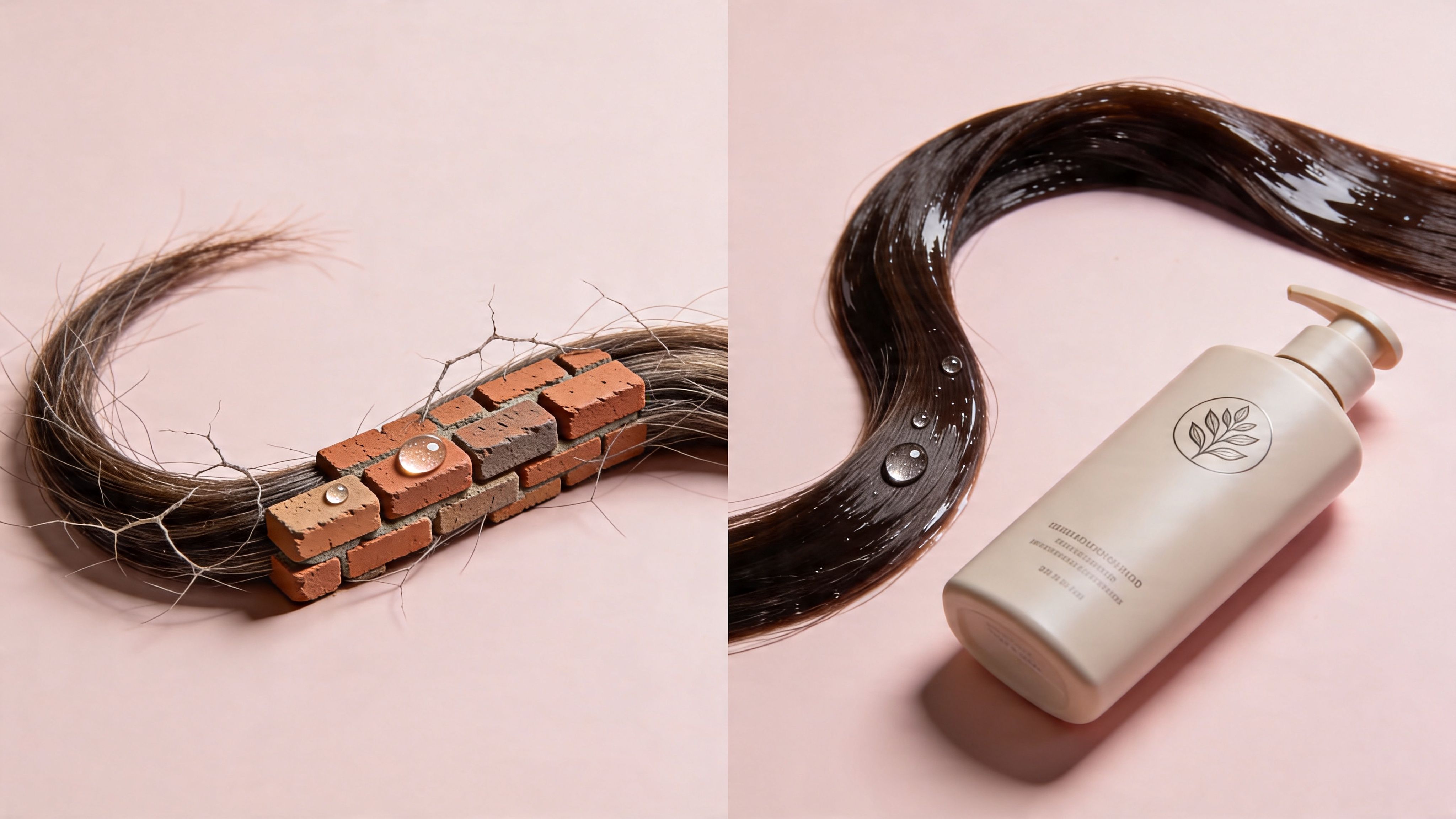

Picture your hair as a strong, tightly-woven rope. When it's healthy, that rope is flexible and almost impossible to snap. But over time, things like heat styling, bleach, and even the sun start to wear away at it, causing the individual fibers to fray and creating weak spots all over.
Hair protein treatments are like sending in a repair crew. They weave new fibers into those gaps to patch up the damage, rebuild strength, and restore your hair’s core structure.
What Are Hair Protein Treatments Anyway?

Let's get back to basics. Your hair is made of roughly 95% protein—mostly a tough, fibrous kind called keratin. This is what gives each strand its shape, resilience, and elasticity. When your hair is damaged, it’s really just a sign that this internal protein structure has been broken down, leading to all the usual suspects: breakage, frizz, and dullness.
A hair protein treatment is basically first aid for your hair. These products are packed with hydrolyzed proteins, which are just proteins that have been broken down into molecules tiny enough to get inside the hair shaft. They slip past the outer cuticle layer and get to work filling in all the microscopic cracks and gaps along the strand, reinforcing it from the inside out.
The result? Hair that feels and looks noticeably stronger and smoother.
Is Your Hair Crying Out for Protein?
Not all damage looks or feels the same, and your hair has some pretty specific ways of telling you what it’s missing. A protein deficiency often gets confused with simple dryness, but the texture is a dead giveaway. If you’re not sure if a protein treatment is the answer, look for these telltale signs.
Your hair might need a dose of protein if it:
- Feels mushy, gummy, or overly soft when wet. Healthy wet hair should feel smooth but still have some substance. If it has the texture of wet cotton candy, its protein structure is likely compromised.
- Loses its natural curl or wave pattern. Without its protein scaffolding, hair doesn't have the support it needs to hold its shape. Curls can look stretched out, waves fall flat, and the whole style feels limp.
- Stretches… and stretches… before it snaps. This is the classic "stretch test." Take a single wet strand and gently pull on both ends. If it stretches excessively before breaking, it lacks protein-based strength.
- Looks limp and lifeless no matter what you do. Hair that’s porous and low on protein just can’t hold volume. It often falls flat shortly after you’ve styled it.
Key Insight: The single biggest factor here is porosity. High-porosity hair has a very open cuticle structure, almost like a sponge. It soaks up moisture—and protein—but loses it just as fast, leaving it constantly in need of repair.
Find Your Definitive Answer
While these signs are great clues, the best way to move forward is with a clear diagnosis. Knowing your hair’s true condition is everything. A great first step is to check your hair porosity with a simple at-home test. This will tell you exactly how well your hair absorbs and holds onto moisture, giving you a critical piece of the puzzle.
Once you know your porosity, you can build a repair strategy that actually works. The goal isn't to just throw protein at your hair, but to balance it perfectly with moisture. Your next step is to build your personalized hair routine, ensuring every product works together to give your hair exactly what it needs.
How Protein Actually Repairs Damaged Hair
To really get how protein treatments work, you first need to understand what your hair is made of. The vast majority of each strand is a tough, fibrous protein called keratin. When your hair is healthy, this keratin forms a strong, tightly-packed structure. But damage from heat, bleach, or even just daily wear and tear starts to chip away at it, creating tiny gaps and weak points along the hair shaft.
Think of it like a pothole-ridden road. Protein treatments act like a highly specialized repair crew. They use hydrolyzed proteins—things like silk, wheat, or even keratin itself—which have been broken down into molecules small enough to get inside the hair shaft. These tiny repair agents patch the "potholes" in your hair's structure.
By filling in these gaps, the proteins make the entire hair strand smoother and much more resilient. They temporarily bond to your hair's natural keratin, reinforcing it from the inside out and making it less likely to snap.
The Science of Small Molecules
So why are these specific proteins so effective? It all comes down to molecular size. The protein molecules in your kitchen, like those in eggs or yogurt, are massive. They’re far too big to squeeze past the hair’s protective outer layer (the cuticle).
At a molecular level, DIY masks often just sit on the surface of your hair without providing any real structural repair. Formulated treatments, however, use hydrolyzed proteins, which are scientifically broken down to ensure they can be absorbed and get to work where damage occurs.
This is exactly why a well-formulated protein treatment can feel so transformative. It’s engineered to do what a simple DIY hair mask can't: rebuild your hair from within.
Finding the Perfect Balance
But here’s the most important concept in all of hair repair: true hair health isn’t just about adding strength. It’s about the delicate balance between protein and moisture.
- Protein provides structure. It's the framework or the "bones" of your hair, giving it strength and rigidity to stand up to styling.
- Moisture provides flexibility. It's what makes your hair feel soft and elastic, allowing it to bend and stretch without breaking.
When this balance is off, you'll know it. Too much moisture with not enough protein gives you limp, mushy hair that won't hold a style. On the flip side, too much protein without enough moisture creates stiff, brittle, straw-like hair that can snap easily. Mastering this relationship is the key to moving beyond just using products and toward strategically rebuilding your hair's health. For more deep dives into hair care science, you can explore our other articles on the IsItClean blog.
The demand for these smarter repair products is exploding. The market for restructuring hair care is set to grow from USD 4.9 billion in 2026 to USD 8.9 billion by 2036. It makes sense when you consider that a single bleaching session can strip away up to 25% of your hair's protein, and using the right treatments can boost elasticity by 20-40%. You can read more about the hair care market forecast here.
Getting that protein-moisture balance right might sound complicated, but it doesn't have to be a guessing game. To make it simple, you can build your personalized hair routine with our tool. It creates a schedule that alternates between protein and moisture, giving your hair exactly what it needs to thrive.
Decoding Your Hair's Cry for Help
Your hair communicates its needs every single day, but learning to speak its language can feel like a guessing game. The key is understanding the distinct signals it sends when it’s out of balance.
This is especially true when trying to figure out if your hair needs protein or moisture. Giving it the wrong thing won't just fail to help—it can actually make the problem worse.
The two issues often get confused, but they feel completely different to the touch. Hair crying out for protein has a structural problem, while hair desperate for moisture is all about dehydration and a lack of flexibility.
Signs Your Hair Needs Protein
When your hair lacks the protein required to hold its internal structure together, it becomes weak, flimsy, and almost too soft. Instead of feeling strong and resilient, it has an unsettlingly delicate quality.
Here are the key signs your hair needs a hair protein treatment:
- A limp, mushy, or gummy feel, especially when wet. Think of overcooked pasta—that’s what protein-deficient hair feels like. It lacks substance.
- Loss of your natural curl or wave pattern. Without its structural scaffolding, your hair can't hold its shape. Curls will droop and styles will fall flat almost immediately.
- Too much elasticity. If you gently pull on a single wet strand, it will stretch on and on (and on) before it finally snaps.
If this sounds familiar, it means your hair's foundation is compromised. It's a clear signal that it's time to rebuild that structure from the inside out.
Signs Your Hair Needs Moisture
On the other hand, hair that’s thirsty for moisture feels entirely different. Picture a dry, brittle leaf in autumn—it’s stiff and snaps with the slightest pressure. That’s your hair when it's dehydrated.
Look for these signs you need a moisture boost, not protein:
- A rough, dry, or straw-like texture. Your hair feels coarse to the touch and has absolutely no softness or slip.
- Snapping easily with little to no stretch. When you try the stretch test on a dry strand, it breaks almost immediately without any give.
- Lots of frizz and a dull appearance. Without moisture to keep the cuticle layer smooth and flat, hair looks frizzy, matte, and lacks that healthy shine.
To help you tell the difference at a glance, here’s a quick comparison of the most common symptoms.
Protein vs Moisture: A Quick Symptom Checker
| Symptom | Hair Needs Protein | Hair Needs Moisture |
|---|---|---|
| Feel When Wet | Mushy, gummy, overly soft | Rough, tangled |
| Feel When Dry | Limp, lifeless, cotton-candy-like | Brittle, straw-like, coarse |
| Elasticity | Stretches excessively before snapping | Snaps instantly with no stretch |
| Appearance | Droopy curls, won't hold a style | Dull, frizzy, lacking shine |
| Breakage | Breakage from weakness and limpness | Breakage from brittleness and snapping |
This table is a great starting point, but remember to feel your hair and observe how it behaves to get the full picture.
This simple decision tree can also help you quickly figure out what your hair is asking for.

As the guide shows, there are two main paths: limp, weak hair usually points toward a need for protein, while rough, brittle hair almost always signals a need for moisture.
When You're Still Unsure
The fear of getting it wrong is completely valid. If you give your hair a strong protein treatment when it was actually just thirsty for moisture, you can end up with stiff, rigid hair that breaks easily. This dreaded state is known as protein overload.
This is where moving beyond guesswork becomes a non-negotiable for keeping your hair healthy.
Don't let your hair's health be a game of chance. If your hair feels stiff, brittle, and straw-like after using protein-rich products, you might be experiencing protein overload.
To get a definitive answer, you can take our quick protein overload test. This tool is built to analyze your hair's specific symptoms and give you a clear diagnosis, taking the anxiety out of the equation.
For an even clearer picture, pair that information with the results from our comprehensive hair type quiz. Together, they create a full profile of your hair’s unique needs.
Once you know exactly what your hair is asking for, you can finally choose the right products and treatments with confidence. The best next step is to take all this knowledge and build your personalized hair routine, creating a balanced schedule that guarantees your hair gets the perfect amount of both protein and moisture.
How to Choose the Right Protein Treatment
Alright, now that you know why your hair might need protein, choosing the right treatment doesn't have to be overwhelming. In fact, it can feel pretty empowering. The secret is matching the product’s intensity to your hair's specific level of damage and porosity.
Think of it like skincare. You wouldn't use a heavy, intensive cream for minor dryness; you’d grab a light hydrator. The same idea applies to your hair. Lighter treatments are for maintenance, while the stronger ones are for serious repair.
Matching Treatment Type to Hair Damage
The first step is getting real about your hair's condition. Are you just fighting off a bit of frizz and dullness, or is your hair crying out for help after a major chemical process?
- Light Treatments (For Regular Upkeep): These are your daily or weekly helpers, like protein-infused leave-in conditioners, styling creams, or mists. They're perfect for low-porosity hair or hair with minimal damage, giving you a steady, gentle dose of strength without the risk of overdoing it.
- Medium-Strength Treatments (For Moderate Damage): Think rinse-out masks or deep conditioners you'd use weekly or every other week. These are your go-to if you regularly use heat or your hair is starting to feel a little weak and your curl pattern is looking stretched out.
- Intensive Treatments (For Severe Damage): These are the heavy hitters—powerful, concentrated formulas often called "reconstructors." They're designed for hair that's highly porous, chemically fried, or snapping off. Use these sparingly, maybe once a month, to avoid making your hair stiff and brittle.
The market for these protein-packed saviors is huge—it was valued at USD 8.24 billion in 2024 and is expected to climb to USD 14.92 billion by 2034. A big reason for this is that over 50% of women under 40 are now dealing with hair issues from stress and pollution. For high-porosity hair, the right protein treatment is a game-changer, proven to reduce breakage by up to 30-50% by patching up that damaged cuticle. Learn more about the drivers of the hair treatment market.
Reading the Ingredient Label Like a Pro
Once you know the strength you need, it’s time to flip the bottle over and decode that ingredient list. Not all proteins are created equal, and some formulas can do more harm than good.
You want to see hydrolyzed proteins high up on the ingredient list. "Hydrolyzed" just means the protein molecules have been broken down into tiny pieces, small enough to actually get inside the hair shaft. Keep an eye out for these:
- Hydrolyzed Keratin
- Hydrolyzed Wheat Protein
- Hydrolyzed Silk Protein
- Hydrolyzed Collagen
- Amino Acids (like Silk Amino Acids or Arginine)
Just as important are the ingredients you want to avoid. Harsh sulfates (like Sodium Lauryl Sulfate) will strip your hair, while certain drying alcohols (like Alcohol Denat.) can make it brittle, completely undoing the treatment’s benefits. Many silicones can also build up, blocking future treatments from working.
Pro Tip: Don't let a long, confusing ingredient list intimidate you. You can easily analyze any product's ingredients with our tool. Just scan the label to instantly see if it has the good stuff and avoids the ingredients that could set you back.
By understanding what to look for, you take back control. While it's great to browse recommendations, nothing beats having the confidence to judge a product for yourself. If you’re looking for a shortcut to clean, effective options, you can explore our curated list of products that meet our high standards for performance and safety.
But remember, finding the right product is only half the battle. To see real, lasting results, you need to fit it into a balanced routine.
Building Your Perfect Hair Care Routine
So, you’ve figured out what your hair is craving and picked the perfect product. Now comes the important part: putting it all into practice. How you apply a hair protein treatment is just as critical as which one you choose. This is where you combine the right product with the right technique to get real results, without accidentally causing more damage.
Let's break it down into a simple three-step ritual: prep, treat, and balance. Each stage is designed to make sure those hydrolyzed proteins can get to work, leaving your hair stronger and more resilient. If you skip a step, you might not see a difference—or worse, you could tip your hair into a state of imbalance.
Step 1: Prep Your Hair with a Clarifying Cleanse
Before you even think about opening that treatment, you have to give your hair a clean slate. Over time, your hair collects buildup from everything: styling products, natural oils, even pollutants in the air. This film creates a barrier that stops the reparative proteins from actually penetrating the hair shaft where they need to be.
To make sure your treatment can do its job, start by washing with a clarifying shampoo. Unlike your everyday shampoo, a clarifying formula is built to deep clean, stripping away stubborn silicones, oils, and product residue. This leaves the hair cuticle open and ready to soak up all the benefits of the protein you’re about to apply.
Once you’ve rinsed, gently squeeze the extra water out of your hair with an old t-shirt or a microfiber towel. You want your hair to be damp, not dripping wet. This creates the ideal canvas for an even application.
Step 2: Apply the Treatment with Precision
This is the main event. Your application technique can be the difference between a few strong patches and uniform strength from root to tip. Take your time with this part.
First, section your damp hair into four or more manageable parts. This is the best way to make sure you don't miss any spots and every strand gets some love. Apply the protein treatment one section at a time, working the product from the ends upward toward your roots. Pay special attention to the areas that need it most, which are usually the mid-lengths and ends.
Gently work the product through with your fingers or a wide-tooth comb for even distribution. Once every strand is coated, check the product’s instructions for how long to leave it on—some intensive treatments need 20-30 minutes, while others are faster. You can pop on a plastic cap to trap your scalp’s natural heat, which helps open the cuticle for even better absorption.
Crucial Reminder: Do not leave a protein treatment on longer than the directions say. Pushing the time is one of the most common ways to cause protein overload, which leads to that stiff, brittle feeling you’re trying to fix.
Step 3: Balance with Deep-Conditioning Moisture
This final step is non-negotiable. After rinsing out the protein, your hair's structure is reinforced, but now it’s desperate for moisture to get its softness and flexibility back. Think of it this way: protein adds the "bones," but moisture provides the "cushion."
Immediately after rinsing, slather on a rich, hydrating deep conditioner or moisturizing mask. Don’t be shy with it! Let it sit for at least 5-10 minutes to really sink in. This step is what locks in all that repair work while reintroducing the suppleness your hair needs. It's the secret to hitting that perfect protein-moisture balance.
Trying to fit these treatments into your routine can feel like a guessing game, and it's easy to worry about doing too much or too little. If you're over the guesswork, you can use our tools to get it right.
Our Routine Analyzer tool helps you figure out where a protein treatment fits into your current product lineup, making sure everything works together. A well-planned routine is your best defense against both damage and overload, taking the stress out of hair care for good.
The Dangers of Protein Overload and How to Fix It

When it comes to hair protein treatments, it’s a classic case of too much of a good thing. It’s so easy to think that if some protein helps, a lot of it will work miracles. But this common mistake can backfire, leading to a frustrating condition called protein overload.
Think of your hair like a bridge that needs to be both strong and flexible. Too much protein makes it rigid and stiff. When pressure is applied—like brushing or styling—it doesn’t bend. It just snaps. That's exactly what happens to your hair strands. They become brittle and straw-like, making them more prone to breakage than before you started.
How to Tell If You Have Protein Overload
The signs of protein overload are pretty distinct once you know what you’re looking for. Your hair might feel strangely rough, coarse, and stiff, even when it’s wet. It loses its natural softness and bounce, often looking dull and frizzy no matter what you do.
If this sounds familiar, you don’t have to guess. You can take a quick test to see if you have protein overload and get a clear answer right away.
The Three-Step Recovery Plan
Staring down a case of protein overload? Don't panic. You can get your hair back on track with a simple, three-step plan focused on restoring that delicate protein-moisture balance.
Clarify: Your first move is to hit the reset button. Grab a gentle, sulfate-free clarifying shampoo and wash away all the excess protein and product buildup that’s coating your hair.
Hydrate: This is the most important step. After clarifying, you need to drench your hair in moisture. Use a rich, protein-free deep conditioner or moisturizing mask and let it sit for at least 15-20 minutes. This will bring back that much-needed softness and flexibility.
Rest and Rebalance: For the next few weeks, put all protein-heavy products on hold. Your only job is to moisturize your hair until it feels soft and pliable again. Once it’s back to normal, you can slowly reintroduce a light protein treatment back into your routine.
Your hair is made of about 95% keratin protein, and treatments are meant to patch up what’s lost—but balance is everything. This is especially true for high-porosity hair, which can easily become fragile when overloaded. With a global hair care market expected to hit USD 122.04 billion by 2026, there are countless products targeting damage. Using them correctly is what makes all the difference. You can discover more about the hair care market's growth.
The Ultimate Goal: The best way to deal with protein overload is to prevent it from happening in the first place. The key is creating a routine that gives your hair a balanced diet of both protein and moisture from the start.
This is where a little planning goes a long way. To sidestep this common problem and make sure your hair gets exactly what it needs, you can build your personalized hair routine. A smart, balanced schedule makes protein overload a problem you'll likely never have to fix.
Your Hair Protein Treatment Questions Answered
Let's tackle some of the biggest questions that come up when you're thinking about protein treatments. Getting the right answers is the key to using them confidently and finally nailing that perfect protein-moisture balance.
Can I Use a Protein Treatment on Color-Treated Hair?
Yes, and you absolutely should. In fact, color-treated hair is one of the prime candidates for regular protein treatments. The chemical process of bleaching and dyeing blasts open the hair cuticle, stripping out natural proteins and leaving your hair weak, porous, and prone to snapping.
A great protein treatment goes in and rebuilds that damaged internal structure. Not only does this make your hair stronger and reduce breakage, but it can also help your color look richer and last longer. Just make sure you always follow it up with a deep moisturizing conditioner to bring back that essential softness and flexibility.
Are DIY Protein Masks Like Egg or Yogurt Effective?
While whipping up a hair mask in the kitchen can be fun, DIY concoctions with ingredients like eggs and yogurt just don't work for deep repair. The protein molecules in food are simply massive—far too large to actually penetrate the hair shaft and do any real structural mending.
Professionally formulated treatments, on the other hand, use hydrolyzed proteins. These proteins have been broken down into tiny fragments, small enough to get inside the hair fiber and patch up the damage from within. If you're looking for true, lasting repair, a dedicated hair product is always your best bet.
How Quickly Will I See Results?
You’ll likely feel an immediate difference in your hair's strength right after the first use. When wet, your hair should feel more substantial and less “gummy” or mushy.
But true, lasting change takes consistency. For significant damage, you can expect to see a real reduction in breakage and a more defined curl pattern within four to six weeks of regular use. The easiest way to stay on track is to build a personalized hair routine, which maps out a schedule that perfectly alternates protein and moisture based on your hair's unique needs.
Ready to stop guessing and start building a routine that delivers real results? The team at IsItClean has you covered. Take the first step toward your healthiest hair ever by trying our Hair Routine Builder today. It's the smartest way to ensure your hair gets the perfect balance of protein and moisture, taking all the guesswork out of achieving your hair goals.