A solid high porosity hair routine is built on one core principle: getting moisture in and then sealing it shut. Because this hair type soaks up water like a sponge but loses it just as fast, your entire goal is to hydrate, strengthen, and protect the hair's outer layer to stop that moisture from escaping.
What Is High Porosity Hair and How Do You Know You Have It?

Before you start swapping out products, you have to be sure you're actually working with high porosity hair. It all comes down to the hair’s cuticle, which is the outermost layer.
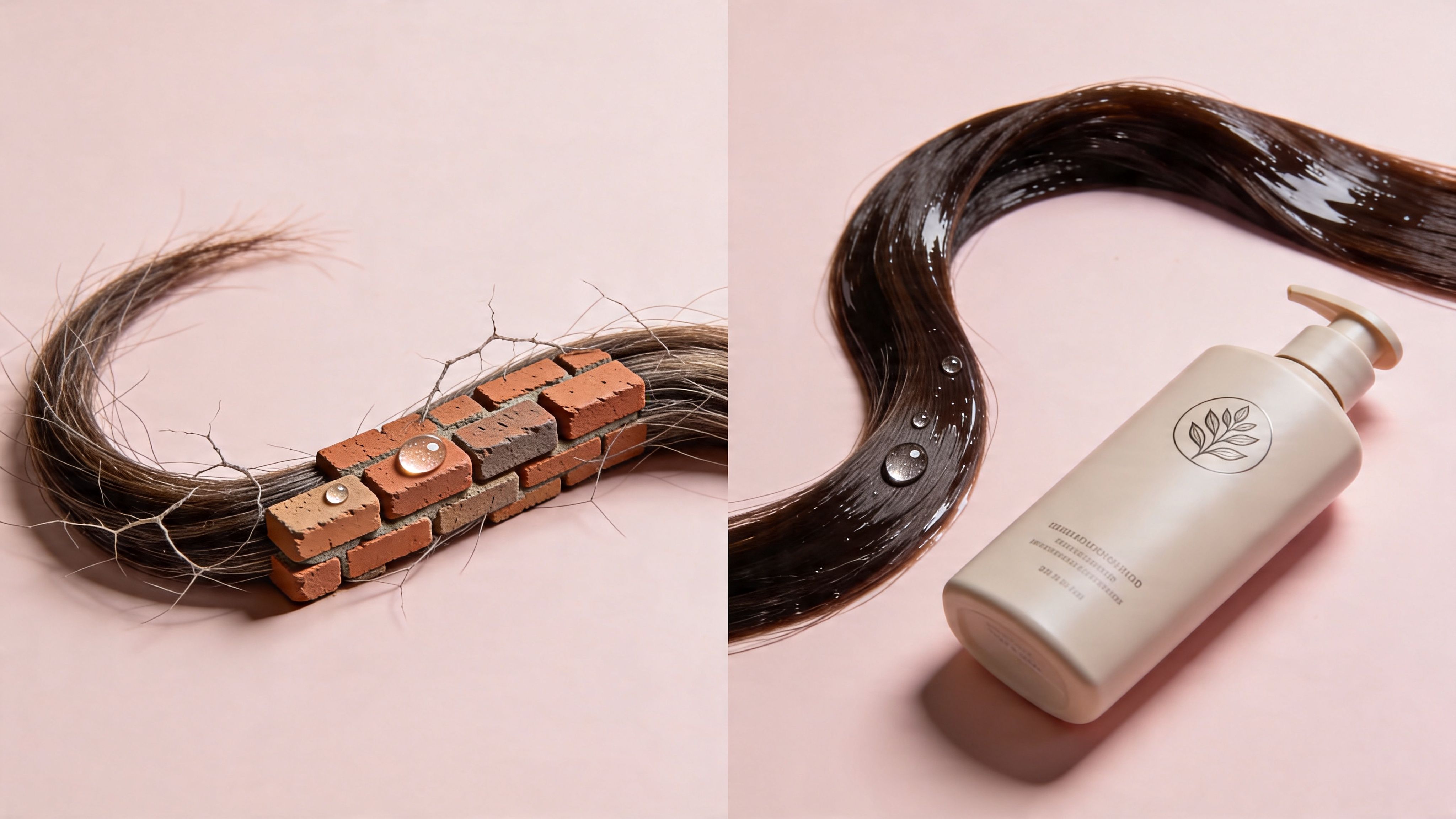
Think of your hair strand like it’s covered in tiny shingles, just like a roof. On healthy, low porosity hair, those shingles (the cuticles) lie flat and tight. This creates a solid barrier that keeps moisture locked inside.
With high porosity hair, those cuticles are lifted, open, or even chipped. This creates gaps and holes all along the hair shaft. Moisture rushes in with no problem, but it streams right back out again, leaving your hair feeling dry just a few hours later.
Telltale Signs of High Porosity
This constant cycle of gaining and losing moisture is behind all the common frustrations you might be facing. If several of these sound painfully familiar, you're probably dealing with high porosity hair:
- It Dries Super Fast: Does your hair go from dripping wet to almost totally dry in what feels like no time at all? Those open cuticles let water evaporate way too quickly.
- It Feels Constantly Dry: Even after you load it up with conditioners and creams, your hair might feel brittle or straw-like again by the end of the day.
- It’s a Magnet for Frizz and Tangles: The raised, rough cuticles on neighboring hair strands snag on each other, causing knots and frizz—especially when it's humid.
- It Looks Dull and Lacks Shine: Smooth, flat cuticles reflect light, which is what gives hair that healthy-looking gloss. Raised cuticles scatter light instead of reflecting it, resulting in a duller appearance.
This porous structure can be genetic—it's very common in curly and coily hair types—but it’s often caused or made worse by damage. Things like bleach, hair color, heat styling, and even too much sun can all lift and damage the cuticle, making your hair more porous. Before you can address the issue, it’s also helpful to have a clear understanding of your texture, which you can determine with a hair type quiz.
Confirm Your Porosity with a Simple Test
While these signs are a great starting point, self-diagnosing can be tricky. It's easy to mistake product buildup for dryness or just assume frizz is part of your natural texture. To stop the guesswork and build a high porosity hair routine that actually works, you need to be certain.
The most reliable way to know for sure is with a proper analysis. Taking a quick hair porosity test gives you a clear answer, so you can be confident that the products and methods you choose are exactly what your hair needs.
Once you’ve confirmed you have high porosity hair, you can start building a routine that solves its unique challenges. For more deep dives into different hair types and concerns, you can always explore our articles over on the IsItClean blog. The next steps will walk you through picking the right products and using the right techniques to finally get the lasting hydration your hair has been missing.
Building a Gentle Cleansing and Conditioning Foundation

Wash day sets the tone for your entire high porosity hair routine. When your hair loses moisture as fast as it soaks it in, you have two main jobs: cleanse without stripping and condition with purpose. This is where you lay the first critical layer of hydration.
The wrong shampoo can completely derail your efforts before you even get to conditioner. Many common shampoos are loaded with harsh sulfates, like sodium lauryl sulfate, that act like aggressive detergents. They might give you a satisfying lather, but they also aggressively lift your already-raised cuticles, making moisture retention a losing battle.
This is why your go-to should be a sulfate-free cleanser. These formulas are much gentler, removing buildup and dirt without roughing up the hair shaft. You're preserving your hair's delicate state, prepping it to actually absorb and hold onto the moisture you're about to add.
Choosing Your Ideal Cleanser and Conditioner
A good routine starts with knowing exactly what you're working with. Once you check your hair porosity, you can pick products that are truly a good fit. It’s a crucial step, especially when you realize that a shocking 36.8% of popular shampoos contain harsh cleansers that are a nightmare for porous hair, according to market trend analysis from Ken Research.
After cleansing, your conditioner is your first line of defense against chronic dryness. This is where you begin filling in the "potholes" along the hair strand.
Think of your conditioner as spackle for your hair. Its job is to smooth over that rough, porous surface to create an even base that can actually hold onto moisture.
For your rinse-out conditioner, you want to see rich emollients and sealing ingredients on the label. These are the ingredients that do the heavy lifting.
- Rich Butters: Shea and mango butter are brilliant for smoothing the cuticle and adding a substantial layer of moisture.
- Nourishing Oils: Avocado and jojoba oil are fantastic choices. Their molecular structures are close to your hair's natural sebum, so they can penetrate and seal effectively.
These ingredients don't just sit on top; they help temporarily patch the porous surface, making it much harder for water to escape later.
To help you remember the core principles, here’s a quick-reference guide.
High Porosity Hair Do's and Don'ts
This table breaks down the essentials for caring for high porosity hair. Sticking to these guidelines will help you maximize moisture and minimize damage.
| Do | Don't |
|---|---|
| Use sulfate-free, moisturizing shampoos. | Use shampoos with harsh sulfates (SLS/SLES). |
| Deep condition regularly with protein & moisture. | Skip deep conditioning or protein treatments. |
| Use rich, creamy leave-ins with butters and oils. | Rely on lightweight, water-only products. |
| Seal in moisture with an oil or butter. | Leave hair exposed without a sealing layer. |
| Rinse with cool water to close the cuticle. | Rinse with hot water, which lifts the cuticle. |
| Apply products in layers (LCO/LOC method). | Apply products in a random order. |
Following these simple rules can make a world of difference in your hair's health and appearance.
Mastering the Wash Day Technique
How you wash is just as important as what you use. Always start with warm water—never hot. Scalding water will only cause your cuticles to swell and lift even more.
When it's time for conditioner, don't just glob it on. Gently work it through your hair, paying special attention to the mid-lengths and ends. This is where your hair is usually the most porous and needs the most help. Let it sit for a few minutes so the ingredients have time to work their magic.
The final, game-changing step? A cool water rinse. This quick temperature change encourages the cuticle to contract and lie flat, which physically locks in the conditioning agents you just applied. It's a simple trick that makes a huge impact on shine and frizz.
If finding the right products feels overwhelming, a great place to start is to build your personalized hair routine with a tool that gives you tailored suggestions.
And before you commit, always analyze your ingredients with a product checker. This ensures you're avoiding sneaky drying alcohols or heavy silicones that cause buildup and block moisture, guaranteeing your wash day foundation is as solid as it can be.
Balancing Moisture and Protein Like a Pro

This is where the real art of high-porosity hair care comes in. Getting the moisture-protein balance right is the difference between hair that feels dry and brittle versus hair that’s strong, bouncy, and hydrated. It's a constant dance, but once you learn the steps, it becomes second nature.
Think of it this way: your hair is a leaky bucket. Moisture is the water you’re constantly trying to fill it with. But without patching the holes, that water will just pour right back out. Protein treatments are the patches that seal up those gaps in your hair's cuticle.
Why You Need Both Moisture and Protein
It’s tempting to just drench high-porosity hair in moisture, but that's only half the battle. Here’s what each one actually does for your hair:
Moisture is all about softness and elasticity. Ingredients like glycerin, aloe vera, and hyaluronic acid are humectants that pull water into the hair shaft, making it feel pliable and hydrated.
Protein provides strength and structure. Think of hydrolyzed keratin, silk, or wheat proteins as the scaffolding that reinforces your hair. They fill in the cracks along the cuticle, making your strands more resilient.
If you only focus on moisture, it will escape almost as fast as you apply it. You need protein to help lock it in.
How to Tell When Your Hair Is Out of Whack
Your hair is always talking to you—you just have to learn its language. Knowing the signs of an imbalance is crucial for figuring out what your hair needs on any given wash day.
If your hair feels mushy, overly soft, limp, or almost like a wet cotton ball when wet, you're in moisture overload. It has too much hydration and not enough structure to hold its shape.
If your hair feels stiff, rigid, straw-like, and snaps easily with very little stretch, that's a classic sign of protein overload. This means you've built up too much protein "scaffolding" without enough moisture to keep things flexible.
Stuck in a cycle where your hair just feels brittle and you can't tell which is which? A quick protein overload test can give you a clear answer and help you get your routine back on the right track.
Setting Up Your Treatment Schedule
Finding the right treatment frequency is the cornerstone of a solid high-porosity routine. There’s no magic number here; it all comes down to your hair’s damage level and how it responds.
A great starting point for most people is:
- Moisturizing Deep Conditioner: Use this once a week. These masks should be loaded with humectants and emollients to drench your hair in hydration.
- Protein Treatment: Start by using this once a month. If your hair is severely damaged from bleach or heat, you might need to bump this up to every two weeks.
This isn't just about aesthetics; imbalanced care can genuinely harm your hair's health. For instance, improper care is a contributing factor to the 63% hair loss prevalence seen among men in India, with similar issues affecting women with porous, damaged hair.
Research on damaged hair shows that a consistent routine makes a huge impact. Using a bi-weekly mask that combines protein like keratin (at a 10-15% concentration) with moisturizing ingredients like glycerin for just 20 minutes can slash breakage by up to 35%. You can discover more about these hair care market trends from Fortune Business Insights.
When you're shopping, always scan the ingredient list. Look for hydrolyzed proteins—their smaller molecules can actually penetrate the hair shaft instead of just sitting on top. For moisture, you want to see natural butters and humectants high on the list.
This back-and-forth might seem complicated, but it doesn't have to be. To take all the guesswork out of it, you can build your personalized hair routine with our AI-powered tool. It analyzes your porosity, texture, and current hair condition to create the perfect schedule and product recommendations, helping you nail that perfect balance every time.
Using Layering Techniques to Seal in Moisture
So you’ve finished your wash day, your hair feels soft and hydrated… and then an hour later, it’s dry and frizzy again. Sound familiar? For those of us with high porosity hair, this is a constant battle. The problem isn’t just getting moisture in; it’s keeping it from escaping right back out of those open hair cuticles.
This is where strategic product layering makes all the difference. Simply slapping on a leave-in conditioner won’t cut it. You need to build a barrier that locks hydration in place. The most popular and effective ways to do this are the LOC and LCO methods.
Understanding the LOC and LCO Methods
These acronyms just represent the order you apply your products. The goal is the same for both: hydrate first with a water-based product, then seal that moisture in with oils and creams.
- LOC Method: Leave-in Conditioner -> Oil -> Cream
- LCO Method: Leave-in Conditioner -> Cream -> Oil
By layering products this way, you create a multi-level shield that prevents your porous strands from losing all that moisture you just worked so hard to put in.
Breaking Down Each Layering Step
Let's walk through how this works in the real world. You always want to start on freshly washed, damp hair—not soaking wet, but not dry either. This is the sweet spot where your hair is most receptive to products.
The "L" Layer: Liquid or Leave-In This is your foundation of pure hydration. Your first step is to apply a water-based leave-in conditioner thoroughly from roots to ends. The whole point here is to drench your hair with moisture. Check the ingredients list: you want to see water as the first ingredient, ideally followed by humectants like glycerin or aloe vera that pull even more moisture from the air into your hair.
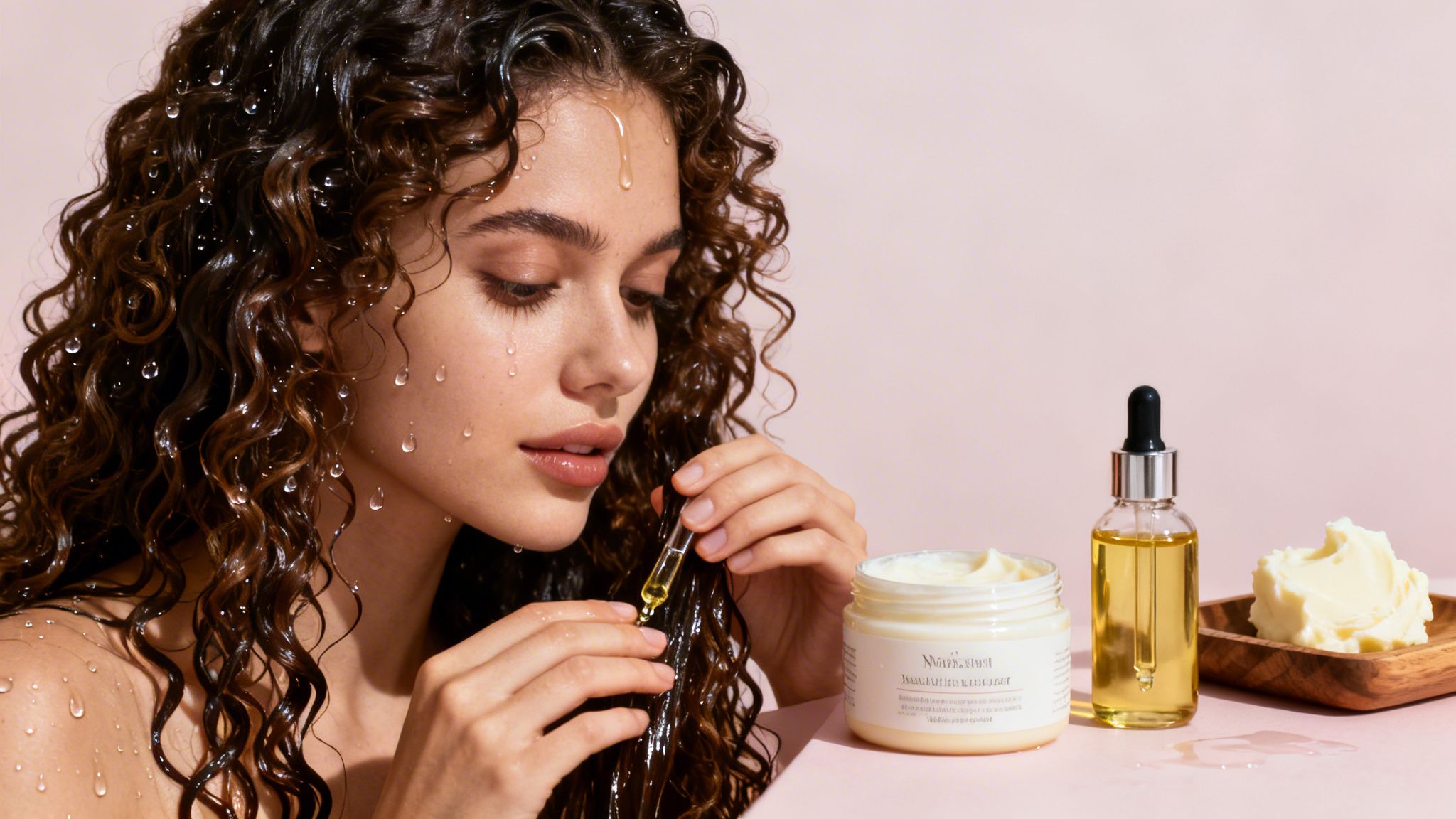
The "O" Layer: Oil Next up is your sealant. An oil's job is to create a barrier that water can’t easily penetrate, trapping the moisture from your leave-in conditioner inside the hair shaft. Heavier oils like castor or olive oil provide a really robust seal, while lighter options like jojoba or argan oil can get the job done without feeling too heavy or greasy.
The "C" Layer: Cream The final layer serves a dual purpose: it adds a bit more moisture while also providing a flexible coating that smooths the cuticle down. This is what helps reduce frizz, clump your curls or coils, and give you definition for styling. A good styling cream or hair butter will often contain both water for hydration and butters (like shea or mango) for that final sealing touch.
Key Takeaway: It’s a simple but brilliant system. The leave-in provides the water, the oil locks it in, and the cream smoothes and defines everything for a soft, lasting finish.
LCO vs. LOC: Which Is Right for You?
So, should you apply your oil before your cream, or your cream before your oil? The answer depends entirely on your hair’s texture and how easily it gets weighed down.
Choose the LOC method (Oil before Cream) if: Your hair is thick, coarse, or extremely dry and needs a serious, heavy-duty seal. Applying the oil right after the leave-in creates a very strong moisture barrier. The cream then goes on top to add extra conditioning, help with curl clumping, and give your style some weight and definition.
Choose the LCO method (Cream before Oil) if: Your hair is on the finer side or gets weighed down by heavy products. By applying the cream first, your hair can soak up all its moisturizing and conditioning benefits. You then follow up with a light layer of oil to seal it all in without making your hair feel limp or greasy.
The only way to know for sure is to experiment. Try one method for a few wash days, then switch to the other. Your hair will tell you which one it prefers. To really master this, exploring various porosity-specific methods for lasting hydration can give you even more tools for your routine.
Finding the perfect leave-in, oil, and cream that play nicely together can take some trial and error. To get a head start, you can use our product search to find products that fit each step of your routine. You can filter for leave-ins, oils, and styling creams that are free of ingredients you want to avoid. You can explore our recommended product lists to find your next holy grail.
Creating and Troubleshooting Your Weekly Hair Routine
Alright, let's tie all of this together. Putting these techniques into a consistent schedule is the final piece of the puzzle for your high porosity hair routine. A great plan isn’t just about what you do on wash day; it’s about how you keep that moisture locked in and tackle problems all week long.
When it comes to high-porosity hair, consistency is everything. A solid weekly rhythm might look like two wash days, one dedicated deep conditioning session (alternating between moisture and protein), and daily moisture touch-ups to keep your ends from getting thirsty.
Building Your Weekly Schedule
Finding a rhythm that works for you is the best way to stay on top of your hair's needs without feeling completely overwhelmed. A simple, but incredibly effective, schedule could look something like this:
- Wash Day 1 (e.g., Sunday): This is your full reset. Go through the whole routine—a gentle cleanse, your weekly deep conditioner, and then carefully layer your products to seal it all in.
- Mid-Week Refresh (e.g., Wednesday): You probably don't need a full shampoo. A co-wash or a very gentle lather, followed by a regular rinse-out conditioner, is perfect. Then, re-apply your leave-in, oil, and cream to get you through to the next wash day.
- Daily Maintenance: This can be as simple as a light misting with water (or a water-based refresher spray). Follow it up with a tiny bit of oil on just the ends to keep them sealed and stop frizz in its tracks.
This kind of schedule gives your hair a steady stream of hydration without pushing it into hygral fatigue from too much washing. The real key is to pay attention to your hair and adjust when you need to.
When Your Routine Isn't Working
So, what happens when you’ve followed all the rules, but your hair still feels dry, brittle, or just plain frizzy? Don't panic. This is a completely normal part of figuring things out. Troubleshooting is just about playing detective to find the real culprit.
Often, the biggest issues are simple things we overlook. It could be product buildup that a good clarifying shampoo would fix, or maybe you have hard water that's leaving mineral deposits on your hair and blocking your products from working. Even small lifestyle tweaks—like switching to a silk pillowcase or using a microfiber towel—can make a massive difference by cutting down on friction.
If you feel like your current routine is failing, you can get an instant analysis of your hair care routine to pinpoint potential issues. This can help you identify if a specific product is causing buildup or if you have an imbalance in your protein and moisture treatments.
Don't ever be afraid to experiment. The "perfect" high porosity hair routine almost always comes from a bit of trial and error. Sometimes the smallest change can unlock the best hair you've ever had.
This diagram shows the layering process that should be the foundation of your styling routine. It’s a game-changer for locking in moisture.

The idea is simple but effective: apply a water-based leave-in first, seal that hydration in with an oil, and then finish with a cream. This creates a powerful barrier that keeps moisture from escaping your porous strands.
Personalizing Your Perfect Routine
Here’s the truth: no two heads of hair are the same, even if they're both high porosity. Your unique hair texture, density, and damage history all play a role in what will work for you. This is where getting personal is non-negotiable.
For example, someone with fine, high-porosity waves will need much lighter oils and creams than someone with coarse, high-porosity coils. The wavy-haired person might just need a light mist to refresh, while the coily-haired person might need to re-apply their cream every single day.
Instead of getting stuck in a cycle of guessing which products will work, a more structured approach can save you a ton of time, money, and frustration. The fastest way forward is to build your personalized hair routine with a guided tool. It takes all of your hair's unique quirks into account to create a complete regimen with specific product suggestions made just for you.
If you're just starting to figure out your hair's personality, it’s also a great idea to check out our full suite of diagnostic hair care tools. They can give you an even clearer picture of what your hair is crying out for.
Your High Porosity Hair Questions Answered
Even when you've got a routine down, high porosity hair can still throw you a curveball. It’s a confusing hair type, and sometimes you just need a straight answer. Here are some of the most common questions we get, designed to help you troubleshoot and perfect your routine.
Can High Porosity Hair Ever Become Low Porosity?
I get this question all the time. The honest answer is no, you can't change your hair's genetic makeup. But—and this is a big but—you absolutely can make it behave like healthier, less porous hair.
It all comes down to a consistent routine. When you regularly use protein to fill in those microscopic gaps in your hair's cuticle and follow it up by sealing everything in with butters or oils, you’re essentially creating a stronger, smoother surface.
This reinforced structure is so much better at holding onto moisture. Over time, you'll notice your hair stays hydrated for longer, looks way shinier, and feels smoother. The hair itself hasn't fundamentally changed, but your hard work has helped it function at its absolute best.
The Goal Is Management, Not Transformation: Think of it less as changing your hair type and more as giving it the support it needs to act like its healthiest self. With the right routine, you can get the benefits of lower porosity hair—like incredible shine and moisture retention—without trying to alter its DNA.
What Are the Worst Ingredients for High Porosity Hair?
Flipping over a bottle to read the ingredients list can feel like homework, but for high porosity hair, a few key things are worth avoiding. Your hair is already in a fragile state, and these ingredients will only make it worse.
Harsh Sulfates: Things like sodium lauryl sulfate (SLS) and sodium laureth sulfate (SLES) are powerful detergents that are just too much for high porosity hair. They strip away your natural oils and can rough up the cuticle even more, leading to instant frizz and that dreaded straw-like feeling.
Drying Alcohols: Keep an eye out for short-chain alcohols like alcohol denat, SD alcohol, or isopropyl alcohol, especially if they're high on the ingredients list. They evaporate almost instantly, taking precious moisture with them and leaving your hair brittle.
Heavy, Non-Soluble Silicones: Not all silicones are evil, but the heavy ones like dimethicone can cause major issues. They create a plastic-like coating that gives you a false sense of smoothness while blocking actual moisture from ever getting in. It’s a vicious cycle of surface-level shine and deep-down dryness.
If you’re ever on the fence about a product, just use an ingredient checker to scan the formula. It's a simple, quick step that can save your hair from a world of trouble.
Why Does My Hair Color Fade So Quickly?
This is easily one of the biggest frustrations for anyone with high porosity hair who loves to color it. That open, porous cuticle is the culprit. Just like it struggles to hold onto moisture, it also lets big color molecules slip right out and wash down the drain.
To make your color last, you need a two-part strategy.
First, rethink your wash day. Always reach for color-safe, sulfate-free shampoos and conditioners. A simple but game-changing trick is to rinse with cool or lukewarm water—never hot—to encourage the cuticle to lie flat.
Second, you have to focus on repairing the hair's structure. If you color your hair, regular protein treatments are totally non-negotiable. By patching up those "holes" in the cuticle, you’re giving the color molecules fewer escape routes. Your vibrant shade will stick around much, much longer.
Building a routine that covers all these bases can feel like a puzzle. Instead of playing a guessing game with products, you can build your personalized hair routine with our guided tool. It takes your porosity, color treatments, and other unique factors into account to give you a plan that keeps your hair healthy and your color looking fresh.
Let's Build Your Perfect Routine
Alright, you've got all the science and theory down. Now for the fun part: turning that knowledge into a routine that actually works for your hair.
It’s easy to get lost in an endless cycle of trial and error, guessing which leave-in, oil, or deep conditioner will finally be "the one." But you don't have to guess.
For a little inspiration on building a truly intentional regimen, it’s worth checking out the philosophy behind the Japanese Hair Care Routine, which focuses on gentle, consistent care.
Ultimately, the most effective routine is one designed specifically for you. Why spend more time guessing when you can get a clear, actionable plan? Build your personalized high porosity hair routine right now using our free tool. It takes everything we've talked about—porosity, hair type, and your specific goals—to map out a complete regimen, so you can stop guessing and start seeing results.