
If you've ever felt like your hair products are a total gamble, you're not alone. The real secret to solving frustrating issues like frizz and dryness isn't just your hair type—it's your hair porosity. Learning how to test it is the first real step toward understanding how your hair absorbs and holds onto moisture.
Why Knowing Your Hair Porosity Is a Game Changer

Have you ever followed a hair tutorial to the letter, only for the results to fall completely flat? You bought the exact same products and used the same techniques, but your hair ended up looking nothing like the "after" photo. This is an incredibly common frustration, and the hidden culprit is almost always hair porosity.
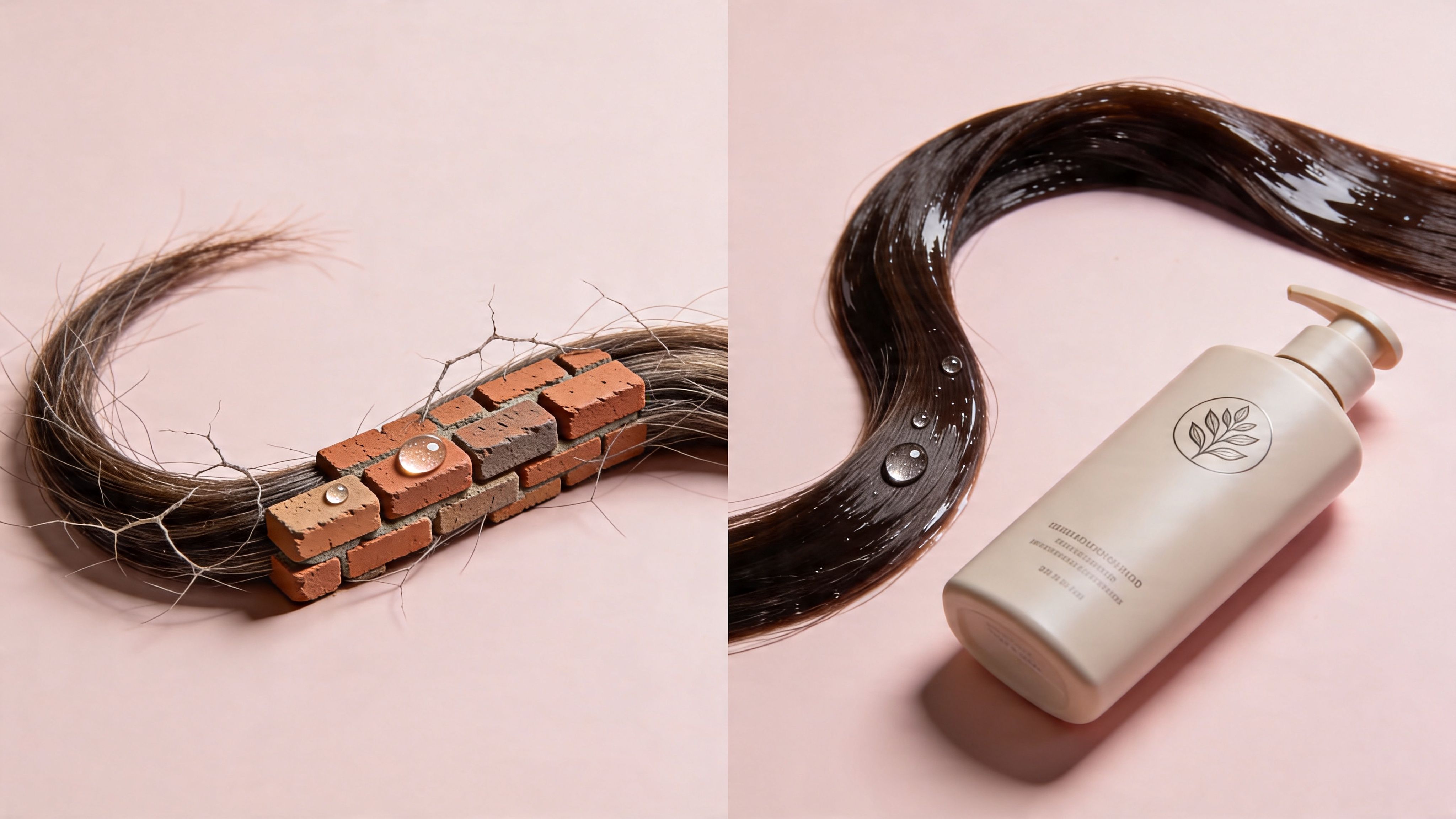
Porosity is simply your hair's ability to absorb and retain moisture. It all comes down to the structure of your hair's cuticle—the outermost layer. Think of it like shingles on a roof. When the shingles are sealed and tightly packed, water just runs right off. But when they're lifted or damaged, water seeps in easily.
The Three Levels of Hair Porosity
Understanding which category your hair falls into explains so much about its daily behavior. There are three main types, and each one has its own distinct personality.
Low Porosity: The cuticles are very tightly packed and flat. This hair type naturally resists moisture, which is why products tend to sit on the surface and cause buildup. It often takes forever to get fully wet in the shower and just as long to air dry.
Medium Porosity: This is the "just right" of the hair world. The cuticles are looser, allowing moisture to penetrate easily while also retaining it well. Hair with medium porosity usually holds styles without a fight and looks healthy with minimal effort.
High Porosity: The cuticles are raised or even have gaps, either from genetics or damage (think color treatments and heat styling). This hair acts like a sponge, soaking up moisture quickly but losing it just as fast. The result is often frizz, stubborn tangles, and a dry, brittle feeling.
Key Takeaway: Your porosity level—not just your curl pattern—dictates which products and ingredients will actually work for you. This is why a heavy cream that’s a holy grail for high-porosity curls might instantly weigh down low-porosity waves.
Figuring out your porosity is a game-changer for building a routine that finally works, especially if you're battling frizz, dryness, or damage from color treatments. The float test is a classic at-home method, and its importance is even recognized by experts at the New York Society of Cosmetic Chemists (NYSCC). You can explore more of their insights on hair porosity to see why it's such a critical piece of the hair health puzzle.
Once you have this information, you can stop the endless cycle of trial and error. Instead of guessing which conditioner or leave-in to buy, you can start making informed choices. This knowledge is your starting point for a truly customized plan, and you can use it to build your personalized hair routine with a tool that turns that knowledge into a concrete action plan with product recommendations made just for you.
The Classic Float Test for Accurate Results

If you’ve heard of one porosity test, it’s probably this one. The float test is the most popular at-home method for a reason—it’s simple, visual, and gives you a pretty clear answer about how your hair interacts with water. All you need is a clear glass of room-temperature water and a single, shed strand of hair.
Now, here’s the most important part: that hair strand must be completely clean. Any product residue—leave-in conditioner, oil, even styling cream—can coat the hair, affect its buoyancy, and throw off your results completely. To do this right, wash your hair with a clarifying shampoo, let it air dry without a single drop of product, and then grab a strand that has naturally shed into your brush.
How To Get Your Results
With your clean hair strand ready, just drop it into the glass of water. Then, watch what happens over the next few minutes. Your hair's behavior will tell you everything.
- Floats at the top: If your strand is still chilling on the surface after a few minutes, you have low porosity hair. Its cuticles are sealed tight, repelling the water.
- Sinks slowly or hovers: Did the strand take a slow dive and now it’s just hanging out in the middle? That’s a classic sign of medium porosity. Your hair is absorbing water at a steady, balanced pace.
- Sinks to the bottom fast: If the strand plummeted straight to the bottom, you’re looking at high porosity hair. Those open cuticles drank up the water and sank like a stone.
A Quick Tip: Don't rush it. I've seen people call it after 30 seconds, but you really need to give the strand at least 2-3 minutes. A strand that sinks after a minute might just be medium porosity taking its time, not necessarily high porosity.
Interpreting Your Float Test Results
Okay, so you know if your hair sinks or floats. But what does that actually mean for your hair's structure? This table breaks it down.
This table helps you understand what each outcome of the float test means about your hair's cuticle structure and moisture behavior.
| Result | Porosity Level | What It Means |
|---|---|---|
| Floats | Low | Your hair cuticles are flat and tightly packed, making it hard for moisture to get in. |
| Hovers in Middle | Medium | Your hair cuticles are slightly raised, allowing moisture to enter and be retained effectively. |
| Sinks | High | Your hair cuticles are wide open or have gaps, causing the strand to absorb water quickly and sink. |
Each result gives you a clue about how your hair’s cuticle layer is behaving, which is the key to choosing the right products.
After the float test, it’s always a good idea to confirm what you’re seeing. A great next step is to use a digital hair porosity test to cross-reference your results. This quick digital assessment asks targeted questions about your hair's daily behavior, giving you another layer of confidence before you start changing up your routine.
Quick Alternatives: The Spray and Slip Tests
Don't have time for the float test? Or maybe you just want to double-check your results. No problem.
There are a couple of other super-fast methods you can try right now. These tests give you instant feedback by relying on direct observation and touch, so you can get a quick read on your hair’s porosity without the wait.
The Spray Test
This one is exactly as simple as it sounds. All you need is clean, dry hair and a spray bottle filled with water.
Isolate a small section of your hair and give it a good spritz. Now, watch what happens to the water droplets.
- If the water beads up on top of your hair and just sits there for a while, that’s a tell-tale sign of low porosity. Your cuticles are tightly sealed and are actively repelling the water.
- If the water soaks in and disappears almost instantly, you’re looking at high porosity hair. Those open cuticles are thirsty and drinking the moisture right up.
This is a fantastic real-time indicator of how your hair’s surface is behaving.
The Slip-and-Slide Test
Next up is a method that’s all about touch. The slip-and-slide test lets you physically feel the condition of your hair's cuticles, and you can do it anywhere, anytime.
Take a single, clean strand of hair and pinch it between your thumb and forefinger. Now, slide your fingers up the hair shaft, moving from the tip toward your scalp. What do you feel?
If it’s a smooth ride with no bumps, your cuticles are lying flat and closed—a classic trait of low porosity hair. But if you feel tiny bumps or a rough, ridged texture, that means your cuticles are raised and open. This is a dead giveaway for high porosity.
This simple tactile check gives you direct feedback on your hair's structural integrity. Those little ridges you feel are a strong sign of damage. In fact, studies show that this kind of damage correlates with pore sizes that are up to 3x larger and can affect up to 75% of heat-styled or chemically relaxed hair.
On the flip side, that smooth feeling is common in the 60% of people with low-damage straight hair, whose tight cuticles can block up to 80% of product from ever getting in. You can discover more insights about these porosity findings on olaplex.com.
Pro Tip: Try these tests on a few different sections of your head. It’s totally normal to have mixed porosity—your ends might be much more porous than your roots thanks to sun, heat, or color damage.
With these quick indicators in your back pocket, you have a much clearer picture of what your hair needs. The next step is to turn that knowledge into a smart, effective routine. The best way to do that is to build your personalized hair routine with a tool that uses your specific porosity to recommend products that will actually work for you.
What Your Porosity Results Mean for Your Hair Care
So, you’ve done the tests and have a much better handle on your hair's personality. Now what? Knowing your porosity is one thing, but turning that knowledge into a real action plan is where the change happens. This is where you stop guessing and start giving your hair exactly what it needs to thrive.
Understanding your porosity explains why some "holy grail" products work miracles for your friends but leave your hair feeling greasy, dry, or just… meh. It’s all about working with your hair’s natural structure, not fighting against it.
Caring for Low Porosity Hair
If you have low porosity hair, your cuticles are very tightly packed. This makes it tough for moisture to get in. You've probably noticed that products tend to just sit on top of your strands, leading to buildup and that dreaded weighed-down feeling.
The goal here is simple: help moisture penetrate without making your hair greasy.
Your new best friends are lightweight, water-based products. Think hair milks, light lotions, and products with humectants like glycerin and aloe vera that pull moisture into the hair. You’ll want to avoid heavy butters and oils like shea butter or castor oil, especially in leave-in products, as they’ll just coat the hair shaft. You can quickly analyze your ingredients to spot these heavy oils before you buy.
A Pro Tip: Gentle heat is your secret weapon. When you deep condition, use a steamer, a thermal cap, or even just a warm towel wrapped around your head. The warmth helps to gently lift those tight cuticles, allowing all that hydrating goodness to finally sink in.
Also, clarifying is non-negotiable for this hair type. Because products can build up so easily, using a good clarifying shampoo once or twice a month will give your hair a complete reset. It removes all that lingering residue so your strands can actually absorb moisture again.
Caring for High Porosity Hair
High porosity hair is the complete opposite. Its cuticles are open and raised, so it soaks up moisture in seconds but loses it just as fast. If this is you, your hair probably feels dry again soon after washing.
Your game plan is twofold: hydrate like crazy, then seal the deal. You need to fill in the gaps along the cuticle and then lock that moisture in for good.
Layering your products is the key. Methods like the LOC (Leave-in, Oil, Cream) or LCO (Leave-in, Cream, Oil) are perfect for this.
- Start with a water-based leave-in conditioner on damp hair.
- Follow with a rich cream to add another layer of hydration.
- Finish with a sealing oil (like jojoba, avocado, or argan oil) to lock it all in.
Protein treatments are also your friend. They act like temporary patches, filling in the holes in the hair shaft, which adds strength and cuts down on breakage. But don't overdo it—start with one treatment a month and see how your hair feels. Not sure if your hair has too much protein? Our free Protein Overload Test can help you figure it out.
This chart breaks down what you might feel or see with the quick porosity tests.

These simple physical checks, like feeling for roughness or watching how water behaves on your strands, give you immediate clues about what your hair needs.
Navigating Medium Porosity Hair
If you landed in the medium porosity camp, consider yourself lucky! Your hair has a relatively balanced cuticle that isn’t too open or too closed. It absorbs and holds onto moisture pretty well, making it the easiest type to manage.
Your focus is simply maintenance. You want to keep your cuticles healthy and avoid doing anything that could damage them.
Stick with products that aren't too heavy or too light, and go easy on the heat and chemical treatments. An occasional deep conditioning treatment will keep it in top shape, but you won't need the intensive strategies required for the other two types. Once you know what your hair likes, you can easily find products to support your balanced routine.
Building Your Perfect Porosity-Aware Routine
Okay, so you've done the tests and finally have an answer. You know your hair's porosity. Now what? This is where the real work—and the real results—begin.
Knowing your porosity is one thing, but translating that into a shelf of products that actually work can feel like a whole different challenge. It's easy to get lost in ingredient lists or fall for marketing promises that don't deliver.
From Information to Action
This is the final, most important step: connecting your porosity results to a routine that serves your hair.
For instance, you might know your low porosity hair needs lightweight products, but which ones? If you have high porosity hair, you know it craves protein and sealing oils, but how much is too much? It’s a delicate balance.
This is precisely where you can stop the guessing game. Instead of piecing together a routine from blog posts and product reviews, you can get a plan built specifically for your hair's unique profile.
The goal is to eliminate the expensive trial-and-error. It's about using the science of your own hair to make smarter choices, which means you get healthier hair, faster.
Let technology do the heavy lifting for you. You can build your personalized hair routine with the IsItClean Hair Routine Builder.
This tool takes your porosity, hair type, and personal goals to generate a science-backed plan with clean, effective products. It's the most direct path from understanding what your hair needs to actually giving it what it wants.
You won't just leave with more information. You’ll get a clear, immediate action plan to finally hit your hair goals. For more deep dives into ingredients and styling techniques, you can explore other articles on our blog.
Frequently Asked Questions About Hair Porosity
Okay, so you’ve done the tests and have your results. Now what? It’s totally normal to have a whole new set of questions pop up once you finally know your hair's porosity. You’re not just holding a test result; you're holding a new key to unlocking your hair's true potential.
Let's dig into some of the most common questions that come up after figuring this all out.
Can My Hair Porosity Change Over Time?
Yes, and it almost always does. While your genetic, natural porosity is something you're born with, it's definitely not set in stone for life.
Think of it this way: your hair is constantly exposed to the world. Things like heat styling, chemical treatments (think coloring, bleaching, or perms), and even just daily sun exposure can rough up and damage the hair's cuticle. This damage forces the cuticles to lift, which directly increases your hair's porosity. It's the classic story of why hair that was once silky smooth can become frizzy and thirsty after years of processing.
Why Do My Ends Feel Different From My Roots?
This is one of the most common things people notice. We call it "combo hair," and almost everyone has it to some degree. Your roots are the newest, healthiest, and least-damaged part of your hair, so they usually reflect your natural porosity (often low or medium).
Your ends, on the other hand, have been through it all. They've endured months, or even years, of brushing, styling, and environmental stress. All that wear and tear makes them far more porous than the hair near your scalp. The fix? Apply your heavier, sealing products like creams and oils only from the mid-lengths down to your ends. Keep products near your roots lightweight to avoid greasy buildup. You can even use our Routine Analyzer to see if your current product lineup is optimized for this kind of targeted application.
Key Takeaway: It's completely normal to have multiple porosity levels on one head of hair. The secret is to treat each section based on its needs—focus on hydration and sealing for your porous ends, and stick to lightweight products at your less-porous roots.
What If My Hair Shows Signs of Both Low and High Porosity?
If your strand just hovered in the middle during the float test, or if your hair has a mix of conflicting behaviors (like taking forever to get wet but then drying super fast), you've likely hit the jackpot with medium porosity hair. This is that "in-between" state often considered the sweet spot.
Your hair's cuticles are just right—they let moisture in easily but don't lose it too quickly. For medium porosity hair, the name of the game is maintenance. Your goal is to keep it that way with a balanced routine of moderate protein and moisture, preventing damage that could push it toward high porosity. Taking a quick hair type quiz can also help confirm if your overall hair profile aligns with a balanced, medium-porosity type.
How Often Should I Test My Hair Porosity?
A good rhythm is to re-test your hair porosity every 4-6 months. This gives you enough time to see if any real changes have occurred.
You should also definitely plan on re-testing anytime you notice a big shift in how your hair is acting or after a major hair event. Did you just get highlights? Start using a new flat iron? Those are perfect times to check in. Keeping your routine updated is crucial, and our Hair Routine Builder can help you pivot your products based on your hair's current needs.
Now that you have the answers, it's time to put that knowledge into action. Stop the guesswork and build a routine that will finally deliver the results you want. Use the IsItClean Hair Routine Builder to get a step-by-step plan with clean, effective products chosen just for you and your porosity.