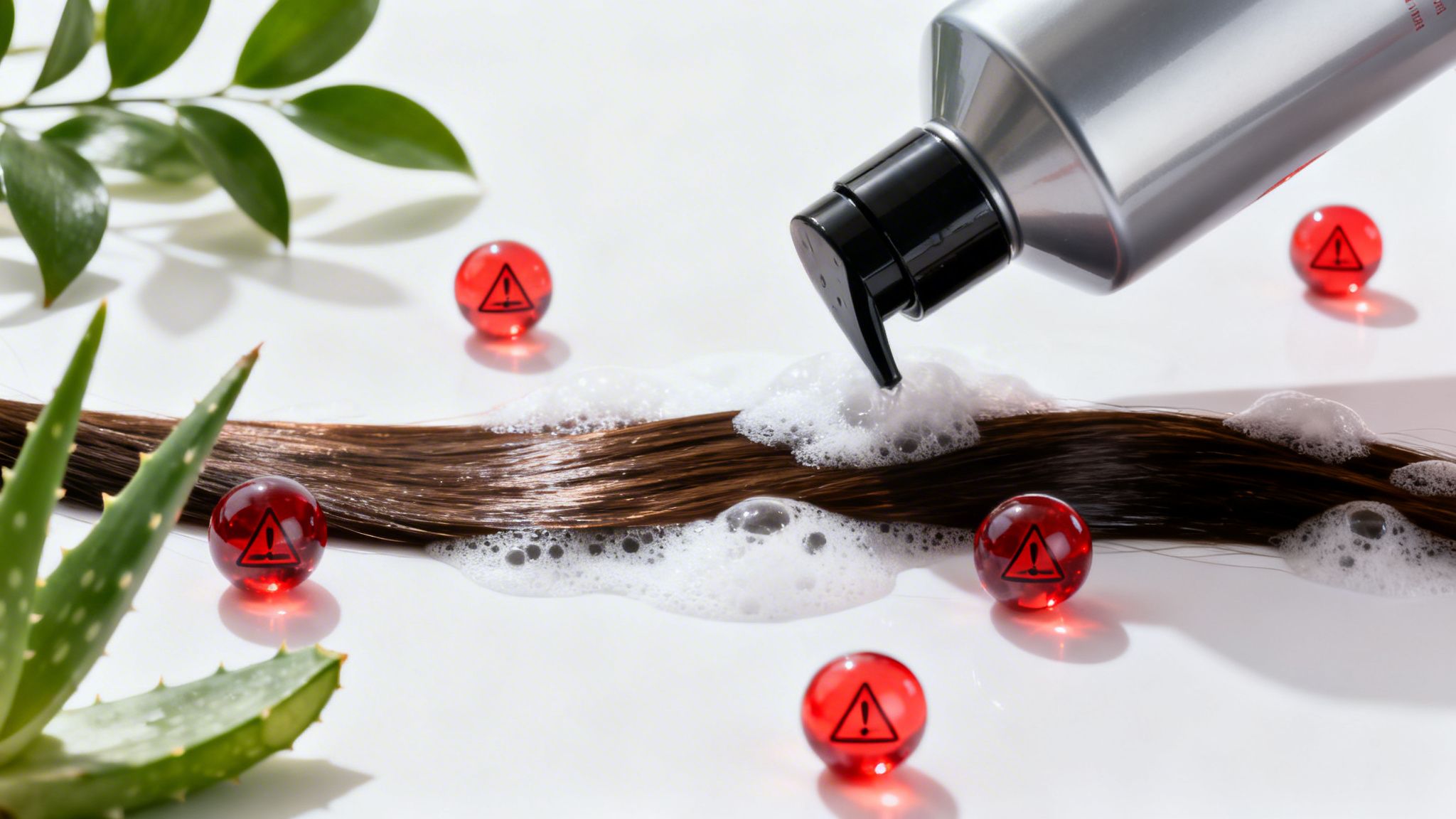
Ever stare at the back of a shampoo bottle and feel like you need a chemistry degree to understand it? You’re not alone. Most of us just want healthy, happy hair, but the ingredient lists on the products promising it are often a minefield of confusing terms.
The truth is, many common additives are the real culprits behind dryness, frizz, scalp irritation, and even that brand-new color fading way too fast. We’re talking about sulfates, silicones, parabens, and certain drying alcohols.
Decoding Your Shampoo Label: What to Actually Look For
Think about it this way: you wouldn’t put cheap, dirty fuel in a high-performance car. So why do we do the equivalent to our hair? Getting a handle on what’s in your shampoo is the first real step toward building a routine that helps your hair, instead of quietly working against it.
What you wash down the drain is just as critical as the fancy conditioners and masks you apply afterward. This guide will help you become fluent in "label-ese," so you can finally spot the ingredients holding your hair back.
From Confusion to Clarity in One Click
Let's be real, navigating that long list of scientific names is a headache. It's nearly impossible to know what’s good, what’s bad, and what’s just marketing fluff. This is where a simple tool can be a complete game-changer.
Instead of guessing, you can pop the ingredients into an ingredient checker like IsItClean and get an instant, easy-to-read breakdown.
Here’s what that looks like in action. You get a simple, visual score that tells you exactly what’s up with a product:
This kind of immediate feedback cuts right through the noise. It highlights the good stuff and flags the ingredients you might want to avoid, letting you make a smart choice right there in the store aisle. No more guesswork.
Taking control of your hair health starts with knowing exactly what you're putting on your scalp and strands. An ingredient checker acts as your personal translator, turning complex chemical names into simple, actionable insights.
Ultimately, this isn’t just about avoiding a few "bad" ingredients. It's about moving past the one-size-fits-all products and building a routine that’s truly yours. A great way to start is to build your personalized hair routine with a tool that recommends clean products based on your specific hair type and goals. This ensures every single product you use is working together to get you the healthy hair you’ve been aiming for.
The Four Main Ingredient Groups Harming Your Hair
To really understand which ingredients to avoid in shampoo, it helps to think of them in families. Once you learn to spot the family name on an ingredient list, you can easily sidestep its troublesome relatives. We're going to focus on the four biggest culprits you'll find lurking on the back of your shampoo bottle.
Now, these ingredients aren't inherently “evil.” They were designed to do a specific job, whether it's creating that rich, satisfying lather or keeping the formula from going bad. The problem is, their side effects often create more problems than they solve, leading to all-too-common issues like dryness, frizz, an irritated scalp, or hair that just feels limp and weighed down.
This quick visual guide shows you exactly how to approach a shampoo label to spot these ingredients before you buy.

It’s a simple three-step process: pick up the bottle, scan the label, and identify the potential troublemakers. This puts the power back in your hands, allowing you to make smarter choices for your hair.
The Big Four Ingredient Groups
Let’s pull back the curtain on the four most common families of ingredients that can stand in the way of your healthy hair goals. Knowing what they do—and what they really do—is the key.
- Sulfates: These are powerful detergents, like Sodium Lauryl Sulfate (SLS). Their whole job is to create that bubbly, sudsy lather we've been taught means "clean."
- Silicones: These are synthetic ingredients, usually with names ending in “-cone” (think Dimethicone). They coat the hair to give it that slippery, silky, frizz-free feeling right out of the shower.
- Parabens: These are preservatives, like Methylparaben or Propylparaben. Their purpose is to stop bacteria and mold from growing in your shampoo, giving it a longer shelf life.
- Drying Alcohols: This group includes ingredients like SD Alcohol 40, Alcohol Denat, and Isopropyl Alcohol. They're often used to help products dry faster on your hair or to dissolve other ingredients in the formula.
So, if they all have a job to do, why are they on the "avoid" list for so many people? Let’s get into the unintended consequences.
Why They Do More Harm Than Good
The real issue isn't what these ingredients are supposed to do, but the collateral damage they cause along the way. Each group brings its own set of problems that can slowly sabotage your hair's health.
Imagine scrubbing a delicate silk blouse with harsh dish soap. That’s essentially what strong sulfates do to your hair. They’re so effective at cleaning that they strip away everything—not just dirt and product buildup, but also the natural, protective oils (sebum) your scalp produces to keep itself balanced and your hair moisturized.
This aggressive stripping action is the root of so many hair frustrations. When your scalp is stripped bare, it can panic and go into oil-production-overdrive to compensate. The result? Greasy roots and brittle, straw-like ends. It's a vicious cycle that many of us mistake for just having "bad" or "combination" hair.
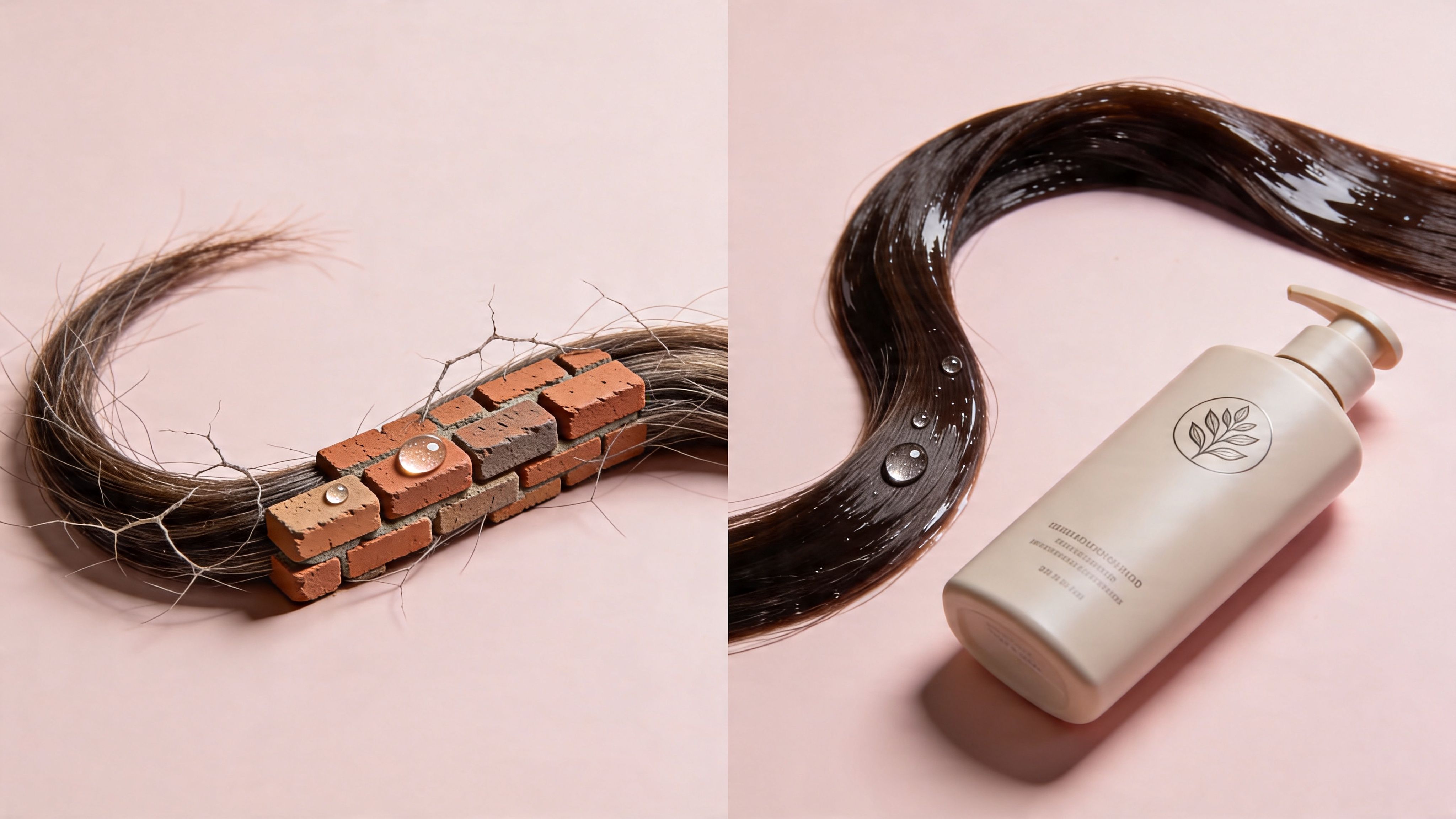
Silicones cause a totally different kind of trouble. They work by wrapping each hair strand in a thin, plastic-like film. This is why your hair feels incredibly smooth and looks shiny right away—it's a cosmetic illusion. But this coating is like wearing a raincoat in the shower; it blocks moisture and nourishing ingredients from actually getting into the hair shaft. Over time, your hair can become even drier and more brittle underneath that shiny facade.
Parabens and drying alcohols have their own red flags. Some studies suggest parabens can disrupt hormone function, which can have downstream effects on your scalp's health. And drying alcohols are exactly what they sound like—they can evaporate quickly and suck the moisture right out of your hair, leaving it weak, fragile, and prone to snapping. This is especially destructive for hair that’s already dry, curly, or color-treated.
If your hair constantly feels weak and lifeless no matter how many "moisturizing" products you use, it might be worth investigating other culprits. You might even see if you have signs of protein overload, which can sometimes mimic the effects of damage from harsh ingredients. Pinpointing the real source of the problem is the first step toward finding a real solution and building a routine that truly supports your hair's long-term health.
Why Sulfates Are Your Hair's Public Enemy Number One
Let's talk about sulfates. You've probably seen "sulfate-free" splashed across shampoo bottles, but what's the real story? Sulfates, especially Sodium Lauryl Sulfate (SLS) and Sodium Laureth Sulfate (SLES), are powerful detergents. Their main job is to create that rich, satisfying lather we’ve all been taught means "squeaky clean."
But here's the catch.

That intense cleaning power is exactly why they can be one of the most problematic ingredients in your shampoo. Sulfates are so good at their job that they don't just remove dirt and product buildup—they strip away your hair and scalp's natural, protective oils, called sebum.
Think of sebum as your body's own custom-made conditioner. It's what keeps your scalp moisturized and your hair cuticle smooth and protected. When sulfates wash it all down the drain, your hair’s first line of defense is gone.
The Vicious Cycle of Stripping and Overproduction
This is where things get frustrating. When sulfates strip your scalp dry, your body's natural response is to panic. It goes into overdrive, pumping out even more oil to try and compensate.
Sound familiar? This is the classic "greasy roots, dry ends" dilemma. You wake up with an oily scalp just a day after washing, while the rest of your hair feels brittle and lifeless. So, you wash it again, exposing your scalp to more harsh sulfates, which in turn triggers even more oil production.
This constant cycle of stripping and overproducing is why so many people think they have "combination hair." In reality, their shampoo is often creating the very problem it's supposed to solve.
The only way to break the cycle is to switch to a gentler, sulfate-free cleanser. This gives your scalp a chance to calm down and rebalance its oil production. Over time, this leads to healthier hair from root to tip. If you're not sure where to start, you can build your personalized hair routine to get recommendations for gentle products that fit your hair's unique needs.
How Sulfates Worsen Common Hair Problems
Beyond creating an oily-scalp-dry-ends situation, sulfates can make some of the most common hair frustrations even worse.
- Frizz and Breakage: Without its protective oil coating, the hair cuticle lifts up and gets rough. This rough surface can't hold onto moisture, leading to that dreaded halo of frizz and making your hair strands much more prone to snapping and splitting.
- Color Fading: If you color your hair, sulfates are public enemy number one. Their aggressive detergent action literally pulls color molecules right out of the hair shaft. The result? That beautiful, expensive salon color fades twice as fast.
- Scalp Irritation: For anyone with sensitive skin, sulfates can be a nightmare. They can cause itching, redness, dryness, and flaking by disrupting the scalp's delicate moisture barrier, leaving it exposed and irritated.
Did you know that sodium lauryl sulfate (SLS), a common foaming agent in shampoos, has been linked to serious health risks that could be stripping your hair and scalp of vital moisture? According to market research, SLS is one of the most prominent ingredients in shampoos worldwide, driving the global shampoo ingredients market. This is particularly concerning for women with curly, wavy, or color-treated hair, who often battle dryness, frizz, and breakage—issues SLS can worsen by aggressively removing natural oils. You can read more about these market findings.
Why Hair Type and Porosity Matter
While no hair type loves sulfates, some are hit much harder than others.
- Curly and Coily Hair: These hair types are already naturally on the drier side. It's simply harder for the oils from your scalp to travel down all those beautiful twists and coils. Sulfates strip away what little moisture is there, wrecking the curl pattern and inviting a ton of frizz.
- High Porosity Hair: If your hair has high porosity, its cuticle is already more open, meaning it absorbs and loses moisture very quickly. Sulfates are especially destructive here, as they rapidly strip away moisture and leave the hair feeling incredibly brittle and weak. Not sure about your hair's porosity? You can check your hair porosity with a quick test to find out.
Making the switch to a sulfate-free shampoo is one of the most impactful changes you can make for your hair's health. It lets your scalp finally heal and allows your hair to hold onto its natural moisture, paving the way for stronger, shinier, and happier hair.
The Hidden Dangers of Parabens in Your Hair Products
Of all the ingredients to watch out for in your shampoo, parabens are some of the sneakiest. They don’t make your shampoo lather or give your hair that silky-smooth feeling. Their one and only job is to act as preservatives.
Parabens stop bacteria, mold, and other nasty things from growing in the bottle, which is how a product can sit on a shelf (or in your shower) for years instead of just a few months. But while that sounds helpful on the surface, the truth is that these chemicals come with some serious red flags for your health.
You’ll typically find them on ingredient lists with names ending in “-paraben,” like methylparaben, propylparaben, and butylparaben. Spotting them is the first step to understanding what you’re really putting on your scalp.
Endocrine Disruptors and Your Scalp
The biggest concern with parabens is their ability to act as endocrine disruptors. In plain English, this means they can mimic estrogen, one of the body’s key hormones. When you lather up with a paraben-filled shampoo, your scalp can absorb these chemicals directly into your system.
Throwing your hormones out of balance is never a good thing. A major study that looked at over 73,000 cosmetic products found about 88 chemicals, including parabens, that were linked to everything from simple skin irritation to more significant health problems. You can explore the full findings on these cosmetic chemicals to see just how widespread this is. For your hair, this hormonal interference can mess with your natural growth cycle and create frustrating scalp issues.
A healthy scalp is the foundation of healthy hair. When its hormonal environment is disrupted, it can lead to unexplained issues like excess oiliness, dryness, or increased sensitivity, which can ultimately impact hair growth and vitality.
If you’ve been dealing with a moody scalp that just won’t cooperate, it’s worth taking a closer look at your product labels. A great first move is to take a quick scalp sensitivity quiz to get a baseline for your irritation levels and start connecting the dots.
Before we move on, let's make it easier to spot these and other common culprits on an ingredient list. Some ingredients hide behind multiple names, which can be confusing.
This table breaks down some of the most common harmful ingredients, what they're called on labels, and why you might want to avoid them.
Common Harmful Ingredients and Their Disguises
| Ingredient Category | Common Names on Labels | Potential Negative Effect |
|---|---|---|
| Sulfates | Sodium Lauryl Sulfate (SLS), Sodium Laureth Sulfate (SLES) | Strips natural oils, causes dryness and frizz, can irritate scalp |
| Silicones | Dimethicone, Cyclomethicone, Amodimethicone | Creates buildup, weighs hair down, prevents moisture absorption |
| Parabens | Methylparaben, Propylparaben, Butylparaben, Ethylparaben | Endocrine disruption, potential hormonal imbalance, scalp irritation |
| Drying Alcohols | Alcohol Denat, SD Alcohol, Isopropyl Alcohol | Dehydrates hair and scalp, leads to brittleness and breakage |
| Formaldehyde Releasers | DMDM Hydantoin, Imidazolidinyl Urea, Diazolidinyl Urea | Scalp irritation, potential allergic reactions, known carcinogen |
| Phthalates | Fragrance, Parfum, Diethylphthalate (DEP) | Endocrine disruption, often hidden under "fragrance" |
Keep this list handy when you're shopping. Being able to recognize these ingredients is a game-changer for building a routine that actually supports your hair health instead of working against it.
What 'Paraben-Free' Really Means
As more people have caught on to the risks, "paraben-free" has become a huge marketing buzzword. Seeing that label is a good sign, but it doesn't mean you can let your guard down.
You still need to be a savvy shopper and flip that bottle over to read the full ingredient list. Sometimes, a brand will remove one type of paraben only to leave another one in. In other cases, they might swap parabens for a different preservative that can be just as irritating, like formaldehyde-releasers.
The only foolproof way to know your routine is clean is to build it yourself, based on what your hair and scalp actually need. A tool that helps you build your personalized hair routine is a fantastic way to do this. It lets you select genuinely paraben-free products that are a perfect match for your hair type, porosity, and scalp condition—no more guesswork, just long-term hair health.
How Your Unique Hair Type Changes Everything

When we talk about ingredients to avoid in shampoo, we have to remember that context is everything. There’s no universal list of "bad" ingredients because what wrecks one person's hair might be a holy grail for someone else. An ingredient's impact depends entirely on your hair's unique personality.
It’s just like skincare. A rich, oil-based moisturizer is a lifesaver for someone with flaky, desert-dry skin, but it’s a total nightmare for an oily, acne-prone complexion. Hair care is no different. Once you understand your hair’s specific needs, you can finally figure out which ingredients are friends and which are foes.
Why Your Hair Porosity Is So Important
One of the most overlooked—and most critical—factors is hair porosity. This simply means how well your hair can soak up and hold onto moisture. Think of it as the difference between a sponge and a raincoat.
- High Porosity Hair: This hair has a wide-open cuticle, just like a sponge. It drinks up moisture in a flash but loses it just as quickly, making it a magnet for frizz and chronic dryness.
- Low Porosity Hair: This hair has a tightly sealed cuticle that acts like a raincoat. It repels moisture, which makes it really hard for products to actually sink in.
This one single trait completely changes the game. For instance, the heavy butters and oils that high-porosity hair craves for moisture will instantly suffocate low-porosity hair, leaving it feeling greasy, limp, and totally weighed down.
Understanding your porosity is a game-changer. It explains why a “moisturizing” shampoo might leave your hair feeling coated and heavy, while a “clarifying” one might make it feel like straw. It’s the missing piece of the puzzle for countless hair frustrations.
If you’ve ever felt like products just sit on top of your hair or never seem to work, porosity is almost certainly the culprit. You can easily check your hair porosity with a quick test to finally get the answers you need to pick the right products.
How Ingredients Affect Different Hair Types
Let's look at a few real-world examples to see how an ingredient can be a hero for one hair type and a villain for another.
Sulfates and High-Porosity Curls Curly hair is already on the drier side, and high-porosity curls are the most delicate of all. When you hit them with aggressive sulfates like SLS, you’re basically power-washing away what little moisture they’ve managed to retain. This completely obliterates the curl pattern, leading to instant frizz, brittleness, and breakage.
Silicones and Low-Porosity Fine Hair For someone with fine, low-porosity strands, heavy silicones like dimethicone are a recipe for disaster. Since the hair's cuticle is so tightly sealed, these ingredients can't get inside. Instead, they build up on the surface, creating a plastic-wrap effect that suffocates the hair. The result? Heavy, greasy buildup that makes fine hair look even flatter and more lifeless.
Drying Alcohols and Color-Treated Hair Coloring your hair is a chemical process that forces the cuticle open, leaving it more porous and vulnerable. When you use a shampoo containing drying alcohols (like Alcohol Denat), it causes moisture to evaporate rapidly from these already-compromised strands. This not only makes your expensive color fade faster but also leaves the hair feeling incredibly brittle and prone to snapping.
Knowing your hair’s true nature shifts your entire approach. You can stop the cycle of randomly trying products and hoping for the best and start making informed, strategic choices.
A great first step is getting a handle on your hair's foundational traits. Taking a comprehensive hair type quiz will give you a complete profile of your texture, density, and unique needs. This knowledge is power—it's what allows you to build a routine that truly works with your hair, not against it.
Building Your Clean and Personalized Hair Routine
Knowing which ingredients to avoid in shampoo is a massive first step. But the real magic begins when you stop focusing on what not to use and start zeroing in on what your hair truly craves. It's time to graduate from simply dodging harsh chemicals to actively building a routine that's clean, personalized, and effective from root to tip.
This isn't about chasing the latest trend or splurging on the most expensive bottle. It’s about creating a smart system where every single product—from your shampoo to your leave-in—works together to support your hair's unique needs. This is how you get real, lasting health, not just a temporary cosmetic fix.
Auditing Your Current Product Lineup
Before you can build something better, you have to know what you're working with. Go gather up all your current hair products: shampoos, conditioners, masks, serums, the works. It's time to play detective.
Flip each bottle over and scan the ingredient list for those common culprits we've been talking about—sulfates, certain silicones, parabens, and drying alcohols. You might be shocked to see where they're hiding.
Think of it like a pantry clean-out for your shower. You're tossing the junk food that does nothing for your hair's health to make room for genuinely nourishing ingredients.
This quick audit will give you a crystal-clear picture of where the weak links are in your routine. Maybe your shampoo is fantastic, but your conditioner is packed with heavy silicones that are causing buildup. Or perhaps that hairspray you love is full of drying alcohols, completely canceling out the hard work of your deep conditioner.
For an even deeper dive, you can analyze your hair care routine to see how your products score and if they actually work well together.
The Power of a Purpose-Built Routine
Once you know what needs to go, you can start building with intention. A truly powerful hair care routine isn't just a random collection of "good" products. It's a strategic system designed specifically for your hair profile—your type, porosity, and biggest concerns. This is where personalization crushes guesswork every time.
A great starting point is to use a tool that takes the trial-and-error out of the equation. By answering a few simple questions about your hair, you can build your personalized hair routine to get customized recommendations for clean products that are not only free of harsh ingredients but are also a perfect match for your needs. This puts you on the fast track to healthier hair without the frustration.
Mastering Protein-Moisture Balance
As you get more comfortable with your clean routine, you'll eventually run into the concept of protein-moisture balance. This is a super common hurdle that trips a lot of people up without them even realizing it. Your hair needs both protein for strength and structure, and moisture for softness and elasticity. It's a delicate dance.
When that balance is off, it can cause some major frustration:
- Too much protein can leave your hair feeling stiff, brittle, and almost like straw.
- Too much moisture can make your hair feel limp, mushy, overly soft, and unable to hold a curl or style.
Does your hair feel brittle no matter how many moisturizing masks you use? You might be dealing with protein overload. Finding that sweet spot is the key to unlocking your hair's full potential, making it both strong and flexible. Creating a routine with the right mix of products ensures you're giving your hair exactly what it needs, when it needs it.
A Few Common Questions About Shampoo Ingredients
Diving into the world of hair care ingredients can feel like learning a new language. Let's tackle some of the most common questions that pop up so you can feel confident reading that label.
Are All Alcohols in Shampoo Bad for My Hair?
Not at all! This is probably one of the biggest myths out there. The trick is to know the difference between the harsh, drying alcohols and their helpful, moisturizing cousins.
The ones to watch out for are the drying alcohols, like Alcohol Denat and Isopropyl Alcohol. Think of them as being too good at their job—they evaporate almost instantly, and when they do, they take a lot of your hair's natural moisture with them. This can leave your strands feeling brittle and much more likely to snap.
On the flip side, you have fatty alcohols like Cetyl Alcohol and Stearyl Alcohol. These are the good guys. They have a completely different structure that's waxy and creamy, making them fantastic for softening hair, melting away tangles, and adding a dose of much-needed moisture.
Does 'Natural' or 'Organic' Mean a Shampoo Is Safe?
You'd think so, but unfortunately, the answer is no. Terms like "natural" and "organic" are buzzwords that sound great but are mostly unregulated in the beauty industry. A brand can use a single drop of an organic oil, then splash "ORGANIC" all over the front of the bottle, even if it’s packed with the very sulfates and silicones you’re trying to avoid.
The only way to know for sure what's in a product is to flip it over and read the ingredient list. Ignore the flashy promises on the front—the small print on the back tells the real story.
How Long Until I See Results from a Sulfate-Free Shampoo?
This is where a little patience goes a long way. When you first ditch harsh sulfates, your scalp might get a bit confused. It’s been working overtime to produce oil to combat being constantly stripped dry. Now that the stripping has stopped, it needs a minute to recalibrate.
You might notice your hair feels a bit greasier or even heavier for a couple of weeks. This is totally normal—it's often called the "transition period." Stick with it! Once your scalp finds its new balance, you’ll likely find your hair feels softer, looks shinier, and actually stays clean for longer. The short adjustment is well worth the long-term health of your hair and scalp.
Feeling like this is a lot to remember? Don't worry. The best way to cut through the confusion and start seeing real results is to create a plan tailored specifically for you. Take the next step and build your personalized hair routine to get recommendations for clean, effective products that match your hair's unique profile and goals.