Curly Hair Type 🌀 10 min read

The Ultimate Guide to Curly Hair Types: How to Unlock Your Most Defined and Healthy Curls

Learn how to identify your curly hair type and match it with the right ingredients, products, and routine for healthy, defined curls.

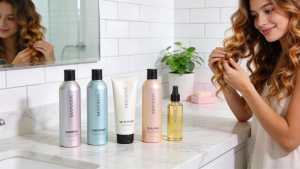
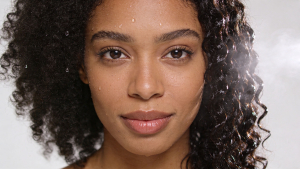
Woman with defined curly hair types
Every curly hair type is unique – understanding your pattern is the first step to healthy curls.

Welcome to the ultimate journey toward understanding and celebrating your unique texture! If you’ve ever felt like you’re battling your hair instead of styling it, the problem might not be your technique—it could be a simple mismatch between your products and your specific curly hair type.

For too long, the haircare aisle has treated all textured hair as one single category. The reality is that the difference between a loose wave and a tight coil is as vast as the difference between straight and wavy hair. Your curl pattern is a unique fingerprint that dictates everything from how your hair absorbs moisture (porosity) to how much product it can handle (density). Knowing this is the first, most critical step to achieving consistent definition, combating chronic frizz, and minimizing breakage.

By the end of this comprehensive guide, you will be able to correctly identify your exact curl pattern (from 2A to 4C), understand foundational characteristics like density and porosity, and, most importantly, learn which ingredients and product types will allow your curls to truly thrive. This knowledge is essential for choosing effective products and avoiding damaging, harsh ingredients that can wreak havoc on delicate curly strands.


What Are the Main Curly Hair Types? The Andre Walker System

The most widely accepted method for classifying textured hair is the Andre Walker Hair Typing System. This system categorizes hair into four main types (1: Straight, 2: Wavy, 3: Curly, 4: Coily) and further breaks down the textured types (2, 3, and 4) into sub‑categories (A, B, and C) based on the diameter and shape of the curl pattern.

Understanding these curly hair types is the bedrock of your entire haircare strategy.

Type 2: Wavy Hair

Wavy hair ranges from a soft bend to a loose, defined S‑shape. It’s the least voluminous of the textured types and is typically easy to weigh down.

  • 2A: Nearly straight at the roots, forming very soft, subtle S‑waves from mid‑shaft down. It lacks volume and is the easiest to straighten. Common problems include lack of definition, oiliness at the root, and being easily weighed down by heavy products.
  • 2B: More defined S‑shape waves that start closer to the root. It’s slightly more prone to frizz and requires a light touch with styling products.
  • 2C: Distinct, well‑defined S‑waves mixed with occasional loose corkscrews. It tends to be thicker, more frizz‑prone, and responds well to layering light products.

Type 3: Curly Hair

Type 3 hair forms distinct, bouncy loops and springs that range from loose spirals to tight corkscrews. This curly hair type is generally prone to frizz and dryness, as the curl pattern makes it difficult for natural oils (sebum) to travel down the hair shaft.

  • 3A: Large, loose spirals or ringlets, similar in size to a piece of sidewalk chalk. It has high shine and bounce but can suffer from loss of definition at the crown.
  • 3B: Bouncier, medium‑sized ringlets roughly the size of a permanent marker. This hair is denser, experiences more shrinkage, and requires significantly more moisture.
  • 3C: Tightly packed, voluminous corkscrews, often the size of a pencil or straw. This subtype sits at the transition to coily hair, with significant density, high shrinkage, and extreme frizz potential.
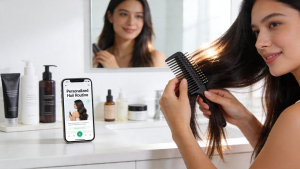
Combing curly hair with a wide-tooth comb
Gentle detangling with a wide‑tooth comb is essential for protecting every curly hair type.

Type 4: Coily Hair

Type 4 hair is the most fragile of all curl types and is characterized by a very tight, densely packed coil pattern, often forming a Z‑shape or tiny corkscrews. Despite its appearance of robustness, it is actually the most vulnerable to breakage and experiences the most shrinkage.

  • 4A: Densely packed, S‑shaped coils that are clearly defined, often the size of a crochet needle. It retains moisture slightly better than 4B or 4C but still requires heavy, penetrating conditioners.
  • 4B: Coils that bend in sharp angles, forming a clear Z‑pattern rather than an S. This pattern causes the hair to feel cottony and fluffy. It has less visible curl definition and needs a routine focused on minimizing manipulation and maximizing moisture.
  • 4C: The tightest curl pattern, with minimal to no visible definition without product. It features small, dense, Z‑shaped coils that can shrink up to 75% of their actual length and are highly susceptible to dryness and breakage.

How to Correctly Identify Your Curl Pattern

Identifying your curl pattern isn’t a one‑time event; it’s a careful observation. You need to assess your hair when it’s wet, completely product‑free, and air‑dried. This helps you see the true behavior of your curly hair type.

The Wet Test

  • Wash Your Hair: Use a clarifying, sulfate‑free shampoo to remove all product residue and buildup.
  • Finger Comb: Gently finger‑comb or use a wide‑tooth comb to detangle your hair while it’s saturated with water.
  • Observe the Strand: Look closely at a strand or a small section of hair and note its shape:
  • Does it form a loose S‑shape? (Type 2)
  • Does it form a large, bouncy spring or corkscrew? (Type 3)
  • Does it form a very tight, small coil or Z‑shape? (Type 4)

Beyond the Curl Pattern: Density, Porosity, Thickness & Shrinkage

While the letter/number system (for example, 3B) defines the shape of your curly hair type, the following factors define its behavior and ultimately determine which products you should use.

Characteristic Definition Importance for Product Choice
Density The number of individual hair strands on your head (how thick your hair looks overall). High density can handle heavier, larger amounts of product; low density needs lighter formulas to prevent weighing hair down.
Porosity Your hair’s ability to absorb and retain moisture (how open the cuticle is). Low porosity needs heat/steam and lightweight, penetrating oils and is prone to buildup. High porosity (often damaged) needs heavier sealants and protein to patch gaps.
Thickness The diameter of a single strand (fine, medium, coarse). Fine strands break easily and can’t handle heavy products; coarse strands are more resilient but require intense moisture.
Shrinkage How much the hair contracts from wet, elongated state to dry, coiled state. Type 4 hair experiences the most shrinkage and benefits from elongating, anti‑frizz products and techniques.

Common Problems Each Curly Hair Type Faces

Identifying issues specific to your curly hair type is key to targeting your product selection.

Type 2 (Wavy): Frizz and Lack of Volume

Waves are easily overwhelmed by heavy creams, leading to limpness and oiliness, but still need light moisture to prevent surface frizz.

Solution: Lightweight mousses, salt sprays, and thin gels. Avoid heavy butters and thick creams.

Type 3 (Curly): Frizz and Dryness

Curls are defined but often dry out quickly, leading to extreme frizz (the “halo effect”). They are prone to knotting and tangles.

Solution: Cream‑based leave‑ins, richer curl creams, and medium‑to‑strong hold gels to lock in moisture and definition.

Type 4 (Coily): Breakage and Extreme Dryness

The tight coil pattern makes it difficult for sebum to reach the ends, leading to chronic dehydration, tangles, and easy breakage.

Solution: Layered moisture (LOC or LCO method), weekly deep conditioning with heat, and protective styles that minimize manipulation.


The Ingredient Deep Dive: How Ingredients Affect Curly Hair Health

Choosing the right product isn’t just about the label—it’s about the ingredient list. Curly hair types are delicate, and harsh chemicals or heavy materials can either dry them out or create debilitating product buildup.

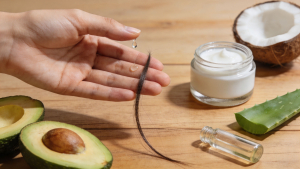
Curly hair products arranged on a table
The right product formulas and clean ingredients make a huge difference for every curly hair type.

1. Humectants (Glycerin, Propylene Glycol, Panthenol)

What they do: Draw moisture from the air or product into the hair shaft.

Effect on curls: Critical for all curly hair types, but a double‑edged sword. In very high humidity, they can draw in too much water, causing frizz. In low humidity, they can pull moisture out of the hair, leaving it dry and stiff.

Rule of thumb: Use humectants when humidity is moderate (around 30–60%).

2. Silicones (Dimethicone, Cyclopentasiloxane, Amodimethicone)

What they do: Coat the hair shaft to provide smoothness, shine, and a frizz‑free surface.

Effect on curls: Water‑soluble silicones rinse out easily and are generally fine. Non‑water soluble silicones provide shine but cause buildup that suffocates the strand and blocks moisture—especially problematic for low‑porosity and Type 3/4 hair.

Rule of thumb: Opt for silicone‑free or water‑soluble silicone products only.

3. Sulfates (Sodium Lauryl Sulfate, Sodium Laureth Sulfate)

What they do: Powerful detergents that create lather and aggressively strip away oil and dirt.

Effect on curls: Highly detrimental. They strip essential natural oils, leading to extreme dryness, frizz, and an aggravated scalp—especially harmful for already dry Type 3 and 4 curls.

Rule of thumb: Avoid aggressive sulfates entirely; choose sulfate‑free or very gentle surfactants.

4. Drying Alcohols (Ethanol, SD Alcohol, Isopropyl Alcohol)

What they do: Help styling products dry quickly and provide strong hold.

Effect on curls: Pull moisture out of the hair, leaving it stiff, crunchy, and more prone to breakage.

Rule of thumb: Avoid drying alcohols high on the ingredient list. Fatty alcohols like Cetearyl or Cetyl Alcohol are good and hydrating.

5. Natural Oils & Butters (Coconut, Shea Butter, Jojoba, Olive)

What they do: Provide penetrating moisture or sealing properties.

  • Type 2: Needs very light oils (Jojoba, Argan) applied mainly to the ends.
  • Type 3: Can handle medium‑weight oils (Olive, Sunflower) and light creams.
  • Type 4: Thrives on heavy butters (Shea, Mango) and thick sealing oils to lock in moisture.

Best Product Types for Each Curl Pattern

Your wash day and styling regimen should be dictated by your specific curly hair type. A product that is perfect for 4C coils can overwhelm 2A waves, and vice versa.

Curl Type Cleanser (Shampoo) Hydration (Conditioner/Mask) Styling (Leave‑in/Cream/Gel)
Type 2 (Wavy) Light, volumizing, sulfate‑free shampoo. Occasionally clarify to prevent root buildup. Lightweight, silicone‑free conditioner. Rinse out fully; occasional protein treatments. Mousse or lightweight, low‑hold gel. Avoid thick creams and heavy butters.
Type 3 (Curly) Sulfate‑free cleanser or co‑wash, rotated with a clarifying wash when needed. Rich moisturizing conditioner and weekly deep conditioning mask. Cream‑based leave‑in followed by curl cream and medium‑to‑strong hold gel.
Type 4 (Coily) Co‑wash most of the time; use a gentle sulfate‑free shampoo once a month for a reset. Thick deep‑conditioning mask with heat weekly plus a heavy leave‑in. Butters, thick creams, and heavy oils (Castor/Olive) for LOC or LCO method.

Building Your Simple Curly Hair Routine

1. The Cleansing Step

Goal: Cleanse the scalp without stripping natural moisture.

All curly hair types should prioritize sulfate‑free cleansers. Type 2 and 3 can clarify every 4–6 weeks to prevent buildup, while Type 4 generally thrives on co‑washing and occasional gentle shampooing.

2. The Detangling and Conditioning Step

Goal: Replenish moisture and create slip for safe detangling.

Apply a generous amount of conditioner and detangle only while hair is saturated. Start at the ends and work upward. Type 2/3 often prefer partial rinse‑out, while Type 4 benefits from leaving more product in.

3. The Styling and Sealing Step

Goal: Define curl pattern, lock in moisture, and minimize frizz.

  • Type 2: Apply a lightweight leave‑in, scrunch in mousse or light gel, then diffuse or air‑dry.
  • Type 3: Use a leave‑in, layer curl cream, and finish with strong‑hold gel to create a cast you can later scrunch out.
  • Type 4: Use the LOC (Liquid/Leave‑in → Oil → Cream) or LCO method to layer moisture and seal it with heavy butters or oils.

How IsItClean Helps Curly Hair Types Choose Clean Products

Navigating haircare ingredients can feel like deciphering a secret language—especially when you’re trying to avoid harsh sulfates, drying alcohols, and heavy silicones that cause buildup on your specific curly hair type.

This is where technology meets clean beauty. If you want to be sure your products are genuinely suitable for your curls, we strongly recommend using IsItClean.app. This AI‑powered ingredient checker analyzes the full ingredient list of any haircare product.

In seconds, you can see whether a formula contains harsh sulfates, drying alcohols, heavy non‑water‑soluble silicones, or other ingredients known to cause buildup—especially on low‑porosity hair or tight Type 4 coils. Leveraging an intelligent tool like IsItClean takes the guesswork out of product selection and keeps your curly hair type thriving.


Benefits of Knowing Your Curly Hair Type

  • Optimal Hydration: You choose products that truly penetrate and seal in moisture.
  • Maximum Definition: Curls clump and form their natural pattern with less frizz.
  • Reduced Frizz: Well‑matched routines keep strands moisturized and smooth.
  • Less Product Waste: You stop buying products that work against your curl pattern.
  • Long‑Term Hair Health: Avoiding harsh detergents and heavy buildup maintains elasticity and strength.

Frequently Asked Questions (FAQ)

What are the main curly hair types? +

The main textured hair types are Type 2 (Wavy), Type 3 (Curly), and Type 4 (Coily). Each is further divided into A, B, and C subtypes based on the tightness of the wave, curl, or coil—ranging from 2A (loose wave) to 4C (tightest Z‑coil).

How do I know if I have 2B, 3A, or 3C curls? +

Look at your hair when it’s clean, wet, and free of products. 2B hair forms a clear, soft S‑shape. 3A hair forms large, loose, bouncy spirals about the size of sidewalk chalk. 3C hair forms very tight, densely packed corkscrews about the size of a pencil or straw.

Which ingredients should curly hair avoid? +

All curly hair types should avoid aggressive sulfates (like Sodium Lauryl Sulfate) and drying alcohols (like Isopropyl Alcohol, SD Alcohol). Type 3 and 4 curls should also be cautious with heavy, non‑water‑soluble silicones (like Dimethicone), which can cause stubborn buildup.

Are sulfates bad for curly hair? +

Generally yes. Sulfates are potent detergents that aggressively strip protective natural oils. Because curly and coily hair is already prone to dryness, sulfates exacerbate frizz, brittleness, and loss of curl definition.

How often should curly hair be washed? +

It depends on your curly hair type and lifestyle. Type 2 waves may cleanse 2–3 times per week, Type 3 curls usually wash 1–2 times per week, and Type 4 coils often thrive on weekly co‑washing with occasional gentle shampooing once or twice a month.

Can AI tools really help choose clean haircare products? +

Yes. AI tools like IsItClean.app quickly analyze ingredient lists and flag harsh sulfates, drying alcohols, or problematic silicones so you can make informed decisions tailored to your specific curly hair type.


Conclusion

Understanding your unique curly hair type isn’t a passing trend—it’s the foundation for transforming your routine from frustrating to effortless. By identifying your curl pattern (Type 2, 3, or 4) and understanding porosity, density, and ingredient needs, you can finally build a routine that supports healthy, defined, frizz‑controlled curls.

The secret to beautiful curls doesn’t lie in a single miracle product, but in a carefully constructed routine based on ingredient suitability and your individual curly hair type. Don’t waste another dollar on formulas that fight your texture.

Ready to find out if your current products are helping or hurting your curls? Visit IsItClean.app, paste in your product’s ingredient list, and get instant, intelligent analysis tailored to clean beauty standards and the needs of all curly hair types.

Ready to Check Your Hair Products?

Use IsItClean's free AI-powered ingredient checker to analyze your shampoos, conditioners, and hair treatments.

Try IsItClean Free